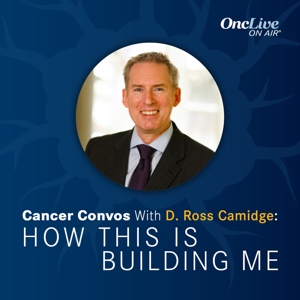
How This Is Building Me, hosted by world-renowned oncologist D. Ross Camidge, MD, PhD, is a podcast focused on the highs and lows, ups and downs of all those involved with cancer, cancer medicine, and cancer science across the full spectrum of life's experiences.
In this episode, Dr Camidge sat down with Laura A. Petrillo, MD, a palliative care physician-investigator in the Division of Palliative Care and Geriatrics at Massachusetts General Hospital and an assistant professor of medicine at Harvard Medical School in Boston.
Drs Camidge and Petrillo discussed Dr Petrillo's evolution from a creative, science-curious student into a leader in palliative care research at the intersection of supportive care and cancer survivorship. Raised in New Jersey in a family of scientists, Petrillo initially considered medical illustration and science journalism before a research coordinator role at the University of California, San Francisco (UCSF) drew her toward clinical research. She completed medical school, residency, and fellowship training at UCSF, where formative encounters with patients revealed that early, sensitive communication could fundamentally reshape a patient's experience.
Petrillo credited the crystallization of her career path to a landmark early palliative care trial, which prompted her move to Boston to further her training. She reflected candidly on navigating academic culture, advocating that pauses in career productivity due to caregiving should be acknowledged, rather than hidden.
Petrillo explained how modern therapies, including targeted agents, checkpoint inhibitors, and CAR T-cell therapy, have transformed the patient experience, introducing prolonged survival, profound uncertainty, and new challenges, such as tapering opioids after disease control. She highlighted the POISE study (NCT04900935), which blends palliative care with survivorship, emphasizing the importance of lifestyle medicine and future preparation.
Petrillo also shared nuanced views on medical aid in dying, framing it against inequities in end-of-life care access. She concluded by reflecting on her reliance on running and research, as well as spotlighting her mission to expand patient access to high-quality supportive care.