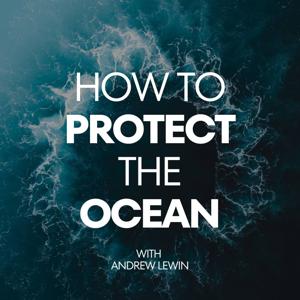
How To Protect The Ocean

How To Protect The Ocean

By Andrew LewinScienceNature
Download on the App Store
  • Favorites

    68

    Followers

  • Typical duration

    17 min

    per episode

Based on Podcast App listening data

How To Protect The Ocean episodes

  • The 30 x 30 conservation goal is more than just a number
    We are now in the decade of the ocean and you may or may not have heard of the term flying around that is supposed to help the oceans and lands and protect biodiversity. The term is 30 x 30. It means 196 nations have pledged to protect 30% of lands and oceans by the year 2030. It's a great goal that can help our environment and the human species from climate change, water pollution, plastic pollution, overfishing, and other human disturbances; however, the number 30 could just mean that politicians will focus on just the quantity and not the quality of the protected areas. The Center of American Progress would like to see a quality-over-quantity scenario and I am going to talk about how where the US needs to focus. Fill out our listener survey: https://www.speakupforblue.com/survey Join the audio program - Build Your Marine Science and Conservation Career: https://www.speakupforblue.com/career Facebook Group: https://bit.ly/3NmYvsI

    Connect with Speak Up For Blue: Website: https://bit.ly/3fOF3Wf Instagram: https://bit.ly/3rIaJSG Twitter: https://bit.ly/3rHZxpc

    20 min
  • Ways to make a decision on whether you should support whale and dolphin
    Whale and dolphin captivity is quite a controversial issue as there are people who are advocating for the release of every captive orca, dolphin, seal, and sea lion (along with manatees) to improve their overall health and there are people who think that these animals are treated well in marine parks and offer a great way for humans to make a connection to help save marine mammals. On which side should you fall and how do you make that decision? These are just some of the questions that you may ask yourself when the opportunity presents itself to see an orca or some other marine mammal. I am going to give you some resources that can help you make decisions for yourself so that you can live for a better ocean. Fill out our listener survey: https://www.speakupforblue.com/survey Join the audio program - Build Your Marine Science and Conservation Career: https://www.speakupforblue.com/career Facebook Group: https://bit.ly/3NmYvsI

    Connect with Speak Up For Blue: Website: https://bit.ly/3fOF3Wf Instagram: https://bit.ly/3rIaJSG Twitter: https://bit.ly/3rHZxpc

    28 min
  • How to get over imposter syndrome
    There are some great people in the marine conservation world that have the potential to do some great things in the field of marine science and conservation. They are intelligent, motivated, passionate, and talented in more than just the science/policy/advocacy work. They can communicate in creative ways. Every once in a while, I have the chance to meet these individuals to speak to them about how they can use their talent and creativity to do some great things. However, imposter syndrome sets in. It can stop you in your tracks of putting yourself out there stopping you from getting your message out. I want people to get past their imposter syndrome as I did so I am going to tell you what helped me. Fill out our listener survey: https://www.speakupforblue.com/survey Join the audio program - Build Your Marine Science and Conservation Career: https://www.speakupforblue.com/career Facebook Group: https://bit.ly/3NmYvsI

    Connect with Speak Up For Blue: Website: https://bit.ly/3fOF3Wf Instagram: https://bit.ly/3rIaJSG Twitter: https://bit.ly/3rHZxpc

    29 min
  • Modern day Noah's Ark being built for Great Barrier Reef corals and their colonies
    Corals are facing a ton of challenges in the form of human disturbances and the potential loss of corals and coral reefs will devastate 25% of the species that depend on reefs for their survival. But there are efforts to protect and restore populations in the face of challenges such as climate change, water pollution, coastal development, and over-fishing. An organization called the Great Barrier Reef Legacy, based in Australia is working to do a different type of preservation. the organization wants to collect and preserve every species of coral in the Great Barrier Reef along with the genetic diversity of each coral species. The offsite facility that will house the species will act to stabilize their existence in case the wild populations are threatened with extinction and could act as brooding colonies for restoration purposes. Article: http://bit.ly/3JyZOW1 Fill out our listener survey: https://www.speakupforblue.com/survey Join the audio program - Build Your Marine Science and Conservation Career: https://www.speakupforblue.com/career Facebook Group: https://bit.ly/3NmYvsI

    Connect with Speak Up For Blue: Website: https://bit.ly/3fOF3Wf Instagram: https://bit.ly/3rIaJSG Twitter: https://bit.ly/3rHZxpc

    18 min
  • Chasing Impact with Finless Foods
    Have you ever thought about whether your marine science/conservation/policy career is having the impact that you want on the ocean? For instance, I turned to podcasting about how to protect the ocean because I wanted to reach out to individual people to tell them about what is happening with the ocean and how they can help. I decided that I would stop working for the government to follow this endeavor and I am not the only one. In today's episode, I speak with Shannon Consentino-Roush about chasing impact throughout her career. Shannon has had quite a career in national and international policy but now works as a Chief Strategic Officer for a start-up company called Finless Foods that offers plant-based and cell-cultured seafood alternatives. We are going to find out what drove her to continue to pivot towards different career choices and how she ended up as the CSO of a start-up. Finless Foods: Website: https://finlessfoods.com/ Instagram: https://www.instagram.com/finlessfoods/ Fill out our listener survey: https://www.speakupforblue.com/survey Join the audio program - Build Your Marine Science and Conservation Career: https://www.speakupforblue.com/career Facebook Group: https://bit.ly/3NmYvsI

    Connect with Speak Up For Blue: Website: https://bit.ly/3fOF3Wf Instagram: https://bit.ly/3rIaJSG Twitter: https://bit.ly/3rHZxpc

    1 hr 7 min
  • The real story about the shark bite off the coast of Mexico
    It seems as though the media salivates any time there is a shark bite event and it's labelled as a shark attack that includes all the horrific details. The story reaffirms the fears many people have of sharks and demonizes them, but there is always a piece of the story missing that could get at the real story. For example, a recent story that is being shared is a potential white shark bite off the coast of Mexico. The headlines and the stories are focusing on where the person was bit, but not on the details of why the person was in the ocean even though there were warnings of an increased presence of sharks. I am going to talk about the real story and discuss why those stories could have better results for conservation. Fill out our listener survey: https://www.speakupforblue.com/survey Join the audio program - Build Your Marine Science and Conservation Career: https://www.speakupforblue.com/career Facebook Group: https://bit.ly/3NmYvsI

    Connect with Speak Up For Blue: Website: https://bit.ly/3fOF3Wf Instagram: https://bit.ly/3rIaJSG Twitter: https://bit.ly/3rHZxpc

    20 min
  • Transparency in international fisheries registration is needed for better tracking
    The major problem with battling overfishing on the high seas is that it is difficult to track vessels due to the lack of transparency in vessel registration. The results of a new study are hoping to change this problem by creating a global database of the global fishing fleet that can help tackle illegal, unreported, and unregulated (IUU) fishing. Analysis of the data found that 20% of high-seas fishing was likely unregulated and that reflagging of vessels mainly occurred in East Asia, West Africa, and Eastern Europe. The researchers plan on making the dataset publicly available so that authorities have access to timely information. Link to article: https://bit.ly/3j0tkZX Fill out our listener survey: https://www.speakupforblue.com/survey Join the audio program - Build Your Marine Science and Conservation Career: https://www.speakupforblue.com/career Facebook Group: https://bit.ly/3NmYvsI

    Connect with Speak Up For Blue: Website: https://bit.ly/3fOF3Wf Instagram: https://bit.ly/3rIaJSG Twitter: https://bit.ly/3rHZxpc

    21 min
  • No butts allowed on Florida beaches - cigarette butts that is
    Sitting on a beach surrounded by sand and the ocean is probably one of the best feelings in the world. Travelers from all over the world flock to coastlines every year to lie on beaches and cool off in the adjacent ocean. However, there is nothing worse than finding litter on the beach, especially cigarette butts. For years, people cleaning beaches have found cigarette butts were the items picked up the most along Florida's coasts. As a result, the Florida legislature passed a bill that gave the municipalities the power to vote to enact their own local bans. Now coastal municipalities are taking action along coastal Florida. We are going to talk about the significance of the bans in this episode. Link to article: https://bit.ly/3Dbu45h Fill out our listener survey: https://www.speakupforblue.com/survey Join the audio program - Build Your Marine Science and Conservation Career: https://www.speakupforblue.com/career Facebook Group: https://bit.ly/3NmYvsI

    Connect with Speak Up For Blue: Website: https://bit.ly/3fOF3Wf Instagram: https://bit.ly/3rIaJSG Twitter: https://bit.ly/3rHZxpc

    14 min
  • Your social media message does not have to be special
    There is so much content out there that is better produced, better audio, better video, and better communicated than mine, but I still have a following and listeners who say they love my content. I must admit, there are times that I want to up my game and make better-produced content to try and bring in more listeners and followers; however, the reality is that I have restrictions in time, money, and sometimes skill set. I continue to make content regardless of the restrictions and my own fears of imposter syndrome because I know there is someone out there that is going to discover my content and turn to live for a better ocean. And I am here to tell you that you can do the same. Fill out our listener survey: https://www.speakupforblue.com/survey Join the audio program - Build Your Marine Science and Conservation Career: https://www.speakupforblue.com/career Facebook Group: https://bit.ly/3NmYvsI

    Connect with Speak Up For Blue: Website: https://bit.ly/3fOF3Wf Instagram: https://bit.ly/3rIaJSG Twitter: https://bit.ly/3rHZxpc

    28 min
  • Reef shark decline could also reduce coral reef health
    The health of ocean habitats is a delicate balance of the presence of the right species and the proper conditions. When things are out of balance the health of habitats can be at stake. Coral reef habitats act as a host for a diverse amount of species of invertebrates and vertebrates; however, the reefs are sensitive to physical and chemical changes which we often discuss on this podcast, but we rarely discuss the biological changes that can occur including the presence of predators and prey. There is an interesting article that reveals a decline of reef sharks that could affect the health of coral reefs. Link to article: https://bit.ly/3ko6Vpx Fill out our listener survey: https://www.speakupforblue.com/survey Join the audio program - Build Your Marine Science and Conservation Career: https://www.speakupforblue.com/career Facebook Group: https://bit.ly/3NmYvsI

    Connect with Speak Up For Blue: Website: https://bit.ly/3fOF3Wf Instagram: https://bit.ly/3rIaJSG Twitter: https://bit.ly/3rHZxpc

    16 min

About How To Protect The Ocean

From the publisher's feed

Dive into the Depths: Join Andrew Lewin on 'How to Protect the Ocean' – Your Gateway to Exclusive Ocean Insights! Explore the latest, uncharted realms of ocean science and conservation that you won't find anywhere else. Andrew takes you on an inspiring journey to uncover the hidden gems of oceanic discovery and initiatives. Tune in to discover how you can transform your life for a better ocean, one episode at a time.

Best of How To Protect The Ocean

Ranked by our users in the last 21 days

More shows like How To Protect The Ocean

HistoryExtra podcast by Immediate

HistoryExtra podcast

3,198 Listeners

The Naked Scientists Podcast by The Naked Scientists

The Naked Scientists Podcast

606 Listeners

Science Vs by Spotify Studios

Science Vs

12,175 Listeners

BBC Inside Science by BBC Radio 4

BBC Inside Science

391 Listeners

Science Weekly by The Guardian

Science Weekly

420 Listeners

Start the Week by BBC Radio 4

Start the Week

162 Listeners

Unexpected Elements by BBC World Service

Unexpected Elements

359 Listeners

Ologies with Alie Ward by Alie Ward

Ologies with Alie Ward

24,536 Listeners

The Wild with Chris Morgan by KUOW News and Information

The Wild with Chris Morgan

3,421 Listeners

The World, the Universe and Us by New Scientist

The World, the Universe and Us

112 Listeners

The Rest Is History by Goalhanger

The Rest Is History

15,653 Listeners

The Climate Question by BBC World Service

The Climate Question

179 Listeners

Short History Of... by NOISER

Short History Of...

2,837 Listeners

Empire: World History by Goalhanger

Empire: World History

2,463 Listeners

The Rest Is Entertainment by Goalhanger

The Rest Is Entertainment

786 Listeners