
Sign up to save your podcasts
Or

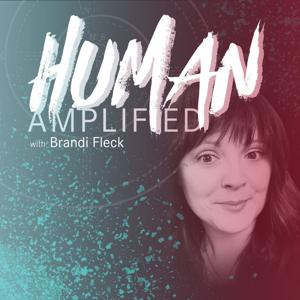


When Human Amplified first launched, the goal was to create honest conversations about what it means to be human. One hundred episodes later, those conversations have grown into something much bigger.
In this special milestone episode, Brandi Fleck and producer Ryan Sauls reflect on the evolution of the podcast over four years, from conversations about trauma and resilience to deeper discussions around healing, creativity, intuition, grief, and connection.
Along the way, they revisit memorable guests, the emotional impact of certain stories, the collaborative nature of art and podcasting, and what they’ve personally learned from producing the show together.
This episode is both a behind-the-scenes look at Human Amplified and a larger conversation about storytelling, emotional growth, and the relationships that shape us.
Before clothing became fast, seasonal, and trend-driven, it was designed around how it felt on the body.
Alyssa Couture (fashion author, designer, and founder of the Healthy Fashion Campaign) shares how her experience in fashion, retail, and design led her to question the role materials play in everyday life. Over time, she began to notice a pattern. Certain fabrics felt better, lasted longer, and were worn more often, while others looked good but never quite felt right.
We explore the idea of fabric frequency, the difference between polyester and natural fabrics, and how clothing choices can influence comfort, breathability, and overall well-being.
If you’ve ever taken off an outfit and immediately felt relief or reached for the same few pieces over and over again, this conversation offers a new way to think about what your clothes are actually doing.
Clif Doyal has spent most of his life in rooms where people weren’t supposed to mix.
He played in integrated rock bands in the 1970s when racial tension still divided crowds inside clubs. He worked alongside Muslim crews in Saudi Arabia as a teenager. He tour managed artists during Donald Trump’s inauguration, then joined the Women’s March the next day.
Clif reflects on political polarization, race relations, social media conflict, cancel culture, systemic racism, and what happens when disagreement becomes strong enough to fracture families and friendships.
We talk about why music can create connection where politics often fails, how curiosity changes the way people relate to each other, and why common ground becomes harder to find when identity starts replacing empathy.
If you’ve felt emotionally worn down by political division, confused by the breakdown of relationships over ideology, or frustrated by how impossible real conversation can feel online, this episode offers a more grounded way to think about human connection in a polarized world.
Most emotional walls are built slowly. They form through judgment, discomfort, self-protection, past experiences, and the quiet conclusions people make about themselves, other people, and the world around them.
In this episode of Human Amplified, communication expert and author Kass Thomas joins Brandi Fleck for a conversation about authentic communication, emotional awareness, intuition, inclusion, and the hidden ways people disconnect from themselves while trying to feel safe, accepted, or understood.
Together, they explore the relationship between communication and energy, why people shut themselves off emotionally, and what becomes possible when you stop treating life as something to defend yourself from and start engaging with it more openly.
People often ask survivors of abuse the same question: “Why didn’t you leave?”
But abusive relationships rarely begin with obvious violence. More often, they unfold slowly through jealousy, control, isolation, emotional manipulation, and trauma bonding over time. By the time the abuse becomes impossible to ignore, many people are already emotionally, financially, psychologically, or physically trapped in ways outsiders don’t fully understand.
In this episode, Shonda Pence (social worker, educator, domestic violence survivor, and co-founder of Mending Fences) shares what it was really like living inside an abusive marriage that began when she was still a teenager.
She opens up about fear, motherhood, PTSD, the long aftermath of emotional abuse, and what it took to eventually rebuild a peaceful life afterward.
Gratitude is easy when life feels supportive. The harder question is whether gratitude is possible during experiences people would normally label traumatic.
Dr. John Demartini explores trauma, grief, panic attacks, emotional resilience, and the role our perception plays in creating suffering. Through stories involving kidnapping, violent assault, prison inmates, family conflict, and fear of death, he challenges the idea that emotional pain is only created by the event itself.
We explore gratitude as more than a mindset practice, along with nervous system balance, victimhood, prolonged grief, emotional healing, and the stories people carry about painful experiences.
If you’ve ever wondered why certain experiences stay emotionally charged for years, he offers a thought-provoking perspective on trauma recovery, gratitude, and healing.
Taylor Rochestie has spent years living with uncertainty. Between international basketball contracts, constant travel, unexpected setbacks, and raising a family across different countries, he’s had to learn how to stay grounded even when life refuses to feel stable.
In this conversation with Brandi Fleck, Taylor explains why he believes happiness is less about circumstances and more about daily perspective. He shares the habits that help him stay optimistic during difficult seasons, how gratitude reshapes the way he experiences challenges, and why trust, self-awareness, accountability, and small consistent actions matter more than chasing perfect outcomes.
The conversation also explores fear, healthy risk-taking, mindset shifts, personal growth, and the importance of surrounding yourself with people who keep you honest. Instead of offering surface-level positivity, Taylor breaks down what it actually looks like to choose happiness every day while still living through stress, uncertainty, and change.
Chronic illness forced Hannah Bethel to slow down long enough to reconnect with her body.
In this episode, the Nashville singer-songwriter, hypnotherapist, and reiki master shares her experience navigating Lyme disease, medical dismissal, holistic healing, and the long process of rebuilding her health through intuition, body awareness, grounding practices, and radical self-trust.
We explore the realities of chronic illness, why learning to listen to the body can completely change the healing process, and how experiences like yoga, solo hiking, and creative vulnerability reshaped both Hannah’s life and her music career.
If you’ve ever struggled to trust yourself, felt disconnected from your body, or wondered how physical healing and emotional healing influence each other, this conversation offers an honest look at what it means to reconnect with yourself from the inside out.
You can eat healthy, work out consistently, and still feel exhausted, inflamed, anxious, bloated, foggy, or completely disconnected from your body.
Before Samantha Lander became a functional diagnostic nutritionist helping people heal chronic symptoms naturally, she spent years struggling with gut issues, hormone imbalance, food sensitivities, addiction, overtraining, and severe inflammation without understanding why her body felt so bad all the time.
In this episode of Human Amplified, Samantha shares the experiences that shaped her approach to health, from chronic illness and eating disorders to addiction recovery and rebuilding her life after federal prison. We explore leaky gut, parasites, brain fog, chronic fatigue, constipation, overtraining, food sensitivities, and why so many people normalize feeling terrible every day.
If you’ve ever wondered why your body still feels off even when you’re trying to do everything right, this conversation offers a grounded and honest look at what could actually be happening beneath the surface.
Modern self-improvement culture often promises peace through discipline, consistency, optimization, and control.
But for many people, trying to follow the “right” routines only creates more anxiety, perfectionism, overthinking, and disconnection from themselves.
In this episode, Rebecca Hulse (author, creative business coach, and former professional dancer) shares how years of chasing achievement, perfection, and external validation eventually pushed her to question whether the systems she was following actually worked for her at all.
We explore the pressure to constantly perform, why creativity and intuition are often dismissed as impractical, and how learning to trust your own knowing can become an act of rebellion in a world that rewards conformity.
If you’ve ever felt exhausted trying to become the version of yourself you think you’re supposed to be, this conversation offers a more human approach to self-care, creativity, authenticity, and being fully alive.
From the publisher's feed
What happens when you outgrow the version of yourself you once needed, but aren’t yet who you’re becoming?
That’s where many of us are right now, individually, collectively, and even in how we relate to the world around us.
Human Amplified has always been about bringing more humanity to daily life; creating more connection, awareness, and inner healing. And like the people listening, the show has evolved too.
Following the natural arc of who we are, where we’ve been, where we’re going, and what it all means, it’s time to focus on waking up—not all at once, and not into something abstract—but into your truth, your power, and the deeper currents shaping your life.
We explore identity, healing, consciousness, and what it means to live as both human and spiritual beings through conversations with storytellers, healers, mystics, scientists, creatives, disruptors, and everyday people navigating this edge in real time.
There’s no hype here.
No fixing.
No one telling you what to believe.
Just honest conversations that create space for your own insight, recognition, and inner shifts to begin.
If you’re listening because something in you is stirring, you’re in the right place.