Humans Manual

Humans Manual

By Andres DiazLeisure
Download on the App Store

Humans Manual episodes

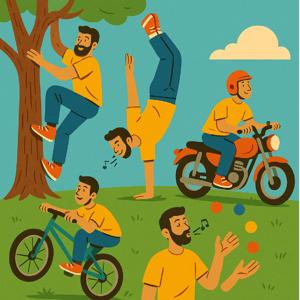
  • Bunny hop: clear curbs on a bike
    Summary:
    The episode by Andrés Díaz teaches how to clear curbs on a bicycle using the Bunny Hop, turning curb fear into fun and emphasizing safety, efficiency, and style. It presents a three-phase technique (load front wheel, level/float, lift rear wheel) with a simple mantra (load, lift, pass), plus preparation tips, equipment considerations, and safe practice spaces. The content covers a detailed step-by-step progression, common mistakes with fixes, a practical practice schedule, safety etiquette, and motivational guidance. It also offers extra tricks, a mini-challenge, and prompts to reflect on progress and fear.
    Key points:
    - Purpose: gain safety (reduce flats), maintain cadence, and improve feel and enjoyment.
    - Three-phase method: load the front wheel, level/float, then lift the rear wheel, with a smooth landing.
    - Preparation: helmet, gloves, seat height, tire pressure, safe practice area, and avoiding distractions.
    - Practice progression: Day 1 front-wheel lift on flat ground; Day 2 cross a line; Day 3 a low curb; daily scheduling.
    - Common mistakes and fixes: look ahead, hips and body movement, avoid yanking the bars, manage speed, and use rear brake lightly if needed.
    - Safety and etiquette: practice away from traffic and pedestrians; film yourself to improve.
    - Extra tips: breath rhythm, hip-driven motion, and techniques to gain height efficiently.
    - Mindset and motivation: supportive phrases, questions to set goals, and small challenges to build confidence.
    Remeber you can contact me at
    8 min
  • Hands-Free Cycling: A Body-Based Guide
    Summary:
    - This episode teaches hands-free cycling, guiding the bike with your body to improve balance, control, and confidence while prioritizing safety and conscious urban riding.
    - Core ideas: start with proper posture and a relaxed, engaged core; look far ahead; use the hips and slight trunk tilt to lean the bike; the neck and eyes guide wheel direction.
    - Step-by-step progression:
    1) Stabilize speed with smooth pedaling
    2) Start with light hands
    3) Guide with the hips (navel as a beacon) and gentle knee/hip input
    4) Practice gradually: loosen one hand, then extend the arm, then release both hands for short moments, always breathing calmly
    5) Build confidence with micro-corrections and looking ahead
    - Handy techniques and tips: avoid pulling the bars; press the inner knee against the frame to cue turns; align neck/shoulders/hips with your gaze; the body is the hidden steering mechanism.
    - Common mistakes and fixes: avoid looking at the front wheel, gripping handlebars tightly, jerky pedaling, and crowding elbows; correct by gazing to the horizon, keeping elbows loose, and maintaining smooth pedaling.
    - Training routine: about 10 minutes of warm-up (diaphragmatic breathing, mobility, core work), 20 minutes of straight-line practice, then hip-back stretches; aim for a three-times-a-week schedule.
    - Braking with control: learn to return to the handlebars safely and practice front-brake braking on dry, straight ground without locking.
    - Basic bike maintenance: proper tire pressure, tight headset, correct saddle height, clean/lubricated chain; good setup saves energy.
    - Mindfulness in motion: ride with three to five slow breaths, stay present, and use breathing to manage tension and focus.
    - Urban context and safety: use the technique only in safe conditions (clear bike lane, straight, no intersections); the hands-free skill is for comfort and efficiency, not for distraction.
    - Practical challenge and training ideas: set micro-goals (soft hands and look ahead, release one hand, small hip corrections) and note sensations; widen practice in turns and with wind, and use walls as safe practice spaces.
    - Benefits: improves stability, posture, coordination, reduces hand/wrist fatigue, and supports efficient, healthier urban cycling.
    - Closing message: the body acts as a steering system; your hips, breath, and gaze guide the ride.
    Remeber you can contact me at

    8 min
  • Bike still: without putting a foot on the ground.
    Summary:
    - Track standing is staying upright on a bike without putting a foot down, relying on balance, not leg power alone. Eyes and gaze ahead (not at the wheel) help balance; a slight incline can aid the motion.
    - Preparation: find a safe, quiet space with a smooth surface and a small incline; lower the saddle a touch; select a middle gear; check tire pressure (slightly lower than road setup) for grip.
    - Technique: position the front wheel in a slight V angle, keep relaxed posture, and use micro-movements. Alternate tiny pedal and brake pressures, using the front brake as an anchor and light rear brake to modulate. Breathe and keep the center of gravity within the base of support.
    - How to practice: start with a wall for support, then progress to unsupported rolling near a stop, looking far ahead and using small pedal/brake adjustments. A practical goal is to hold for ten breaths without touching down.
    - Mental approach and safety: expect nerves, use slow breathing, and practice away from traffic with proper gear and helmet. If the bike wobbles, time movements with the hips; lean toward the side you’re turning.
    - Gear notes: with clipless pedals, start looser and practice barefoot first; fixed-gear bikes feel natural for track standing due to direct pedal-wheel linkage.
    - Benefits: quicker starts, fewer low-speed falls, better balance in roundabouts and intersections, improved confidence and control.
    - Common mistakes: staring at the front wheel, locking elbows, over- or under-gear, abrupt front braking, and not breathing. Fixes include looking ahead, keeping arms relaxed, using brakes gently, and timing with hip movements.
    - Progressive plan: today two 5-minute sessions; tomorrow practice at two safe lights; this week aim for ten breaths without a foot down; gradually increase difficulty (e.g., half-released hand, longer holds).
    - Final mindset: balance is intelligent movement, not the absence of movement.
    - Close: encouragement to subscribe and share, with a reminder that technique enhances enjoyment and safety on any ride.
    Remeber you can contact me at

    8 min
  • Whistling with fingers: stadium-level volume
    Summary:
    - The episode teaches finger whistling at stadium volume, aiming for a loud, clean, and controllable whistle that can cut through noise and draw attention.
    - It notes that finger whistles can reach 100 dB or more and mentions whistled languages as cultural heritage (La Gomera).
    - Practical prep includes clean hands, short nails, slightly moist lips, good posture, mirrors for beginners, and taking breaks to avoid dizziness.
    - Three techniques:
    1) Two-index fingers: specific mouth, tongue, and lip positioning; adjust if air leaks or sound is rough.
    2) Two pinkies: sharper edge and brighter tone; can be easier for people with smaller hands.
    3) Thumb and index in an OK sign: circle placed at the lips’ center; allows holding something in the other hand.
    - Fine-tuning focuses on opening size, tongue position, and air direction; success hinges on angle rather than sheer force and sustaining the whistle.
    - Common mistakes and fixes cover issues like too much opening, loose tongue, jaw clenching, or breaking sound; emphasizes precision over lung power.
    - A 5–10 minute practice routine is outlined, including incremental blowing and recording progress with a decibel app.
    - Extra tips address hydration, posture, outdoor wind considerations, and the idea that good whistling is about tuning rather than forcing volume.
    - Uses and etiquette cover signaling at noisy events, calling friends, summoning a dog, cheering, and appropriate contexts (avoid cinemas, libraries, or serious meetings).
    - Reality check asserts whistling is learned technique, not a gift; with practice, noticeable progress is possible.
    - Safety reminders include avoiding others’ ears, pausing if dizzy, keeping hands clean, and balancing lip tension to protect lips.
    - Reflective tasks invite readers to note what technique produced the first sound, where vibration was felt, and how tone changes with tongue height.
    - The closing frames whistling as a sonic signature that communicates presence and can open doors, with encouragement to try it now and track progress.
    - The episode ends with a call to subscribe, provide feedback, and share.
    Remeber you can contact me at
    6 min
  • Walking on hands: three steps to get started.
    Summary:
    - The episode by Andrés Díaz presents a practical, three-step plan to start handstands: 1) physical preparation and safety (wrist, shoulder, and core readiness; thoracic mobility; warm-up and safe environment); 2) progression with support (wall-based drills like hand walking, small leans, maintaining an active core, aiming for brief balances); 3) consolidation (gradually reducing support, practicing 3–4 days a week with 10–20 second holds gradually extending to 30–45 seconds, plus exercises like the hand stretch and controlled sways, ending with wrist mobility).
    - Throughout, the emphasis is on patience, body awareness, breathing, and safety to avoid injury. The guide also highlights practical tips such as proper hand placement, viewing angle, and turning balance into a manageable routine (including humor to reduce anxiety).
    - The episode notes additional insights: handstands improve proprioception and torso stability, can be combined with other athletic skills, and should be approached slowly with mindful technique. It also mentions a potential ad opportunity and encourages setting concrete, time-bound goals (e.g., 20-second wall balances, freestanding holds).
    - Practical takeaway: establish a simple three-phase routine, train three days a week, and track progress in a training notebook, focusing on wrist mobility, shoulder stability, and balance. Ending with encouragement to share progress and stay persistent through falls as lessons.
    Remeber you can contact me at
    7 min
  • One Hand on the Bike: Balance in Motion
    Summary:
    - The episode “One Hand on the Bike: Balance in Motion” presents balance as a dynamic, whole-body skill crucial for confidence and control on two wheels.
    - It explains that the center of gravity shifts with turns and bumps, and small body adjustments translate to the handlebars. Eye–ear–back coordination and a far-ahead gaze help maintain stability.
    - Four progressive exercises are outlined to practice with one hand off the bar:
    1) at rest beside the bike with one hand on the bar, focusing on breathing and looking ahead;
    2) rolling slowly with one loose hand while keeping eyes fixed on a far point;
    3) gentle hand swap while maintaining a straight line and torso stability;
    4) light counter-impulse by rotating the torso and returning the hand if the bike drifts.
    - Mid-episode prompts invite reflection on pavement type, solo vs. with others, and comfortable progress pace.
    - Key improvement tips include: strengthening the core (8–12 minutes of planks, bridges, back activation), looking far ahead, rhythm and breathing, safety gear and low-speed practice, and deliberate, patient progression.
    - Additional notes emphasize that balance is learned gradually, can transfer from stationary to moving bikes, and that the goal is safety and confidence without sacrificing flow.
    - The episode closes with encouragement to subscribe and share.
    Remeber you can contact me at
    6 min
  • Urban motorcycle: balance and control for beginners.
    Summary:
    - Purpose: A beginner-focused episode on urban riding, aiming to build balance and control in city traffic.
    - Preparation: Emphasizes safety gear (helmet, protective jacket, gloves, sturdy boots) and a quick bike check (tire pressure, tread, brakes, lights). Highlights how correct tire pressure improves grip and handling and notes risks of underinflation.
    - Posture and positioning: Look far ahead, keep a steady torso, relaxed elbows, knees on the tank, and centered weight. In slow-speed corners, shift weight slightly to the inside to plant the wheel; small hip movement can significantly affect steering.
    - Throttle and braking: Front brake provides most stopping power; rear brake aids stability on slippery surfaces or in traffic. Practice progressive braking and smooth throttle with a wide gaze to anticipate others’ moves; slow, controlled deceleration at lights.
    - Daily techniques: Practice in low-traffic areas—start from a standstill with a gentle handlebars turn, maintain steady speed, and brake progressively. Train lane changes with signaling and head up to anticipate others. For U-turns, practice slowly in a wide area before attempting among vehicles.
    - Engagement and branding: Encourages advertising inquiries via [email protected].
    - Facts and mindset: Observation and anticipation help predict unpredictable driver behavior; managing body weight improves tire grip on wet pavement; a well-fitted helmet can reduce injury risk even at low speeds.
    - Participation prompts: Questions about which aspect offers the most security (posture, observation, braking), the most challenging urban situation, and whether to practice on smooth or safe practice spaces first.
    - Goals and habits: Emphasizes that improving balance, control, and technique enhances reaction, response to surprises, and confidence. Encourages adopting small daily habits.
    - Progress tools: Suggests maintaining a practice diary to track easy versus hard maneuvers, braking feel, and stability on different surfaces; use the log to plan focused practice next week.
    - Medium-term plan: A seven-day progression with daily focuses (equipment check, static balance, slalom, progressive braking, city route, posture/gaze, reflection and goals).
    - Realistic expectations: Invites readers to assess if the plan could show improvements within a week.
    - Motivational note: Consistent, safe practice in the city leads to becoming a conscious rider; beginners shouldn’t be discouraged by initial clumsiness.
    - Closing: Thanks and a call to subscribe, provide feedback, or share; look forward to the next episode.
    Remeber you can contact me at
    6 min
  • Take the helm: learn to sail a small boat.
    - The episode “Conquer the Helm: Learn to Navigate a Small Boat” by Andrés Díaz explains that you don’t need a big boat to enjoy sailing, and aims to help you captain a small vessel with confidence through practical, actionable steps.
    - Core goals: develop the ability to helm, understand how your body, the water, and the wind interact, and sail safely in calm waters with a solid safety base and basic maneuvers.
    - Safety first: wear a well-fitting life jacket, check equipment (oars/paddle, tow line, motor fuel/ignition), carry a whistle, and establish hand-signals with companions; evaluate route for obstacles near shore.
    - Posture and helm technique: keep a straight back, feet shoulder-width apart, knees bent, hands on the helm; look ahead to your destination; use smooth, gradual movements and small corrections rather than sharp turns; weight shifts help with straightness and responsiveness.
    - Helm as a coordination tool: small weight shifts aid straight sailing and faster response to changing winds; practice basic maneuvers (moving forward, turning, reversing) first in calm conditions, then increase complexity.
    - Practical drills: begin near shore with a calm area, push forward gently, maintain steady pace, use micro helm adjustments with slight weight shifts for course corrections; stay calm during gusts and continually scan for boats, buoys, and currents.
    - Docking and mooring: approach slowly with minimal speed, align bow with the docking point, gradually turn helm to face the docking point, and finish with slow, controlled movements; reflect on avoiding contact with neighboring boats.
    - Reflection and improvement: prompts on how to stay straight in light current, signaling with more people, and common mistakes; use these to internalize the sailing method.
    - Mid-episode note: practical tip about advertising contact; wind affects helm responsiveness, gusty days require softer, anticipatory movements; keeping gaze on the last buoy before a turn helps cleaner maneuvers.
    - Practical challenge for the week: practice three minutes of straight sailing, then two smooth turns (left and right) with alternating speeds; record observations on stability and helm response, and track progress in a notebook or phone.
    - Summary: the episode covers basic safety, posture and helm handling, departure and mooring maneuvers, and techniques for confident sailing in calm waters, with questions and next-step topics invited for ongoing practice.
    - Guest interaction and closing: invites questions, topic suggestions for future episodes, and encourages listeners to subscribe, share, or provide feedback.
    Remeber you can contact me at
    6 min
  • Knots and heading: Learn to sail a small boat.
    Summary:
    This episode by Andrés Díaz teaches practical and mental skills for navigating a small boat by combining knots, heading (the planned route between sail and rudder), wind-reading, and a structured practice plan. The goal is safety, control, and confidence on the water, with an emphasis on understanding how ropes transmit forces and how to choose and test knots.
    Key points:
    - Knots: three essential starters
    - Figure-eight (eight knot): prevents fraying and acts as a stopper; practice until you can tie it reliably and undo with a gentle pull.
    - Square knot: quick and useful for tying two ends of equal diameter.
    - Clove hitch: provides a secure finish around posts or cylindrical objects; not the easiest to untie but very stable.
    - Knot safety and testing: knots should withstand tension, be easy to undo after serving their purpose, and not appear strained; test at home with a rope to learn how tension changes rope behavior.
    - Heading and wind-reading: heading is a practical route between the compass and the sail; make small, gentle helm adjustments and observe how the boat responds; wind direction affects speed and control, with beam winds reducing speed and forward winds increasing it; use waves and deck vibrations as cues, and aim to let current guide you while staying on course.
    - Rope care and safety: ropes degrade from salt and sun; regular inspection is essential for safe sailing.
    - Practice plan (7 days)
    - Day 1: sketch three knot scenarios (tying off a buoy, finishing a rope, securing to a mooring).
    - Day 3: practice the eight knot daily for 5 minutes.
    - Day 4: heading drill in a room with helm adjustments as the imagined breeze changes.
    - Day 5: practice at a small dock or sailing club under supervision to test knots under moderate load.
    - Day 7: plan a short real outing with a heading goal and reflect on tying, undoing, and steering.
    - Daily: note lessons and common mistakes to correct.
    - Engagement prompts: listeners are invited to reflect on which knot they find most useful, preference for quick-tying vs. easy-undo knots, how wind reading influences routing, and safety needs for unknown waters.
    - Facts and philosophy: knots and sailing blend history, physics (tension in fibers), and practical learning; a few knots and heading concepts can empower confident, prudent navigation.
    - Advert/ outreach note: there is an invitation to advertise, with contact provided in the episode.
    - Recap and next steps: emphasizes small steps, observation, and fearless correction to reach sailing goals.
    Farewell:
    The episode closes with encouragement to subscribe, give feedback, and share with others, inviting listeners to pursue a calm, intelligent approach to wind and rope.
    Remeber you can contact me at
    7 min
  • Juggling for Beginners: Three Tricks for Throwing and Catching
    Summary:
    - Episode teaches juggling for beginners using three simple tricks: straight throw and clean catch, two balls rhythm, and three-ball cascade.
    - Trick 1: Straight throw and clean catch requires elbows in, eyes on the arc, a medium-height gentle throw, and catching with the opposite hand. Do 10 reps focusing on the path rather than the catching hand; breathing tips and common mistakes noted.
    - Trick 2: Two balls rhythm builds flow between hands. Start with one ball in each hand, throw toward the center, then catch with the other hand as it descends. Do three blocks of 20 reps; progress from alternating hands to adding a second throw mid-cycle.
    - Trick 3: Three-ball cascade alternates throws between hands to keep height even and steady tempo. Do three rounds of 60–90 seconds with a minute of rest; use soft balls to protect the wrist.
    - Additional context: Juggling is ancient and the cascade is central to many routines; this episode also promotes the podcast and advertising contact.
    - Benefits and practice plan: highlights mental and motor benefits (hand–eye coordination, focus, working memory). A daily 5–10 minute routine is suggested, with weekly variations to increase challenge gradually.
    - Motivation tips: keep a simple log, set small goals, practice with a partner for timing/feedback, and celebrate progress.
    - Optional extension: offers a 21-day cascade guide and asks which trick to master first.
    - Closing guidance: practice in a quiet space, adjust height/tempo as needed, and consider subscribing or sharing.
    Remeber you can contact me at
    4 min

About Humans Manual

From the publisher's feed

A podcast for those of us who didn’t come with instructions.