
Sign up to save your podcasts
Or

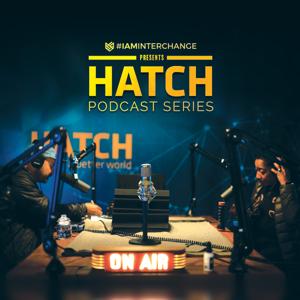


In this podcast, our host Tate Chamberlin discusses the wealth gap and its impact on BIPOC communities and national economic prosperity with esteemed HATCH Montana Lab guests Otho E. Kerr III, Andre M. Perry, and Renay Loper. Otho Kerr, Director of Strategic Partnerships and Community Impact Investing at the Federal Reserve Bank of New York, works to solve crucial environmental, social, and financial problems by advising investments in innovation and equity, moving money to makers. Senior fellow at Brookings Metro, Andre Perry is the author of Know Your Price: Valuing Black Lives and Property in America's Black Cities and the landmark 2018 Brookings Institution report, "The Devaluation of Assets in Black Neighborhoods." He is a nationally renowned analyst of race, education, and inequality. Impact Strategist Renay Loper is the Vice President of Program Innovation at Pyxera Global, an organization working to develop collaborative partnerships that put people at the center of public, private, and social interests to solve complex global challenges.
In this podcast, our host Tate Chamberlin is joined by Ryland Engelhart — co-founder and executive director of Kiss the Ground and producer of the September 2020 film by the same name — for a conversation about his HATCH accelerator lab, regenerative agriculture, the 2023 Farm Bill and Engelhart's multi-pronged mission to help save the planet. Next year, the 2023 Farm Bill — a package of legislation passed once every five years that outlines agricultural parameters around farming and food production — will once again define our path forward. Or back. Engelhart and many like him are particularly passionate about engaging public momentum around the bill because its reverberations have the power to revolutionize farming and food in America on a regenerative, sustainable platform, or to seal the fate of the planet and all the species reliant upon it. Co-creator of the documentary film May I Be Frank and co-owner of the groundbreaking Cafe Gratitude and Gracias Madre plant-based restaurants, Engelhart and his family live in Fillmore, California where they put intention into practice on their own 17-acre regenerative organic farm.
In this podcast, our host Tate Chamberlin reimagines philanthropy with HATCH Rethinking Philanthropy lab facilitator Ada Williams Prince and esteemed lab guests, Asiaha Butler and Kimberly Bryant. Ada Williams Prince is the senior advisor for program strategy and investment at Pivotal Ventures, where she works to accelerate positive social programming and evolution, particularly in the areas of adolescent mental health and empowerment and access for women and girls of color. Former electrical engineer and current founder and CEO of Black Girls CODE, a non-profit that introduces girls of color to technology and computer science, Kimberly Bryant has grown her grassroots initiative since 2011 to reach over 30,000 young women worldwide. And Asiaha Butler, co-founder and CEO of the Resident Association of Greater Englewood or R.A.G.E. in Chicago, works to reinvigorate the greater Englewood neighborhood by mobilizing "residents and resources to force a change in the community." Through the voices and experiences of these commanding women of color, this podcast provides a glimpse of the struggle, the passion, and the power behind change and its makers.
I'm Tate Chamberlin, and in this podcast, I discuss the future of education with HATCH education lab coordinator, President Philomena Mantella of Grand Valley State University, and esteemed lab guests, Ty Hobson-Powell, and Zineb Mouhyi. President of Grand Valley State University in Allendale, Michigan, Philly Mantella brings 30 years of higher education experience to both her university role and her work transforming inter-institutional collaborations and designing partnerships for diversity in learning.
The Future of Education HATCH lab was centered around accelerating Mantella's passion project REP4 (or rapid education prototyping), an alliance of six higher education founding partners working together to transform the education system into a student/learning-centered model. Lab invitee, child prodigy, and founder of Concerned Citizens Demanding Change, Inc., Ty Hobson-Powell joins the discussion as a lifelong activist and advocate intent on disrupting systems and structures that no longer serve the global community.
Photos by MT Shots Photography
Copy by Evil Red Pen
How does a nation reconcile a heinous history of colonialism, slavery, murder, rape, and thievery to itself, let alone the generations that have sprung forth from those it harmed? There are fair arguments for reparations. There are equally persuasive challenges to make the past just that and to come together as a global community of differently colored, shaped, and sized Homo sapiens stumbling through existence with good intentions, but a particular aptitude for making trouble. Humanity has, after all, a rather unadulterated history of exploration and colonization, regardless of origin, ethnicity, and religion; this isn't American-made.
On the contrary, there are a host of social, political, ethnologic, economic, and sexist structures and constructs in place to ensure that this manor of degradation, exploitation, and annihilation of the "other" continues. How does humanity take down what was, address what is, and build anew?
I'm Tate Chamberlin and in this podcast, myself and a panel of esteemed guests including, business owner Billy McWilliams, indigenous political activist Terry Bradley, indigenous documentary filmmaker Ivy MacDonald, and libertarian entrepreneur Kyle Mack discuss America's legacy of oppression and genocide, globalization versus tribalism, reconciliation, perspective, and the work needed to ensure a collective future that does not repeat the past.
Indigenous activist and documentary filmmaker Ivy MacDonald is a study in straddling multiple worlds, marrying sometimes contrary identities to create one "beautiful Blackfeet bitch." Born on the Blackfeet Reservation in Browning, Montana, Ivy is defined by a home as much about place as people. And, while her identification with the LGBTQ community would presumably further fracture an identity already enmeshed in the space between conflicting perspectives, she owns her voice and the range of presence and purpose she embodies as a powerful queer indigenous woman in a world intent on marginalization.
As co-founder of the Bozeman Tea Party, Henry Kriegel is no stranger to political activism or the controversy that can surround it. Born of eastern European Jewish emigrant parents who fled post-WWII Germany with their lives and little else, Kriegel is a first-generation American and a firm believer in the freedoms this country promises, providing some critiques of the governmental bodies sworn to protect them.
This interview was conducted in October 2020, over a year ago. While circumstances and conditions changed significantly since then, the issues and point-of-view shared are still relevant. Additionally, the views expressed by Mr. Kriegel are his own and not necessarily reflective of any organization with which he has an affiliation.
Photos by Ben Johnson
Copy by Evil Red Pen
Indigenous activist Terry Bradley has his hands and heart in a lot of pots. Whether he's advocating for the LGBTQ community, igniting a passion for the democratic process with Forward Montana, or pinpointing colonizers' roles in the desecration of "the other" and their responsibilities going forward, Bradley has a lot to say and it's not all met with an accepting acquiescence. While he challenges whether we can make America great again, he argues that we have the capacity to achieve that greatness for the very first time – and that it's worth the fight.
In this podcast, Interchange Founder Tate Chamberlin and Terry Bradley discuss identity, colonization, the challenge of tribal reconciliation, and hope on the horizon.
Photos by Ben Johnson
Copy by Evil Red Pen
What began for Billy McWilliams as a simple move to follow family, ended halfway across the world in a small southwest Montana town. Since his relocation with twin brother Robert decades ago, Billy has worn many hats, the most fitting of which as the owner of Erotique, an adult boutique in the downtown area. Meager beginnings in the late '80s as the store manager ignited Billy's passion for sexual health, empowerment, and advocacy. Through a range of applications and arenas – from providing HIV outreach and awareness during the height of the AIDS epidemic to inviting MSU's incoming freshman (and their blushing parents) to embrace their sexual identities and independence – Billy has become a warm example to an ever-evolving Bozeman demographic of what is possible when inclusivity and compassion drive action. And now, he's set his sights on a bit wider circle of influence through the Great American Orgasm. Billy's newest altruistic venture is a simple answer to Trump-era divisiveness and COVID-induced tension: a wave of pint-sized vibrators sweeping the nation and providing a whole lot of sexual healing.
What happens when a tall drink of water, a self-motivated mom to the masses, and a passionate walking dick joke get together? Unparalleled improvisation, challenging classes, and a comic community defined by laughter.
Well, that is, in any time other than the present. When Last Best Comedy founders and veteran improv artists Annie and Levin O'Conner and Molly Hannan banded together to develop a performance and training venue in early 2020, the last thing they expected was that contagious laughter would be the end of comedy.
Just days before they were due to sign the lease on their new space, the country shut down in the wake of rising numbers and a pandemic that has proven to be the cruelest and most persistent of hecklers.
From the publisher's feed