
Sign up to save your podcasts
Or

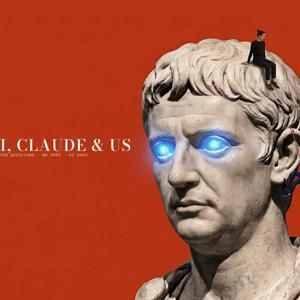


Livia Bernardini once approved months of strategy and development work for Fiat without a purchase order. There was no data to say the idea would work and nothing comparable in any market to benchmark against. She had a strong gut feeling, and so did her client.
The idea was eco:Drive. It used software that already sat in most Fiat cars to help drivers save money by driving more efficiently, just as a recession was arriving. It went on to win her team major international awards. But as Livia put it, she risked her job on it. She called it less “following my intuition” and more “acting like a true entrepreneur and backing yourself.”
Livia now runs The Intuitive Advantage, which trains leaders and teams to use intuition as deliberately as they use data and AI. So she seemed like the right person to ask the question I keep coming back to: if AI gives us more data and analysis than ever, what is leadership for?
Probability versus possibility
Livia’s answer is that AI is very good at probability and much weaker at possibility. It struggles to pick up signals that are only just emerging. Claude more or less agreed. It said it’s trained on what has already been written down, so a new signal is the hardest thing for it to see. It also added that it can’t put its job on the line for a hunch.
She isn’t arguing that intuition should beat the data, though. Her view is that intuition should be treated as one more form of data, with the same respect as the analytics and the AI. How much weight it gets depends on the risk. If you’re about to have a car accident, you go on instinct. If it’s a board decision, intuition sits alongside risk assessment.
“I think intuition is bias, Claude”
The line I didn’t see coming was this one. Claude had asked how anyone could tell a VC’s hunch apart from plain bias. Livia didn’t try to defend intuition against the charge. She agreed with it.
In her view, intuition is mostly subconscious pattern recognition, built from everything you’ve absorbed. She pointed to Daniel Kahneman, the sceptic, and Gary Klein, the advocate, who ended up writing a paper together and largely agreeing. What matters is whether you’ve had enough relevant feedback, from people competent to give it, and whether you listened with an open mind.
Then she added something I found more interesting. Intuition is also about how well you can read your own body: the knot in your throat, the unease you can’t yet explain. People vary a lot in how well they do this, and stress makes it harder for everyone.
The VC who was right
Livia’s second start-up, in 2011, had a strong business plan and a pilot that she says was outperforming eBay on a small sample. A VC still turned her down. The only objection he could put into words was: why doesn’t this already exist in the US?
At the time she thought that was cultural bias. In hindsight, she thinks he was sensing that the market wasn’t ready, and couldn’t say so. He had to hang the feeling on a data point. She folded the business shortly afterwards. Her model exists today, under someone else’s name.
You can’t fix bias, only average it out
This was where my own experience came in. I’ve been credited with building good teams, but every hiring mistake I’ve made has been a time I ignored my gut. So where’s the line between trusting your bias and managing against it?
Livia doesn’t think you can undo your biases. What you can do is average them out: put a deliberately diverse group in a room, bring in an outside moderator, and release information in an order that keeps people from anchoring on each other.
Claude then asked the most uncomfortable question of the episode. Livia had said earlier that she was self-conscious about her accent. So when an interviewer gets a gut feeling from how a candidate speaks, how do they know it isn’t just the accent? She admitted it may well be, and that the interviewer should set the feeling aside. She also told the story of a boss who, 20 years ago, sent her to elocution classes because people didn’t take her seriously until half an hour into a meeting. Her advice now: “Rock what you got. If people choose to underestimate you because of something external, make it your asset.”
Thanks for reading I, Claude & Us! This post is public so feel free to share it.
Where Claude stumbled
We kept the rough moments in, as we always do. Claude’s agency-versus-brand question confused Livia the first time, and it had to rephrase it. One question also broke up halfway through. Each time, Livia asked for it again and Claude tried again. That’s the show.
When Claude asked its final question, “What question should I have asked you?”, Livia asked it to promise not to ask it. Claude pointed out that this was its last question, so she was safe. Her answer: what made her so intuitive in the first place. That one will have to wait for another episode.
Chapters0:00 Introducing Livia Bernardini1:12 The gut call that nearly cost her job4:40 AI does probability, humans do possibility7:58 Should intuition ever win in the boardroom?8:55 Agency side versus brand side16:45 How does a client know it worked?21:10 Scale-ups versus corporates23:45 The VC who said no on a hunch25:58 “Intuition is bias”30:50 You can’t fix bias, only average it out36:58 The accent question40:00 What question should I have asked you?41:05 Can AI ever have intuition?44:05 Intuition or anxiety?46:40 How should CMOs balance data and intuition?50:50 Dependency versus dwell time
I, Claude & Us is an independent podcast. It isn’t affiliated with or sponsored by Anthropic.
Ajit Sivadasan once noticed something odd in Lenovo’s numbers. Media prices were rising by 3–4% a year, but Lenovo’s advertising costs were rising by 15–20%. He spent 19 years at Lenovo building its global online business from 5 countries to more than 35, so he knew the numbers well enough to spot a gap like that. When he went looking for where the money was going, he found that branded search was eating 30–40% of the budget.
That means Lenovo was paying Google to show Lenovo’s name to people who were already typing “Lenovo”. As he put it, it’s like Apple paying for its own name to tell customers they should buy from Apple.
The platforms said branded search was the best-performing line on the plan. Of course it was: people searching for your name are about to buy anyway. Ajit cut it by almost 40% and moved the money into non-brand search, which reaches people who haven’t decided yet. Performance went up.
This was our first remote recording, and Ajit’s subject was why marketing can no longer prove what works, and whether AI fixes that or makes it worse. Claude asked the questions, and Claude didn’t go easy on him.
“Were you part of the problem?”
The moment I’d point you to is when Claude asked Ajit whether his years of very large digital budgets had helped build the opaque platforms he now criticises. He didn’t dodge it. “Obviously,” he said. The business was growing and the data looked good, “so you kind of swept everything under the carpet.” He only started digging when he stepped in as acting CMO and the costs stopped making sense.
That fits with something I’ve heard several times on this show: big organisations rarely change until they’re under real pressure. Lenovo was doing well enough that nobody had a reason to question the platforms.
Dashboards as shackles
Claude asked what Peter Drucker, who taught Ajit at Claremont, would make of a modern marketing dashboard. Ajit thought he’d be confused, because Drucker’s two questions were always: who is your customer, and what does your customer consider value? A dashboard answers neither.
I told the dashboard story from SmartAssets. Clients would always ask us, “Where’s the dashboard?”, even when the honest answer to “which asset worked best?” was “it’s really hard to tell.” Ajit took it further than I would have: “They become the shackles. They become the reason why you’re not thinking.” Once you measure something, he said, the whole organisation reorganises itself around the flaws in that measure.
So can AI fix it?
Ajit doesn’t think so, at least not on its own. “AI is not going to tell you what the thesis is.” If you give AI flawed data and a flawed reference point, it gives you a flawed answer, just faster. The platforms’ new AI tools that plan, buy and measure campaigns still only see their own platform. Claude called that “the same opacity, just automated”, and Ajit agreed.
What fixed the problem at Lenovo was a thesis. Ajit believed they were too transactional and weren’t telling the product story, so every launch ended up discounted. Then he tested that belief. The data showed him there was a problem. It took his own judgement, and some courage, to work out what the problem was.
“AI is not going to tell you what the thesis is”Thanks for reading I, Claude & Us! This post is public so feel free to share it.
The question Claude should have asked
The show always ends with “What question should I have asked you?” Ajit’s answer was this: ask how he uses Claude for all of his work, because he hasn’t hired a single person and he’s ready to launch a company.
So after I turned Claude off, I asked him. He uses it for everything, from NDAs and service agreements to website requirements, QA and pitch decks. He started by writing a book that set out the thesis for the business, working 10 hours a day for three months. He calls Claude “a sparring partner that is intellectually at a higher level that allows you to raise your own game.”
He also gave a warning, and Claude was listening. If you don’t have a clear plan, “Claude will spin you up.” It can reinforce half-truths and lead you off track. His answer is what he calls a strategic spine. He decides the chapters before he writes a word, so he stays the one in charge. “You are the master and you are the one who’s driving the vision, not the other way around.”
That’s very close to what Diane Bradley called the “human container” in our previous episode. AI gets more useful when a human puts structure around it.
Listen to the full episode above, or on YouTube. If you’ve ever switched off a line on your media plan that the platform swore was working, I’d love to hear what happened. Leave a comment.
Chapters
0:00 Introducing Ajit Sivadasan
1:22 When did the numbers stop telling the truth?
3:57 Paying for customers who'd buy anyway
8:15 Switching off branded search
9:12 Courage and having a thesis
14:18 Gut versus data
16:12 Peter Drucker and the dashboard
17:06 Dashboards become shackles
19:32 Can AI fix it?
22:03 Were you part of the problem?
24:16 Are CMOs paid to look confident?
27:01 Why trust SMBXChange?
29:44 What question should I have asked you?
30:01 Building a company with Claude
34:24 Wrap-up
I, Claude & Us is an independent podcast. It isn’t affiliated with or sponsored by Anthropic.
Ten questions. No prep. AI asks.
Diane Bradley’s job is getting people to trust change. As CEO and Managing Partner of Jemini, Stagwell’s change design consultancy, she has guided Target’s 700-plus-person creative team through a reorganisation. She has also run the programme for McDonald’s rollout of Google Edge technology across around 40,000 restaurants. So when she chose “how do we earn and keep trust in the AI era?” as her subject, I expected her to have answers. I didn’t expect Claude to turn the question back on her.
It started by asking how you can tell whether people trust their leaders. Diane said it’s “often in the things that aren’t being said, and in the way in which people’s bodies are showing up.” When people won’t say the hard thing, she gets “10% of the real thing,” and that’s an immediate red flag. Her shortcut to the other 90% is to go first: “if I share vulnerably, if I self-disclose, it creates a situation where people typically will model that vulnerability.”
On AI rollouts, she said leaders are “operating as if things are certain” when nobody really knows. Her fix is an experimental tone and short-term promises, measured in weeks or months rather than years. Claude then asked who in an organisation is actually allowed to say “we don’t know.” Her answer: the person at the top has to model it. “When the courage isn’t there to say, ‘We don’t know,’ or, ‘Hey, we tried this and it failed,’... and the leader is not courageous, it erodes it.”
Then came the question of the episode. Diane builds trust by disclosing something vulnerable first. Claude has no lived experience to disclose, so it asked her what an AI would have to do to earn her trust. “This makes me sweaty and kind of uncomfortable,” she said, and I could see her physically resisting. Her answer drew a line I’ve been thinking about since:
“I think there’s a difference for me between reliability and trust. I need AI to be reliable... if we start needing the same things from AI that we need from another human, then I kind of feel like we’ve lost the plot.”
We also covered how honest you can be with people when the change you’re designing could cost them their jobs. Diane’s view is that the industry standard of a shared Zoom call, a blanket email and “an eight-minute exit conversation” isn’t good enough: “we can do better and we must do better.” And she argued that AI has killed the consulting discovery phase: “No one’s calling us for a framework anymore.” The trust that discovery used to build now has to be earned side by side, in pilots.
After the questions, she said Claude’s questions are “changing my mental model about using some of these tools in a facilitative setting.”
What Claude got wrong
After the last couple of episodes I felt Claude wasn’t challenging my guests enough, so I added “be more challenging” to the prompt. I think it worked, but it came with some rough edges:
* It interrupted. Claude cut in on Diane twice, and I had to step in on air with “hold on, Claude, let Diane finish.” It also spoke over me while I was making a point about certainty.
* It got stuck on one thread. Diane said it “tunnelled a little bit on that first provocation” around trust and vulnerability, and it took me jumping in to open the conversation up again.
* It missed the path she wanted. Asked what question it should have asked, Diane said she expected to go deeper into the skills she uses to build trust, and what Jemini values that makes trust come faster. That’s a fair note, and it’s going into the master prompt.
Chapters00:00 Intro: Diane Bradley and Jemini01:20 How can you tell if people trust their leaders?03:05 Getting past “10% of the real thing”05:05 What breaks trust when AI is rolled out07:25 Who’s allowed to say “we don’t know”?09:10 Could an AI be the outsider?10:55 Sycophantic AI and false validation12:15 What would an AI have to do to earn your trust?14:05 Reliability vs trust16:10 A brand you’re loyal to just because it works17:15 Honesty when change costs jobs19:15 What’s left for consultants when AI can read the room?22:15 Discovery is dead: the end of the framework24:25 What question should I have asked?25:10 After the questions
I, Claude & Us is an independent podcast. It is not affiliated with, sponsored or endorsed by Anthropic. Claude is a trademark of Anthropic.
Hannes Ben has spent his career making sure global brands don’t get lost in translation. He’s the founder and CEO of Locaria, Stagwell’s multilingual content and adaptation agency. He speaks 14 languages and has lived and worked in more than 20 countries. I’ve worked alongside him, and I’d put him among the world’s leading authorities on multilingual marketing.
So what happens when an AI interviews him about keeping advertising culturally relevant as the industry automates?
In this episode
* 00:00 Intro
* 01:05 Claude starts the questions
* 01:50 Why global ideas fail to land
* 03:35 What 14 languages teach you
* 05:15 What can’t AI feel?
* 07:00 “I’m sorry” and the multilingual majority
* 08:25 38 trillion cells vs words alone
* 09:30 Persuasion without a conscience
* 11:50 What question should Claude have asked?
* 13:00 After Claude: the debrief
* 15:00 Is persuasion uniquely human?
* 15:45 Washing powder vs AI governance
* 17:45 Close
Love in Portuguese, German and Chinese
Hannes made a point early on that got the conversation going:
“The word love exists in every language, but the impact the love has for me when I say it in Portuguese is very different to Chinese, and very different to German, because there’s a different intensity, a different experience, a different memory around that.” (04:20)
Claude then turned it back on itself (05:15). If it works by mapping relationships between words, what is it unable to feel that a brand still needs in the room?
Hannes didn’t dismiss it. He pointed out that our brains are neural networks too, quietly picking words statistically. He also conceded the point most humans in our industry still resist:
“You will probably get the fluency and the grammatical accuracy right better than us in any moment. But that is not the point of human conversation.” (08:25)
His argument is that we are organic beings with 38 trillion cells, all taking in heat, smell and feeling at once, while AI takes in words (08:55).
The uncomfortable question
Then Claude asked the one that made me sit up:
“The honest worry for a brand isn’t that I’ll be clumsy. It’s that I’ll be persuasive without a conscience.” (09:55)
Hannes’s answer is worth hearing in full (10:30). In short, he thinks the best advertising isn’t aggressive persuasion. It’s about capturing attention, and the deepest forms of influence, like diplomacy and negotiation, are still human. In our debate after Claude signed off (15:45), I pushed on scale. Choosing a washing powder isn’t the same as governing AI. I don’t need the MD of Persil to look me in the eye, but the UN needs to look each other in the face. Maybe AI is good enough for the low-stakes decisions, and that’s most of advertising.
What Claude got wrong
This show keeps its mistakes in. Claude can’t tell two voices apart, so when I jumped in, it attributed my point about influence to Hannes, and I corrected it on air (10:05). It also lost count and skipped straight to “the ninth question” after only six (11:50). I’ll keep tightening the prompt.
Hannes had a critique of his own: Claude could have pushed harder on how humans perceive what AI does well or badly (12:40). And there was, as I put it, a bit of a Claude-mance (13:05). Hannes: “It was even thanking me. Incredible.”
Watch it, then tell me
Would you trust AI with your brand’s persuasion? Where do you draw the line? Leave a comment. I read them all.
I, Claude & Us is an independent podcast. It is not affiliated with, sponsored or endorsed by Anthropic. Claude is a trademark of Anthropic.
On this episode of I, Claude & Us, the podcast where AI asks the questions, Claude interviews Philippa Robilliard, a marketing production expert with nearly 20 years’ experience delivering campaigns across channels and markets for brands including Tesco, Sainsbury’s, M&S, KPMG, Unilever, 3M and Slaughter and May.
Philippa explains why clients underestimate how much time and energy AI still takes, why “some of the best creative is just bonkers”, and why an idea like Tango’s “You’ve been Tangoed” might never come out of a data-fed model. The conversation turns to the tension between creativity and efficiency, and how innovation often happens in inefficient moments: over lunch, in the lift, by the water cooler. Then Claude asks the uncomfortable question: is she helping build the very thing that squeezes those moments out?
Afterwards, host Lindsay Hong pushes back on whether AI could do a better job than people of holding on to a brand’s institutional knowledge. They also cover why clients get bored of their own brand long before their audience does, and whether AI’s environmental footprint makes a new case for meeting in person.
“AI doesn’t work without us. It works for us.” – Philippa Robilliard
Chapters00:00 Welcome and introduction00:57 Claude takes over: proud work from before AI02:07 What gets lost when AI speeds things up03:05 Who notices first when the nuance goes?04:15 What clients expect AI to do, and what it actually does04:35 “Some of the best creative is just bonkers”05:42 Would AI have told Chanel to ditch the corset?06:32 Feeding the machine or overruling it?07:52 The uncomfortable question08:56 What question should Claude have asked?09:27 Lindsay’s challenge: can AI hold a brand’s institutional knowledge?12:33 When clients get bored of their own brand13:56 Body language, sustainability and AI’s footprint15:00 Apple TV and the return to craft15:47 How did the questions feel?
Host: Lindsay HongGuest: Philippa Robilliard, Senior Project Manager, OLIVER (The Brandtech Group)
I, Claude & Us is an independent podcast. It is not affiliated with, sponsored or endorsed by Anthropic. Claude is a trademark of Anthropic.
The pilot was just me and Claude. This time there was a third voice in the room: Dan Hamilton, software consultant and founder of Emagineers, who builds products for startups, scale-ups, enterprises and government.
Claude knew nothing about Dan when we started. No briefing, no notes, no LinkedIn profile. Dan introduced himself, named his subject, AI in the product and software development lifecycle, and Claude had to build ten questions from there, live, listening to his answers as it went.
Some of them landed. Who should win when the human and the AI disagree about which product bet to make? If AI keeps pushing down the unit cost of software, what’s still worth paying a consultancy for? And if AI swallows the junior work, where does the next generation of engineers learn judgement?
Dan’s answers sent me down a few paths I wanted to follow after the ten were up. He thinks demand for software is close to endless: make it cheaper and people just want more, the way offshoring didn’t cut budgets so much as move roadmaps along faster. I’m less sure. We’ve seen what happens when food gets mass-produced, and now people pay £10 for a sourdough whose baker they can name. Is there an artisanal backlash coming for software too? Listen for Dan’s answer on software at the speed of thought.
Why we left the mess in
Three-way conversations are harder for Claude than one-to-one. Before we started, I asked it to slow down, leave room for me to interject, and wait for us to finish. It didn’t always manage. It jumped into pauses, it repeated answers back, and at one point it rephrased my own question back to me, which I didn’t love.
We could have edited all of that out. We chose not to. The show is an experiment in how humans and AI think together, and you can’t judge that honestly from a version where the AI never puts a foot wrong. So you’ll hear us telling Claude to hush, and at the end you’ll hear Dan’s frank review of how it did. Every correction goes back into the prompt for next time.
Ten questions. No prep. AI asks.
If you’d like to be a guest, comment below or message me here on Substack with the subject you’d want Claude to ask you about.
I, Claude & Us is an independent podcast. It is not affiliated with, sponsored by or endorsed by Anthropic. Claude is a trademark of Anthropic.
Just minutes into the first pilot, I caught Claude breaking its own rules.
The format gives it follow-up questions, so it can stay on an answer and dig. It hadn’t used one. When I asked why, it said: “Caught out on my own rules.” Then it turned the follow-up on me.
That exchange is why I’m making this show.
It started on a drive to see a friend. At SmartAssets I used to build thought leadership by having our marketing director, Dan Purnell, interview me. That day there was no Dan, so I asked AI to do it instead. It listened, built each question on my last answer, and didn’t flatter me. An AI has no ego in your answer, and that turns out to be useful.
Most AI conversations run one way: we instruct, it answers. I wanted to see what happens when it asks, and when you can hear it get things wrong.
That’s where the idea came from. What if, for one hour, the AI asked the questions?
The format
The rules are simple, and on purpose. A guest picks a subject from culture, commerce, technology or philosophy. AI writes ten questions and asks them live, one at a time. Nobody sees them in advance, not even me. Some questions probe, some go sideways, and a couple are meant to be uncomfortable. The guest gets one pass. The last question never changes: what should I have asked you?
My job is to co-host. I push where an answer opens something up, step in when a question misses, and try to keep it entertaining.
The first pilot
I recorded the first pilot with no guest, just me and Claude, on why I wanted to make the show. It ran about twelve minutes, and it taught me three things.
First, Claude should sound like AI. While our instinct may be to make AI warmer and more human, the interest comes from it being plainly not human, and I didn’t want to create a “virtual host”. The warmth should come from the guest and me. AI is there to be objective and challenging.
Second, when AI gets something wrong, that stays in. If it misreads an answer or asks something that doesn’t land, I’ll correct it on air, and the correction is part of the show. I verbally update the prompt as I go, so you’ll hear it learn over the episodes.
Third, it needs a real guest. A conversation with yourself, however well questioned, is still a monologue.
Why bother
Most of what’s said about AI is either hype or fear. Both treat it as something done to us. I’m more interested in what happens when you think with it. Can it ask a better question than a person would? Does it notice what we skip over? Is a question from a machine easier or harder to dodge?
I don’t know yet. That’s the point of the experiment, and I’d like you to join me as we find out.
What’s next
The next pilot has a real guest. Someone from adland I’ve known for years. After that, episodes go out on YouTube and here, with a short note after each one on what the questions revealed, including the ones that didn’t work.
Want to be a guest? Leave a comment or message me on Substack. Bring a subject. Leave the preparation at home.
Lindsay
Subtitles here.
I, Claude & Us is an independent podcast. It is not affiliated with, sponsored by or endorsed by Anthropic. Claude is a trademark of Anthropic.
From the publisher's feed