
Sign up to save your podcasts
Or



Boundaries do not mean you have to shut out the entire world just to protect your progress. You can maintain a completely open heart while still requiring explicit permission before anyone steps inside. Protecting your peace means recognizing that access to your life must be earned. You can decide who hears the rest of your story. You can enforce a limit without becoming cruel. And you can let a safe person know that you still want connection, even when the terms are changing.
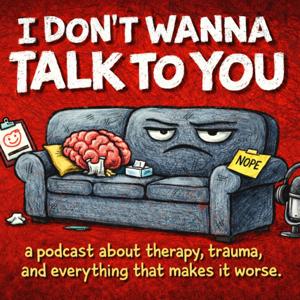
I Don't Wanna Talk To You!—conversations about therapy, trauma, and everything that makes it worse. We're glad you're here—even if you didn't wanna be.
Visit https://www.visions-counseling.com/ to learn more about our team, services, careers, and approach.
BOUNDARIES
Boundaries define the physical, emotional, and psychological limits that protect personal integrity and mental well-being. When individuals begin personal growth, establishing clear boundaries often triggers resistance from systems accustomed to their compliance. Clarifying boundaries allows individuals to preserve their autonomy while maintaining healthy relationships, distinguishing between an authentic request for connection and an inappropriate assumption of entitlement.
RECOGNIZING EMOTIONAL ENTITLEMENT AND PRESSURE
Emotional entitlement occurs when an individual assumes an unearned right to another person's immediate attention, emotional labor, or private disclosures regardless of consent. When a limit is established, entitled reactions frequently manifest as guilt induction, persistent negotiation, or emotional retaliation. Identifying these behavioral dynamics helps individuals maintain necessary limits without misinterpreting routine relational friction as personal failure.
SELECTIVE VULNERABILITY AND PRIVACY MANAGEMENT
Selective vulnerability involves choosing what personal information to disclose based on demonstrated trust, relational safety, and situational relevance. Privacy differs fundamentally from secrecy, as withholding sensitive details protects emotional stability rather than concealing deceptive behavior. Individuals maintain clinical autonomy by pacing their disclosures, ensuring that personal vulnerability remains an intentional choice rather than an unmetered obligation.
LEGAL & CLINICAL DISCLAIMER
This podcast and show notes are for informational and entertainment purposes only. We’re clinicians, but this is not therapy, not medical advice, and not suitable for professional care. Listening to this podcast does not establish a therapist-client relationship. If you’re in crisis or need immediate support, please contact local emergency services or a mental health professional in your area.
CBRS Community Leadership? What's that? Telling someone you're a Community-Based Rehabilitation Specialist will instantly short-circuit a casual backyard barbecue the second someone asks what you do for a living. Most folks think mental health care begins and ends behind closed clinical doors. But survival skills are forged out in the messy real world, right where daily anxiety actually happens. CBRS community leadership isn't about being a glorified taxi service or babysitting someone's comfort zone. It's about stepping directly into the real world with somebody and saying, 'You're terrified, but you're safe—now let's take the next step.'
I Don't Wanna Talk To You!—conversations about therapy, trauma, and everything that makes it worse. We're glad you're here—even if you didn't wanna be.
Thanks to our special guest, George Larsen, CBRS for making time to share his thoughts about community leadership.
Visit https://www.visions-counseling.com/ to learn more about our team, services, careers, and approach.
CBRS COMMUNITY LEADERSHIP
Community-Based Rehabilitation Services (CBRS) deliver structured, goal-oriented behavioral interventions directly within natural living environments. Clinicians and specialists collaborate to generalize coping mechanisms from clinical settings into everyday community interactions. The intervention prioritizes functional independence, social integration, and self-advocacy for individuals navigating persistent psychiatric or developmental barriers. Consistent modeling equips participants with measurable tools for autonomous daily living.
TRANSLATING CLINICAL INSIGHT INTO FUNCTIONAL INDEPENDENCE
Psychotherapy frequently provides essential cognitive clarity and emotional processing behind closed doors. However, intellectual comprehension alone does not resolve the paralysis of social anxiety or practical avoidance. Rehabilitation specialists bridge this operational gap by accompanying clients into retail systems, transit networks, and workplace settings. Guided exposure transforms abstract psychological concepts into repeatable daily habits.
NAVIGATING THE AVOIDANCE LOOP THROUGH GRADED EXPOSURE
Avoidance provides immediate relief from acute distress, inadvertently conditioning the brain to perceive normal social friction as danger. Over time, this negative reinforcement shrinks an individual's operational world and reinforces perceived helplessness. Community-based interventions disrupt this self-defeating pattern through incremental exposure tasks and consistent boundary accountability. Sustainable recovery develops when clients discover that emotional discomfort does not signify genuine personal danger.
LEGAL & CLINICAL DISCLAIMER
This podcast and show notes are for informational and entertainment purposes only. We’re clinicians, but this is not therapy, not medical advice, and not suitable for professional care. Listening to this podcast does not establish a therapist-client relationship. If you’re in crisis or need immediate support, please contact local emergency services or a mental health professional in your area.
Reconciliation demands behavioral change and actual evidence, but forgiveness is strictly an internal process. Just because you choose to release the resentment doesn't mean you should reach out and hold hands with a monster. Sometimes the healthiest choice you will ever make is loving someone from a permanent distance. Reconciliation requires evidence, not just an apology. You don't owe anyone access to your life just because they finally decided to say they're sorry.
I Don't Wanna Talk To You!—conversations about therapy, trauma, and everything that makes it worse. We're glad you're here—even if you didn't wanna be.
Visit https://www.visions-counseling.com/ to learn more about our team, services, careers, and approach.
RECONCILIATION
Reconciliation is the collaborative process of rebuilding trust and safety within a previously damaged interpersonal relationship. Unlike individual emotional processing, it requires active participation, transparent accountability, and sustained behavioral change from both parties involved. When one individual expects access without demonstrating measurable accountability, the dynamic shifts from genuine restoration to relational pressure. Healthy connection cannot exist without established safety protocols.
Forgiveness operates as an entirely internal neurological process designed to release the chronic physical stress of resentment. It does not require contacting the offending party, nor does it obligate an individual to re-establish vulnerable contact. Conflating internal emotional release with external relational access frequently leads to re-traumatization. Clinical recovery prioritizes emotional autonomy, allowing individuals to wish others well while maintaining firm, non-negotiable boundaries.
DISTINGUISHING INTERNAL FORGIVENESS FROM EXTERNAL ACCESS
Interpersonal boundary setting is frequently misinterpreted as punitive retaliation by individuals accustomed to unconditional access. In clinical reality, establishing distance is a protective adaptation that preserves nervous system regulation. When individuals repeatedly cross personal thresholds, reducing contact functions as a predictable consequence rather than intentional revenge. Preserving psychological safety requires accepting that others may actively mischaracterize healthy limits as hostile rejection.
NAVIGATING GRIEF AND SELF-CREATED CLOSURE
Grieving a living person represents one of the most complex emotional challenges in trauma recovery. Individuals often find themselves mourning the unrealized potential of a relationship rather than the tangible reality of the connection. Genuine closure rarely arrives through external apologies or delayed validation from family members. Healing occurs when clients grant themselves permission to validate their own reality and release expectations of future repair.
KEY TOPICS
Forgiveness vs. Reconciliation, Boundaries vs. Revenge, Grieving Living Relationships, Threat Detection, Emotional Autonomy, Trauma Recovery
LEGAL & CLINICAL DISCLAIMER
This podcast and show notes are for informational and entertainment purposes only. We’re clinicians, but this is not therapy, not medical advice, and not suitable for professional care. Listening to this podcast does not establish a therapist-client relationship. If you’re in crisis or need immediate support, please contact local emergency services or a mental health professional in your area.
Chaos is like juggling lit road flares in a puddle of gasoline simply because the quiet feels too boring. When your nervous system adapts to constant emotional intensity, a perfectly safe environment can trigger an overwhelming biological urge to burn it all down. You don't have to create a crisis just to prove you can survive one. The human nervous system has an annoying habit of confusing familiar with safe, so chaos isn't just something you survived—it became your baseline.
I Don't Wanna Talk To You!—conversations about therapy, trauma, and everything that makes it worse. We're glad you're here—even if you didn't wanna be.
Visit https://www.visions-counseling.com/ to learn more about our team, services, careers, and approach.
CHAOS
Chaos acts as a familiar behavioral baseline for individuals accustomed to chronic stress or volatile environments. When the nervous system adapts to high emotional intensity, it frequently interprets safety and calm as threatening or unfamiliar. This physiological response can lead to unconscious self-sabotage, where individuals manufacture conflict to restore a recognizable state of arousal. Retraining the brain requires repeated exposure to stable, secure situations without the presence of a crisis.
NAVIGATING THE DISCOMFORT OF PEACE
Transitioning from a state of hypervigilance to a calm environment often produces unexpected anxiety. The brain relies on historical data to predict danger, making predictability feel suspiciously quiet for those who survived trauma. Individuals may experience an overwhelming urge to test relationships or break boundaries simply to validate their internal alarm systems. Overcoming this discomfort involves recognizing that a lack of emotional intensity does not equate to a lack of connection.
REDEFINING SAFETY AND INTIMACY
Healthy relationships often lack the dramatic emotional peaks and valleys associated with toxic dynamics. This absence of whiplash can be misinterpreted as boredom or a loss of romantic chemistry. True intimacy is built on consistent communication, mutual respect, and the ability to share ordinary life without the constant threat of abandonment. Building secure attachments requires intentional practice and a willingness to embrace the quiet moments together.
KEY TOPICS
Emotional Dysregulation, Nervous System Arousal, Trauma Adaptations, Relationship Sabotage, Hypervigilance, Coping Mechanisms
LEGAL & CLINICAL DISCLAIMER
This podcast and show notes are for informational and entertainment purposes only. We’re clinicians, but this is not therapy, not medical advice, and not suitable for professional care. Listening to this podcast does not establish a therapist-client relationship. If you’re in crisis or need immediate support, please contact local emergency services or a mental health professional in your area.
Adaptation kept you alive by forcing you to become whatever the chaos demanded—a combative shell, a vanishing ghost, a frozen stone, or a smiling mirror. When your nervous system treats everyday peace like a threat, you remain trapped in these exhausting trauma responses. True autonomy means recognizing you are safe enough to finally retire these outdated defenses and step back into your actual life. Your brain doesn't care if you're happy, it only cares if you're alive. You've spent years adapting to dangerous situations just to survive, but now it's time to find yourself again.
I Don't Wanna Talk To You!—conversations about therapy, trauma, and everything that makes it worse. We're glad you're here—even if you didn't wanna be.
Visit https://www.visions-counseling.com/ to learn more about our team, services, careers, and approach.
ADAPTATION
Adaptation develops as a highly intelligent biological response to prolonged instability, severe neglect, or chronic external threats. When a specific environment lacks consistent emotional safety, the human nervous system constructs intricate defensive roles to prevent further harm. These automatic behavioral patterns often manifest as extreme hypervigilance, sudden anger, compulsive control, or complete emotional shutdown. They serve as functional adjustments that successfully preserved your survival rather than representing fundamental character defects.
Complications inevitably arise when your external conditions stabilize while your internal threat alarms remain permanently triggered. The human threat detection network naturally prioritizes false alarms over missed dangers to ensure you stay alive. Consequently, routine daily conversations, minor relational disagreements, and quiet moments are frequently misinterpreted as dangerous confrontations. Living inside this continuous defensive posture rapidly drains your physical vitality, ruins restful sleep, and actively blocks meaningful interpersonal connection.
THE BIOLOGICAL PERSISTENCE OF OUTDATED THREAT RESPONSES
The autonomic nervous system efficiently encodes these survival habits through intense emotional repetition and high perceived stakes. Threat assessment structures like the amygdala rapidly mobilize bodily resources long before conscious reasoning can accurately evaluate present safety. While these lightning-fast defenses remain absolutely essential during an acute crisis, chronic activation effectively locks the body into permanent survival mode. True autonomy involves calibrating your brain to recognize genuine safety instead of permanently erasing your internal alarms.
RETIRING LEGACY DEFENSES WITH ACCOUNTABILITY AND RESPECT
Reclaiming autonomic stability requires consistent physiological evidence rather than intellectual rationalization or sheer willpower alone. Grounding physical actions, such as relaxing muscle tension and deliberately slowing exhalations, signal directly to the brainstem that the present room is genuinely safe. Recognizing that protective habits have become counterproductive allows individuals to transition away from heavy self-blame. True recovery consistently honors the resilient self that endured the storm by finally allowing that exhausted survivor to rest.
KEY TOPICS
Adaptation, Autonomic Regulation, Hypervigilance and Trauma, Outdated Coping Retirement, Learned Nervous System Safety, Emotional Availability, Secondary Emotion Processing
LEGAL & CLINICAL DISCLAIMER
This podcast and show notes are for informational and entertainment purposes only. We’re clinicians, but this is not therapy, not medical advice, and not suitable for professional care. Listening to this podcast does not establish a therapist-client relationship. If you’re in crisis or need immediate support, please contact local emergency services or a mental health professional in your area.
Burnout convinces you to maintain perfect corporate posture while your immediate surroundings are actively catching fire. The system expects polite compliance even when you are actively turning to ash. Stop trying to aggressively optimize a nervous system that is currently on fire. Stand up and walk out of the flames. You do not have a motivation problem. You are a charred matchstick sitting in a burning room, politely criticizing yourself for not typing faster.
I Don't Wanna Talk To You!—conversations about therapy, trauma, and everything that makes it worse. We're glad you're here—even if you didn't wanna be.
Visit https://www.visions-counseling.com/ to learn more about our team, services, careers, and approach.
BURNOUT
Burnout is frequently misunderstood as a personal weakness or a character flaw rather than a biological reality. In clinical terms, it represents a severe imbalance where the demands placed upon the nervous system vastly exceed the available recovery resources. This condition often overlaps with depression, chronic stress, or trauma responses, making accurate identification essential for effective intervention. Recognizing this state requires shifting the focus away from external judgments and toward an honest evaluation of systemic overload.
The human brain constantly budgets physical and emotional energy to manage daily environmental threats and basic survival needs. When chronic pressure continues without adequate restorative breaks, the resulting allostatic load impairs executive functioning, decision-making, and emotional regulation. Consequently, routine tasks that previously felt manageable begin to appear overwhelmingly complex and threatening to the nervous system. Addressing this depletion requires removing unnecessary friction and implementing structured, manageable steps rather than relying on aggressive internal criticism.
THE NEUROSCIENCE OF EXHAUSTION
The prefrontal cortex is responsible for executive functions such as planning, prioritizing, and flexible thinking under normal conditions. However, sustained stress and poor sleep drastically reduce the efficiency of this brain region, compromising basic cognitive abilities. As a result, the nervous system begins attaching emergency tags to neutral stimuli, causing everyday obligations to feel like insurmountable crises. This neurological shift explains why individuals experiencing deep depletion struggle to initiate simple actions despite fully understanding their importance.
SHAME-BASED PRODUCTIVITY
Many individuals attempt to overcome their internal resistance by utilizing shame and self-attack as primary motivational tools. This strategy creates a temporary surge of adrenaline that forces immediate action but ultimately leaves the system more depleted. The brain quickly learns to associate task completion with high-threat states, requiring increasing levels of panic to function. Sustainable recovery demands replacing this punitive cycle with compassionate accountability and realistic expectations aligned with current capacity.
Overexplaining is rarely about achieving clarity; it's a frantic trauma response attempting to control an unsafe narrative. You are exhausting yourself gathering context and endless receipts to present to a courtroom that refuses to look at your evidence. Healing begins when you stop acting as your own defense attorney to validate a simple boundary. If your message is twelve paragraphs long, your amygdala has already obtained editorial control. Put the phone down.
I Don't Wanna Talk To You!—conversations about therapy, trauma, and everything that makes it worse. We're glad you're here—even if you didn't wanna be.
Visit https://www.visions-counseling.com/ to learn more about our team, services, careers, and approach.
OVEREXPLAINING
Overexplaining often manifests as an involuntary survival mechanism rooted in early relational trauma. When individuals learn that being misunderstood leads to punishment, abandonment, or emotional withdrawal, they develop a hypervigilant need to justify their actions. This relentless pursuit of clarity attempts to manufacture safety by controlling the other person's perception. Unfortunately, this behavior frequently exhausts the nervous system and rarely resolves the underlying insecurity.
Clinically, mitigating this response requires shifting focus from external validation to internal regulation. Healing involves recognizing that establishing boundaries does not require exhaustive evidence or universal agreement from others. By practicing brief, direct communication and tolerating the discomfort of being misunderstood, individuals can gradually reclaim their emotional energy. True security develops when actions replace arguments, allowing individuals to maintain their integrity regardless of external opinions.
THE ILLUSION OF CLOSURE AND THE TRAP OF VALIDATION
Seeking closure from an unsafe or unwilling participant often traps individuals in a perpetual cycle of emotional reenactment. When you repeatedly attempt to explain your perspective to someone committed to misunderstanding you, you inadvertently surrender your emotional autonomy. This pattern operates similarly to a slot machine, where intermittent validation keeps the nervous system hooked on the slim possibility of resolution. True closure rarely requires another person's participation; it is an internal acceptance of unanswered questions.
ENFORCING BOUNDARIES WITHOUT THE COURTROOM DEFENSE
Establishing effective boundaries involves communicating limits through consistent actions rather than elaborate, defensive monologues. When an individual provides excessive context for a simple boundary, they unintentionally invite negotiation and invite the other party to critique their reasoning. A mature boundary is a statement of personal limits, not an ongoing debate requiring mutual consensus. By delivering concise limits and immediately enforcing them, individuals protect their energy and effectively retrain their nervous system.
LEGAL & CLINICAL DISCLAIMER
This podcast and show notes are for informational and entertainment purposes only. We’re clinicians, but this is not therapy, not medical advice, and not suitable for professional care. Listening to this podcast does not establish a therapist-client relationship. If you’re in crisis or need immediate support, please contact local emergency services or a mental health professional in your area.
Social exclusion often feels like standing alone in a dark, empty stadium. When you finally stop performing to keep everyone else happy, the sudden quiet can feel like a punishment. But empty space isn't abandonment—it is the room required to stop exhausting yourself for people that never really cared about you in the first place.
I Don't Wanna Talk To You!—conversations about therapy, trauma, and everything that makes it worse. We're glad you're here—even if you didn't wanna be.
Visit https://www.visions-counseling.com/ to learn more about our team, services, careers, and approach.
SOCIAL EXCLUSION
Adjustment disorder frequently manifests when a person experiences profound social exclusion after establishing necessary boundaries. This psychological response occurs because the nervous system is conditioned to equate familiar social roles with safety, even when those roles are inherently damaging. When these toxic dynamics are severed, the resulting absence of constant adrenaline can initially be misinterpreted by the body as isolation or abandonment.
Understanding this transition is essential for developing a healthier emotional baseline moving forward. The profound quiet that follows social exclusion is not an indicator of personal failure, but rather a temporary vacuum created by the removal of chaos. Recognizing this empty space allows individuals to slowly build reciprocal connections that are based on genuine intimacy rather than a shared need for survival.
OUTGROWING FAMILIAR ROLES IN FAMILY SYSTEMS
Personal growth within established family systems frequently disrupts unspoken agreements that rely on one person maintaining a specific, burdensome role. If an individual has historically functioned as the designated crisis manager, their implementation of healthy limits forces the rest of the system to manage its own distress. This necessary shift can trigger acute social exclusion as the group pressures the individual to abandon their progress and return to a more convenient state of compliance.
AMBIGUOUS LOSS AND THE ILLUSION OF CONNECTION
When relationships gradually fade rather than ending with a definitive conflict, individuals frequently experience a profound sense of ambiguous loss. During these periods of social exclusion, the brain tends to selectively recall moments of comfort while conveniently deleting the historical patterns of manipulation or exhaustion. It is highly crucial to accurately name these specific losses without romanticizing the harmful dynamics that ultimately made the separation necessary for long-term psychological health.
KEY TOPICS
Social Exclusion, Adjustment Disorder, Ambiguous Loss, Boundary Setting, Nervous System Regulation, Toxic Relationships, Trauma Recovery, Family Systems.
LEGAL & CLINICAL DISCLAIMER
This podcast and show notes are for informational and entertainment purposes only. We’re clinicians, but this is not therapy, not medical advice, and not suitable for professional care. Listening to this podcast does not establish a therapist-client relationship. If you’re in crisis or need immediate support, please contact local emergency services or a mental health professional in your area.
Adjustment disorder occurs when your brain projects an outdated survival role instead of your current reality. You may wear the uniform of a functional adult, but underneath, you are clinging to familiar past identities. Retiring those old reflections is the first step toward genuine freedom. Healing can feel like betrayal. You're not being authentic to who you were, but in reality, you were a mess.
I Don't Wanna Talk To You!—conversations about therapy, trauma, and everything that makes it worse. We're glad you're here—even if you didn't wanna be.
Visit https://www.visions-counseling.com/ to learn more about our team, services, careers, and approach.
ADJUSTMENT DISORDER
Navigating an adjustment disorder often means confronting the uncomfortable space between your painful past and a healthier future. People frequently expect the healing process to bring immediate relief and happiness to their lives. Instead, stepping away from familiar trauma responses can trigger unexpected feelings of profound grief, guilt, and fear. This emotional friction occurs because the nervous system is literally losing its primary method of navigating the world.
RETIRING YOUR OUTDATED SURVIVAL ROLES
The human brain is essentially a survival engine that constantly seeks safety through highly predictable and familiar routines. When individuals adopt protective roles like the caretaker, the invisible one, or the chronic overachiever, those strategies become deeply ingrained labels. Letting go of these established identities feels incredibly threatening to a brain that relies on them to anticipate danger. Outgrowing these toxic environments requires consciously retiring the roles that originally kept you safe.
BUILDING IDENTITY THROUGH REPEATED BEHAVIOR
Identity is not stored in a single geographical location within the human brain waiting to be easily deleted. It is continuously constructed through accumulated memories, emotional responses, and physical sensations over an extended period of time. By consistently practicing new and healthier behaviors, individuals can effectively update their neural pathways through neuroplasticity. True healing demands accepting that unfamiliar sensations are simply new experiences rather than dangerous or fake realities.
KEY TOPICS
Adjustment Disorder, Trauma-Informed Care, Neuroplasticity, Survival Identities, Mental Health Healing, Therapy Resistance
LEGAL & CLINICAL DISCLAIMER
This podcast and show notes are for informational and entertainment purposes only. We’re clinicians, but this is not therapy, not medical advice, and not suitable for professional care. Listening to this podcast does not establish a therapist-client relationship. If you’re in crisis or need immediate support, please contact local emergency services or a mental health professional in your area.
Most people misunderstand healing and assume they should immediately feel better after starting therapy. In reality, opening up old wounds usually makes everything feel significantly worse before the calm arrives. This temporary discomfort isn't failure; it is the gritty blueprint for permanent change and nervous system regulation. Avoidance works wonderfully. Until it destroys your entire life. Other than that, it's fantastic.
I Don't Wanna Talk To You!—conversations about therapy, trauma, and everything that makes it worse. We're glad you're here—even if you didn't wanna be.
Thanks to our special guest, Bryn Winegar, LPC for making time to share her thoughts about healing.
Visit https://www.visions-counseling.com/ to learn more about our team, services, careers, and approach.
HEALING
The brain is a survival machine that values familiar chaos over unfamiliar peace. When individuals begin therapy, the nervous system often perceives the disruption of old patterns as an active threat. This biological reaction means that emotional soreness, heightened anxiety, and unexpected grief are standard clinical markers of progress, not signs of failure. Establishing distress tolerance requires confronting these temporary emotional spikes rather than retreating into avoidance.
THE DANGER OF REVERTING TO AVOIDANCE
Many clients abandon their clinical journey right before achieving a major breakthrough because their amygdala signals danger. Quitting therapy provides immediate dopamine relief, but this chemical reward system actually reinforces the original trauma loop. True neurological change requires enduring the initial emotional exhaustion so the brain can build stronger neural pathways.
THE ROLE OF THE HIPPOCAMPUS IN MEMORY RETRIEVAL
As the nervous system slowly gains permission to process past events, the hippocampus begins reconnecting suppressed memories. This biological mechanism explains why patients often feel overwhelmed by sudden emotional clarity after years of numbness. Processing these intense feelings is similar to cleaning an infected wound, requiring patience and sustained emotional exercise.
KEY TOPICS
Therapy Resistance, Distress Tolerance, Neuroplasticity, Trauma Processing, Amygdala Activation
LEGAL & CLINICAL DISCLAIMER
This podcast and show notes are for informational and entertainment purposes only. We’re clinicians, but this is not therapy, not medical advice, and not suitable for professional care. Listening to this podcast does not establish a therapist-client relationship. If you’re in crisis or need immediate support, please contact local emergency services or a mental health professional in your area.
From the publisher's feed