
Sign up to save your podcasts
Or

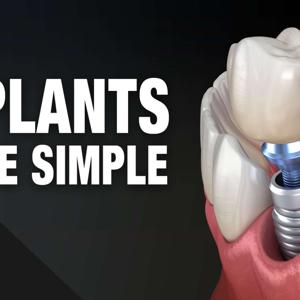


What actually determines whether an immediate implant will succeed?
For years, dentists have relied on insertion torque as the gold standard for predicting primary stability. But what if that metric isn’t telling the full story?
In this video, Dr. Robert Stanley breaks down the Stanley Five Thread Guideline—a simple, data-backed approach to predicting implant stability before you ever pick up a handpiece.
Instead of guessing…
Instead of relying on torque after placement…
This method allows you to plan with confidence using one key variable: thread engagement in native bone.
Backed by real patient data, statistical analysis, and published research, this concept has the potential to completely change how clinicians approach immediate implant placement—especially in challenging extraction sockets.
If you’re placing implants (or planning to), this is a framework you need to understand.
📥 Download the full journal article on predicting primary stability using the Five Thread Guideline: https://joi.kglmeridian.com/view/journals/orim/51/6/article-p522.xml
🎓 Learn the full workflow step-by-step at Stanley Institute Courses: www.stanleyinstitute.com/courses.
If you found this valuable, share it with a colleague—this is the kind of concept that should be taught in dental school.
At Stanley Institute for Comprehensive Dentistry, we offer expert-led courses designed to train the whole doctor—covering everything from diagnosis to advanced treatment planning, efficient practice management and more. Learn cutting-edge, fully digital solutions and workflows that will transform your practice and patient care. With both online and in-person options, our comprehensive programs provide the skills and confidence you need to excel. Don’t miss out—join us today at https://stanleyinstitute.com/courses!
Online Courses: https://stanleyinstitute.com/virtual-courses/
In-Person Courses: https://stanleyinstitute.com/courses/
Are you a patient looking for our dental practice? Learn more about us at www.stanleysmiles.com.
Questions, Comments or Insights? Email us at:
[email protected]
Stanley Institute Socials
► Subscribe: https://youtube.com/@Stanleyinstitute
► Facebook: https://facebook.com/stanleyinstitute/
► Instagram: https://instagram.com/stanleyinstitute
► LinkedIn: https://linkedin.com/school/stanleyinstitute/
Dr. Robert Stanley, Smile Engineer Socials
► Facebook: https://facebook.com/p/Smile-Engineer-100054446351425/
► Instagram: https://instagram.com/smileengineer/
Guided vs non-guided implant surgery isn’t just about preference—it’s about accountability.
In this video, Dr. Robert Stanley dives into a growing issue in implant dentistry: clinicians moving away from guided surgery while dental labs continue to get better and better at fixing the results.
The problem? When great prosthetics can “rescue” poorly placed implants, it can create a dangerous safety net—one that allows bad surgical habits to persist.
Dr. Stanley breaks down why guided implant placement leads to more predictable outcomes, less stress on the restorative team, and ultimately better care for the patient. He also challenges the idea that just because a case can be restored… means it was done right in the first place.
This is a must-watch discussion on precision, responsibility, and where implant dentistry may be heading if standards slip.
At Stanley Institute for Comprehensive Dentistry, we offer expert-led courses designed to train the whole doctor—covering everything from diagnosis to advanced treatment planning, efficient practice management and more. Learn cutting-edge, fully digital solutions and workflows that will transform your practice and patient care. With both online and in-person options, our comprehensive programs provide the skills and confidence you need to excel. Don’t miss out—join us today at https://stanleyinstitute.com/courses!
Online Courses: https://stanleyinstitute.com/virtual-courses/
In-Person Courses: https://stanleyinstitute.com/courses/
Are you a patient looking for our dental practice? Learn more about us at www.stanleysmiles.com.
Questions, Comments or Insights? Email us at:
[email protected]
Stanley Institute Socials
► Subscribe: https://youtube.com/@Stanleyinstitute
► Facebook: https://facebook.com/stanleyinstitute/
► Instagram: https://instagram.com/stanleyinstitute
► LinkedIn: https://linkedin.com/school/stanleyinstitute/
Dr. Robert Stanley, Smile Engineer Socials
► Facebook: https://facebook.com/p/Smile-Engineer-100054446351425/
► Instagram: https://instagram.com/smileengineer/
Is Periacryl the best way to secure graft material around implants and extraction sockets?
In this video, Dr. Robert Stanley revisits a technique many clinicians have seen on this channel—using Periacryl (a medical-grade tissue adhesive) to stabilize immediate gap grafting. While it was once a go-to approach, Dr. Rob explains why his protocol has evolved over time.
As dentistry advances, so should our techniques. What worked well in the past isn’t always the best option with new research, better materials, and more clinical experience. Dr. Stanley breaks down when Periacryl made sense, where it may fall short, and why he no longer uses it routinely in his current implant workflows.
This is an important conversation about growth in clinical practice—because great clinicians don’t just learn… they adapt.
If you’ve seen our older surgical videos, this one provides critical context on how and why our approach has changed.
Subscribe for more real-world surgical insights and evolving implant protocols.
At Stanley Institute for Comprehensive Dentistry, we offer expert-led courses designed to train the whole doctor—covering everything from diagnosis to advanced treatment planning, efficient practice management and more. Learn cutting-edge, fully digital solutions and workflows that will transform your practice and patient care. With both online and in-person options, our comprehensive programs provide the skills and confidence you need to excel. Don’t miss out—join us today at https://stanleyinstitute.com/courses!
Online Courses: https://stanleyinstitute.com/virtual-courses/
In-Person Courses: https://stanleyinstitute.com/courses/
Are you a patient looking for our dental practice? Learn more about us at www.stanleysmiles.com.
Questions, Comments or Insights? Email us at:
[email protected]
Stanley Institute Socials
► Subscribe: https://youtube.com/@Stanleyinstitute
► Facebook: https://facebook.com/stanleyinstitute/
► Instagram: https://instagram.com/stanleyinstitute
► LinkedIn: https://linkedin.com/school/stanleyinstitute/
Dr. Robert Stanley, Smile Engineer Socials
► Facebook: https://facebook.com/p/Smile-Engineer-100054446351425/
► Instagram: https://instagram.com/smileengineer/
Does drill speed cause thermal necrosis during implant placement?
It’s a common concern in dentistry: if you drill too fast, you’ll overheat the bone and compromise healing. But is that actually happening in real-world implant surgery? In this video, Dr. Robert Stanley breaks down the science (and the misconceptions) behind thermal necrosis. He explains why the idea often doesn’t match clinical reality—especially when using fully guided implant systems.
You’ll learn:
Dr. Stanley also shares his clinical experience—including zero reported cases of thermal necrosis—and why efficiency and precision may be safer than you think.
If you’ve ever worried about drill speed during implant placement, this is a must-watch.
At Stanley Institute for Comprehensive Dentistry, we offer expert-led courses designed to train the whole doctor—covering everything from diagnosis to advanced treatment planning, efficient practice management and more. Learn cutting-edge, fully digital solutions and workflows that will transform your practice and patient care. With both online and in-person options, our comprehensive programs provide the skills and confidence you need to excel. Don’t miss out—join us today at https://stanleyinstitute.com/courses!
Online Courses: https://stanleyinstitute.com/virtual-courses/
In-Person Courses: https://stanleyinstitute.com/courses/
Are you a patient looking for our dental practice? Learn more about us at www.stanleysmiles.com.
Questions, Comments or Insights? Email us at:
[email protected]
Stanley Institute Socials
► Subscribe: https://youtube.com/@Stanleyinstitute
► Facebook: https://facebook.com/stanleyinstitute/
► Instagram: https://instagram.com/stanleyinstitute
► LinkedIn: https://linkedin.com/school/stanleyinstitute/
Dr. Robert Stanley, Smile Engineer Socials
► Facebook: https://facebook.com/p/Smile-Engineer-100054446351425/
► Instagram: https://instagram.com/smileengineer/
“Why are you taking out perfectly good teeth?”
It’s one of the most common—and emotional—questions we get.
In this video, Dr. Robert Stanley breaks down what you don’t see in surgical clips: the hidden decay, structural compromise, and long-term prognosis that isn’t visible on the surface. Just because a tooth looks healthy doesn’t mean it is.
Dr. Stanley also dives into the critical tipping point—when saving individual teeth no longer serves the patient—and why full-arch solutions like All-on-X can actually be the more predictable, healthier option long term.
This isn’t about removing teeth. It’s about removing disease—and giving patients a better future.
At Stanley Institute for Comprehensive Dentistry, we offer expert-led courses designed to train the whole doctor—covering everything from diagnosis to advanced treatment planning, efficient practice management and more. Learn cutting-edge, fully digital solutions and workflows that will transform your practice and patient care. With both online and in-person options, our comprehensive programs provide the skills and confidence you need to excel. Don’t miss out—join us today at https://stanleyinstitute.com/courses!
Online Courses: https://stanleyinstitute.com/virtual-courses/
In-Person Courses: https://stanleyinstitute.com/courses/
Are you a patient looking for our dental practice? Learn more about us at www.stanleysmiles.com.
Questions, Comments or Insights? Email us at:
[email protected]
Stanley Institute Socials
► Subscribe: https://youtube.com/@Stanleyinstitute
► Facebook: https://facebook.com/stanleyinstitute/
► Instagram: https://instagram.com/stanleyinstitute
► LinkedIn: https://linkedin.com/school/stanleyinstitute/
Dr. Robert Stanley, Smile Engineer Socials
► Facebook: https://facebook.com/p/Smile-Engineer-100054446351425/
► Instagram: https://instagram.com/smileengineer/
Titanium vs. zirconia implants… which one actually lasts?
In this video, Dr. Robert Stanley breaks down one of the most misunderstood concepts in implant dentistry: strength vs. toughness—and why they are NOT the same thing.
While zirconia implants are often marketed as “strong,” their ceramic nature makes them more brittle under real-world forces. Titanium, on the other hand, offers something far more important for long-term success: toughness—the ability to absorb stress without fracturing.
Dr. Stanley explains why this distinction matters clinically, how it impacts implant longevity, and why titanium continues to outperform zirconia when it comes to durability inside the human body.
If you’re placing implants—or considering getting one—this is a must-watch.
Subscribe for more real-world implant insights from Dr. Stanley.
At Stanley Institute for Comprehensive Dentistry, we offer expert-led courses designed to train the whole doctor—covering everything from diagnosis to advanced treatment planning, efficient practice management and more. Learn cutting-edge, fully digital solutions and workflows that will transform your practice and patient care. With both online and in-person options, our comprehensive programs provide the skills and confidence you need to excel. Don’t miss out—join us today at https://stanleyinstitute.com/courses!
Online Courses: https://stanleyinstitute.com/virtual-courses/
In-Person Courses: https://stanleyinstitute.com/courses/
Are you a patient looking for our dental practice? Learn more about us at www.stanleysmiles.com.
Questions, Comments or Insights? Email us at:
[email protected]
Stanley Institute Socials
► Subscribe: https://youtube.com/@Stanleyinstitute
► Facebook: https://facebook.com/stanleyinstitute/
► Instagram: https://instagram.com/stanleyinstitute
► LinkedIn: https://linkedin.com/school/stanleyinstitute/
Dr. Robert Stanley, Smile Engineer Socials
► Facebook: https://facebook.com/p/Smile-Engineer-100054446351425/
► Instagram: https://instagram.com/smileengineer/
Immediate implants aren’t just faster—they’re biologically smarter.
In this video, Dr. Robert Stanley breaks down why immediate implant placement can actually support the bone instead of allowing it to collapse after extraction. When done correctly—specifically with fully guided surgery—immediates don’t just match delayed placement… they can outperform it.
Less chair time. Fewer appointments. Better patient experience.
Dr. Rob explains why he views immediate implants as a symbiotic relationship with the bone—and why that mindset changes everything about how you plan and execute treatment.
If you’ve been taught to wait… it might be time to rethink that.
At Stanley Institute for Comprehensive Dentistry, we offer expert-led courses designed to train the whole doctor—covering everything from diagnosis to advanced treatment planning, efficient practice management and more. Learn cutting-edge, fully digital solutions and workflows that will transform your practice and patient care. With both online and in-person options, our comprehensive programs provide the skills and confidence you need to excel. Don’t miss out—join us today at https://stanleyinstitute.com/courses!
Online Courses: https://stanleyinstitute.com/virtual-courses/
In-Person Courses: https://stanleyinstitute.com/courses/
Are you a patient looking for our dental practice? Learn more about us at www.stanleysmiles.com.
Questions, Comments or Insights? Email us at:
[email protected]
Stanley Institute Socials
► Subscribe: https://youtube.com/@Stanleyinstitute
► Facebook: https://facebook.com/stanleyinstitute/
► Instagram: https://instagram.com/stanleyinstitute
► LinkedIn: https://linkedin.com/school/stanleyinstitute/
Dr. Robert Stanley, Smile Engineer Socials
► Facebook: https://facebook.com/p/Smile-Engineer-100054446351425/
► Instagram: https://instagram.com/smileengineer/
Is CBCT the solution to the crestal bone loss problem… or just another layer of bad data?
In this follow-up to last week’s discussion, Dr. Robert Stanley tackles a common argument: if 2D radiographs distort crestal bone levels, shouldn’t 3D imaging (CBCT) fix the issue? Not so fast.
Dr. Rob breaks down why CT scatter from titanium implants creates its own set of inaccuracies—making CBCT just as unreliable (if not more misleading) when evaluating so-called “crestal bone loss.”
This video dives into:
If you’re using imaging to evaluate implant success, this is a conversation you need to hear.
Watch last week’s video on crestal bone loss vs. wound healing to get the full picture.
At Stanley Institute for Comprehensive Dentistry, we offer expert-led courses designed to train the whole doctor—covering everything from diagnosis to advanced treatment planning, efficient practice management and more. Learn cutting-edge, fully digital solutions and workflows that will transform your practice and patient care. With both online and in-person options, our comprehensive programs provide the skills and confidence you need to excel. Don’t miss out—join us today at https://stanleyinstitute.com/courses!
Online Courses: https://stanleyinstitute.com/virtual-courses/
In-Person Courses: https://stanleyinstitute.com/courses/
Are you a patient looking for our dental practice? Learn more about us at www.stanleysmiles.com.
Questions, Comments or Insights? Email us at:
[email protected]
Stanley Institute Socials
► Subscribe: https://youtube.com/@Stanleyinstitute
► Facebook: https://facebook.com/stanleyinstitute/
► Instagram: https://instagram.com/stanleyinstitute
► LinkedIn: https://linkedin.com/school/stanleyinstitute/
Dr. Robert Stanley, Smile Engineer Socials
► Facebook: https://facebook.com/p/Smile-Engineer-100054446351425/
► Instagram: https://instagram.com/smileengineer/
Most clinicians have been taught to measure crestal bone loss as a marker of implant success. But what if we’ve been measuring the wrong thing entirely?
In this video, Dr. Robert Stanley breaks down the critical difference between true crestal bone loss and normal wound healing and and why the dental industry continues to confuse the two. He explains how long wound healing actually takes, what’s really happening biologically around implants, and why relying on 2D radiographs to draw conclusions about bone loss may not be good science.
If you’ve ever questioned the timelines, the data, or the assumptions behind implant success metrics… this is a conversation worth paying attention to.
Because understanding the difference doesn’t just change how you read studies; it changes how you treat patients.
At Stanley Institute for Comprehensive Dentistry, we offer expert-led courses designed to train the whole doctor—covering everything from diagnosis to advanced treatment planning, efficient practice management and more. Learn cutting-edge, fully digital solutions and workflows that will transform your practice and patient care. With both online and in-person options, our comprehensive programs provide the skills and confidence you need to excel. Don’t miss out—join us today at https://stanleyinstitute.com/courses!
Online Courses: https://stanleyinstitute.com/virtual-courses/
In-Person Courses: https://stanleyinstitute.com/courses/
Are you a patient looking for our dental practice? Learn more about us at www.stanleysmiles.com.
Questions, Comments or Insights? Email us at:
[email protected]
Stanley Institute Socials
► Subscribe: https://youtube.com/@Stanleyinstitute
► Facebook: https://facebook.com/stanleyinstitute/
► Instagram: https://instagram.com/stanleyinstitute
► LinkedIn: https://linkedin.com/school/stanleyinstitute/
Dr. Robert Stanley, Smile Engineer Socials
► Facebook: https://facebook.com/p/Smile-Engineer-100054446351425/
► Instagram: https://instagram.com/smileengineer/
In this week’s video, Dr. Stanley tackles the one topic every implant clinician needs to understand: why periodontal disease still matters when you're placing implants, and how to effectively remove disease to set your All-on-X cases up for long-term success.
Whether you’re a dentist, hygienist, or implant team member, we break down:
What periodontal disease really is — and why you can’t just replace teeth and ignore it
How to assess and manage perio risk in full-arch / All-on-X patients
Real-world hygiene tips when taking apart and cleaning All-on-X prostheses
Practical strategies for maintenance, probing, risk stratification, and tissue evaluation
This isn’t theory — it’s clinical application, delivered with clarity and backed by the hands-on training principles of the Stanley Institute. Watch it all the way through for actionable take-aways you can implement in practice Monday morning.
At Stanley Institute for Comprehensive Dentistry, we offer expert-led courses designed to train the whole doctor—covering everything from diagnosis to advanced treatment planning, efficient practice management and more. Learn cutting-edge, fully digital solutions and workflows that will transform your practice and patient care. With both online and in-person options, our comprehensive programs provide the skills and confidence you need to excel. Don’t miss out—join us today at https://stanleyinstitute.com/courses!
Online Courses: https://stanleyinstitute.com/virtual-courses/
In-Person Courses: https://stanleyinstitute.com/courses/
Are you a patient looking for our dental practice? Learn more about us at www.stanleysmiles.com.
Questions, Comments or Insights? Email us at:
[email protected]
Stanley Institute Socials
► Subscribe: https://youtube.com/@Stanleyinstitute
► Facebook: https://facebook.com/stanleyinstitute/
► Instagram: https://instagram.com/stanleyinstitute
► LinkedIn: https://linkedin.com/school/stanleyinstitute/
Dr. Robert Stanley, Smile Engineer Socials
► Facebook: https://facebook.com/p/Smile-Engineer-100054446351425/
► Instagram: https://instagram.com/smileengineer/