
Sign up to save your podcasts
Or

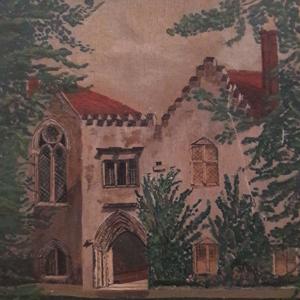


This track guides you round the highlights of Bisham Church in 15 minutes. All Saints Bisham sits on the banks of the River Thames by an ancient river crossing with a clunch chalk Norman tower and significant extensions from 1566, 1849 and 1870. Enjoy the peaceful churchyard.
The church was always linked with Bisham Abbey after the priory was demolished and the monastery closed. Home to the Knights Templar then three great families; Salisbury, Hoby and Vansittart for over 600 years. Bisham Abbey became the first national sports centre in 1946 and was sold 60 years ago in memory of the 2 heirs (Berkeley and Guy) killed in WWII.
The spectacular Hoby monuments (featured in the Simon Jenkins book) contrast with the simple gunmetal of the Williams copper family and the tragedy of the Vansittarts. Investigate the stories hidden in the church.
Longer tours are available via Bishamchurchfriends.org
Written and narrated by Sheila Featherstone-Clark
Audio description of the Creckett and Brinkhurst brasses in Bisham Church. Featuring Thomas Creckett a Fishmonger and John Brinkhurst a Merchant Venturer and local philanthropist.
Part of a series of mini-pods for the church by Sheila Featherstone-Clark
Unexpected inheritance funds the co-operative movement, Henry and Florence finally marry, the opening of the Bisham institute, new road and profitable development for wealthy residents.
On November 4th 1885, 200 people attended GHVN the younger’s funeral at Bisham Church. He left £52,000 pounds and the Bisham estate to his cousin Edward. Was this Abbot Corderys curse at work?
Edward Ernest was born in 1810. His father, Edward, was the second son of the then Lord of the manor, George Vansittart. Edward succeeded to his wife’s estate of Allesley Park near Coventry in 1805, he had taken the name Neale on inheriting the property. After her death he married again; Anne (nee Spooner) and produced Edward Ernest in 1810 followed by 7 girls. In 1825 Edward became a trustee of the Bisham estate, on his brother’s death, because his heir, George Henry Vansittart the Younger, his grandson, was only a minor.
Edward Ernest went to Oriel College Oxford. In 1828 he started practicing as a barrister and in 1837 he married Frances Sarah Farrer. Edward Ernest believed passionately in ‘the inestimable value of co-operation as a method for conferring inestimable advantages upon mankind’ (Smith, 1892). In 1850 he became a Christian Socialist, along with others such as John Stuart Mill and John Ruskin.
By the 1850s Edward had lost some £40,000. Edward Vansittart Neale is Nationally recognised as the founding father of the Co-operative movement. The key role he played in its establishment is acknowledged in a memorial to him in the crypt of St Pauls Cathedral.
Inheriting the Bisham Estate in 1885 provided an unexpected source of funds to support his favoured co-operative movement. Edward started to sell off parts of the estate. In May 1888 he gave the inaugural address at Dewsbury as president of the Co-operative Congress.
Henry James, Edward’s son, had had to curtail his plans University in favour of getting paid employment at the Admiralty to support his mother and sisters who were secondary to his father’s co-operative endeavours. He married Florence, the daughter of Arthur Eddis a County Court Judge in 1887
Edward founded the Village Club and Institute, giving the land contributing towards the building which opened in November 1888. The estate cottages were upgraded around 1890. However Edward increased the rents significantly. He proposed building a new road from Bisham to Cookham to replace the track, from Bisham road through Quarry Wood. The charming terraces in the wood which command some of the most lovely scenery along the valley of the Thames, will be obtainable for building purposes.
Henry James and Florence took an increasingly active part in village life. Edward had broken the terms of the entail shortly before he died in September 16th 1892, to pass the estate to his wife Frances for life, to try to limit death duties. She died two years later in 1894.
“ I was willing to incur the risk of loss from the desire to promote a great cause and 2. The ill success of these trials did not discourage me from working for that cause” He propounded a scheme for converting the most beautiful parts of his estate into places suitable for wealthy residents ,
Margaret Dickinson, credits him with beginning the dissolution of the Bisham estate. Country Life 'if the inhabitants of Bisham well cared for, living in one of the oldest, most charming and picturesque villages of rural England, are not among the most contented and happiest of people it must be their own fault.’
Researched, written and narrated by Sheila Featherstone-Clark. Sounds from Freesound.org.
The turnpike the train and the bridge, MP for the pocket borough of Bisham, ghostly copybooks? Victorian Gothic makeover and new chapel for the Church, selling land to fund lavish lifestyles .
George Henry the Younger was the first Vansittart heir to be born at Bisham, the Estate comprised 1800 acres the landscape was changing with new modes of transport. The Hatfield to Reading Turnpike came through Bisham. From 1826 to 1881, the Marlow Flier offered a twice daily coach service to London in only 3 hours. In 1832 Tierney Clark designed a new stone suspension bridge across the Thames. The Wycombe Railway Company opened the line as far as High Wycombe on 1st August 1854 via Wycombe Junction and Cookham. During George Henrys minority, the estate was run by the trustees. The Abbey was leased to his aunt Caroline and her husband Augustus East. The guardian of the 2 young boys (George Henry and Augustus Arthur) was Henry Windsor the 8th Earl of Plymouth. In 1840, faded blotted copy books were found. Were these the books from the story of Lady Hoby whose ghost walks through the great hall.
GHV took over the running of the Bisham estate in 1844. Trees for timber, osier beds provided willow. The 4 farms: provided wheat, barley and oats and pasture for the animals. In March 1845 GHV became deputy lieutenant of Berkshire. Bisham Church had a Victorian Gothic makeover and the Williams Chapel was built at a cost of £2000, funded by Owen Willams of Temple House. The memorials in this chapel are all of copper. In Dec 1851 GH married Catherine Elizabeth Steuart (b 1828) from Scotland and in July 1852 he became MP for Berkshire.‘ the parishes of Great and Little Marlow, Medmenham and Bisham made up the Borough of Marlow, .., the Squire of Bisham exercised a powerful influence in the result. Indeed Bisham was generally regarded as the key to the borough.’
George Henry created a road to the railway station at Cookham. In June 1855 he instructed Messrs Rolls to sell 3 miles of valuable FISHERY, And twelve Lots of Valuable FREEHOLD BUILDING GROUND for Residences of a superior class and enjoy a right of way to the river for mooring their skiffs or fishing punts but not for trading purposes. In May 1857 George Henry’s brother Augustus Arthur married the Hon Rachel Irby. A further Building plot Sale held at the Compleat Anglers Hotel in Bisham (owned by the Wethered family) in 1858, delightfully situated on the bank of the Thames at Bisham, close to the beautiful suspension bridge. Oct 1858 Bisham Church choir concert under the direction of the vicar (Powell) with all first and second class seats being full. The Royal East Berks Agricultural association held their annual Ploughing match at Park farm on 5th Oct 1858. 40 teams entered.
At Christmas 1860 a ball was given for 200 of the elite of Berkshire and the Abbey was illuminated with gas from the works erected on the estate. The hall is lighted up with a very handsome chandelier throwing out jets of gas forming stars. In August, Bisham School held their annual festival in the Bisham Abbey Park. In 1867 the businessmen of Great Marlow partly funded a railway linking Great Marlow to the GWR Wycombe branch. The line opened on in 1873, known as the Marlow Donkey. 1874– George Henry’s mother, Ann Mary, and his wife, Katherine died. George Henry married Constance Charlotte Craven age 38 in 1876, producing only a daughter who died young. On the death of George Henry in 1885, the Bisham estate passed via his uncle, the Revd Edward Neale. Edward Ernest inherited the estate aged 75.
Episode researched, written and narrated by Sheila Featherstone-Clark.
Image is the Great Hall, Bisham. Sound effects from Freesound.org
Daring merchant adventurers seize the day. East India Company fortunes save Berkshire as the Nabobs arrive. Georgian lavish lifestyle contrasts with fighting in France threatening the succession
The time of the Hoby family at Bisham Abbey ended in 1780 with the death of Sir John Hoby Mill the 5th Hoby baronet of Bisham. The succession had faltered and finally failed. Sir John’s widow, Lady Elizabeth Hoby Mill sold the estate to George Vansittart. The VanSittarts were originally of Dutch extraction, Peter, had migrated from Danzig to London in 1670 to found the English branch of the family. He was a remarkable linguist, a merchant adventurer and was said to be a man of ‘daring and enterprise in the East Indies, the South Seas, Russia and the Baltic’ . Arthur Vansittart was a successful merchant and director of the Russia Company until he retired in 1722 and married Martha Stonhouse, daughter of the comptroller to the household of Queen Ann and together they had 9 children. It was Arthur’s sixth and youngest son, who acquired the Bisham estate.
George married his cousin Sara Stonhouse in Bengal in October 1767 and by 1772 he was Chief of Revenue in Patna and a member of the Board of Trade. His brother Henry had returned again to England in 1765, bought the Foxley estate at Bray and Reading Abbey and had been elected MP for Reading. However his lavish lifestyle drained all his money within two years so he was keen to return to India.
George gave Bisham a lavish makeover including chimneys, ceilings and armorials in the great hall. Including the purchase of a beautiful John Lee wall clock to hang over the fireplace in the Great Hall. It seems to have been a happy settled life at Bisham. George and Sara had eight children; their 5 sons all had distinguished careers. He declared himself happy as a country gentleman but in 1784 he successfully contested the Berkshire seat in parliament.
George Henry Vansittart (1768 -1824) his eldest son married late in life and on 29th October 1818, age 50, he married Ann Mary Copson age 22, the daughter and co-heiress of Thomas Copson of Sheppey Hall. Three years later, in July 1821, in peacetime, he gained the top rank of General (RBWM exhib) in the Berkshire Militia. George Henry was expected to inherit the Bisham estate, however he died in 1824, a year before his father, leaving Ann aged only 26 with their infant son George Henry Vansittart the Younger (1823–1885), and pregnant with their second son.
Was the curse of Abbott Cordery now playing out for the Vansittarts? The Bisham Estate passed to the infant George Henry Vansittart (the younger) (1823–1885) on the death of his grandfather 1825.
Episode researched, written and narrated by Sheila Featherstone-Clark
Sounds effects from Freesound.org.
Image is The East India Company’s Coat of Arms
The shape of the village and tudor brickmaking, From parliament to the church, illegitimacy saves the day, the start and end of the Hoby Baronetcy of Bisham, the succession finally falters and fails.
The Bisham estate passed to Edward and Thomas Posthumous Hobye, in 1609, a map of the estate was drawn up. The outline of the village is still similar today, on the road to Marlow and Maidenhead. Brick field identifies where bricks were be made for the new dwellings in the 1600s. Itinerant brickmakers were hired to excavate, mould, dry, fire and deliver bricks. English cross-bond was popular as it allowed the bricklayers to create patterns, specially shaped bricks could be made. Called ‘hewing’, this practice was introduced by Flemish craftsmen during the 15th century and required great skill.
Sir Edward was another Hobye scholar, from Trinity college Oxford, under the patronage of his uncle, undertaking confidential missions for Queen Elizabeth. Lord Burghley arranged his marriage in (1582) to the Queens cousin Margaret Carey, and took him to Scotland, where he impressed King James VI with his affability and learning. By September 1586 he was MP for Queenborough (on the Isle of Sheppey in Kent) and gained distinction as the Speaker in Parliament. He regained favour with Queen Elizabeth and reported to her on the defence preparations for the Spanish Armada. However his attempts to reform the exchequer were not well received by the Queen as they challenged the royal prerogative. In 1601 he was placed in charge of the parliamentary privileges committee, accompanied the expedition to Cadiz, Spain in 1596 and in 1597, he was made constable of Queenborough Castle. A Justice of the Peace, he was elected a knight of the shire for Berkshire and Kent. Reputedly he entertained King James frequently at Bisham. Sir Edward died without a living son. He recognised and brought up an illegitimate son by his lover Catherine Pinckney. In 1616, Peregrine Hoby (aged 14) was named his heir. Sir Edward died in March 1617. Was this the curse of Abbot Cordery at work?
Under English Law, a bastard could not inherit real property, thus Peregrine could not inherit his father’s title. Peregrine was accepted by society and followed in his father’s footsteps, MP (Royalist) for Great Marlow, serving in the Long Parliament and was given leave to use his father’s arms, with a bordure . Later he became MP for Rochester, and a favourite of King James I. Peregrine’s son Edward married Elizabeth Styles, the co-heiress of Francis Styles of Little Missenden and his daughter Mary married William Fleetwoode of Great Missenden in 1654 at Bisham. The Hoby Baronetcy was a new title, created in 1666 by Charles II for Edward Hoby Peregrine’s son . Unfortunately Edward died and was buried on the 1st May 1675 at Bisham, just before his father, so the succession passed to his younger surviving brother, Sir John who married Mary Long, daughter and heiress of Thomas Long.
Sir Thomas (1685-1730) was the next heir. He married Elizabeth, daughter of Sir John Mill and produced another Thomas, MP for Marlow, the succession passed to his younger brother, the Revd Sir Philip Dean of Ardfert ( Ireland) the last Hoby baronet, number 5, commemorated on a stone plaque in the Hoby chapel of Bisham Church. Sir John Mill 1st cousin inherited the estate in 1766 on condition that he took the name of Hoby. He died in July 1780 and his wife sold the estate that year ending the era of the Hoby family at Bisham after 200 years.
Episode researched, written and narrated by Sheila Featherstone-Clark. Image is Edward Hoby from David Nash Berkshire History
Haunting the Abbey, nearly a countess, Pomp and ceremony for Queen Elizabeth in the Royal Progress, no chance for Shakespeare’s Globe and the Dowager's Magnificent monuments.
Elizabeth Cooke had married Sir Thomas Hobbye on 27 June 1558. In 1565, following his death in Paris where he was the ambassador, Lady Hoby returned to Bisham to bury her husband and to give birth to a fourth child, Thomas Posthumous.
The ghost of Lady Hoby is said to walk through the Great Hall at Bisham Abbey. She is rumoured to have mistreated her young son William… he was found dead in the tower room. Lady Hobye was distraught and is said to haunt the Abbey to this day, walking through the great hall wringing her hands. She particularly appears around a royal coronation, suggesting her guilt of choosing her sovereign over her son.
The two girls died young, Elizabeth Hobbey (spelling as per register) died on 17th Feb 1572 aged 9 and her sister Agnis on 24th Feb aged 7. Grief stricken, Lady Hobye decided to build a burial chapel, a large extension on the south side of Bisham Church. William Cure was commissioned to create a fine life-sized monument of her husband Thomas and his half-brother Philip in Italian alabaster. Two worthye knights, and Hobies bothe by name,
Lady Elizabeth married again at Bisham Church. The Right Honourable Lorde John Russell and the Renoumbed Lady Elizabeth Hobbey married 23rd December 1574. He was heir to 2nd Earl of Bedford. Lady Russell fought a long legal battle to have her daughters recognised as his heiresses, after his death and designed a memorial in Westminster Abbey, showing him reclining in his red ermine-lined Parliamentary robes with their daughters holding the Bedford crest above him.
Lady Russell became a powerful widow and courtier, a devout Protestant, she controlled the inheritance of her 2 younger sons. Edward Hobye (b1560),married Margaret Carey, the daughter of Queen Elizabeth I’s cousin, Lord Hunsdon on 21 May 1582.
September 1592 Queen Elizabeth visited Lady Russell at Bisham Abbey, Lady Elizabeth loved pomp and ceremony and she mounted a very elaborate pageant starting at the top of ‘Bissam Hill’, featuring herself and her daughter Anne as Sybilla and Isabella, two virgins keeping sheep. This was the first occasion on which English noblewomen took speaking parts in a quasi-dramatic production. (Jayne Elisabeth Archer, 2014, p. Ch 11)
Elizabeth petitioned the queen to refuse the building of the Globe Theatre in 1596 and engaged in various litigation including with Richard Lovelace at Hurley. Her younger son, Thomas Posthumous was said to be the inspiration for Shakespeare’s Malvolio in Twelfth Night. His wife, Margaret Hoby’s diary covers the workings of a puritan household 1599 – 1605 and is the earliest diary written in English by a woman. She was an heiress in Hackness.
The Dowager Lady Elizabeth Hobye Russell demonstrated her reputation as a talented scholar of classics in the translation of a religious book Way of Reconciliation of a Good and learned man, in her own name.
Lady Elizabeth Hobye planned her funeral herself to ensure it was suitable. She designed another spectacular monument in Alabaster marble, in which she is the matriarch wearing a countess’s coronet, positioned under a canopy in the burial chapel, with her children around her. This monument is more ornate than those she designed for her husbands; all the inscriptions are written by herself. Elizabeth Hobye Russell was buried at Bisham on 2nd June 1609 aged 81.
Episode researched, written and narrated by Sheila Featherstone-Clark
Image is Lady Hobyes's memorial. Sound effects from Freesound.org.
The Hobbyes come to Bisham. Sir Philip, the King and the Stonor connection, Sir Thomas, the Courtier and the wedding, Princess Elizabeth under arrest. Religious turmoil. Diplomacy after death.
Sir Philip Hobbye took over the Bisham estate in 1553 . In consideration of the good time and faithful service and council to us by our beloved councillor Philip Hobbye, Knight Do give and grant to the aforesaid the site of the late monastery of Bysham otherwise Bustlesham = Montague in the county of Berks.
Sir Philip had been undertaking important work on behalf of Henry VIII since 1536, he married Elizabeth Stonor in 1540, part of Catherine Parr’s inner circle and daughter of Sir Walter Stonor, ; this marriage created a local family connection that was to last for generations. Sir Philip had been knighted in 1544 and made Master-General of Ordinance in 1547.
He initiated significant building work at Bisham in 1556/7. It seems that the tombs of the Earls of Salisbury had also been demolished along with the priory. The work at Bisham was undertaken to the highest quality and the workmen included Flemish bricklayers, who were considered superior to the English. The new building included rooms added on the south side of the hall and in 1560, a turret on the north side at the heart of the Abbey with a Newel Staircase. A large oriel window was constructed on the solar, later the council chamber (now known as the Elizabethan room) used by Princess Elizabeth whilst she was under house arrest at Bisham from 1556 - 1558. The Flemish tapestries in the great Hall were cut up. Sir Philip died in Blackfriars on 31 May 1558
His heir was his much younger half-brother, Thomas Hobye (1530 – 1566) 25 years his junior, who was also learned and well-travelled. He had been presented at court in 1550 and joined the service of the Marquis of Northampton undertaking missions to Paris and Italy. On inheriting the Bisham Estate. Sir Thomas wasted no time; he married Elizabeth Cooke on 27 June 1558 at Bisham Church, just 3 weeks after his brother’s death. Her father, Sir Anthony Cooke of Gidea Park Romford was tutor to Edward V1. Elizabeth Cooke was highly educated, which was unusual for a woman at that time. It was the new Lady Elizabeth Hobye (b 1528 ) who was to ensure the family left an enduring legacy.
Thomas is known for his translation, from Italian, of Baldessare Castiglione's book, ' II Cortegiano’, which laid out his vision of the ideal gentleman and lady,The Book of the Courtier ran to 4 editions when finally published in English in 1561 and a diary entitled Travels and life of Sir Thomas Hoby Kt of Bisham Abbey, written by himself 1547 – 1564, bound in red leather, which is now held in the British Museum.
Princess Elizabeth spent nearly 3 years living in Bisham Abbey . As Elizabeth I she returned the country to the Church of England. The Hobyes at Bisham were Protestants and thus avoided the religious persecution that was the fate of many local catholic families such as the Brinkhursts.
In March 1566 Thomas was knighted at Greenwich and became the English Ambassador to France and went to Paris with his wife and 3 children. He died in July that year, aged only 36. Lady Elizabeth had to organise the return of the household to Bisham, whilst pregnant with another son who was to be called Thomas Posthumous as he was born after his father’s death (1566 – 1640). The Worshipfull Mr Thomas Hobbey Knight was buried at Bisham on 3rd September 1565.
Two worthye knights, and Hobies bothe by name
Enclosed within this marble stone do rest
Episode researched, written and narrated by Sheila Featherstone-Clark
Sounds effects from Freesound.org.
Image is Sir Philip's memorial
In remembrance of Henry James Vansittart Neale KCB, Lord of the Manor of Bisham, lover of the river, deeply involved in his village community with a sense of duty and service, remembered by Reverend Farrer, for 25 years his parson and friend.
Revd William Farrer had been appointed vicar of Bisham by Henry Vansittart Neale in June 1900. He followed Revd Powell who had been vicar there for over 51 years. However it is possible that they knew each other for longer than this as they were distantly related. William and Henry both shared a love of the river as rowers and created a bond between them making a strong team. It is fitting for him to reflect on Sir Henry at this point.
When I was about to issue my letter last May we had just heard that Sir Henry had been taken ill in London and I added a postscript expressing our sorrow and anxiety and hopes for his recovery. Our hopes and prayers were not to be fulfilled and he died on Sunday July 15th 1923. It is impossible to say at all adequately what his loss means to us all.
I must endeavour to place on record here a slight remembrance of him. He succeeded his father as the owner of Bisham Abbey in 1892. Henry had married Florence Eddis, the daughter of a county court judge in 1887 when he could afford a reasonable marriage settlement. They were a happy family deeply involved in the village and with 3 children, the succession looked secure. Tragically, in 1904 George Kenneth died whilst as school at Eton, he was aged 14. Mr Vansittart Neale had the decoration of CB conferred on him in the year of 1897 the diamond Jubilee year of Queen Victoria and a few years later he was promoted to KCB (Knight Commander of the Bath) The honour was given in recognition of the” ability and success” with which he discharged his duties at the Admiralty during 40 years. Everyone around Bisham and Marlow was proud to call him Sir Henry.
In him the Maidenhead Advertiser wrote, ‘the Parish of Bisham had a sincere and generous friend. He was a kind master and considerate landlord’. Such words applied to him seem to us only to need underlining. His religion was I believe the mainspring of his life. I can recollect how in his youth, when Sunday was his only free day he delighted when he could to spend it on the river and that he always made attendance at Church part of the days programme.
Sir Henry will be greatly missed in Bisham and Marlow. A kindly and generous squire he was regarded with feelings of deep affection and regard throughout the district.
The funeral took place at Bisham Church on Thursday 19th July 1923. The church was filled not with onlookers but with mourners who all felt they were parting from one who had done much to brighten and uplift the lives of very many. The Admiralty sent a Union Jack by special Kings Messenger to cover the coffin, the pair of sculls laid alongside the grave a token of his lifelong love of the river and of his sculling boat. A plaque on the wall in the church records his passing. Revd Farrer took the funeral service of his long time friend and squire, then retired to the Cottage at Hurley until his death in 1934, aged 83. He too is buried in the Churchyard at Bisham and has a plaque on the wall in the church. The villagers of Bisham were long to remember, Sir Henry, the squire and Revd Farrer, his parson.
This is the final episode of this section.
Episode researched, written and narrated by Sheila Featherstone-Clark based on The Bisham Parish Report of May 1924 and local newspaper cuttings. Revd Farrer is voiced by Nigel Greenwich. Sound effects from www.Freesound.org. Church bells.
Episode image is an old etching of Bisham Abbey, by Thomas C Farrer
New regime at the school, Mrs Young’s Guinea prize, wireless lessons, new houses built, the tin shed appears, Women’s Institute fete plan, Miss Phyllis steps up and Farewell to Sir Henry
Writing my 25th Annual Letter reminds me that a quarter of a century has passed since I came here as Vicar. I sometimes look back at those letters, and they call to mind many events of interest in our Parish history as well as the events in the wider world during those 25 years. One event overshadows all others in our Parish story, namely the death of Sir Henry Vansittart Neale. I am printing an in memoriam notice of him.
With the death of Sir Henry, I asked Mr Young to take his place as Vicar’s Churchwarden and he kindly consented to take the office. On Easter Day the number of communicants remained at 104. The Offertories fell from £114 to £88. This is accounted for as I stated at the Church Meeting mainly by the loss of Sir Henry's weekly contribution and also by the Abbey, Temple House and Stoney Ware and other big houses being empty or inhabited by Gallios.
The school was working very happily and earned the commendation of a legion of inspectors. However changes were being made in schools based on the Education Act of 1921 . We were therefore, with much regret, obliged to part with Mrs Butler and Miss Sylvia Arnold, who had both been working in our school for a number of years and had done good work in the teaching of Infants and younger children. “A very interesting development has taken place in the form of lessons given by wireless. Each Friday afternoon since Easter a lesson has been given and notes have been taken by the children on music, Shakespeare, Nature Study etc. The Bishops Prize was awarded to Phyllis House, Alice Webb being a good second. The school Football Competition was won by the ‘Crusaders’, Ernest Scrace being Captain and the Cricket Club victors were the ‘Spartans’ captained by Frank Towers. Mrs Young very kindly gave a prize of a guinea for the ‘best boy and best girl’, the boys to choose the boy and the girls to choose the girl; 10s and 6d for each. The children entered into the election very keenly The School Treat was held in the Warren on July 29th and games and races and trips in a launch on a lovely afternoon were much enjoyed.”
A tin shed was erected in the Parish Ground between the Churchyard and Stoney Ware. “It is not beautiful and it is to be hoped it will not be useful. The less said about it the better.”
Miss Phyllis Vansitart Neale became District Commissioner of the Maidenhead Division of Girl Guides and Captain of the Marlow Company of Girl Guides.
The main news was the death of Sir Henry. He died at the vicarage at Ware and was brought back to Bisham. “It is impossible to say adequately what his loss means to us all. The Maidenhead Advertiser wrote: the parish of Bisham had a sincere and generous friend, he was a kind master and a considerate landlord, a well-loved squire”
This was the last Bisham Newletter written by William Farrer, he moved to The Cottage at Hurley, where he lived until he died in November 1934 aged 83.
Episode researched, written and narrated by Sheila Featherstone-Clark based on The Bisham Parish Report of May 1923. Revd W Farrer is voiced by Nigel Greenwich.
Photo is of Sir Henry with family and friends, in the Abbey grounds in 1922.
Sound effects from www.Freesound.org. Bell ringing, Handbell for the school etc.
From the publisher's feed