
Sign up to save your podcasts
Or

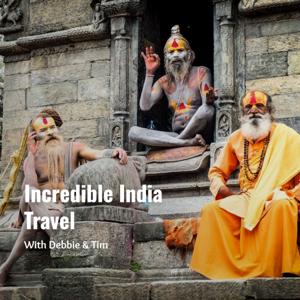


In 1779 Hyder Ali had been trying to take Chitradurga Fort for twenty years.
Three sieges. Three failures.
Against seven concentric walls. Nineteen iron-spiked gateways. Thirty-five secret passages. Two thousand watchtowers. And a water harvesting system so sophisticated that the fort never ran dry regardless of how long the siege lasted.
He finally found the weakness.
Not in the walls. Not in the gates. In a hole in the rock. A natural fissure in the granite hillside just large enough for one soldier to crawl through at a time. A chance sighting by one of his men had revealed it. His intelligence officers had confirmed it. And on the day the guard posted beside it went home for lunch, Hyder Ali sent his soldiers through.
The guard's wife had gone to the nearby pond to fetch water.
Her name was Obavva. What she had in her hand was a pestle, the heavy wooden implement used to grind grain. What she saw when she arrived at the pond was a soldier crawling through the hole into the fort.
She did not run. She did not shout. She positioned herself at the exit of the hole and killed each soldier as he emerged, one at a time, moving each body quietly before the next man came through.
The fort that seven walls, nineteen gateways and thirty-five secret passages had defended for four hundred years was defended, at its most critical moment, by a woman with a kitchen implement.
This episode tells the complete story of Chitradurga Fort, one of the most formidable medieval military structures in India and one of the most completely unknown extraordinary forts in Karnataka.
What You Will Discover in This Episode
The complete history of Chitradurga Fort, locally known as Elusuttina Kote or the fort of seven circles, from its earliest Ashokan era origins through the Chalukya and Hoysala periods to its peak as the most formidable hill fort in Karnataka under the Nayaka rulers between the 14th and 18th centuries
How the Nayaka dynasty came to power as feudatories of the Vijayanagar Empire, how they navigated four centuries of shifting alliances between Mysore, the Marathas and the Mughals as each threatened to overwhelm their territory, and how this constant political pressure drove them to build the most comprehensively fortified military structure in the Deccan plateau
The specific military engineering genius behind Chitradurga Fort, its seven concentric walls each commanding a view over the lower walls outside it, its nineteen gateways designed with sharp internal bends to prevent battering rams and force attackers into point-blank defensive fire, its iron-spiked main gates to stop war elephants and its cascade of interconnected water reservoirs that filled one from the other as rainwater collected on the hillside and routed the overflow into the moat below
The complete story of Onake Obavva, the guard's wife who in 1779 discovered Hyder Ali's soldiers attempting to infiltrate the fort through a hidden hole in the granite rock during her husband's lunch break and killed them one by one with the pestle in her hand, moving each body quietly before the next soldier came through, in one of the most extraordinary individual acts of military courage in the recorded history of Karnataka
Why Hyder Ali, one of the most formidable military commanders in 18th-century Asia, had failed to take Chitradurga Fort across three separate sieges over twenty years, and how he finally succeeded in 1779 despite Obavva's defence, through a combination of sustained military pressure, Maratha betrayal and the political exhaustion of a small kingdom that had been fighting for its survival across three decades of constant assault
The extraordinary interior of Chitradurga Fort, its eighteen temples including the Hidimbeshwara Temple whose connection to the Mahabharata tradition places this landscape within a mythological history considerably older than its military one, the Ekanathamma Temple built in the 15th century with its distinctive lamp pillar and swing arch, and the mosque built during Hyder Ali's brief period of rule that makes this one of the most quietly interesting examples of layered religious heritage at any single Karnataka heritage site
How 5 Senses Tours brings the complete Chitradurga Fort experience to life for international travellers through full-day private guided tours from Bangalore and through the six-day Bewitching Ruins Trail that connects Chitradurga to the UNESCO World Heritage ruins of Hampi, the Daroji Sloth Bear Sanctuary and the extraordinary Chalukya cave temples of Badami, Aihole and Pattadakal
Experience Chitradurga Fort With 5 Senses Tours
The passage in the rock where Onake Obavva stood is still there. It still has her name. Onake Obavvana Kindi. Standing beside it, understanding how small it is, how completely it concentrated the entry of soldiers into a single unavoidable chokepoint, makes the story simultaneously completely credible and completely astonishing.
The seven walls are still standing. The nineteen gateways with their iron-spiked doors and their sharp internal bends are still there. The eighteen temples within the upper fort are still there. The cascade of water reservoirs carved into the granite hillside is still visible. And the Karnataka government has formally declared Onake Obavva Jayanti on November 11 each year in honour of the woman whose name the passage carries.
Our Chitradurga Fort day tour from Bangalore covers the complete fort complex with an expert cultural guide in a full-day private experience from Bangalore at https://5sensestours.com/tour/chitradurga-fort-from-bangalore/
Our Bewitching Ruins Trail is the most complete way to experience Chitradurga alongside the wider Karnataka heritage landscape, combining the fort with the UNESCO World Heritage ruins of Hampi, the Daroji Sloth Bear Sanctuary and the extraordinary Chalukya cave temples of Badami, Aihole and Pattadakal across six extraordinary days from Bangalore at https://5sensestours.com/tour/bewitching-ruins-trail-hampi-6-days/
Our Must Visit Places in Karnataka tour covers the complete Karnataka heritage circuit including Bangalore, Mysore, Hampi, Badami, Belur, Halebid, Aihole, Pattadakal, Talakadu and Chitradurga across eight days at https://5sensestours.com/home-bangalore-tours/
For a customised private Chitradurga Fort heritage experience from Bangalore, contact us at https://5sensestours.com/
5 Senses Tours is recognised by India's Ministry of Tourism, winner of the Tripadvisor Travellers Choice Award and the Outlook Responsible Tourism Award. Every tour is private, expert guided and completely customised for your group.
John Dalton is credited with discovering atomic theory in 1808.
He was 2600 years late.
In approximately 600 BCE, on a dusty road near what is now Dwaraka in Gujarat, a philosopher named Kanada was eating grain and thinking about division. He kept breaking the grain into smaller and smaller pieces. And at some point he reached a theoretical limit. The point at which the grain could no longer be divided without ceasing to be grain at all.
He called it paramanu. Para meaning beyond. Anu meaning atom. Paramanu meaning that which is beyond division. The ultimate particle.
Modern physics arrived at the same conclusion using particle accelerators and two centuries of experimental science. Kanada arrived at it by thinking very carefully about a piece of grain.
This is not a story that most people know. The Western educational tradition credits atomic theory to the Greek philosopher Democritus in the 5th century BCE and its scientific formalisation to John Dalton in 1808. Kanada's name does not appear in most school curricula anywhere outside India. His Vaisheshika Sutras, which contain the most complete and most philosophically sophisticated atomic theory produced in the ancient world, are almost entirely absent from the standard history of science as taught in the USA, the UK and Australia.
This episode tells the complete story of Kanada's atomic theory.
What You Will Discover in This Episode
The complete story of how Kanada arrived at atomic theory on a dusty road in ancient Gujarat by thinking about the division of grain, and what this act of pure philosophical reasoning tells us about the depth and sophistication of ancient Indian intellectual tradition
The five specific claims of the Vaisheshika Sutras about the nature of atoms, including the eternal character of paramanu, the combination of atoms in definite ratios and the qualitative distinction between atoms of different substances, and how each of these claims maps onto the findings of modern physics
Why Kanada proposed that atoms differ qualitatively between different substances while Democritus proposed they differ only quantitatively in shape and size, and why modern physics confirms that Kanada was closer to the truth of how fundamental particles actually behave
The specific and important contribution of Democritus to atomic theory that Kanada's framework addressed differently, particularly the concept of the void through which atoms move, and why understanding both traditions gives a more complete picture of ancient atomic thinking than either tradition alone
Why John Dalton deserves his title as the father of modern atomic theory not because he was the first to propose that atoms exist but because he was the first to connect atomic theory to measurable experimental evidence, introducing atomic weights and explaining the laws of chemical combination mathematically
How the Standard Model of particle physics, with its twelve qualitatively distinct fermions and four force-carrying bosons, has moved closer to Kanada's ancient insight than to the purely quantitative tradition of Dalton, vindicating across two and a half thousand years the philosopher who thought about grain on a dusty road in Gujarat
The extraordinary connection between Kanada's ancient Gujarat and the Bengali scientists of Presidency College Kolkata who transformed modern physics, from Satyendra Nath Bose whose work on quantum statistics gave the boson class of particles its name to CV Raman whose Raman Effect won India its first Nobel Prize in science
The Gujarat heritage landscape where Kanada was born near Dwaraka at Prabhas Kshetra, and how 5 Senses Tours connects the birthplace of atomic theory to the extraordinary Indus Valley civilisation sites of Dholavira and Lothal that preceded him by two thousand years
The complete ancient Indian science heritage journey that 5 Senses Tours offers, connecting Kanada's Gujarat to the Bengali scientists of Kolkata in a single private guided experience through two and a half thousand years of the most extraordinary intellectual tradition in Asian history
Experience Kanada's Ancient Indian Science Heritage With 5 Senses Tours
The place where Kanada walked and thought about the division of matter is still there. Prabhas Kshetra near Dwaraka on the Gujarat coast. The same sacred landscape that is home to the Somnath Jyotirlinga, destroyed and rebuilt seventeen times and still standing on the Arabian Sea. The same coastline that the Indus Valley people of Dholavira and Lothal were trading from four thousand years ago when the rest of the world was still finding its feet.
Our Dholavira tour takes you to the UNESCO World Heritage Indus Valley city on the island of Khadir in the Rann of Kutch, one of the five largest cities of the ancient world, at https://5sensestours.com/tour/dholavira-tour/
Our Lothal tour covers the ancient Indus Valley port city near Ahmedabad whose dry dock is the world's earliest known at https://5sensestours.com/tour/lothal-tour/
Our Ahmedabad tours hub covers the complete Gujarat heritage circuit with expert cultural guides who bring the full depth of the ancient Indian science story to life at https://5sensestours.com/home-ahmedabad-tours/
Our Kolkata tours cover the complete Bengali scientists heritage trail including Presidency College, the Bose Institute and the Indian Museum, connecting the modern scientific tradition of Bengal to the ancient philosophical tradition of Gujarat at https://5sensestours.com/home-kolkata-tours/
For the complete ancient Indian science heritage journey from Kanada's Gujarat to the Bengali scientists of Kolkata, contact us at https://5sensestours.com/
5 Senses Tours is recognised by India's Ministry of Tourism, winner of the Tripadvisor Travellers Choice Award and the Outlook Responsible Tourism Award. Every tour is private, expert guided and completely customised for your group.
There is a seal in the collection of the National Museum in Delhi.
It is approximately four centimetres square. It is made of steatite, a soft grey stone. It was carved somewhere in the Indus Valley between 2600 and 1900 BCE. And on its surface, above the carved image of a humped bull, there are five symbols.
Nobody knows what they say.
Not for lack of trying. Since the Archaeological Survey of India announced its first findings on the Indus Valley Civilisation in 1924, over 5000 inscriptions have been excavated from sites across present-day India, Pakistan and Afghanistan. Linguists, archaeologists, cryptographers, computer scientists and now artificial intelligence researchers have spent over a century attempting to decode them. None has produced a result that the scholarly community has accepted as definitively correct.
The Indus Valley script remains the last major undeciphered writing system of an advanced ancient civilisation. It is older than Egyptian hieroglyphs. It is older than Mesopotamian cuneiform. It was used by a civilisation that built grid-pattern cities with indoor plumbing, standardised weights and a trade network reaching Mesopotamia and the Persian Gulf at a time when most of the world was still living in scattered agricultural settlements.
And we still cannot read what its people wrote.
But 2025 has brought this hundred-year mystery to its most urgent and most publicly charged moment. The Tamil Nadu government has offered a one million dollar prize for successful decipherment. Artificial intelligence researchers are applying deep learning algorithms to the script's structure with results generating genuine excitement in the field. And a researcher called Yajnadevam has published a cryptanalytic decipherment claiming to have read over 500 inscriptions in post-Vedic Sanskrit using methods borrowed from modern cryptography.
The race to crack history's greatest code is at its most intense.
What You Will Discover in This Episode
The complete story of the Indus Valley Civilisation, which flourished between approximately 3300 and 1300 BCE across an area larger than ancient Egypt and Mesopotamia combined, its grid-pattern cities, indoor plumbing, standardised weights, maritime trade network and the extraordinary sophistication that makes the silence of its script so consequential
Why the Indus Valley script decipherment challenge is uniquely difficult, average inscription length of only four to five signs, no bilingual text equivalent to the Rosetta Stone, an unknown root language and a politically charged scholarly debate about whether the underlying language is Dravidian, Sanskrit or not a language at all
The AI revolution in Indus script research, including transformer models published in the Transactions of the Association for Computational Linguistics in 2025, deep learning tools that are producing genuine structural insights into the script's sequential patterns and the application of computer vision algorithms to digitise and standardise the entire inscription corpus
The Yajnadevam cryptanalytic decipherment of 2024, the most methodologically complete claim yet published, which treats the entire corpus of Indus inscriptions as a single large cryptogram using Claude Shannon's mathematical framework and claims readings of over 500 inscriptions in grammatically correct post-Vedic Sanskrit, along with the scholarly response and why it remains contested
The Tamil Nadu one million dollar Iravatham Mahadevan Prize announced in January 2025, named after the most significant Indian scholar in the history of Indus script research, how it has transformed a century-old specialist debate into a global race and why it reflects Tamil Nadu's specific interest in the Dravidian hypothesis
The Dholavira signboard, the most extraordinary single Indus Valley inscription ever found, approximately ten feet long with ten large white gypsum characters mounted above the northern gateway of the ancient city of Dholavira in Gujarat so that every person entering the city would see it, still completely unread after four thousand years
What the excavations at Dholavira reveal about the sophistication of the Indus Valley Civilisation even without reading a single word of its script, including the most sophisticated hydraulic engineering system of the ancient world, standardised city planning and a water management system capable of sustaining the city through multiple years of drought
The three competing theories for the Indus script, the Dravidian hypothesis associated with Asko Parpola and Iravatham Mahadevan and supported by a Tamil Nadu study finding 60 percent sign similarity between Indus script and early Tamil Nadu graffiti markings, the Sanskrit hypothesis associated with the Yajnadevam decipherment and its contested relationship to the Aryan migration debate, and the non-linguistic hypothesis that the script may not encode a spoken language at all
The ancient port of Lothal near Ahmedabad in Gujarat, where the world's earliest known dry dock demonstrates the maritime engineering capability behind the Indus Valley trade network and where trade seals were used to authenticate cargo bound for Mesopotamia and the Persian Gulf four thousand years ago
How 5 Senses Tours brings the complete Indus Valley heritage to life for international travellers through expert guided experiences at the UNESCO World Heritage city of Dholavira and the ancient port of Lothal
Experience the Indus Valley Heritage With 5 Senses Tours
The gateway where the Dholavira signboard once stood is still there. The ancient dry dock at Lothal is still there. The seals in the museums are still not speaking. But for the first time in a hundred years of trying, the people who are working to make them speak are closer than they have ever been.
Our Dholavira tour takes you to the UNESCO World Heritage city in the Rann of Kutch in Gujarat, where the most important Indus Valley inscription was found, with expert cultural guides who bring the complete story of the Indus Valley Civilisation and the decipherment challenge to life at the exact place where it happened, at https://5sensestours.com/tour/dholavira-tour/
Our Lothal tour covers the ancient Indus Valley port city near Ahmedabad whose dry dock is the world's earliest known, at https://5sensestours.com/tour/lothal-tour/
Our Ahmedabad tours hub covers the complete Gujarat heritage circuit connecting Dholavira and Lothal to the UNESCO World Heritage pols of Ahmedabad and the extraordinary stepwell at Rani ki Vav in Patan, at https://5sensestours.com/home-ahmedabad-tours/
For a customised private Indus Valley heritage journey covering the complete Gujarat archaeological circuit, contact us at https://5sensestours.com/
5 Senses Tours is recognised by India's Ministry of Tourism, winner of the Tripadvisor Travellers Choice Award and the Outlook Responsible Tourism Award. Every tour is private, expert guided and completely customised for your group.
In 1666 Isaac Newton invented calculus.
This is what most of the world was taught and what most of the world still believes.
There is a problem with this version of events.
A mathematician in Kerala had already done it. In the 14th century. And the Cambridge University Professor of Mathematics George Gheverghese Joseph has stated that the priority of Kerala developments in the calculus over that of Newton and Leibniz is now beyond doubt.
His name was Madhava of Sangamagrama. He was born around 1340 CE in a small town near what is now Thrissur in Kerala. He died around 1425 CE, more than two centuries before Newton was born. And the mathematical tradition he founded, the Kerala School of Astronomy and Mathematics, produced infinite series expansions for sine, cosine, tangent and arctangent that are today formally known by the names of the European mathematicians who rediscovered them centuries after Madhava had already solved them.
Madhava-Newton. Madhava-Leibniz. Madhava-Gregory. Madhava-Taylor.
The names that appear in every university mathematics syllabus worldwide contain the name of a 14th-century Kerala mathematician as the first author. And almost nobody outside the mathematical history community knows this.
But the story does not end with the mathematics. It ends with a question historians of science are still actively debating. Did the Jesuit missionaries who were active on the Kerala coast in the 15th and 16th centuries, trading from the ancient port of Muziris near Madhava's own birthplace, carry the Kerala calculus back to Europe in their manuscripts and letters? Did Newton and Leibniz build on mathematical foundations that an Indian mathematician had already laid?
The answer is not yet proven. But the circumstantial evidence is extraordinary.
What You Will Discover in This Episode
The complete story of Madhava of Sangamagrama, born around 1340 CE in Sangamagrama, present-day Irinjalakuda in the Thrissur district of Kerala, and how he founded the Kerala School of Astronomy and Mathematics that continued producing world-class mathematical work for over two hundred years after his death
How Madhava built explicitly on the calculus concepts that Bhaskara II of Bijapur in Karnataka had described two centuries earlier in his Siddhanta Shiromani of 1150 CE, and why the distinction matters, Bhaskara II described calculus concepts in application, Madhava formalised calculus as a complete mathematical system, and together they represent the most significant contribution to the development of calculus made anywhere in the world before Newton
What an infinite series actually is and why Madhava's discovery that irrational quantities like pi can be expressed as infinite series of progressively smaller terms converging to an exact value is the foundational concept of modern mathematical analysis, the decisive step from finite to infinite procedures that Cambridge mathematicians have described as the kernel of modern classical analysis
The specific series for pi that Madhava discovered and that Leibniz independently rediscovered in 1676, today known as the Madhava-Leibniz series, and how Madhava used it to calculate pi correctly to eleven decimal places in 14th-century Kerala, a precision sufficient for almost every practical application including the GPS satellite navigation systems whose mathematics traces foundational concepts back to his work
The Gregory-Leibniz series for the arctangent function, taught in every university calculus course in the world, which was known in Kerala three hundred years before either James Gregory or Gottfried Leibniz was born, and why the attribution question is one of the most significant issues of intellectual priority in the history of mathematics
The extraordinary transmission question, whether the Jesuit missionaries who arrived on the Kerala Malabar Coast in the 16th century, who were extraordinarily well educated men with strong mathematical backgrounds in active communication with the leading mathematical centres of Europe, were the channel through which Madhava's infinite series reached Newton and Leibniz, and why the circumstantial evidence is compelling even though documentary proof has not yet been found
The ancient port of Muziris near Madhava's birthplace in the Thrissur district, one of the most commercially active ports on the Indian Ocean coast, where Roman amphorae, Mediterranean glass beads and coins confirm extraordinary ancient trading connections, and how the same port through which Roman merchants imported Indian pepper in the 1st century CE may have been the port through which Jesuit missionaries exported Indian mathematics to Europe in the 16th century
How 5 Senses Tours brings the complete Madhava and Kerala mathematical heritage to life for international travellers through expert guided experiences in the Thrissur district, the Muziris heritage circuit and the complete Fort Kochi heritage
Experience Madhava's Kerala With 5 Senses Tours
The landscape where Madhava worked out the infinite series for pi on palm leaf manuscripts in 14th-century Kerala is the same landscape you look out over from a houseboat on the Kerala backwaters today.
Our Kochi tours cover the complete Madhava and Muziris heritage circuit alongside the Jewish, Portuguese, Dutch and British heritage of Fort Kochi at https://5sensestours.com/home-kochi-tours/
Our Fort Kochi heritage walk brings the most cosmopolitan port city in Asian history to life on foot at https://5sensestours.com/tour/fort-kochi-heritage-walk/
Our Kochi food walk connects the extraordinary culinary heritage of the Malabar spice trade to the living food culture of Fort Kochi today at https://5sensestours.com/tour/kochi-food-walk/
For travellers who want to experience the complete story of Indian mathematical genius from its Karnataka origins to its Kerala culmination, our Aurangabad tours cover the Deccan heritage of the Rashtrakuta dynasty that patronised Mahavira and produced the cultural tradition that Bhaskara II inherited at https://5sensestours.com/home-aurangabad-tours/
For a customised private Kerala heritage journey connecting Madhava's birthplace, the Muziris archaeological site and the complete Fort Kochi heritage circuit, contact us at https://5sensestours.com/
5 Senses Tours is recognised by India's Ministry of Tourism, winner of the Tripadvisor Travellers Choice Award and the Outlook Responsible Tourism Award. Every tour is private, expert guided and completely customised for your group.
Why does Punjab celebrate its new year in April with bonfires and a festival built around cut wheat, while Tamil Nadu celebrates its harvest festival in January, watching a pot of rice boil over with milk and jaggery.
Why do the temples of the south rise in towering gopurams visible from a distance, while many temples of the north sit smaller and more intimately set into a riverbank or hillside.
Why does the north's classical music tradition favour a single performer exploring a raga alone, while the south's classical tradition favours an ensemble in constant, audible dialogue with itself.
One honest, well documented answer, among several that matter, turns out to be sitting on a plate in front of you at almost every meal.
It is the grain.
This episode traces how two different staple crops, wheat in the north and rice in the south, quietly shaped two different calendars, cuisines and artistic traditions across India over thousands of years, while being equally honest about where this theory holds up and where it does not.
What You Will Discover in This Episode
How the Indus Valley Civilisation grew wheat and barley as winter staples and rice as a summer crop over four thousand years ago, and how archaeologists at Rakhigarhi found evidence of sophisticated seasonal multi-cropping that predates comparable evidence from Mesopotamia or Egypt
Why wheat ripens all at once in spring across the entire northern wheat belt, while rice, dependent on monsoon timing that varies by region, staggers its harvest across a much wider stretch of the calendar
Why Punjab's Baisakhi falls every April, marking the wheat harvest and the Punjabi new year, while Tamil Nadu's Pongal falls every January, named for the moment rice cooked with milk and jaggery boils over an earthen pot, and how Onam, Bihu and Nabanna each follow this same underlying logic across other regions
How North Indian cuisine centres on wheat breads and dairy based gravies while South Indian cuisine centres on rice, fermented batters and coconut based dishes, and why neither tradition should be read as more or less communal than the other
Why North Indian Nagara temples are built around a curved shikhara tower echoing a mountain peak with a small, dim sanctum at their centre, while South Indian Dravida temples rise in towering gopurams visible for miles, built around vast courtyards for grain storage, education and annual festivals, and why this difference likely reflects geography and centuries of stable patronage rather than any difference in devotion
The genuinely surprising case of Indian classical music, where the northern Hindustani tradition, born in royal courts, favours a single performer's unhurried solo exploration of a raga, while the southern Carnatic tradition, born in temples, favours a tightly coordinated ensemble in constant real time dialogue, a pattern that runs in the opposite direction from what the wheat and rice theory would predict
The honest limits of this entire theory, including why rice growing Bengal produced one of India's most distinguished intellectual traditions and why wheat growing Punjab is home to the deeply communal langar tradition, both of which complicate any simple version of this story
How 5 Senses Tours brings the complete wheat belt and rice belt heritage circuit to life for international travellers
Experience the Two Indias With 5 Senses Tours
Our Delhi tours take you through the heart of India's wheat belt, the Indo-Gangetic plain that has grown wheat for over four thousand years, at https://5sensestours.com/home-delhi-tours/
Our Kerala tours take you into the rice belt, where the August festival of Onam and centuries of paddy cultivation define the landscape, at https://5sensestours.com/tour/kerala-5-days/
Our Kolkata tours and Kolkata city tour take you into rice growing Bengal, where the Nabanna festival celebrates the new rice harvest each winter, at https://5sensestours.com/home-kolkata-tours/ and https://5sensestours.com/tour/kolkata-city-tour/
5 Senses Tours is recognised by India's Ministry of Tourism, winner of the Tripadvisor Travellers Choice Award and the Outlook Responsible Tourism Award. Every tour is private, expert guided and completely customised for your group.
In 1905, a young Sanskrit scholar named Rudrapatna Shamasastry was working through a heap of palm leaf manuscripts in the Mysore Oriental Library, doing the kind of routine cataloguing work a librarian does every day.
Then he opened one written in the Grantha script, and the words stopped being routine.
He was holding the Arthashastra. Chanakya's lost political treatise, written for the Mauryan Empire roughly twenty four centuries earlier. A book European scholars believed might never have survived, because it had vanished from circulation sometime around the 12th century and had not been seen by a single scholar anywhere on earth for nearly eight hundred years.
Buried inside its second book is a chapter Chanakya titled, with characteristic bluntness, Detection of Embezzlement by Government Officials. In it, the man who helped build one of the largest empires in the ancient world catalogued, in exhaustive detail, exactly forty distinct ways a government treasury official could steal from the state.
This episode tells the story of that chapter, the empire it was written to protect, and the librarian who rescued it from eight centuries of silence.
What You Will Discover in This Episode
The complete story of Chanakya, also known as Kautilya, who helped a young Chandragupta Maurya build the first great political unification of the Indian subcontinent around 321 BCE, and his likely connection to the ancient university of Takshashila
The forty distinct embezzlement techniques catalogued in Book Two, Chapter Eight of the Arthashastra, including mismatched gift records, phantom recipients and unrecorded raw materials, described with a precision that reads like a modern forensic accounting textbook
Chanakya's investigative method of separately interrogating every official connected to a suspicious transaction, the treasurer, the authoriser, the receiver, the payer, to prevent coordinated false testimony, a principle still used in fraud investigations today
The honest limitation Chanakya built into his own system, comparing the near impossibility of catching a dishonest official to determining whether a fish swimming underwater has swallowed any of the water around it
How the Arthashastra, an influential and widely cited text for centuries, simply disappeared from circulation around the 12th century, vanishing so completely that an entire tradition of European scholarship grew up believing ancient India had learned its principles of statecraft from the Greeks
The story of Rudrapatna Shamasastry, born in 1868 on the banks of the Kaveri river, who mastered Sanskrit, Vedic literature, Prakrit, English, German and French before becoming the Mysore Oriental Library cataloguer who discovered the lost manuscript in 1905, published the Sanskrit edition in 1909, and completed the first English translation in 1915
Why Shamasastry's discovery has been called an epoch making event in the history of the study of ancient Indian polity, and how it overturned a settled European assumption about where ancient India's statecraft came from
Where the original palm leaf manuscript is preserved today, at the Oriental Research Institute in Mysore, alongside nearly sixty thousand other classical Indian manuscripts
How 5 Senses Tours brings the complete story of Chanakya, Takshashila and the Mysore manuscript discovery to life for international travellers
Experience Chanakya's Mysore With 5 Senses Tours
The palm leaf manuscript Shamasastry discovered in 1905 is still preserved at the Oriental Research Institute in Mysore, alongside the Mysore Palace and the city's deep Sanskrit scholarly tradition.
Our Royal Mysore tour explores this heritage in full at https://5sensestours.com/tour/tour-of-mysore/
Our Mysore day tour from Bangalore covers the same heritage as a convenient day trip at https://5sensestours.com/tour/mysore-tour/
For a customised journey connecting Chanakya, Panini and the ancient university of Takshashila, contact us at https://5sensestours.com/
5 Senses Tours is recognised by India's Ministry of Tourism, winner of the Tripadvisor Travellers Choice Award and the Outlook Responsible Tourism Award. Every tour is private, expert guided and completely customised for your group.
In 1959 a computer scientist named John Backus invented a notation for describing the grammar of programming languages.
It is called Backus Naur Form, and it is one of the foundational tools of modern computer science. Every programming language you have ever used was at some point defined using a descendant of this notation.
In 1967 a researcher reading an old Sanskrit grammar wrote a letter to the Communications of the ACM, the most respected computer science journal in the world, to point out something extraordinary.
Someone had already invented Backus Naur Form. Twenty five hundred years earlier. In Sanskrit.
Panini was a scholar who flourished between 400 and 200 BC, and in order to describe the rules of Sanskrit grammar he invented a notation equivalent in its power to that of Backus.
The researchers proposed a new name for the notation computer scientists had been using for nine years.
The Panini Backus Form.
This episode tells the story of Panini, the Sanskrit grammarian born near the Indus river in what is now Pakistan, who wrote a grammar so rigorous, so mechanical and so completely rule based that twenty five centuries later, computer scientists building the first programming languages discovered he had already solved their problem.
What You Will Discover in This Episode
The complete story of Panini, born in Shalatula near Attock on the Indus river sometime between the 4th and 7th century BC, and his likely connection to the ancient university of Taxila, which also produced Chanakya, the strategist behind the Mauryan Empire, and Charaka, the father of Ayurvedic medicine
The structure of the Ashtadhyayi, Panini's eight chapter grammar of Sanskrit containing approximately 4000 sutras, generative rules that completely define the language mechanically rather than through memorised examples, in a structure modern linguists compare directly to a formal computer programming language
How Panini classified 1700 basic linguistic elements into systematic categories using single letter symbolic markers called anubandhas, a technique functionally identical to how modern programmers define variable classes and apply functions across entire categories of data
The 1967 letter to the Communications of the ACM in which researcher P Z Ingerman demonstrated that Panini's notation was structurally equivalent in power to Backus Naur Form, leading to the proposed term Panini Backus Form, and why this discovery mattered so much precisely because Backus had developed his notation independently, with no knowledge of Panini's work
How Panini's rule based grammar uses recursion, transformations and metarules, rules about rules, in an architecture that mirrors exactly how a modern compiler operates, where certain rules transform raw input and higher order rules determine which transformations apply and in which order
Why Sanskrit, structured according to Panini's deterministic grammar, has become a subject of active research in modern artificial intelligence and large language models, with researchers finding that Panini's generative rules offer measurable computational efficiency advantages over languages that rely on memorised patterns
The honest and important distinction between what Panini actually achieved, a complete formal system describing an existing human language, and what Backus and Naur achieved, an artificial language built for a machine, and why the structural toolkit required to solve both problems with total precision turned out to be, almost exactly, the same toolkit
How Panini connects to India's broader ancient scientific tradition, including Kanada's atomic theory in Gujarat, the calculus described by Karnataka's mathematicians five centuries before Newton, and the modern physics achievements of Kolkata's Bengali scientists, forming an unbroken line of rigorous Indian thought spanning more than two thousand years
How 5 Senses Tours brings the complete ancient Indian science and intellectual heritage trail to life for international travellers through expert guided experiences connecting Delhi, Gujarat, Karnataka and Kolkata
Experience Panini's World With 5 Senses Tours
Panini's birthplace near the Indus river sits within reach of one of the most historically layered regions accessible from northern India, and the broader story he belongs to stretches across the entire subcontinent.
Our Delhi tours connect international travellers to the closest major gateway for exploring this ancient intellectual landscape at https://5sensestours.com/home-delhi-tours/
Travellers who want to walk the same ground that shaped Kanada's atomic theory can extend their journey to our Ahmedabad tours in Gujarat at https://5sensestours.com/home-ahmedabad-tours/
The calculus described by Karnataka's mathematicians five centuries before Newton comes alive through our Karnataka tours at https://5sensestours.com/home-karnataka-tours/
The quantum physics breakthroughs of Kolkata's Bengali scientists are covered in full through our Kolkata tours at https://5sensestours.com/home-kolkata-tours/
For a customised journey tracing the complete ancient Indian science and intellectual heritage trail, explore our full range of tours at https://5sensestours.com/
5 Senses Tours is recognised by India's Ministry of Tourism, winner of the Tripadvisor Travellers Choice Award and the Outlook Responsible Tourism Award. Every tour is private, expert guided and completely customised for your group.
There is a building on College Street in Kolkata.
It was built in 1875. Its architecture is the confident Victorian Gothic of a colonial institution that expected to last. Tall windows. High ceilings. A sweeping central staircase. A laboratory called the Baker Laboratory that became one of the most productive scientific research spaces in Asia.
Its name is Presidency College. And the list of people who studied and taught within its walls across a period of approximately seventy years is so extraordinary that if you compiled it without knowing it was true you would be accused of making it up.
Jagadish Chandra Bose. The man who proved that plants have feelings and who transmitted the world's first wireless signal before Marconi, teaching in its laboratories.
Prafulla Chandra Ray. The chemist who founded the Indian pharmaceutical industry and whose students would reshape modern physics, teaching beside him.
Satyendra Nath Bose. The physicist whose paper Albert Einstein personally translated into German and whose name is now attached to the most fundamental class of particles in the universe, studying in its classrooms.
Meghnad Saha. The astrophysicist whose equation explaining the chemical composition of stars transformed our understanding of the cosmos, studying beside Bose in the same year.
CV Raman. The physicist who discovered the effect that bears his name and won India its first Nobel Prize in science, conducting his experiments in its Baker Laboratory.
Amartya Sen. The economist whose work on poverty and human development won the Nobel Prize in Economics and whose name was given to him by Rabindranath Tagore, studying in its economics department decades later.
Six individuals. One building. Physics. Chemistry. Astrophysics. The God Particle. The Raman Effect. The Nobel Prize for Economics.
And almost no international tourist who visits Kolkata knows this building exists.
This episode is the complete story of the most extraordinary concentration of scientific genius in modern Indian history, and the heritage trail in Kolkata that brings it to life.
What You Will Discover in This Episode
How a single educational institution on College Street in Kolkata, founded as a result of a meeting in 1816 between progressive British and Bengali reformers, became the most intellectually productive building in the history of South Asia across nearly two centuries
The complete story of Jagadish Chandra Bose, who demonstrated wireless transmission of electromagnetic waves in Calcutta in 1895, a full year before Marconi's celebrated demonstration in Britain, and who also invented the crescograph, an instrument that proved plants respond to heat, light and electrical stimuli in ways functionally analogous to animal nervous systems
The story of Prafulla Chandra Ray, who founded Bengal Chemical and Pharmaceutical Works in 1901, the first pharmaceutical manufacturing company in India, while living with extraordinary personal simplicity and mentoring the two students who would go on to transform 20th century physics
How Meghnad Saha, who grew up in poverty in rural Bengal with precarious access to education, developed the Saha Ionization Equation in 1920, a discovery that gave astronomers for the first time the ability to determine the chemical composition and temperature of stars from their light alone, transforming astrophysics from a descriptive science into a predictive one
The extraordinary story of Satyendra Nath Bose, who in 1924 wrote a paper on quantum statistics that European journals rejected, and who responded by posting it directly to Albert Einstein, who recognised its significance immediately, translated it into German himself, and gave his name to the entire class of particles now known as bosons, including the Higgs boson discovered at CERN in 2012 and popularly known as the God Particle
The discovery of the Raman Effect by CV Raman in 1928 in the Baker Laboratory at Presidency College, the phenomenon in which scattered light changes wavelength according to the molecular composition of the substance it passes through, a discovery so significant that Raman was reportedly confident enough of its impact to book his ticket to Stockholm before the Nobel committee had even made its decision
How Amartya Sen, given his name by Rabindranath Tagore, used the Bengal Famine of 1943, a famine that killed between two and three million people while food was actually being exported from Bengal, to demonstrate that famines are caused by a failure of economic entitlement rather than a shortage of food, transforming global development economics and humanitarian policy
The extraordinary genealogy connecting all six scientists, in which Jagadish Chandra Bose and Prafulla Chandra Ray taught Satyendra Nath Bose and Meghnad Saha, who became classmates and lifelong collaborators, while CV Raman used the same Baker Laboratory that Bose established, and Amartya Sen studied economics in the same institution decades later
How the Bengali scientists' work connects directly to daily life today, from the wireless technology in your phone, to the Raman spectroscopy used in pharmaceutical quality control and on Mars rovers, to the stellar composition calculations that depend on the Saha equation, to the global famine prevention policies built on Amartya Sen's theory of entitlement
How 5 Senses Tours brings the complete Bengali scientists heritage trail to life for international travellers through expert guided visits to Presidency College and the Baker Laboratory, the Bose Institute, the Indian Botanic Garden and the Indian Museum
Experience the Bengali Scientists Heritage With 5 Senses Tours
The building where six scientists who changed the world studied and taught is still standing on College Street in Kolkata. The Baker Laboratory where CV Raman discovered the effect that won him India's first Nobel Prize in science is still there. The Bose Institute, founded by Jagadish Chandra Bose in 1917 as the first multidisciplinary research institute in India, still preserves his original scientific equipment. And the Great Banyan Tree in the botanical garden that carries his name, a single tree over 250 years old covering more than three and a half acres, is still growing.
Our Kolkata tours cover the complete Bengali scientists heritage trail including Presidency College, the Bose Institute and the Indian Museum, connecting the most extraordinary concentration of scientific genius in modern Indian history to the living city where it happened. Book at https://5sensestours.com/home-kolkata-tours/
For travellers extending their Bengal heritage experience, our Sundarbans wildlife tour covers the extraordinary mangrove ecosystem of the Bengal delta where Royal Bengal tigers swim between islands. Book at https://5sensestours.com/tour/sundarban-wildlife-tour/
For a customised private Bengali scientists heritage journey, contact us at www.5sensestours.com
5 Senses Tours is recognised by India's Ministry of Tourism, winner of the Tripadvisor Travellers Choice Award and the Outlook Responsible Tourism Award. Every tour is private, expert-guided and completely customised for your group.
In 1854 a British engineer looked up at the Western Ghats and proposed building a railway through them.
His superiors said no.
He proposed it again. No. Again. No.
For decades the answer was always some version of the same thing. The gradients were too steep. The terrain was too difficult. The engineering was impossible. The Western Ghats rose over 1800 feet in sixteen miles between the Konkan coastal plain and the Deccan Plateau, and no conventional railway locomotive could climb a gradient that severe without simply sliding back down the hill.
But there was cotton on the other side of those hills. Vast quantities of extraordinary quality cotton growing on the Deccan Plateau, the cotton that the mills of Lancashire needed and that the port of Bombay could export to the world if only someone could find a way to get it down the mountain.
Between 1856 and 1863 someone did.
Forty-two thousand workers at the peak of construction. Twenty-five tunnels blasted through solid basalt by hand. Eight stone viaducts rising up to 160 feet above the valley floor. Fifty-four million cubic feet of rock excavated over seven years. And a reversing station at Khandala, a piece of Victorian railway engineering so unusual it has no equivalent anywhere else in India, that allowed trains to climb a gradient that every expert had declared impossible by switching direction in a zigzag pattern that traded distance for steepness.
The Times of London called it one of the greatest triumphs of 19th-century civil engineering in the world.
The tunnels are still there. The viaducts are still there. The trains still use them today. And the story of who built them, including a Victorian woman from Leek in Staffordshire who took over the construction contract after her husband died within a month of arriving in India and managed the most complex engineering project in Asia from England for seven years, is one of the most extraordinary and most completely untold stories in the history of Indian railway heritage.
This is the complete story of the Bhor Ghat railway, the Mumbai to Pune heritage tour and the extraordinary human drama behind the engineering achievement that changed India forever.
What You Will Discover in This Episode
The complete story of why the British East India Company needed to conquer the Western Ghats, the extraordinary commercial imperative of the Deccan cotton trade and how the American Civil War made the Bhor Ghat railway not just desirable but urgently necessary for the survival of the Lancashire textile industry
The specific engineering challenge of the Bhor Ghat, why the gradients of one in forty and in some sections one in thirty-seven were far beyond the capability of any conventional adhesion railway locomotive and what the specific technical solution, the reversing station at Khandala, actually involved and how it worked
The complete story of the construction between 1856 and 1863, the number of workers that grew from 10,000 in 1856 to over 20,000 in 1857 to a peak of 42,000 in January 1861, the conditions they worked in on bamboo scaffolding above drops of up to 160 feet, the cholera and malaria that swept through the crowded tent cities on the hillside and the several thousand who never came home
The extraordinary story of Alice Tredwell, born in Leek Staffordshire in 1823, who took over the construction contract for the most difficult section of the Bhor Ghat railway after her husband Solomon died within a month of arriving in India, managed it for seven years from England through two appointed engineers, inherited £70,000 and chose to honour the contract rather than walk away, was described by a Victorian engineer as having assumed the contract with a remarkable degree of spirit and judgment, also photographed the construction in photographs now preserved in the archives of the Institution of Mechanical Engineers in London, completed the project successfully in 1863 and died four years later aged 44 without being mentioned in the Governor's opening ceremony speech
The opening ceremony at Khandala on April 21 1863 attended by the Governor of Bombay Sir Bartle Frere, the speech that celebrated the English engineers and compared the railway to the cave temples of ancient India while making almost no mention of Alice Tredwell or the tens of thousands of Indian workers whose labour and whose lives made the achievement possible
The 25 tunnels and 8 stone viaducts of the Bhor Ghat railway, their specific engineering achievements and the extraordinary fact that they are still carrying the Mumbai to Pune railway traffic over 160 years after they were built
The Karla and Bhaja Buddhist cave temples near Lonavala, carved from the same basalt cliffs that the Victorian engineers blasted through, funded by Buddhist merchants who used the same Bhor Ghat mountain pass two thousand years before the railway arrived, demonstrating that the route through the Western Ghats has been one of the most commercially significant geographical crossings in Indian history for over two millennia
The Chhatrapati Shivaji Maharaj Terminus in Mumbai, the UNESCO World Heritage Victorian Gothic railway station that is the most direct physical connection between the Bhor Ghat story and the living city of Mumbai today
How 5 Senses Tours brings the complete Mumbai to Pune heritage story to life for international travellers through expert guided experiences covering the Bhor Ghat railway landscape, the Mumbai heritage circuit and the Pune and Aurangabad heritage destinations
Experience the Bhor Ghat Railway Heritage With 5 Senses Tours
The tunnels that 42,000 workers blasted through solid basalt between 1856 and 1863 are still there. Every Mumbai to Pune train passes through them. The stone viaducts rising up to 160 feet above the Western Ghats valley floor are still there. The reversing station at Khandala is still there, largely abandoned, its overgrown stone platforms and track beds slowly being reclaimed by the forest. And the Karla cave temples that Buddhist merchants built with their trade profits from the same mountain pass two thousand years before the railway arrived are still there, the largest rock-cut chaitya hall in India, still receiving visitors who almost never know the extraordinary commercial and engineering history of the landscape around them.
Our Mumbai tours cover the complete heritage of one of the world's most extraordinary cities, including the Chhatrapati Shivaji Maharaj Terminus UNESCO World Heritage building and the complete Victorian heritage of Bombay at https://5sensestours.com/home-mumbai-tours/
Our Pune city tour covers the complete heritage of the Queen of the Deccan including Shaniwarwada, the seat of the Peshwa rulers of the Maratha Empire, at https://5sensestours.com/tour/pune-city-tour/
Our Pune tours hub covers the complete range of Pune heritage experiences including the Karla Bhaja caves day trip from Pune at https://5sensestours.com/home-pune-tours/
Our Aurangabad tours cover the complete Deccan heritage circuit including the UNESCO World Heritage Ajanta and Ellora caves, the Bibi Ka Maqbara and the Daulatabad Fort at https://5sensestours.com/home-aurangabad-tours/
For a customised private Mumbai to Pune heritage journey that combines the Bhor Ghat railway landscape, the Mumbai Victorian heritage circuit and the complete Pune and Aurangabad Deccan heritage experience, contact us at www.5sensestours.com
5 Senses T...
On the afternoon of October 4 1929 a 28-year-old German physicist arrived at the house of a 68-year-old Indian poet in Kolkata.
The physicist had two years earlier published the uncertainty principle, one of the most philosophically disturbing discoveries in the history of science. It had shaken the foundations of physics so completely that he himself could not fully make peace with what he had found. The mathematics was unambiguous. The implications were overwhelming. And nothing in the Western philosophical tradition within which he had been educated gave him a framework for understanding what his own equations were telling him about the nature of physical reality.
The poet was one of the most celebrated minds of the 20th century. Nobel laureate. Composer of the national anthems of both India and Bangladesh. The first non-European to win the Nobel Prize in Literature. And a philosopher whose understanding of the relationship between consciousness and reality, between the observer and the observed, between the individual and the universe, was rooted in the Upanishadic tradition that the Indian subcontinent had been developing for three thousand years.
Their names were Werner Heisenberg and Rabindranath Tagore.
They talked for hours at Tagore's ancestral home at Jorasanko in North Kolkata. And when Heisenberg left he wrote to his parents the following day. In the afternoon I was the guest of the Indian poet Rabindranath Tagore.
Decades later Heisenberg told the physicist Fritjof Capra what those conversations had meant to him. After these conversations with Tagore he said some of the ideas that had seemed so crazy suddenly made much more sense. That was a great help for me.
The man who had discovered that the act of observation changes the thing being observed found comfort and clarity in a philosophical tradition that had been saying exactly this for three thousand years. The most disturbing finding of 20th-century physics had already been anticipated by ancient Indian thought. And it took a conversation in a house in Kolkata to make the connection visible.
This is the complete story of the Heisenberg Tagore Kolkata meeting. And it is one of the most extraordinary intellectual encounters in the history of modern science.
What You Will Discover in This Episode
The complete story of Werner Heisenberg and the uncertainty principle, why the discovery he published in 1927 at the age of 26 was so philosophically disturbing that it left him searching for a framework within which to understand what his own mathematics had revealed, and why nothing in the Western philosophical tradition he had been educated in could provide that framework
Who Rabindranath Tagore was and why his intellectual formation in the Upanishadic tradition of ancient India had given him precisely the philosophical tools that Heisenberg needed, tools for understanding the non-separation of observer and observed, the interconnectedness of all phenomena and the impermanence of apparently solid and separate objects that the Indian tradition had been developing for three thousand years before quantum mechanics arrived at the same conclusions through mathematics
The precise account of how the October 4 1929 meeting came to happen, how Heisenberg was brought to Jorasanko by Debendra Mohan Bose the nephew of the extraordinary scientist Jagadish Chandra Bose, and what Heisenberg wrote to his parents the following morning
The specific philosophical parallels between the Upanishadic tradition and quantum mechanics that Heisenberg found so clarifying in the Jorasanko conversations, including the relationship between the uncertainty principle and the Upanishadic teaching about the non-separability of consciousness and the physical world, the connection between quantum entanglement and the concept of Indra's Net, and the parallel between the Copenhagen interpretation and the Advaita Vedanta understanding of how definite objects emerge from the unified ground of being
The honest account of what the meeting did and did not mean, why Indian philosophy did not cause the discovery of the uncertainty principle since Heisenberg published it two years before he met Tagore, and why the comfort and clarity the conversations provided is nevertheless genuinely extraordinary and genuinely significant
The second great conversation between a 20th-century physics giant and Indian philosophy, the Einstein Tagore meeting of July 14 1930 in Berlin, the recorded exchange about the nature of reality published in the Modern Review in January 1931, and why Einstein and Tagore's famous disagreement about mind-independent reality maps precisely onto Einstein's disagreement with Bohr about the interpretation of quantum mechanics
Why Tagore and Bohr were on the same philosophical side and Einstein was on the other, and what it means that an Indian poet-philosopher and a Danish physicist working from completely different traditions and completely different methods arrived independently at the same position on the deepest question in the philosophy of physics
The Jorasanko Thakur Bari, the ancestral home of the Tagore family built in 1784 in North Kolkata, the birthplace of Rabindranath Tagore and the site of the Heisenberg conversations, now a museum and the campus of Rabindra Bharati University open Tuesday to Sunday from 10:30 am to 4:30 pm
The complete Kolkata intellectual heritage landscape that surrounds the Heisenberg Tagore story, including Presidency College where Jagadish Chandra Bose taught Satyendra Nath Bose and Meghnad Saha, the Bose Institute whose founder's nephew brought Heisenberg to Tagore's house, and the extraordinary Bengali scientific tradition that produced both the scientists who reshaped modern physics and the philosopher whose Upanishadic understanding gave Heisenberg the peace of mind to accept what he had discovered
How 5 Senses Tours brings the complete Heisenberg Tagore Kolkata story to life for international travellers through expert guided heritage experiences at Jorasanko Thakur Bari, Presidency College, the Bose Institute and the complete intellectual landscape of one of Asia's most extraordinary cities
Experience the Heisenberg Tagore Heritage With 5 Senses Tours
The house where Heisenberg and Tagore talked is still standing in North Kolkata. The rooms where those October afternoon conversations happened are still there. The carved wooden screens still cast the same geometric patterns of amber light across the floor. And the city outside, with its extraordinary tradition of intellectual and cultural achievement that produced both the Bengali scientists who reshaped modern physics and the poet-philosopher whose ancient wisdom gave one of those physicists his peace of mind, is still one of the most rewarding heritage destinations in Asia for a traveller who arrives with the complete story.
Our Kolkata tours cover the complete intellectual heritage of the city including Jorasanko Thakur Bari, Presidency College, the Bose Institute and the Indian Museum with expert cultural guides who bring every story to life at the physical place where it happened. Book at https://5sensestours.com/home-kolkata-tours/
Our Varanasi tours cover the Kashi Vishwanath tradition of accumulated knowledge on the banks of the Ganges where the Upanishadic philosophy that Tagore articulated to Heisenberg was developed and maintained for three thousand years. Book at https://5sensestours.com/home-varanasi-tours/
Our Bodhgaya tours cover the Buddhist philosophical tradition that developed alongside the Upanishadic tradition and whose own insights about consciousness and re...
From the publisher's feed