
Sign up to save your podcasts
Or

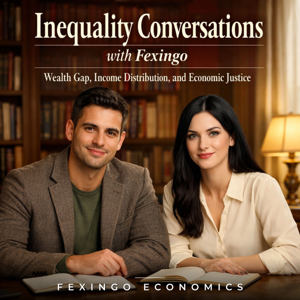


Episode 42 of Inequality Conversations with Fexingo digs into a surprising driver of wealth inequality: the hidden prices of hospital services. Lucas and Luna explore how opaque pricing forces uninsured and underinsured patients to pay dramatically more than insurers — often five to ten times more — for the exact same procedure. They walk through a concrete example: a $15,000 MRI billed to an uninsured patient that costs a private insurer $2,500. They explain how this system creates a 'wealth drain' on low-income families who can't negotiate or shop around, and how even federal price transparency rules have failed to help because hospitals bury the data in unreadable formats. The episode also touches on the broader economic logic: hospitals use inflated 'chargemaster' rates to extract higher payments from commercial insurers, and the uninsured become the unwitting pawns. No prior episode has covered hospital price opacity as a wealth drain mechanism. Listeners will come away understanding one concrete policy failure — and why the sticker price on a hospital bill is essentially fictional.
#HospitalPricing #PriceTransparency #WealthGap #HealthcareCosts #Uninsured #Chargemaster #MedicalBilling #Economics #Inequality #WealthDrain #HealthcarePolicy #Underinsured #CMS #HospitalBills #FinancialToxicity #FexingoBusiness #BusinessPodcast #InequalityConversations
Keep every episode free: buymeacoffee.com/fexingo
In episode 41 of Inequality Conversations, Lucas and Luna unpack a hidden wealth drain that costs low-income families hundreds of dollars a year: check-cashing fees. With roughly 6 million U.S. households unbanked, these services charge 1% to 4% of a check's face value — a regressive tax that adds up to billions annually. The hosts trace how a single worker cashing a $600 biweekly paycheck loses over $300 a year in fees alone, compared to zero cost with a basic bank account. They explore the structural barriers like minimum balance requirements and ChexSystems blacklisting that keep people out of banking, and examine recent Federal Reserve data showing the unbanked rate has barely budged since 2019. The episode also highlights the rise of municipal public banking pilots in cities like Los Angeles and Philadelphia as a potential alternative. A sharp, data-driven look at how the infrastructure of money itself reinforces inequality.
#CheckCashing #Unbanked #WealthDrain #BankingDeserts #FinancialInclusion #RegressiveTax #ChexSystems #FederalReserve #PublicBanking #LosAngeles #Philadelphia #Inequality #WealthGap #EconomicJustice #FexingoBusiness #BusinessPodcast #Economics #IncomeDistribution
Keep every episode free: buymeacoffee.com/fexingo
In Episode 40 of Inequality Conversations, Lucas and Luna examine how pawnshops — once a last-resort lender — have evolved into a multibillion-dollar industry that preys on low-income communities. They walk through the typical pawn transaction, the eye-popping effective annual percentage rates (often 200% or higher), and the state-level legal loopholes that allow these rates. The hosts compare pawnshop economics to payday lending and title loans, revealing a debt trap that costs borrowers billions each year. They also touch on the racial and geographic dimensions: pawnshops are far more concentrated in Black and Hispanic neighborhoods than in white ones. Finally, they explore small policy fixes — like rate caps and mandatory data collection — that could reduce harm without eliminating the service entirely. A sobering look at a quiet wealth drain that's costing the working poor millions every day.
#Pawnshop #WealthGap #IncomeInequality #PredatoryLending #ConsumerFinance #DebtTrap #EconomicJustice #LowIncomeBorrowers #InterestRates #StateRegulation #RacialWealthGap #CFPB #FinancialInclusion #AlternativeLending #LunaAndLucas #FexingoBusiness #BusinessPodcast #Economics
Keep every episode free: buymeacoffee.com/fexingo
In this episode of Inequality Conversations, Lucas and Luna explore how medical debt functions as a hidden driver of wealth inequality in the United States. They examine the case of a single mother in Texas who faced wage garnishment over a $3,800 hospital bill, and break down how medical debt affects credit scores, interest rates, and homeownership. The conversation covers the impact of debt collection lawsuits, the role of non-profit hospitals in aggressive collections, and legislative efforts like the 2025 No Surprises Act update. Lucas and Luna also discuss data from the Consumer Financial Protection Bureau on the 100 million Americans with medical debt, and how this burden falls disproportionately on Black and Hispanic households. The episode connects medical debt to the broader wealth gap, showing how a single illness can erase decades of financial progress.
#MedicalDebt #WealthGap #EconomicJustice #IncomeInequality #ConsumerProtection #CFPB #CreditScores #WageGarnishment #NoSurprisesAct #NonProfitHospitals #FinancialVulnerability #BlackHouseholds #HispanicHouseholds #DebtCollection #HealthCareCosts #Economics #FexingoBusiness #BusinessPodcast
Keep every episode free: buymeacoffee.com/fexingo
Lucas and Luna examine how federal disaster aid disproportionately benefits wealthy homeowners over renters and low-income families. They discuss FEMA's 'Individual Assistance' program, which provides grants for home repairs and temporary housing, but requires recipients to have flood insurance or prove they can repay loans. Using data from Hurricane Harvey (2017) and Hurricane Ida (2021), they show how homeowners received an average of $7,000 in grants while renters got $1,200. The episode also covers how FEMA's recertification process burdens low-income claimants and how states like Texas and Louisiana have different outcomes based on their insurance regulations. The hosts tie this to broader wealth inequality and suggest policy fixes like upfront rental assistance and simplified applications.
#FEMA #DisasterRelief #WealthInequality #HurricaneHarvey #HurricaneIda #FloodInsurance #RentersRights #Homeownership #ClimateChange #DisasterPolicy #EconomicJustice #WealthGap #Louisiana #Texas #NFIP #FexingoBusiness #BusinessPodcast #Economics
Keep every episode free: buymeacoffee.com/fexingo
In Episode 37, Lucas and Luna explore how the legacy of redlining—a 1930s federal housing policy—continues to shape the racial wealth gap in 2026. They break down the specific numbers: how neighborhoods rated 'D' lost an estimated $200 billion in home equity over decades, and how today's home appraisal gap still undervalues homes in majority-Black neighborhoods by up to 23%. Luna shares a striking anecdote from a recent Brookings study showing that a home in a Black neighborhood is appraised at $46,000 less than an identical home in a white neighborhood. The hosts connect this historical policy to modern barriers like algorithmic bias in mortgage lending and the ongoing struggle for fair housing. If you've learned something useful, listener support at buy me a coffee dot com slash fexingo keeps this show ad-free.
#Redlining #WealthGap #HousingPolicy #RacialInequality #HomeAppraisal #FairHousing #Economics #InequalityConversations #FexingoBusiness #BusinessPodcast #WealthInequality #IncomeDistribution #EconomicJustice #HomeEquity #MortgageLending #AlgorithmicBias #BrookingsStudy #HOLC
Keep every episode free: buymeacoffee.com/fexingo
Lucas and Luna unpack the Earned Income Tax Credit (EITC) — one of the most effective anti-poverty programs in the U.S. tax code. They explain how the credit works, why it puts cash directly into the pockets of low-income workers, and how a single mother of two earning $25,000 a year can get a refund of roughly $5,500. They trace the EITC's bipartisan origins under President Ford and its expansions under Reagan and Clinton. The conversation drills into why the credit phase-out creates a hidden marginal tax rate of 21 cents per dollar, and why 20 percent of eligible families still don't claim it. They end with a forward look at the 2026 policy debate over expanding the childless-worker EITC.
#EITC #EarnedIncomeTaxCredit #TaxPolicy #AntiPoverty #WealthGap #IncomeDistribution #EconomicJustice #WorkingFamilies #TaxCredits #PovertyReduction #BipartisanPolicy #TaxReturns #FilingSeason #WageSubsidy #LowIncomeWorkers #ChildTaxCredit #Economics #FexingoBusiness
Keep every episode free: buymeacoffee.com/fexingo
Lucas and Luna explore how subscription-based business models—from streaming services to meal kits to car subscriptions—disproportionately drain wealth from low-income households. They examine the psychology of auto-renewals, the financial impact of forgotten subscriptions, and how a 2025 Federal Trade Commission rule requiring 'click-to-cancel' has only partially addressed the problem. The episode cites a 2024 study from the Consumer Financial Protection Bureau finding that the average American household spends $62 per month on unused subscriptions, with low-income families spending a higher percentage of their income on these fees. They also discuss how subscription pricing creates a 'poverty premium,' where those who can least afford it pay more for essential services like internet and phone plans due to prepaid penalties and lack of credit card access. The hosts conclude with a look at emerging state-level legislation in California and New York that targets subscription cancellation friction.
#SubscriptionEconomy #ConsumerProtection #WealthGap #FTC #CFPB #AutoRenewal #PovertyPremium #ClickToCancel #FinancialInclusion #CaliforniaLaw #NewYorkLaw #HiddenFees #WealthDrain #Economics #FexingoBusiness #BusinessPodcast #InequalityConversations #EconomicJustice
Keep every episode free: buymeacoffee.com/fexingo
This episode of Inequality Conversations with Fexingo dives into how payday lending creates a systematic wealth drain for low-income households. Lucas and Luna examine a typical payday loan: a $375 loan with a $55 fee, which translates to an annual percentage rate of 391 percent. They trace how the two-week loan structure, combined with aggressive rollover practices, traps borrowers in a cycle of debt that extracts over $4 billion in fees annually in the United States. The hosts contrast this with the banking options available to higher-income households, such as overdraft lines of credit at 15 percent APR. The conversation explores why state interest rate caps, like the 36 percent rate cap implemented for military families under the Military Lending Act, have been effective but remain limited in scope. Lucas and Luna discuss the business model of payday lenders, storefront saturation in low-income neighborhoods, and the role of federal preemption that prevents states from regulating lenders chartered by other states. The episode concludes with a look at recent proposals by the Consumer Financial Protection Bureau and the potential for postal banking as an alternative. A sincere mid-episode moment acknowledges that this podcast is ad-free and supported by listeners via Buy Me a Coffee.
#PaydayLending #WealthDrain #Inequality #Economics #PredatoryLending #ConsumerFinance #CFPB #MilitaryLendingAct #InterestRateCaps #DebtCycle #FinancialInclusion #PostalBanking #LowIncome #EconomicJustice #FexingoBusiness #BusinessPodcast #InequalityShow #PersonalFinance
Keep every episode free: buymeacoffee.com/fexingo
In this episode of Inequality Conversations with Fexingo, Lucas and Luna explore how homeowners association fees act as a regressive wealth drain, disproportionately hitting lower-income homeowners. They examine the case of a family in a suburban Atlanta HOA who faced a special assessment that wiped out their emergency savings, and discuss how HOA rules on rental caps and parking can trap residents in depreciating assets. The conversation ties to the broader wealth gap, showing how middle-class homeowners often bear costs that wealthier communities can avoid or pass on. Tune in for a concrete look at a hidden driver of inequality.
#HOA #HomeownersAssociation #WealthGap #EconomicInequality #Housing #WealthDrain #RegressiveFees #SpecialAssessment #Atlanta #MiddleClass #Homeownership #WealthInequality #Economics #FexingoBusiness #BusinessPodcast #InequalityPodcast #HiddenCosts #HousingPolicy
Keep every episode free: buymeacoffee.com/fexingo
From the publisher's feed