
Sign up to save your podcasts
Or

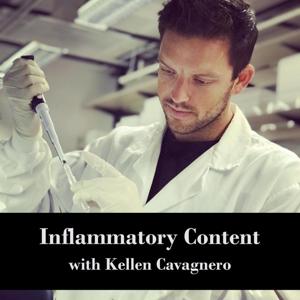


Fragile X syndrome is a genetic disorder and the leading cause of intellectual disability and autism. There is no treatment. In this episode, Kellen discusses recent gene therapy advances for treating Fragile X syndrome. The article highlighted in this episode was written by X. Shawn Liu and colleagues from Rudolf Jaenisch’s lab at the Whitehead Institute and is titled “Rescue of Fragile X Syndrome Neurons by DNA Methylation Editing of the FMR1 Gene”.
Paper: https://www.ncbi.nlm.nih.gov/pmc/articles/PMC6375087/
To help us spread science, please consider writing a review, sharing this episode with your friends and colleagues, or donating to support our work (Venmo @Kellen-Cavagnero).
Please reach out to us via email ([email protected]) or Twitter (@KellenCavagnero) with any questions, comments, topic suggestions, etc.
Medical systems around the world need our help with COVID19. After sharing an important PSA, Kellen dives into the topic of unconventional T cells. These novel immune subsets have unique functions with great therapeutic potential. In this episode, a seminal paper by Michael Crowther and colleagues is discussed. It’s titled, “Genome-wide CRISPR–Cas9 screening reveals ubiquitous T cell cancer targeting via the monomorphic MHC class I-related protein MR1”.
Paper: https://www.ncbi.nlm.nih.gov/pubmed/31959982
Review: https://www.ncbi.nlm.nih.gov/pubmed/30397170
To help us spread science, please consider writing a review, sharing this episode with your friends and colleagues, or donating to support our work (Venmo @Kellen-Cavagnero).
Please reach out to us via email ([email protected]) or Twitter (@KellenCavagnero) with any questions, comments, topic suggestions, etc.
Antibiotic resistance is an enormous public health problem. The prevalence of superbugs is increasing over time, whereas the number of drugs available to treat these microbes is not. Bacterial communities called biofilms harbor strains of bacteria that persist in the face of antibiotic therapy. Thus, in order to tackle the problem of antibiotic resistance, we must better understand biofilms. In this episode, Kellen covers a recent report on this topic by Fransisco Diaz-Pascual and colleagues titled, “Breakdown of Vibrio cholerae biofilm architecture induced by antibiotics disrupts community barrier function”.
Paper: https://www.ncbi.nlm.nih.gov/pubmed/31659297
Review: https://www.ncbi.nlm.nih.gov/pubmed/31295420
To help us spread science, please consider writing a review, sharing this episode with your friends and colleagues, or donating to support our work (Venmo @Kellen-Cavagnero).
Please reach out to us via email ([email protected]) or Twitter (@KellenCavagnero) with any questions, comments, topic suggestions, etc.
Engineering bacteria to kill cancer cells… Sounds like science fiction, right? Well, it’s actually all science, no fiction! Sreyan Chowdhury and colleagues from Tal Danino’s lab at Columbia University describe this novel therapeutic approach in their recent Nature Medicine publication, “Programmable bacteria induce durable tumor regression and systemic antitumor immunity”.
Paper: https://www.ncbi.nlm.nih.gov/pmc/articles/PMC6688650/
Review: https://www.ncbi.nlm.nih.gov/pmc/articles/PMC6558487/
Video: https://www.youtube.com/watch?v=fnpIIZrjMtM&t=18s
To help us spread science, please consider writing a review, sharing this episode with your friends and colleagues, or donating to support our work (Venmo @Kellen-Cavagnero).
Please reach out to us via email ([email protected]) or Twitter (@KellenCavagnero) with any questions, comments, topic suggestions, etc.
In this episode, Kellen covers a topic near and dear to his heart – group two innate lymphoid cells, or ILC2s. Specifically, Kellen discusses the original article titled “Neutrophils restrain allergic airway inflammation by limiting ILC2 function and monocyte–dendritic cell antigen presentation”, which was published in the journal Science Immunology in November 2019 by Dhiren Patel and colleagues.
Paper: https://immunology.sciencemag.org/content/4/41/eaax7006/tab-pdf
Review: https://www.ncbi.nlm.nih.gov/pmc/articles/PMC5614509/ (shameless self-promo)
To help us spread science, please consider writing a review, sharing this episode with your friends and colleagues, or donating to support our work (Venmo @Kellen-Cavagnero).
Please reach out to us via email ([email protected]) or Twitter (@KellenCavagnero) with any questions, comments, topic suggestions, etc.
When most people think of viruses, they usually think of the negative aspect of viruses –- agents of infectious disease. We, however, are not most people! Not only are viruses useful biotechnological tools, but they are also capable of promoting health outcomes in disease models. In this episode, Kellen covers a report released in December 2019 in Nature Immunology by Lei Liu, Tao Gong, and colleagues titled “Commensal viruses maintain intestinal intraepithelial lymphocytes via noncanonical RIG-I signaling”.
Paper: https://www.nature.com/articles/s41590-019-0513-z
Review: https://www.ncbi.nlm.nih.gov/pmc/articles/PMC3140792/
To help us spread science, please consider writing a review, sharing this episode with your friends and colleagues, or donating to support our work (Venmo @Kellen-Cavagnero).
Please reach out to us via email ([email protected]) or Twitter (@KellenCavagnero) with any questions, comments, topic suggestions, etc.
Plants are a great source of fiber and micronutrients, which makes them an important component of a heathy diet. However, it was recently shown that there is another aspect of plants that allows them to contribute to well-being –- exosomes. In this episode, Kellen reviews a paper published in 2018 in Cell Host & Microbe by Yun Teng and colleagues titled “Plant-Derived Exosomal MicroRNAs Shape the Gut Microbiota”.
Paper: https://www.ncbi.nlm.nih.gov/pmc/articles/PMC6746408/
To help us spread science, please consider writing a review, sharing this episode with your friends and colleagues, or donating to support our work (Venmo @Kellen-Cavagnero).
Please reach out to us via email ([email protected]) or Twitter (@KellenCavagnero) with any questions, comments, topic suggestions, etc.
Brief introduction of what this podcast will entail and the reason behind its creation.
To help us spread science, please consider writing a review, sharing this episode with your friends and colleagues, or donating to support our work (Venmo @Kellen-Cavagnero).
Please reach out to us via email ([email protected]) or Twitter (@KellenCavagnero) with any questions, comments, topic suggestions, etc.
From the publisher's feed