
Sign up to save your podcasts
Or

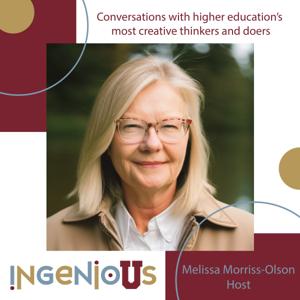


In response to a frightening array of challenges facing public higher education nationally and acutely concentrated in Pennsylvania, the Pennsylvania State System of Higher Education (PASSHE) undertook an innovative and bold redesign to fundamentally transform education and business models. Launched in 2017, the multi-phase, System redesign focused on 3 goals: 1) advance student success; 2) leverage universities’ strengths as a system; and 3) enhance “systemness” through accountability and governance. In support of the effort, the Board of Governors established metrics-based expectations for each university’s financial stability, transparency, accountability, and sustainability.
With two phases completed, early results are stunning. In this first episode of Season 4, we sit down with PASSHE Chancellor Dr. Daniel Greenstein and PASSHE Board of Governors Chair Dr. Cynthia Shapira to learn the backstory for this unprecedented effort. Dan and Cindy speak candidly about what it takes to pull off a change effort of this magnitude including the importance of having an effective governance and leadership team, data driven decision making, and an unwavering student-first commitment. Early success markers include the integration of six Universities to create two new powerhouse regional Universities and a a historic state funding increase of $75 million (16 percent) to $552.5 million in the 2022-23 state budget.
Of all the problems facing the higher education sector today, the lack of differentiation may be the root cause of many of them. Too many colleges and universities look like every other college and university, offering similar degrees, similar student services, similar athletic opportunities, their faculty publishing in the same journals and attending the same conferences. As the size of the undergraduate student market shrinks—as we now live through the long-predicted “demographic cliff”—the same institutions desperately chase a share of an ever-shrinking market. Perhaps rather than defining the problem as a lack of differentiation, we might instead call it “the drift toward uniformity.”
In David J. Staley's new IngenioUs blog article, he suggests that this steady move toward uniformity is driven by 'FOLD: “fear of looking different” from every other college or university.' And rather than protecting our institutions from the headwinds, Staley cautions that an increasingly standardized model may actually heighten our vulnerability to disruption. Listen here to learn more.
It’s an easy assumption to make: improving access must necessarily degrade quality. Enhancing quality always costs more money, increasing the cost of education. These beliefs have been called the Iron Triangle of Higher Education. However, a number of institutions have been demonstrating over recent years that institutional outcomes of quality, access, and even affordability can be improved simultaneously. In this IngenioUs mini, Bay Path University professor of higher education leadership, Dr. Lauren Way speaks with Dr. Stephen Ehrmann about his upcoming Leading Edge Thinking in Higher Education seminar on this very important topic. Listen in to leanr more about what insights Dr. Ehrmann will be sharing in the webinar.
Dr. Stephen C. Ehrmann is an independent scholar and the author of Pursuing Quality, Access, and Affordability: A Field Guide to Improving Higher Education (Stylus). His book provides a practical, and long-view guide to implementing transformative educational change across an entire institution and ultimately, US higher education as a whole. Dr. Ehrmann is a former grant-maker, consultant, and vice provost for teaching and learning at George Washington University, and has served as Program Officer for the Fund for the Improvement of Postsecondary Education (FIPSE), and as Director of Educational Research and Assistance.
To register for this free event, scheduled for July 21, 2022 at 12:00 noon (ET) see here.
In this mini episode of IngenioUs, we speak with Bay Path University EdD Higher Education Leadership and Organizational Studies faculty, Dr. Kristine Barnett. Listen in to hear Dr. Barnett's perspective about what makes the HELOS unique and what students can expect to experience in her classroom.
At the conclusion of every IngenioUs conversation, we ask our guests what’s on their radar right now? What is top of mind? What keeps them up at night? As seasoned higher ed professionals and thought leaders, the responses suggest that higher education is indeed undergoing a sea wave of change. Depending upon where one’s institution is situated, the impact clearly varies. Even still, there are commonalities that emerged across nearly all of our Season 3 conversations. In our final episode for the year, our IngenioUs host, Dr. Melissa Morriss-Olson and Bay Path University EdD in Educational Leadership program coordinator and professor, Dr. Mela Dutka unpack these common themes, adding their own insights about this important moment, what lies ahead, and why it matters.
In this IngenioUs mini episode, we hear from RHB consultants and conveners of a recent, year-long ground breaking study about strategic planning practices in higher education, Dr. Aimee Hosemann and Dr. Rob Zinkan. What are strategic plans for, and who are they for? What does it mean to be “strategic”? Amidst such rapid change, how relevant can a plan truly be? These are among the questions addressed in a yearlong study of 108 active college and university strategic plans. Researchers selected 16 strategic plans (of the 108) containing some of the most strategic tendencies and then interviewed presidents of those institutions. Based on the study’s findings and implications, Zinkan and Hosemann will outline important leadership considerations to avoid the many pitfalls of strategic planning and ensure a process focused on strategy and outcomes. To register for our June 9 Leading Edge Thinking in Higher Education free webinar, see here: https://register.gotowebinar.com/register/8558370233447293454
Having lived and worked within the diversity, equity, and inclusion space for several years, Dr. Amer F. Ahmed is not afraid to speak clearly and bluntly about what higher ed leaders and faculty need to know; especially if they want to create campus cultures where everyone can find a place to belong. As the Vice Provost for Diversity, Equity, and Inclusion at the University of Vermont, Dr. Ahmed is a nationally recognized thought leader and DEI practitioner. He is skilled at leading university-wide strategic initiatives to build capacity and foster a culture of belonging. In our conversation, Dr. Ahmed gets real about what it takes to do just that and why he believes this work can make the difference for institutional survival.
See here for links to the resources discussed in this episode:
https://www.equipinclusive.com/
https://www.global-inclusion.com/
In recent times, many higher ed observers have suggested that higher ed's business model is broken. In this episode we speak with the co-authors of the 'hot-off-the-press' book, The College of the Future, which lays out a bold plan to 'fix the broken business model' for those institutions that are most vulnerable--America’s private, non-profit colleges. These colleges have long been a haven for students, an anchor for communities, and a cultural oasis in small towns and cities across America, but rising costs and falling enrollments have plunged many of these venerable institutions into debt. In the past decade, dozens have closed their doors for good, a devastating occurrence for students, faculty, staff, alumni, and the communities surrounding the campuses. Even institutions that are thriving are faced with headwinds that necessitate strategic evolution.
From the publisher's feed