
Sign up to save your podcasts
Or



Anti-Inflammatory Lifestyle: A Holistic Path to Living Well
At Innerwealth, we believe that to enjoy life fully, we must look after ourselves holistically. This means addressing every aspect of our being: mind, body, relationships, career, wealth, spirit, and social connections. A sense of purpose underpins all of this, providing the drive to live meaningfully.
The first step is ensuring we’re not making life harder for ourselves by adopting habits that hinder our progress. From the food we eat and the drinks we consume, to the thoughts we entertain and the behaviours we exhibit, everything contributes to either vitality or struggle. Starting each day inspired sets the tone for an extraordinary day—and ultimately, a fulfilling life.
Inflammation is a natural response to life. It’s how our body and mind react to environmental stimuli, stresses, and experiences. In its short-term form, inflammation supports growth, healing, and adaptation. However, when left unchecked, it can accumulate and become a chronic block to enjoyment, vitality, and long-term health. This is why we champion an anti-inflammatory lifestyle—to balance the growth spurred by life’s challenges with daily recovery and renewal.
These scenarios illustrate how understanding and expressing what we want from our giving can actually lead to more meaningful and sustainable relationships.
These scenarios illustrate how understanding and expressing what we want from our giving can actually lead to more meaningful and sustainable relationships.
These scenarios illustrate how understanding and expressing what we want from our giving can actually lead to more meaningful and sustainable relationships.
There's no two ways about it, vip, is the key to your innerwealth... and what is your innerwealth, it's the key to your future.
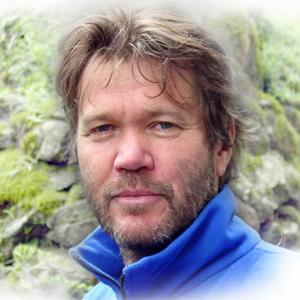
Chris Walker introduces the session by discussing the concept of Innerwealth, which is about feeling good internally, independent of external circumstances. He critiques the idea that external achievements or habits like exercise, healthy eating, or even acquiring knowledge necessarily lead to lasting happiness. Instead, he emphasises that life operates at the border of support and challenge, and resilience or stoicism often leads to rigidity rather than true inner contentment.
Chris introduces his framework of gratitude, presence, certainty, and love as the foundation for maintaining an internal smile regardless of external chaos. He discusses the importance of creating an inner vision, which is not bound by reality but driven by imagination. This vision, developed with guidance, connects to one's soul and enables a person to align their inner wealth with their external goals without self-sabotage.
He also contrasts the loud outer voices—such as societal expectations, emotions, and self-doubt—with the quieter, yet more essential, inner voice. Drawing from his experience with traditional monks, Chris highlights the importance of cultivating a genuine inner smile, visible in one's eyes, as a marker of true inner wealth and inspiration.
Chris challenges the misconception that overcoming life's challenges requires substantial mental strength. He asserts that many difficulties are just normal aspects of life and don't warrant extraordinary willpower. By understanding universal laws and accepting life’s natural order, individuals can minimize the need for resilience. Using examples from various fields like work, fitness, relationships, and investments, Chris argues that wisdom is more crucial than mental strength in navigating life's dualities. He criticizes the modern focus on resilience, promoting instead a balanced perspective that recognizes both positive and negative experiences as integral parts of life
In this video, Chris challenges the common belief that mental strength is crucial for overcoming life's challenges. He argues that many difficulties are simply natural parts of life and do not require extraordinary willpower. Chris emphasizes understanding universal laws and accepting life's natural order to reduce the perceived need for resilience. Using examples from various areas such as work, fitness, relationships, and investments, he illustrates that wisdom and balance are more effective in navigating life's ups and downs than sheer mental strength. He critiques the modern obsession with resilience and promotes a perspective that values wisdom and understanding of life's dualities over the pursuit of constant mental toughness.
From the publisher's feed