
Sign up to save your podcasts
Or

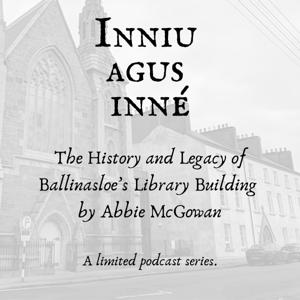


This is the last episode in the series, and it deals with the legacy of Ballinasloe's Library Building and its rehabilitation as an inclusive, peaceful, and safe space.
The episode investigates how podcasts like this are being used to engage communities in their local histories. The approach to buildings with difficult or contested histories in Ireland is also examined. Library staff from Ballinasloe also share their experiences of working in the building, and members of the community tell us what the library means to them,
This episode features the memories of four people who were committed to St. Joseph's Industrial School, Ballinasloe between the years 1955 and 1968. The experiences featured belong to some of the last children committed to the school and here they tell their experiences in their own words.
Listeners should be warned that this episode does contain adult language and subject matter and some listeners may find some of the experiences featured upsetting.
This episode features the recollections from people in Ballinasloe of the convent and the industrial, primary, and secondary schools associated with it.
The episode also examines the impact those memories have on their perception of the building as it stands today.
Listener discretion is advised as some may find the stories featured upsetting.
The information in this episode is a result of original research based on interviews conducted with people from Ballinasloe who remember the Industrial School. The full list of sources for this episode is available at www.stjosephsindustrialschoolballinasloe.wordpress.com
This episode examines more recent history of St Joseph’s Industrial School and the legacy of these schools.
It includes the discovery of eighteen children who were committed to St Joseph’s Industrial School at the time of their death- but with burial records available for just two of them.
This episode features a surprising meeting that this project resulted in, and discusses the links between St Joseph's, mother and baby homes, and Magdelene Laundries.
The information in this episode is a result of original research based on civil records, census records, and information obtained in the Sister's of Mercy's archive. The full list of sources for this episode is available at www.stjosephsindustrialschoolballinasloe.wordpress.com.
This episode examines the early history of Ballinasloe's Library building and features a discussion of what life was like in Ballinasloe in the 1800s, the religious and political conflicts that were ongoing in the town during that period, and examines the reformatory and industrial school systems.
The information in this episode is a result of original research based on contemporary newspapers and school inspector reports. The full list of sources for this episode is available at www.stjosephsindustrialschoolballinasloe.wordpress.com.
Thanks to Hannah Daly, Thomas Dolan, Darren Kelly, Patrick McGowan and Colm Muldoon for providing their voices for this episode.
Inniú agus Innné, a new limited series that explores the life cycle of the library building in Ballinasloe, Co. Galway.
The building began as a residential space, before becoming a convent, then Connacht's first girl's reformatory, part of an industrial school complex, and finally a thriving public library.
This trailer features excerpts from some of the interviews that feature in the series.
From the publisher's feed
Shame. Stigma. Redemption. The walls of Ballinasloe Library in Co. Galway have heard it all.
Once a Convent, then St Joseph’s Reformatory School- the first girls’ reformatory in Connacht- and…
Today, the building echoes with the bustle of community, learning, and life; but the past hasn’t gone anywhere.
This podcast opens the doors to a story that has been pushed to the margins. Through voices of survivors, locals, and library staff members, you’ll hear stories that span two centuries and how this building has been reclaimed from somewhere marked by shame to something hopeful.
Librarian Abbie McGowan, examines the story of a building and the people associated with it.