
Sign up to save your podcasts
Or


2025 marked real pressure across the global aid landscape, and the effects continue to emerge. Funding cuts. Programs paused or closed. Organisations asking hard questions about how to keep essential services running. But alongside that disruption, something else is emerging: a genuine sense of possibility.
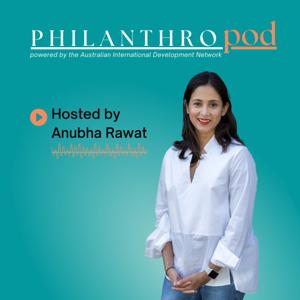
In this conversation, host Anubha Rawat sits down with Neil Buddy Shah, CEO of the Clinton Health Access Initiative (CHAI), to take stock of where global health has landed after a difficult year, and to look seriously at what comes next.
CHAI works as a technical and strategic partner to governments in over 35 countries, sitting at the intersection of governments, business and health, negotiating the conditions that drive more equitable access to lifesaving medicines, vaccines, and diagnostics. It's a model with deep roots: CHAI was founded in 2002 at the height of the HIV/AIDS epidemic, and its early work negotiating drug prices is a case study in what's possible when the right stakeholders align around a clear goal. Crucially, CHAI only ever works at the invitation of governments, and that distinction shapes everything about how the partnership functions.
Buddy brings his expertise and CHAI's history to bear in this conversation, while staying firmly focused on what's ahead. He describes the current moment as defined by paradox: crisis on one side, and some of the most exciting scientific and biomedical developments in a generation on the other. And he's optimistic: periods of disruption, he reflects, are also opportunities to take stock, think differently, and do things differently.
From there, the conversation ranges widely. Buddy talks about the discipline of doing more with less, finding efficiencies without sacrificing coverage, helping ministries reanalyse budgets, and leveraging new sources of financing. He reflects on scientific breakthroughs as the thing that gives him the most hope, and what it takes to translate discovery into access for the people who need it most. As Chair of Anthropic AI's Long-Term Benefit Trust, he makes a case for why global health leaders should be thinking about AI's potential: not as a fix-all, but as a genuinely powerful technology that low-income countries could use to build healthcare models at scale. And because CHAI only ever enters a country at the invitation of its government, Buddy is attuned to what trust between implementers, governments, and funders actually looks like in practice, starting with humility, and with the conviction that the people closest to a problem are best placed to find its solutions.
On the future and what success looks like, he's both grounded and aspirational: ending the AIDS epidemic in Africa, driving real reductions in malaria mortality, and reaching a point where national governments are genuinely in charge of their own health systems. With better tools, more capital, and more technical knowledge than ever before, he believes these aspirations are within reach, if we're disciplined and intentional enough to pursue them.
Hosted on Acast. See acast.com/privacy for more information.
 View all episodes
 By Powered by the Australian International Development Network
5
33 ratings
2025 marked real pressure across the global aid landscape, and the effects continue to emerge. Funding cuts. Programs paused or closed. Organisations asking hard questions about how to keep essential services running. But alongside that disruption, something else is emerging: a genuine sense of possibility.
In this conversation, host Anubha Rawat sits down with Neil Buddy Shah, CEO of the Clinton Health Access Initiative (CHAI), to take stock of where global health has landed after a difficult year, and to look seriously at what comes next.
CHAI works as a technical and strategic partner to governments in over 35 countries, sitting at the intersection of governments, business and health, negotiating the conditions that drive more equitable access to lifesaving medicines, vaccines, and diagnostics. It's a model with deep roots: CHAI was founded in 2002 at the height of the HIV/AIDS epidemic, and its early work negotiating drug prices is a case study in what's possible when the right stakeholders align around a clear goal. Crucially, CHAI only ever works at the invitation of governments, and that distinction shapes everything about how the partnership functions.
Buddy brings his expertise and CHAI's history to bear in this conversation, while staying firmly focused on what's ahead. He describes the current moment as defined by paradox: crisis on one side, and some of the most exciting scientific and biomedical developments in a generation on the other. And he's optimistic: periods of disruption, he reflects, are also opportunities to take stock, think differently, and do things differently.
From there, the conversation ranges widely. Buddy talks about the discipline of doing more with less, finding efficiencies without sacrificing coverage, helping ministries reanalyse budgets, and leveraging new sources of financing. He reflects on scientific breakthroughs as the thing that gives him the most hope, and what it takes to translate discovery into access for the people who need it most. As Chair of Anthropic AI's Long-Term Benefit Trust, he makes a case for why global health leaders should be thinking about AI's potential: not as a fix-all, but as a genuinely powerful technology that low-income countries could use to build healthcare models at scale. And because CHAI only ever enters a country at the invitation of its government, Buddy is attuned to what trust between implementers, governments, and funders actually looks like in practice, starting with humility, and with the conviction that the people closest to a problem are best placed to find its solutions.
On the future and what success looks like, he's both grounded and aspirational: ending the AIDS epidemic in Africa, driving real reductions in malaria mortality, and reaching a point where national governments are genuinely in charge of their own health systems. With better tools, more capital, and more technical knowledge than ever before, he believes these aspirations are within reach, if we're disciplined and intentional enough to pursue them.
Hosted on Acast. See acast.com/privacy for more information.