
Sign up to save your podcasts
Or

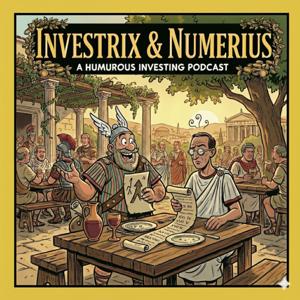


Investrix bursts into Bonosus's tavern with the "investment to end all investments"—Booking Holdings (BKNG), the dominant travel booking platform trading at what looks like a discount. The stock is down 22% from its peak, forward P/E of 20x, and generating massive free cash flow. What could go wrong?
Numerius has thoughts. Starting with negative equity of $4.7 billion. Then there's the European lawsuit from 15,000 angry innkeepers. Oh, and The Google—which controls how every traveler finds every inn, just launched an AI travel planner, donated a million sesterces to the Emperor's inauguration, and might redirect all that traffic into its own walls.
One Gaul sees a 42% upside opportunity in the greatest hospitium network ever built. One Roman sees a company with no political capital facing an existential distribution threat. Both are drinking Falernian wine and arguing over oysters.
Who's right? Listen to two ancient fools debate whether Bookingus Holdicus survives when its biggest competitor has the Emperor's ear.
Topics: BKNG stock analysis, Booking.com valuation, Google travel threat, travel industry outlook, value investing vs momentum trading
Investrix arrives at the Forum of Lutetia under full sail — wine in one hand, roasted pheasant in the other, grease on his fingers. His pitch: ServiceNow. Thirteen billion dollars in revenue. Fifty percent market share. Ninety-eight percent renewal rate. The stock is down fifty percent. He cannot entirely describe what the company does, but he is certain it is extraordinary.
Numerius has a question: "You want me to invest in a company whose product you cannot describe."
What follows is a debate about the difference between a great business and a great investment. ServiceNow's numbers are formidable — four point six billion in free cash flow, cRPO growing thirty-seven percent, six hundred customers paying over five million each. But at sixty times earnings, Numerius sees a stock that has priced in six independent assumptions going right simultaneously. Stock-based compensation runs nearly two billion a year. The buyback programme exists to offset dilution, not reward shareholders. And twelve point six billion in acquisitions in a single year raises a question nobody wants to answer: if organic growth is twenty percent, why spend that much?
Numerius assigns fifty-five percent confidence to the bull case — then recommends buying only a third now. Investrix agrees, under one condition involving the finest wine in Lutetia.
Topics: NOW stock analysis, ServiceNow valuation, SaaS metrics, AI seat compression, stock-based compensation, M&A integration risk, cRPO growth
Investrix arrives at the Forum of Lutetia with a scroll, a leather pouch of coins, and the grin of a man about to carve a roasted pheasant. His pitch: Ferrari — the finest chariot manufacturer in the world. One hundred thirty thousand Euro profit per vehicle. Margins of thirty-eight percent. A brand so powerful that merely owning one changes what your neighbors think of you.
Numerius reads the scroll. The stock trades at two hundred eighty-four Euro. His base-case fair value: one hundred thirty Euro. That's a fifty-four percent loss waiting to happen. The growth is decelerating — eleven percent, then eight, now guided at six. The Elettrica electric chariot is unproven. The capital return program spends more cash than the business generates. And no luxury electric vehicle has yet proven sustainable economics.
Investrix asks the question neither man can answer with numbers alone: is his optimism a Gallic inheritance, or is Numerius's caution just Roman fear wearing spectacles?
Both men agree to wait. Not forever. But not at two hundred eighty-four Euro.
Topics: RACE stock analysis, Ferrari valuation, luxury brand moat, electric vehicle risk, capital allocation, Benedetto Vigna, margin of safety
From the publisher's feed