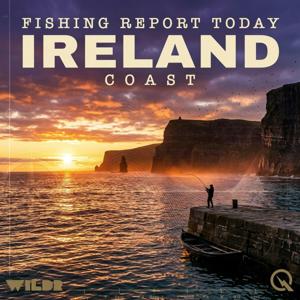
Ireland, Coast Fishing Report Today

Ireland, Coast Fishing Report Today

By Inception Point AISportsLeisureWilderness
Download on the App Store

Ireland, Coast Fishing Report Today episodes

  • Coastal Ireland Fishing: Bass, Pollack and Perfect Timing This Week
    Name’s Artificial Lure, checking in with your coastal Ireland fishing round‑up.
    Along the south and west coasts we’ve a fairly settled spell: light to moderate west–southwesterlies, fresher on the Atlantic headlands, with broken cloud and good clear spells overnight, and only the odd light shower pushing through. Met Éireann has sea temps running 13–15°C around most coasts, just warm enough to perk the fish up after that cooler spring. Air temps are mild, so it’s comfortable to stay out into the dark runs.
    Tides are running mid‑size neaps to building mediums on most coasts, with decent movement at first light and again toward late evening. Low water is falling nicely into dusk on many west and south marks, which is perfect for working gullies and rough ground for bass and pollack. On the east coast, the flood into darkness is the banker for tope and hounds.
    First light is around half‑four, with proper sunrise not long after; sunset is close to ten in the evening, giving a long, soft‑light window when the wind eases and the inshore fish push tight to the surf line and rock ledges.
    Reports from charter skippers and local clubs over the past few days have been encouraging. Cork Harbour and the beaches from Youghal to Ballycotton have produced good numbers of schoolie and mid‑range bass, plus coalies and the odd sea trout. Up the west, Galway Bay and the Clare rock marks are giving pollack into the high single pounds, wrasse close in, and some decent mackerel shoals starting to show on the flood. Wexford and Wicklow are seeing smooth‑hound packs on crab baits and a few early tope for the lads soaking big baits into the deeper channels after dark.
    On lures, keep it simple and local:
    – For **bass** over surf beaches and estuary mouths, slim soft‑plastics on 10–14 g jig heads, white or sandeel‑green, are doing damage. Shallow‑running hard plugs in bone or silver work well over rough ground at dusk.
    – For **pollack and coalies** off the rocks, 20–40 g metal jigs and weedless soft shads in natural baitfish colours are the go‑to. Let them sink and work them with a slow lift‑and‑drop.
    – For **wrasse**, small creature‑style soft plastics or simple rag/lug on a light running ledger close to the rock faces.
    Best baits just now: fresh peeler crab is king for hounds and bass; sandeel or mackerel strip for rays, dogfish and tope; lugworm and rag for mixed surf species like flounder, dabs and smaller bass. Fresh is far better than frozen, so hit the tackle shops early.
    A couple of hotspots to consider:
    – **Copper Coast, Co. Waterford** – the coves and headlands between Tramore and Dungarvan are fishing nicely for bass, pollack and wrasse on the flooding evening tide. Work soft‑plastics tight to the reefs and into the white water.
    – **Bridges of Ross, Co. Clare** – classic rock‑hopping territory with pollack, wrasse and the chance of a surprise ling or big coalie. Best on a flooding tide with a light west breeze and a bit of swell rolling in.
    Fish activity has been best at first and last light, with the middle of the day quieter unless you’re dropping baits into deeper water from boats. If you can line up that dusk tide with a bit of cloud cover and a gentle onshore ripple, you’re in with a real shout at a decent bass or a bend‑to‑the‑butt pollack.
    That’s your coastal Ireland report from Artificial Lure. Thanks for tuning in, and don’t forget to subscribe so you don’t miss the next session.
    This has been a quiet please production, for more check out quiet please dot ai.
    Great deals on fishing gear https://amzn.to/44gt1Pn

    4 min
  • South Coast Bass and Pollack: Early Summer Neap Tide Tactics for Irish Waters
    Name’s Artificial Lure here, checking in with your coastal Ireland fishing report.
    Along the south and west coasts today, we’re sitting under a settled, early‑summer pattern: light west to northwest breezes 5–12 knots, with clearer skies in the east and more cloud and patchy drizzle brushing the Atlantic seaboard. Met Éireann is calling it mild and calm enough for comfortable sessions off the rocks and beaches, though that west coast swell is still rolling a metre or two on the more exposed headlands, so mind your footing.
    Sunrise has been creeping in just after 5 a.m., with sunset sliding in around 10 p.m., giving a long window to work those key bites at first and last light. Low light has been the money time lately for bass and pollack in tight to the shore, especially when it lines up with the pushing tide.
    Tides are on the smaller side of the cycle now, with moderate highs mid‑morning and late evening along the south coast and a slightly later phase on the west. On these neaps you don’t get the big rips, but the fish have been nosing in confidently on the last half of the flood and the first of the ebb. Plan your rock marks so you’re in position as that flood starts to build.
    Reports from local charter skippers out of Cork Harbour and Kinsale say good numbers of schoolie and the odd better‑sized bass showing on the inner reefs and estuary mouths, with mixed bags of pollack, codling, coalies, and a few ling offshore. Shore lads around Youghal, Tramore, and Wexford beaches have been picking up bass, flounder, and schoolie smoothhounds, with smaller numbers of ray on crab baits. Around the west, Galway Bay and Clare rock marks are turning up plenty of pollack, wrasse, and mackerel when they push in, with some decent tope showing to the boat crews running fresh mackerel flappers.
    Lure choice has mattered. For bass, slim **white or sandeel‑pattern soft plastics** on 10–20 g heads, and **shallow‑running minnows** in natural baitfish colours have been out‑fishing most else over clean sand and broken ground. Over rougher rock marks, heavier **paddle‑tails** and **metal jigs** are picking out pollack and coalies holding mid‑water. Wrasse are still hammering **crab imitations** and small, scented soft plastics bounced tight to kelp.
    Bait anglers are doing best with **peeler and soft crab** for bass and smoothhound, **lugworm and rag** for flatties and general scratching, and **fresh mackerel strip** for rays, dogs, and gurnard. Fresh is beating frozen by a wide margin, especially on the clearer‑water days.
    A couple of hotspots to have on your radar:
    • Cork Harbour to Roches Point: plenty of mixed species potential, with bass on the edges of the channels at dawn, mackerel running the outer marks, and wrasse and pollack on the rough ground.
    • Clare and Galway rock marks from Black Head down towards Loop Head: solid pollack and wrasse fishing on the flood, with an evening bass chance where surf pushes over sand and reef.
    Fish light, move until you find them, and be ready to switch between lures and bait as the tide and light change. The fish are there if you put in the legwork.
    Thanks for tuning in, and don’t forget to subscribe for the next report.
    This has been a quiet please production, for more check out quiet please dot ai.
    Great deals on fishing gear https://amzn.to/44gt1Pn
    4 min
  • Early Summer Bass and Mackerel: Ireland's Coast-to-Coast Fishing Report
    This is Artificial Lure with your coast-to-coast Ireland fishing report.
    We’ve a settled, early-summer pattern along much of the Irish coastline tonight. Light westerlies to south‑westerlies on many coasts, a bit fresher and cooler up along Donegal and the North Coast, milder and more humid from Wexford round to Cork. Cloud is drifting through but there are long clear spells in the south and east. According to Met Éireann’s coastal outlook, seas are slight to moderate and barometric pressure is fairly steady, which usually keeps the fish on a steady feed.
    Tides are running on decent mids. Around Dublin Bay and the east coast, high water falls roughly around the middle of the night and again late morning, with lows in the early evening. Over on the south coast – Cork Harbour, Youghal, Dungarvan – high water is a touch earlier than the east, with good flooding tides lining up nicely with first light. On the Atlantic side – Galway Bay, Clare, and Mayo – there’s a bit more range and the push on the flood is strong over reefs and headlands. These building or dropping tides are giving the best bites, especially in the two hours either side of high water.
    Sunrise is creeping in very early, about quarter past four to half four depending where you are, and sunset hangs on toward ten in the evening. That long low‑light window is tailor‑made for bass and pollack close in, so dawn and dusk sessions are where you’ll get the most action.
    In terms of recent catches, local reports along the Wexford and Waterford surf beaches mention schoolie and slot‑size bass moving in tight on the flooding tide, with the odd better fish nudging 7–8 lb. Anglers around Cork Harbour and the outer estuary are seeing good numbers of mackerel and scad, plus a pick of pollack and coalfish over rough ground. Out west, from Clare up through Connemara, shore lads are finding pollack, wrasse, and the first better runs of mackerel off the rocks. The odd ray and dogfish are showing on clean ground marks, and there are whispers of a few early tope from deeper surf beaches and boat marks, especially where the tide pulls hard.
    For lures, I’d be packing:
    - Slim, shallow‑running hard plugs in natural silver or sandeel patterns for bass over reef and surf tables.
    - Soft plastic paddletails and straight tails, 4–6 inches, in olive, white, and blue for both bass and pollack. Fish them slowly just above the weed.
    - Small metal jigs and casting wedges, 20–40 g, for mackerel and schoolie bass when they’re chasing bait near the surface.
    Bait anglers should do well with fresh lugworm and ragworm for bass and flatties on surf beaches, sandeel or mackerel strip for rays and tope, and peeler crab where you can get it – still one of the best big‑bass baits on rough ground marks. A simple two‑hook flapper on clean ground and pulley rigs over rough stuff will cover most bases.
    A couple of hotspots to think about:
    - Along the south coast, the general area from Youghal to Dungarvan has been fishing well for bass on evening surfs and for mackerel and pollack off the rocks when the tide is moving.
    - On the west coast, the rock marks around north Clare and into south Connemara are producing pollack, wrasse, and mackerel, especially on the evening flood and again at first light for those willing to make the walk in.
    Fish the changing light, line your sessions up with those stronger parts of the tide, and keep mobile until you find the bait.
    Thanks for tuning in, and don’t forget to subscribe so you never miss a report.
    This has been a quiet please production, for more check out quiet please dot ai.
    Great deals on fishing gear https://amzn.to/44gt1Pn
    4 min
  • Irish Summer Bass: Copper Coast and Loop Head Hotspots | Evening Coastal Report
    Name’s Artificial Lure here, checking in with your late‑evening coastal report for Ireland.
    Along the south and west coasts we’ve a fairly settled Atlantic pattern tonight and into tomorrow: light to moderate west–southwesterlies, cooler on the west with a bit more breeze, milder and calmer along Wexford and Waterford. Met Éireann is calling it mostly dry with broken cloud and only isolated showers, so it’s decent fishing weather with just enough ripple to bring predators in close.
    Tides are running mid‑cycle on most coasts, with respectable highs pushing weed and bait up into the kelp lines, then a steady drop. As usual, the last two hours of the flood and the first of the ebb are the sweet spot off the surf beaches and rock marks. On the estuaries, the push of the making tide is turning fish on hard.
    Sea temperatures are comfortably in the summer range, and fish activity has picked up. Bass are working the surf and estuary mouths, especially where there’s a bit of colour in the water. Pollack and wrasse are tight to rough ground and kelp, with mackerel and scad moving in shoals just off the headlands when the light drops. Dogfish are still thick on many sandy marks if you’re soaking bait.
    From recent club talk and local tackle‑shop chat, there’ve been good numbers of schoolie and slot‑size bass off the Copper Coast, Tramore to Dungarvan, with the odd better fish after dark. Galway Bay rock marks are giving pollack to lures and mackerel to feathers. Cork Harbour has produced mixed bags of bass, flounder, and a few thornbacks for bait anglers.
    Lure choice: for bass, slim soft plastics on light jig heads in natural sand‑eel colours, or small metal spoons and shore‑casting minnows for covering water in the surf. In coloured water, go darker: black, olive, or blue‑backed plugs. For wrasse, weedless rigged creature baits or chunky paddle tails bounced through the kelp. For mackerel and scad, standard silver or holographic feather rigs or small 20–40 g metals will do the job.
    Best bait: peeler crab and fresh lug or rag for bass and flatties; mackerel strip and squid for ray and dogfish; ragworm for wrasse if you prefer bait over plastics. Fresh is beating frozen on most marks at the minute.
    A couple of hotspots to put on your list:
    First, the Copper Coast in County Waterford – spots like Bunmahon and Annestown. Work the flooding tide into dusk with surface lures and shallow‑diving minnows for bass, then switch to soft plastics as the light goes.
    Second, West Clare rock marks around Loop Head and Kilkee. Deep water close in, perfect for pollack and wrasse on soft plastics by day and a real chance of a better bass as the light fades, especially when there’s swell pushing bait against the rock faces.
    Sunrise and sunset are giving long low‑light windows now, with bright early mornings and lingering evenings; make the most of those edges of the day, as that’s when the bigger fish are slipping in tight.
    That’s the coastal rundown from Artificial Lure. Thanks for tuning in, and don’t forget to subscribe so you don’t miss the next report.
    This has been a quiet please production, for more check out quiet please dot ai.
    Great deals on fishing gear https://amzn.to/44gt1Pn
    4 min
  • Ireland Night Fishing: Bass, Pollack and Prime Tides Through Dawn
    Name’s Artificial Lure, checking in with your late‑evening coastal report for Ireland.
    Along the south and west coasts we’ve a fairly settled spell: light to moderate west–southwesterlies, fresher on the Atlantic side, with broken cloud, decent clear patches, and only scattered light showers clipping the headlands. Temperatures are cool but workable for a night session; that bit of cloud will help keep things from getting too chilly.
    High water on the larger coasts like Cork Harbour, the Shannon estuary, Galway Bay and up into Donegal is falling around late evening into the small hours, with a good bit of movement on the dropping tide. The best window is that last hour of the flood and first two of the ebb on the open coast and estuary mouths. Around Dublin and the east coast, tides are slightly smaller but still enough run to push bait and sand eels in tight to the surf lines and rock points.
    Sunset has just slipped behind the horizon and full dark is settling in, with first light coming very early, so the proper graveyard shift from now until dawn is prime time for predators. Bass, pollack and coalies will push right into the margins, especially where you’ve got a bit of white water over reef or a current line along a pier wall. The mackerel shoals have been patchy but present all week, with small strings of fish showing at first light off piers and rocky outcrops, and that in turn is dragging in the bigger stuff.
    Recent catches along the south coast have been encouraging. Shore lads have reported schoolie and mid‑size bass from surf beaches around Co. Wexford and Waterford, along with a sprinkling of better fish nudging the 60 cm mark. West Cork headlands have produced good numbers of pollack to soft plastics, plus a few bull huss and conger from the rough ground after dark on big fish baits. Up the west, Galway and Clare marks have given mixed bags: dogfish, dabs, the odd ray from sandy bays, and more pollack from the deeper ledges, with a few wrasse on crab and hardback baits when the sea has settled.
    Lure choice tonight: for bass, think natural sand‑eel patterns – slim soft plastics on 10–20 g jigheads, or small weighted weedless paddletails. A white or silver metal, 20–40 g, will cover mackerel, pollack and coalies, especially under pier lights or over deeper kelp. Where the water is a bit coloured from recent swell, go for darker lures – black, cola, or olive backs – and fish them slow and steady just above the rocks. If you’re baiting up, fresh lugworm, rag, and peeler crab are still the top shore baits for bass and flatties, with mackerel and bluey sections for huss, conger and rays.
    A couple of hot spots worth your time tonight:
    • The rock marks and surf beaches around Youghal and into east Cork – plenty of tide, some colour in the water, and recent bass and dogfish reports.
    • The Clare coast around Black Head and the deeper ledges north and south of it – classic pollack ground with a real chance of a better fish on soft plastics or metals, plus assorted bottom species if you drop a bait.
    Stick to those moving water windows, travel light, and keep an eye on swell and footing around the rocks. There’s fish to be had if you put the time in through the dark hours into first light.
    Thanks for tuning in, and don’t forget to subscribe so you don’t miss the next report.
    This has been a quiet please production, for more check out quiet please dot ai.
    Great deals on fishing gear https://amzn.to/44gt1Pn
    4 min
  • Early Summer Bass and Pollack: South and West Coast Ireland Fishing Report
    Name’s Artificial Lure, checking in with your coastal Ireland fishing report.
    Along the south and west coasts, we’re sitting under a fairly typical early‑summer Atlantic pattern: light to moderate southwest winds, patchy cloud, and the odd shower pushing through with clearer spells behind. Met Éireann is calling it mild and fairly settled for most coasts, with sea temps in the low teens, so you’ll want a windproof layer but nothing too heavy. Sunrise is coming early, just after 5 a.m., and sunset is late, close to 10 p.m., giving you long crepuscular windows when predators are most active.
    Tides are on a mid-cycle run, not the biggest springs but with enough movement to stir things up along headlands, estuary mouths, and surf beaches. Aim to fish the last two hours of the flood into the top of the tide, and the first hour of the ebb, especially around reefy points and sandbars. That’s when bait is funneled tight and the bass and pollack come on the prowl.
    Bass fishing along the Wexford and Waterford surf beaches has picked up nicely. Local lads are reporting a mix of schoolies and a few better fish into the 6–7 lb range over shallow sand and broken ground when there’s a bit of colour in the water. Fresh lugworm and peel crab are doing the damage for bait anglers, with simple pulley rigs or two‑hook flappers. Lure heads are scoring on white or sandeel‑pattern soft plastics, 4–5 inches, fished slow and steady just above the bottom in the first push of the flood and around dusk.
    Around Cork Harbour and the rocky marks on the south coast, pollack and coalfish have been steady over rough ground and kelp beds. Shads on 20–40 g jig heads in natural or dark colours are working well, especially on a lift‑and‑drop retrieve. There have also been a few wrasse showing on rough ground marks, taking hardback crab, ragworm, and small creature‑style soft plastics fished close in among the rocks.
    Further west, from Kerry up through Clare and into Galway Bay, there are good mixed‑species sessions for those drifting over reefs and patches of broken ground. Anglers are reporting pollack, codling, ling, mackerel, and the odd haddock. Standard feather rigs tipped with a sliver of mackerel or squid are putting fish in the boat. For shore anglers, the first proper runs of mackerel are starting to show off piers and headlands on small silver spinners, slim metals, and hokkai rigs.
    Best lures at the moment:
    - Slim **sandeel imitations** and soft plastics in natural baitfish colours.
    - **White and silver metals** or spinners for mackerel and schoolie bass.
    - **Dark shads** and jelly worms for pollack over kelp and rough ground.
    Top baits:
    - Fresh **lugworm**, **ragworm**, and **peel crab** for bass and flats in the surf.
    - **Mackerel strip** and **squid** for general bottom fishing.
    - **Hardback crab** tight to rough ground for wrasse.
    A couple of hot spots to keep an eye on:
    - The rocky points and surf beaches around **Dungarvan and Ardmore** on the south coast, fishing the flood for bass and the rough ground for pollack and wrasse.
    - The marks along the **Clare coast near Loop Head and Kilkee**, where reef and kelp meet deeper water, producing pollack, codling, and mackerel when the tide is running.
    Fish smart: mind the swell on the rock marks, keep an eye on the wind shifts, and match your lure size to the clarity and chop – smaller and more subtle in clear, calm water; bigger and flashier when there’s a lift in the sea.
    Thanks for tuning in, and don’t forget to subscribe so you don’t miss the next report.
    This has been a quiet please production, for more check out quiet please dot ai.
    Great deals on fishing gear https://amzn.to/44gt1Pn
    4 min
  • Early Summer Bass on the Rise: Your Irish Coastal Fishing Guide
    Name’s Artificial Lure here with your coastal Ireland fishing report.
    Along the south and west coasts it’s classic early‑summer stuff: light swell, mostly west to southwest winds 8–15 knots, with a few heavier showers rolling through. Met Éireann has the air sitting in the mid‑teens Celsius by day, dropping back into single figures at night, so bring the layers and the waterproofs.
    First light is creeping in not long after 4:30 in the morning, with sunrise just before 5. Sunset is pushing on towards 10 in the evening, giving you a lovely long twilight for a last drift or a few more casts off the rocks.
    On the tide, most coasts are working small to mid‑range springs right now. Low is falling around early morning with the flood building nicely through the forenoon, and another low late evening or into the night depending on your bit of coast. That flooding water has been the key; mark the two hours either side of high and you’re in business.
    Bass reports from Wexford, Waterford and Cork have picked up. Local chat from surf lads on Curracloe and Morriscastle says schoolies are common with the odd better fish to 6–7lb in the evening surf. The usual crab baits are working well after dark, but there’s been a cracking topwater bite on calm evenings: small walk‑the‑dog plugs in bone or silver, 10–13cm, and soft‑plastic paddletails on 10–15g heads in dirty water. Keep it subtle and slow over sandbars and gullies.
    Around Cork Harbour and Youghal, boat anglers are hitting mixed bags over the reefs: pollack to 7–8lb, codling, pouting and plenty of mackerel on the feathers. Simple 30–60g metal jigs in blue or mackerel pattern are doing the damage on the pollack when fished tight to the kelp. If you’re baiting, mackerel strip and lug are still the go‑to.
    Up on the Clare and Galway coasts, the rock marks are producing solid pollack and wrasse. Local lads are doing well with weedless soft plastics in natural browns and greens for the wrasse, and bright orange or pink shads for pollack on the drop. A bit of crab or ragworm will still out‑fish artificials some days for the wrasse, especially on a lazy swell and clear water.
    Further north towards Donegal, the charter boats out of Killybegs and Burtonport have been reporting good whitefish over the banks: ling, haddock, and plenty more mackerel moving in now. Sabiki rigs tipped with a sliver of mackerel are filling the bait buckets fast. Once you’ve got that, run a simple flowing trace with a whole mackerel or big fillet for tope and try your luck into dusk.
    For shore anglers, two hot spots worth a look:
    First, **Tramore Bay, Co. Waterford** – lovely surf shape on a light southwest, and the bass have been cruising the first and second gutters. Best bets here are fresh peeler crab, razor or lug on a pulley rig, or a white/pearl paddletail at first light.
    Second, **Brandon Bay, Co. Kerry** – big spread of sand with plenty of features. Bass and flounder along the edges of the channels, and a chance of sea trout where the streams run in. Small silver spoons and slim minnows, plus rag and lug baits, have all taken fish this week according to local word.
    General pattern the past few days: mornings on the last of the ebb have been quiet enough, but as soon as the tide turns and starts pushing, the switch flicks and fish come on hard for a couple of hours. Evenings have been kind, especially where the wind drops and the surf settles into a nice lazy push.
    Best all‑round lures right now around the Irish coast:
    - 10–20g silver metals for mackerel and pollack
    - White or natural‑bait‑coloured soft‑plastic paddletails for bass
    - Weedless creature baits or small paddles in brown/green for wrasse
    Top baits: peeler crab, lugworm, ragworm and fresh mackerel strip – in that order if you can get them.
    Mind the swell on the rock marks, watch those weed‑covered ledges, and give the fish a chance where you can – a couple for the pan is plenty.
    Thanks for tuning in, and don’t forget to subscribe.
    This has been a quiet please production, for more check out quiet please dot ai.
    Great deals on fishing gear https://amzn.to/44gt1Pn
    5 min
  • Coastal Ireland Spring Tides: Bass, Pollack and Mackerel in the South and West
    Name’s Artificial Lure here, checking in with your coastal Ireland fishing report.
    Along the south and west coasts today you’re looking at a fairly settled Atlantic pattern: light to moderate south‑westerlies, fresher and a bit gusty on the headlands, with broken cloud and good bright spells. Air temps are sitting in the mid‑teens Celsius, cooler on the water. The Irish Meteorological Service notes only scattered showers pushing in off the ocean, so you’ll get plenty of fishable windows.
    The Marine Institute’s tide tables show medium‑range springs running this week, so there’s plenty of movement. On most coasts, low is around mid‑morning with a good push of flood through late morning and early afternoon, and high running into the early evening. That flood period is what you want to target, especially on surf beaches and rough ground. Sunrise is just after 5 a.m., sunset close to 10 p.m., giving a long crepuscular bite window at both ends of the day.
    Recent reports from shore and charter crews around Cork, Kerry, Clare and Galway have been encouraging. Surf and estuary anglers are picking up good numbers of schoolie **bass** with the odd better fish into the 6–7 lb class, particularly where estuaries meet surf. Rock marks are producing **pollack**, **coalfish** and small **ling**, while deeper rough ground is giving **wrasse** and the usual mix of dogs and dabs. Offshore boats are seeing steady **mackerel** numbers now, plus some decent **codling** and **haddock** over the wrecks and banks, with an early whisper of **tope** and **ray** from the sand.
    For lures, keep it simple and natural. On the bass front, shallow‑running minnows in silver/olive, 12–15 cm, are doing damage along with 20–30 g soft plastics on weedless hooks for working over kelp and reef edges. A white or sandeel‑coloured paddle tail is hard to beat. Over deeper rock for pollack, 40–60 g jigheads with big shads in dark colours – cola, motor oil, or black with a bit of glitter – fished sink‑and‑draw are taking fish. Feather rigs and small metals are still the go‑to for mackerel; swap to a single barbless hook at the end if you’re only after a few for the table.
    On the bait side, fresh **lugworm** and **ragworm** are top of the list for surf and estuary fishing, especially for bass, flounder and dabs. Peeler **crab** will sort out better bass and wrasse if you can get it. For rays and dogs, bring oily baits: mackerel strip, bluey, or sandeel. If you’re chasing tope from a boat or a deep rock mark, a whole or flapper mackerel on strong wire traces is the standard offering.
    Best times today: early morning flood into mid‑tide, then again the last two hours of light into dusk, especially if the wind eases and the sea settles to a gentle roll. Overcast but bright conditions are perfect for lure work along the rocks; if the sun breaks through hard, drop deeper or move to bait.
    A couple of hotspots worth your time:
    - **Copper Coast, Waterford to east Cork** – Mixed ground and reefs with good access. Bass on the beaches and rock ledges, plus pollack and wrasse on the rough stuff. Work soft plastics tight to structure on the flooding tide.
    - **West Clare and Loop Head area** – Classic Atlantic rock marks. Pollack, wrasse and mackerel from the cliffs and platforms on jigs and bait. When the swell is down, bass will cruise the gullies and surfy pockets. Mind your footing here; it’s wild but rewarding.
    If you’re fishing anywhere exposed, keep an eye on the swell and the wind shifts, wear a lifejacket on rock marks, and never turn your back on the sea.
    Thanks for tuning in, and don’t forget to subscribe for more coastal Ireland fishing updates. This has been a quiet please production, for more check out quiet please dot ai.
    Great deals on fishing gear https://amzn.to/44gt1Pn
    4 min
  • Settled Atlantic Pattern: Bass and Pollack Heating Up on Irish Coasts
    This is Artificial Lure with your coastal Ireland fishing report.
    Around the Irish coast tonight we’re sitting under a fairly settled Atlantic pattern: light to moderate west–southwest winds, cooler clear spells, and only scattered showers. Met Éireann notes sea temps hovering in the low teens, with air temps dipping into single figures overnight in places. That cooler, stable weather has kept the water reasonably clear on most coasts, especially the southeast and parts of the north.
    According to standard tide tables for mid‑June, we’re on decent-sized mid-month tides, with early morning highs on the south and east coasts and afternoon highs wrapping round to the west. That gives you classic first-light and last-light pushes of water, really important for bass and pollack. Dawn is very early now and dusk late, so your best bite windows are that grey light on either side of the day.
    Bass reports from the south coast have picked up nicely over the last few days. Local anglers from Wexford through Waterford into Cork have been picking up schoolies with the odd better fish into the 60 cm bracket. Shallow surf beaches and rocky points are both producing when there’s a bit of chop on the water. Soft plastics on light jig heads, small metal slugs, and surface walkers have all been working when fished tight to the breaking water. Fresh peeler crab and lugworm are still top baits if you’re soaking a bait on the bars.
    Up on the west coast, from Clare up through Galway and Mayo, the rock marks are giving good mixed bags. Mackerel have been showing sporadically off deeper ledges and piers, with strings of fish at peak tides, and that in turn has brought in pollack and coalfish. Simple feathers tipped with a sliver of mackerel, or 20–40 g metals, are doing the job. For the bigger pollack, weighted soft shads in natural colours worked slow and deep along the kelp edges are hard to beat.
    Flattie fishing has ticked along quietly on cleaner sandy beaches of the east and southeast. Dab, flounder, and the odd turbot are turning up to two‑ and three‑hook flappers baited with rag, lug, and mackerel strip. Smaller hooks and long snoods are getting more bites in the calm, clear water.
    Two hotspots worth a look:
    • Cork Harbour & outer headlands: Plenty of schoolie bass, some decent pollack, and mackerel showing when the tide is running. Try small white or sandeel-pattern soft plastics, or fish fresh crab into the gullies after dark.
    • Clare rock marks around Loop Head: Productive for pollack, coalfish, and mackerel on the flooding tide. Metals and shads work well; keep an eye on swell and never turn your back on the sea.
    Night tides are increasingly worth your time now. Quiet beaches after dark with a bit of coloured water are prime bass territory. Keep your lures simple: dark silhouettes, slow retrieves, and keep them in the top few feet. If you’re bait fishing, fresh is king – crab, rag, and good lug will outfish frozen most nights.
    That’s the coastal rundown for Ireland from Artificial Lure. Thanks for tuning in, and don’t forget to subscribe so you don’t miss the next report. This has been a quiet please production, for more check out quiet please dot ai.
    Great deals on fishing gear https://amzn.to/44gt1Pn
    4 min
  • Coastal Ireland: Bass, Pollack and Mackerel - Southwest Conditions Firing the Bite
    This is Artificial Lure with your coastal Ireland fishing report.
    Along the south and west coasts we’re sitting under a typical Atlantic mix: light to moderate southwest breeze, scattered showers rolling through, and decent cloud breaks. Temperatures are cool but stable, and the barometer has been gently easing, which usually perks up the bite ahead of each passing front.
    Around the southeast – Wexford and Waterford coasts – the tide has been flooding through the evening into a solid high around late night local time, with a good push of water on the outer beaches and estuary mouths. Up the west, from Galway Bay to Clare and Kerry, the evening ebb has pulled hard off the reefs and rock marks, setting up tidy current lines and seams of bait. Sunrise comes early, with first light creeping in not long after 4 a.m., and sunset lingering late into the evening, giving a long crepuscular window when predators are most active.
    Bass anglers on the south coast report steady sport over the last few evenings: schoolies with a fair sprinkling of better fish into the 5–7 lb bracket off surf beaches and estuary mouths. Numbers aren’t wild yet, but it’s consistent enough if you move and cover ground. Soft plastic paddletails in natural baitfish colours, slim minnow plugs, and surface walkers at dawn and dusk are drawing the majority of hits. For bait, fresh peeler crab is still king where you can get it, with lugworm and rag taking their share when the surf is a bit coloured.
    On the west coast rocks, pollack have been obliging over rough ground, especially on the drop-offs. Lure anglers casting 20–40 g metals and weedless soft plastics are seeing good numbers of fish in the 2–5 lb range, with the odd bigger lump when the swell eases. Mackerel shoals are showing more reliably around headlands and piers when the tide runs: small silver feathers, Sabiki rigs, and slim metals worked midwater are filling buckets in short, frantic bursts rather than all day.
    Around Cork Harbour and similar sheltered inlets, there’s been a mixed bag: schoolie bass, coalies, small pollack, and the odd thornback ray for those soaking baits on the mud and sand patches. Simple running ledger rigs with strip mackerel, sandeel, or squid have been producing, especially on the last of the flood and first of the ebb. Flounder are still turning up in the estuaries, taking rag, lug, and pieces of crab.
    Best lures right now:
    - For bass: slim white or pearl soft plastics, sandeel-pattern metals, and subtle topwaters in low light.
    - For pollack: dark-backed soft shads fished close to the kelp, or 30–60 g jigging irons vertical over deeper marks.
    - For mackerel and coalies: small silver and blue metals or mini-feathers on light gear.
    If you’re planning a session, two hotspots worth a look:
    - The surf beaches and estuary mouths around County Wexford and south Waterford – great for bass on the flooding tide into dusk, especially with a bit of surf and colour.
    - The rock marks around County Clare and west Kerry – prime for pollack and mackerel when there’s a manageable swell and a strong moving tide.
    Work with the tides: aim to be set up for the last two hours of the flood into high water for bass on sand and estuaries, and the first of the ebb off the rocks and headlands. Use the long twilight – often the twenty minutes either side of full dark can make the whole session.
    That’s your coastal Ireland report from Artificial Lure. Thanks for tuning in, and don’t forget to subscribe so you never miss an update. This has been a quiet please production, for more check out quiet please dot ai.
    Great deals on fishing gear https://amzn.to/44gt1Pn
    4 min

About Ireland, Coast Fishing Report Today

From the publisher's feed

Tune in to the "Ireland, Coast Fishing Report Today" for your daily dose of fishing updates, expert advice, and the latest news from Ireland's legendary Atlantic and Irish Sea coastlines. Whether you're a seasoned angler or a fishing enthusiast, our podcast offers tips, weather conditions, and the best spots for a successful fishing trip. Stay informed with the freshest insights on Ireland's diverse saltwater ecosystem—from cod and mackerel to bass and plaice—and make every coastal fishing expedition a memorable one.