
Sign up to save your podcasts
Or

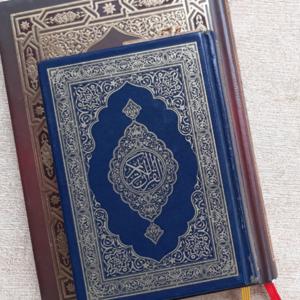


In Islam, not allowing Satan's influence on one's behavior and thinking is very important. In Islam, Satan or Iblis is considered a real enemy and seeks to tempt people into committing sinful acts and away from the right path.
To avoid Satan's influence, it is important for a Muslim to have a strong faith and a good understanding of religious teachings. Acceptance and implementation of Islamic teachings will help one to resist temptations and negative influences coming from Satan.
In addition, there are several steps that can be taken to protect oneself from Satan's influence. One of them is to try to stay away from all forms of sin and immorality. Having a strong self-awareness and improving the relationship with Allah through worship, such as praying, reading the Quran, and giving alms can also help in resisting Satan's influence.
In addition, avoiding environments or situations that can strengthen Satan's influence is also very important. Keeping company with people who believe and have good moral values will help a person stay strong in the face of temptation from Satan.
In Islam, understanding the existence of Satan and countering his influence is an integral part of a Muslim's life. By understanding the importance of not condoning Satan's influence in behavior and thinking, one can maintain purity of heart and live a more meaningful life in accordance with the teachings of Islam.
Believers are encouraged to be generous and take care of their relatives, the poor, and travelers. However, they must also exercise caution and not be wasteful when it comes to their wealth. It is important to strike a balance between generosity and prudence; avoiding both extreme extravagance and excessive frugality. The Quran emphasizes this in its verses, which promote responsible and moderate spending habits for believers.
Islam is a religion that advocates monotheism or belief in the oneness of God. One important concept in Islam is the avoidance of idolatry. In this context, idolatry refers to the worship or veneration of anything other than Allah, be it a physical object or an abstract concept.
In Islam, any form of idolatry is considered a violation of monotheism and is strictly forbidden. This includes worshipping statues, statues of deities, natural objects such as the sun or moon, animals as well as humans or famous figures thought to have supernatural powers.
In addition, there are also modern forms of idolatry that need to be avoided in Islam. For example, when one places complete reliance on material wealth and possessions as the object of their worship. Similarly, popularity and fame become the center of their attention without recognizing that only Allah is worthy of worship.
In Islam, the belief is that Allah alone deserves to be worshipped and to have the full devotion of His servants. Hence, it is important for Muslims to shun all forms of idolatry in order to wholeheartedly practice the teachings of monotheism and maintain the sanctity of their faith.
It must be remembered that the concept of idolatry in Islam does not only relate to physical objects, but also involves one's attitude and intentions. Therefore, it is important for Muslims to constantly self-correct and ensure that their faith remains firm in the oneness of Allah, as well as shun any forms of idolatry that may arise in their daily lives.
Listen to the full audiobook here: https://free-islamic-audiobooks.blogspot.com/2024/02/the-worst-slander-idolatry.html
Allah is the Creator of the universe and all of its contents. It is also necessary to understand that He is the Controller of all things, and that nothing can happen without His Will. Allah is the one true God, and He alone has the power to create and control all things. He is not subject to any weaknesses or imperfections, and He is the originator of the heavens and the Earth. The Quran is the only book revealed by Allah to have survived intact, and it reveals the false beliefs about Allah which have been adopted by the adherents of other divine books.
The Qur'an also explains the correct beliefs about Allah,and clarifies that He is the Creator and Controller of the universe, and nothing can happen without His will. Allah is the Owner of all things, exercising command over creation, near to man, and Most Merciful and Just. He has the Power to do anything, sees and hears all, and is the King of the Day of Judgment. Idolatry is ascribing associates to Allah, such as worshipping false gods, pursuing goals other than pleasing Allah, or loving a being more than Allah. Muslims believe that everything is created by Allah, and deviation from this is idolatry.
Allah does not forgive idolatry, and those who reflect on His Creation come to recognize His greatness. Allah is the Creator of the universe. He brings the Earth to life, and scatters creatures of every kind and varying winds. Muslims remember Allah and reflect on His Creation, recognizing His infinite power and knowledge.
The order of the universe and its details point to Allah's greatness. He has power over all things, and His knowledge encompasses even that which is unknown to us. He can create many other things, and has created billions of humans, each with their own unique set of eyes, fingerprints, and tissues. He also has the power to create many other beings and worlds which we cannot see.
All of these facts demonstrate Allah's magnificent Creation.
Allah's knowledge is infinite and beyond human comprehension. We can only come to know to the extent that Allah permits us. The Prophet Muhammad (may God bless him and grant him peace) referred to Allah's eternal power when he said that the seven heavens and the seven Earths are no more in Allah's Hand than a mustard seed. The Qur'an also explains Allah's infiniteness of knowledge.
No matter how hard we strive, we cannot grasp the extent of His knowledge because it is unlimited. Everything in the heavens and the Earth belongs to Him and He knows what is before them and what is behind them. We must remember that Allah is Almighty, All-Wise, and that He is the Self-Sustaining and Living, with no drowsiness or sleep.
Part 3 of 8:
9. False beliefs about Allah
10. Faith in Allah free of idolatry
11. Assessing Allah with a just assessment
12. Allah’s infinite greatness and power
Allah is the All-Knowing, All-Aware, and all beings are under His control. Allah is the absolute and infinite Creator of all beings, including Truth and time itself. He knows all events, past and future, and sustains all systems of the universe. His perfect Creation is destiny and nothing happens without His will. He is the sole Possessor of Power, and His Word is the Truth.
We must recognize Allah's infinite might and that He is the Maintainer of all things in Heaven and Earth. Allah is the source of all Truth, and all Beings are subjected to Him. He is omnipresent and omniscient, always watching and knowing all that we do. He created the heavens and the Earth in six days and has the power to bring the dead to life.
His Might is demonstrated by the elaborate processes taking place in the bodies of living things, like the kidney cells which can filter and eliminate molecules that a giant haemodialyser would be needed for. We are reminded to have no fear and to rely on Him for guidance and protection. Allah is the Creator and Ruler of all beings, including man and satan. He has given us examples of His power in the world, so that we may reflect on His truth. Allah has endowed satan with the ability and authority to call mankind to disbelief, but this is only for the purpose of testing us and distinguishing the righteous from the corrupt.
Ultimately, satan is under Allah's control, and is not a being possessing an independent will.
Part 2 of 8:
5. Allah created everything according to a fixed decree
6. Allah has power over everything
7. Allah sees and knows everything
8. All beings are subjected to Allah
The Prophet Muhammad (may Allah bless him and grant him peace) is an integral part of Islam, as he delivered the teachings of the Quran to the believers. The Qur'an is the final revelation from Allah and is the only holy book to have survived intact. It serves as guidance for mankind and is full of wisdom, instructions and stories of the prophets. The Sunnah, or hadiths, is the living interpretation of the Quran by the Prophet Muhammad (may Allah bless him and grant him peace), and provides insight into how to lead one's life.
Together the Qur'an and the Sunnah provide the foundation of Islam, which teaches us to be responsible, considerate and to ponder the wonders of the Universe. The Prophet Muhammad (may Allah bless him and grant him peace) was sent to us to teach us about Allah, the universe, and Islam. He taught us that Allah is the only true existence and all else is His Creation. The universe and all living things were created by Allah, and are under His control. We must accept the truth that there is no god but Allah and understand that He has no son.
Through this knowledge we can draw closer to Allah and gain infinite bliss and salvation. Allah, mentioned in Islam, is everywhere and all-encompassing. He is the only absolute being and holds all creatures by the forelock. This is made clear in the verses of the Qur'an, which state that Allah's Footstool encompasses the heavens and the Earth. Prophet Muhammad (may Allah bless him and grant him peace) also taught that Allah is very close to us and hears our prayers, even our innermost thoughts. He is closer than our own jugular veins and answers our call when we call on Him. We must remember that Allah is near to us and all-encompassing, so that we will believe in Him and be guided.
Part 1 of 8:
1. Introduction
2. There is no god but Allah
3. Allah encompasses everything
4. Allah is near to man
Surah Yasin is one of the suras (chapters) in the Quran. It is the 36th surah in the order of the Quran and has 83 verses. Yasin is the name given to this surah, taken from the Arabic letter "Ya Sin" which is the opening.
Surah Yasin (Quran chapter 36) has a very important meaning and influence in the lives of Muslims. This surah contains various moral and spiritual messages that can inspire and guide people in living their daily lives.
One of the important messages contained in Surah Yasin is about the importance of teaching the Qur'an as a guide to life. This surah emphasizes that the Qur'an is not only a holy book, but also a guide to direct people towards the right path.
In addition, Surah Yasin also teaches about resurrection and Judgment Day. The verses convey that every good or bad deed will be held accountable on the Day of Judgment. This is a reminder for Muslims to always do good deeds seriously and be responsible for their actions.
Surah Yasin is also known as "qalbun Quran" or the heart of the Quran because of the amount of wisdom and gratitude it contains. Many Muslims recite this surah regularly in the hope of receiving blessings and protection from God.
In conclusion, Surah Yasin is one of the most important suras in the Qur'an. It provides moral and spiritual teachings that can guide Muslims in their daily lives. By listening and understanding the contents of this surah, Muslims are expected to get the right life guidance and preparation for the Day of Judgment.
The Quran
Translated by Talal Itani
www.ClearQuran.org
Music by Alfa Relaxing Music from Pixabay.
Surah Fatir is the 35th surah (chapter) of the Quran. It consists of 45 verses and belongs to the Makkiyah category of surahs. The name "Fatir" is derived from the Arabic word meaning ‘’Originator’’, which describes one of the main themes of the surah.
One of the main messages conveyed by Surah Fatir (Quran chapter 35) is about the oneness of God and His power as the Creator of the universe. The verses of this surah invite mankind to contemplate God's creation around them, such as the sky, earth, sun, moon and stars. In contemplating His creation, mankind is expected to gain confidence in the greatness of God and develop a sense of awe and gratitude towards Him.
Surah Fatir also emphasizes the importance of faith and devotion to God. The verses in this surah remind people that everything in this world is temporary and ephemeral. Only by making God the main goal of life and devoting oneself to Him properly can one achieve true success in this world and in the Hereafter.
Surah Fatir also warns the disbelievers who do not believe in the day of reckoning and their equality before God. The verses in this surah describe how the disbelievers will regret and regret their actions in this world when they see the consequences of their disbelief and negligence.
In conclusion, Surah Fatir is one of the suras in the Qur'an that teaches about the oneness of God, His wondrous creation, the importance of faith and devotion to Him, as well as a warning of the Hereafter and the recompense that each individual will receive for his or her actions in this world.
The Quran
Translated by Talal Itani
www.ClearQuran.org
Music by Alfa Relaxing Music from Pixabay.
Idolatry, known as "shirk" in Islam, refers to the act of associating partners or objects with Allah (God). It is considered a major sin and a violation of the fundamental principle of monotheism in Islam. Muslims believe in the oneness of Allah and consider any form of worship or reverence towards anything other than Allah as idolatrous.
In Islamic teachings, idolatry is seen as a grave offense that goes against the core principles of Islam. The Quran explicitly prohibits idol worship and emphasizes the importance of worshipping Allah alone. Muslims are required to have faith in the unseen and to submit themselves completely to Allah's will.
Idolatry can take various forms, including worshipping statues, images, or symbols as divine beings or intermediaries between humans and God. It can also involve attributing divine qualities to natural elements such as trees, rivers, or celestial bodies.
Islam encourages believers to focus their devotion solely on Allah and to avoid any association with partners or objects. Muslims are urged to engage in acts of worship that strengthen their connection with Allah through prayer, fasting, charity, pilgrimage (Hajj), recitation of the Quran, and living a righteous life.
The concept of shirk is not limited to physical idols but also extends to internal beliefs and attitudes that undermine pure monotheism. This includes seeking help from anyone other than Allah for matters that only He has control over.
In summary, idolatry in Islam refers to associating partners or objects with Allah through acts of worship or reverence. It is considered a major sin that goes against the fundamental principle of monotheism in Islam. Muslims are encouraged to have faith solely in Allah and engage in acts of devotion that strengthen their connection with Him.
Listen to the full audiobook here: https://free-islamic-audiobooks.blogspot.com/2024/02/the-worst-slander-idolatry.html
Surah al-Qasas (Quran chapter 28 - History) is one of the surahs (chapters) found in the Quran. It is the 28th surah and consists of 88 verses.
Surah al-Qasas contains the story of Prophet Moses (pbuh), one of the most important prophets in Islam. This surah tells the life journey of Prophet Moses (pbuh) from childhood to becoming a prophet and leader sent by God to free the Children of Israel from the slavery of Pharaoh.
In this surah, God describes how Prophet Moses (pbuh) was saved from death as a baby by his mother and raised in Pharaoh's palace. Later, Prophet Moses (pbuh) was guided by God and escaped after killing an Egyptian man who was oppressing the Israelites.
God also tells of Prophet Moses' (pbuh) journey to Madyan, where he helped Shu'aib's family and eventually married one of Shu'aib's daughters. After that, God told Moses to return to Egypt and confront Pharaoh to ask for the release of the Children of Israel.
Surah al-Qasas also contains important moral teachings such as patience, fortitude, trust in God and hope for His help. The stories in this surah inspire Muslims not to despair in the face of life's challenges and to expect God's help in every situation.
By listening and understanding surah al-Qasas, Muslims can learn important lessons in their daily lives and gain peace and strength from the stories contained therein.
The Quran
Translated by Talal Itani
www.ClearQuran.org
Music by Alfa Relaxing Music from Pixabay.
Music by Sufi Sama from Pixabay.
From the publisher's feed

481 Listeners

0 Listeners
3 Listeners
0 Listeners

11 Listeners

25 Listeners