
Sign up to save your podcasts
Or

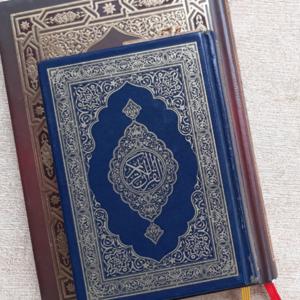


Particles play a major role in the fecundating quality of the wind; aerosols, with a diameter of one hundredth of a millimetre, are produced when air bubbles burst on the surface of oceans and seas. The wind carries these particles, along with dust from the land, to higher altitudes, where they mix with water vapour and condense into droplets that form clouds. The wind is also responsible for the pollination of plants, carrying pollen from one plant to another of the same species, thus fertilising them. This formation process was recognised centuries ago in the Qur'an.
He is the Originator of the heavens and the earth. How could He have a son when He has no wife? He created all things and He has knowledge of all things. (Qur'an, 6:101)
Lightning and hail are formed in rain clouds due to the accumulation of electrical charges caused by freezing raindrops and contact between droplets and hailstones. The hailstones become negatively charged, while the upper parts of the cloud become positively charged. When the voltage between these two areas reaches 1 billion volts, a spark, or lightning, is discharged from the cloud, sometimes from within the cloud, or sometimes to the ground. This spark forms dazzling lightning strikes, and the sudden increase in electrical charge causes intense heat which leads to the loud noise of thunder.
Everything modern science has established about clouds, and has to say about the causes of thunder and lightning, is in complete accord with the descriptions in the Qur'an.
... He sends down mountains from the sky with hail inside them, striking with it anyone He wills and averting it from anyone He wills. The brightness of His lightning almost blinds the sight. (Quran chapter 24 verse 43)
Or [their likeness is] that of a storm-cloud in the sky, full of darkness, thunder and lightning. They put their fingers in their ears against the thunderclaps, fearful of death... (Quran chapter 2 verse 19)
Note 61. C. Donald Ahrens, Meteorology Today: An Introduction to Weather, Climate and Environment, 3rd ed., (St. Paul: West Publishing Company: 1988), 437.
Note 62. Athar Lila, "The Quran and Modern Physics," December 10, 1998;
http://webhome.idirect.com/~alila/Writings/Physics.htm.
Note 63. Ibid.
The Quran speaks of the miraculous power of rain to bring a dead land back to life. Rain is essential for living things, and also has a fertilizing property that brings elements and mineral salts necessary for plants to grow. Rain provides 150 million tons of fertilizer every year and is essential for the balance of life. This is just one of the many miraculous properties of the Quran.
From the publisher's feed

481 Listeners
0 Listeners

3 Listeners

0 Listeners

11 Listeners

25 Listeners