
Sign up to save your podcasts
Or

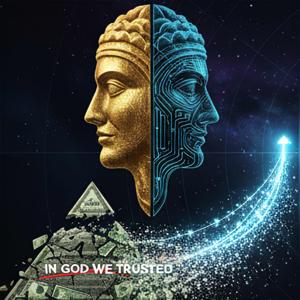


When Brad Garlinghouse went on CNBC in late June and conceded that of the sixteen trillion dollars his own company cleared in 2025 almost none had moved through XRP, and when the dollar establishment shipped its neutral stablecoin, Open USD, days later on four chains that pointedly excluded the XRP Ledger, the scaffolding around the asset began to shake in public. A promoter is scaffolding. From the street you cannot tell whether it braces a real building or dresses a facade, and you only find out when it comes down. Ripple is XRP’s scaffold, and it is coming down the slowest way there is, sold off a few hundred million a month from an escrow that held an estimated thirty-eight billion tokens in mid-2026, down from fifty-five billion at its 2017 start. This dispatch is not about Ripple; its companion is. This one is about the building: when the scaffold is gone, does XRP stand, and on what?
Strip the sponsor away and the honest question is what kind of thing the asset even is. XRP pays no yield and throws off no cash flow. What it has instead is a claim to be one of three kinds of thing at once: a utility, a store of value, and a collateral. Those are its three pillars, and without a promoter to prop it, the asset has to stand on them or on nothing. This piece is a test of each, taken on its own terms, with the scaffold assumed already gone.
Here is the claim it will defend. XRP stands or falls on three pillars, and the honest verdict differs on each: one is real but narrow, one is real but last in line, and one is genuine but contested and new. None of them is a pillar XRP is the obvious asset to stand on. What follows tests all three, and names, at the close, the single condition under which the building simply does not stand.
What the Asset Is
Before the pillars, one fact governs all three. The only thing XRP has ever monetized is belief, the willingness of others to hold it on the strength of a story about what it might become. That is not an insult; it is the nature of a non-yielding, non-sovereign asset. But it means the asset’s whole case rests on being credibly neutral, a thing no single party controls, because a story that a company can rewrite at will is not a store, a bridge, or a collateral anyone builds on.
And here is the paradox the asset cannot think its way out of. The very sponsor that promotes XRP is the reason it fails the neutrality test. A bridge or a reserve that one American company can move at will is not neutral, and the more visibly Ripple owns and steers the supply, the less the asset qualifies as the neutral thing all three pillars require. So the pillars are not tested against Ripple’s presence. They are tested against its absence, which is the only condition under which any of them can bear weight. The scaffold has to be gone for the question even to make sense.
Pillar One: Utility
The first pillar is the oldest claim: XRP as the working asset of a ledger, the neutral bridge that cross-border value routes through and the fee that every transaction burns. For years this was the whole thesis, XRP as the toll booth beneath the traffic, indispensable because settlement had to pass through it.
Its strongest form is not toll collection but topology. Connect every currency to every other one directly and the corridors grow with the square of the currencies: a hundred currencies imply thousands of funded lanes, each trapping idle capital in pre-funded nostro-vostro accounts. Route them through one neutral hub asset instead and the count collapses toward one connection each, N spokes into a single center rather than N-squared bridges between pairs. That is the real efficiency a bridge asset sells, not that it moves value but that it spares the network from funding every pair, and on paper it is the most serious thing the utility pillar has ever claimed.
Strip the sponsor and test it, though, and the pillar has narrowed to a corner. The stablecoin wave took the settlement job, and a dollar stablecoin is itself a hub: value now moves as dollars, spoke to dollar-center to spoke, with no volatile asset needed in the middle. The topological advantage does not require XRP at all, because the dollar can be the hub. Open USD, the establishment’s own neutral dollar, launched on four chains and the XRP Ledger was not among them.
What survives for the utility pillar is one lane a governed dollar cannot enter: the issuerless, un-freezable corridor between parties who will accept no single issuer, sanctioned or non-aligned counterparties for whom a Visa-and-BlackRock dollar is not an option, because it is still a dollar. A claim on US Treasuries, which is to say the very debasement they are trying to escape, dressed in a more efficient wrapper. The wrapper is new; the asset rotten inside it is not.
That lane is real, it is narrow, and it is unproven at any depth. Pillar One holds, but on a footing far smaller than the bridge thesis ever imagined.
Pillar Two: Store of Value
The second pillar is the one the first dispatch of this series was built on: XRP as a non-dollar, issuerless store, a thing you hold precisely because it is nobody’s liability and does not eat the dollar’s debasement. This is the pillar a dollar stablecoin structurally cannot contest, because a dollar is exactly what a non-dollar store exists to escape. On this pillar, and only this one, any USD Stablecoin is no threat at all.
But two things keep it from being the refuge it sounds like. The first is pedigree. Gold is scarce by five thousand years and central-bank bids, Bitcoin by a fixed supply written in code, and neither scarcity answers to anyone; XRP’s answers to a company, and it leans on the utility pillar for whatever credibility it has as a store. The second is subtler, because the raw number flatters XRP. Give the escrow its due: the release is capped, most of what unlocks each month relocks, and the net new supply against the standing stock is thin enough that on a pure stock-to-flow ratio XRP scores better than silver. But that scarcity is administered, not structural, fixed by a corporate release policy that has been rewritten before rather than by geology or code. A store’s scarcity has to sit outside anyone’s discretion, and this one sits inside a company’s. So XRP can look scarcer than silver on the ratio and still be the weaker store, because managed scarcity is not credible scarcity. Pillar Two is real, and it is the one the dollar cannot take. It is also the pillar on which XRP stands last in line.
Pillar Three: Collateral
The third pillar is the newest and the least discussed: XRP not held and not spent, but put to work as productive capital behind on-chain credit. Be exact about the machinery, because it is thinner than the slogans. The ledger’s native credit stack is in validator voting now, the XLS-65 single-asset vault and the XLS-66 lending protocol built on top of it, and it has stalled near a fifth of the support it needs after months on the ballot. Its loans are uncollateralised, underwritten off-chain, so on its own ledger XRP funds the vault rather than being posted against the loan. Alongside it, the real-world assets on the chain are real money, past three billion dollars this spring on the rwa.xyz dashboard. Freshest demand, least-built machinery.
But look at what that three billion is made of before reading it as XRP’s. More than half of it is a single energy token backed by Latin-American producers; the institutional-grade share is tokenized U.S. Treasuries from issuers like Ondo, a few hundred million dollars of it. Those are dollars sitting on the ledger, not credit extended against the coin. The pillar is being built, but most of what is arriving to post as collateral is denominated in something other than XRP.
And there is a second place to look, the one where XRP is most actively worked as collateral today, whi…
May 2026. Two months of preparation. J., a strategy consultant in her late thirties, is about to present a Southeast Asia entry plan to her firm’s executive committee. The data was thin, and the internal politics difficult. Over the last three weeks, she used a plausibility generator heavily. Not to write the deck, but to fill in the analytical scaffolding.
The deck lands. J. secures her budget, plus an unexpected co-leadership role. Two weeks later, in a follow-up session, the regional head asks a precise question about the assumptions underlying the four-year revenue projection. She knows the number. She does not know how it was derived. The plausibility generator knew, and the generator is no longer in the room.
J. has a choice. She can admit she does not own the analysis, forfeiting her new role. Or she can defend the number as if she had derived it. She defends. The defence works in the room. It does not work in her head.
The Objection That Deserves the Most Serious Answer
Long before J. faces her regional head, a reader of this book raises an objection, and it deserves a serious answer. The objection: Good books change me too. I read the stoics, the logicians, the historians of science, the physicists. They live rent-free in my head. I am the sum of my influences. Why is machine output suddenly an infection, when a book is a voluntary influence?
The question is not rhetorical. It is the core objection to the security frame of this book. Unanswered, the security frame collapses into Luddism: a refusal of all influence. Intellectually impossible, morally unattractive. The line has to be drawn precisely. And the line is older than the technology that occasioned it.
Seneca and Montaigne Already Drew the Line
In his eighty-fourth letter to Lucilius, Seneca writes that we digest authors the way bees gather nectar. The honey is no longer the nectar. It has been transformed by the bee, mixed in the bee’s own body, secreted as a different substance. Without the nectar, no honey. The bee depends on the flower. The flower lives rent-free in the bee. That is not infection. That is nourishment.
Fifteen centuries later, Montaigne opens his Essais with the line that anchors European reflection on identity: Je suis moy-mesmes la matière de mon livre (I myself am the matter of my book). The self speaking in the Essais is not a self prior to reading. It is a self constituted through a lifetime of engagement with the books that gave Montaigne his categories. The bee and the flower, at the level of a biography.
Take a hard contract negotiation. You sit opposite a senior partner. She tears your liability clause apart. She finds three weaknesses you missed. She proposes a counter-structure, more elegant than yours and worse for you. The conversation is uncomfortable. You go home. You sleep on it badly. You rewrite it the next morning, informed by everything she said. But it is not her clause. It carries her objections inside it, transformed, in service of your position. That is digestion.
Replay the same evening with a plausibility generator. The machine rewrites your clause in three seconds, addressing the same objections, returning a polished structure. There is no resistance. Without resistance, no digestion. Six weeks later, the client asks why a specific liability cap sits exactly where it sits. You freeze. You have nothing to draw on. You did not negotiate against the objection. You accepted a polish. You are a pass-through funnel for nectar that never became honey.
Four Dividing Lines Between Nourishment and Colonisation
What separates the bee from the funnel is not the presence of influence. Influence is a constant. The distinction is mechanical. Four dividing lines do the work.
Time.
A book shapes you over time. A chapter on Tuesday is carried through Wednesday, surfacing on Thursday in a context the author never anticipated. The argument has had four days to settle, to interact with your existing categories, to reorganise the mental furniture. Machine output appears and dissolves in the same breath. By Wednesday morning you remember the machine said something useful about quarterly margins. The actual sentence is gone. The argument never moved in.
Resistance.
The book resisted you. It used vocabulary you had to look up, made claims you had to argue with, deployed examples that did not fit, and forced you to build the bridges yourself. The friction of that translation is the substance of digestion. Every act of mental rewriting leaves a trace. Machine output is pre-chewed. It is calibrated by reinforcement learning to minimise resistance. You accept what the machine produces because the machine learned to produce what you accept. Friction is engineered out of the loop. With the friction goes the digestion.
Attribution.
You know to whom you owe a thought. The mechanics of regression to the mean: Galton. The geometry of the centripetal screen: Bazin. The categorical imperative: Kant. The generation effect: Slamecka. Attribution is the cognitive substrate that lets you trace your own mind back through the conversations that produced it. With the machine, attribution dissolves. You no longer know whether the thought is yours, the machine’s, or the statistical mean of the training corpus. Influence with attribution is biography. Influence without attribution is colonisation.
Generation.
The fourth line is what Seneca’s bee names directly, and what learning science measures precisely. Memory and skill are not produced by exposure. They are produced by generating a response under uncertainty: what Norman Slamecka and Peter Graf called the generation effect in 1978, and what Henry Roediger and Jeffrey Karpicke named the testing effect across decades of experiments. Retrieving an answer encodes more than receiving the same answer fluently delivered. Piotr Woźniak built thirty years of spaced-repetition practice on this principle. The moment of effortful retrieval lays down the trace. A system that hands back the answer before you try to generate it removes the single operation that turns nectar into honey. The bee, asked nothing of, secretes nothing.
Skin in the Game, Reversed
Return to J. The public debate about AI-assisted writing runs through the wrong question. The wrong question is fraud: did you write this yourself, or did you have a machine write it for you? That debate produces moral heat and zero diagnostic light. The damage does not happen during writing. The damage happens after publication, when the social system attributes the text to the author, and the author has to decide what to do with that attribution.
What J. does in that follow-up session has a precise structure, recurring across thousands of conference rooms every week. She performs a retroactive identification with text she did not author. The cognitive mechanics are unforgiving. To step forward and concede ‘I did not actually think this through’ would amputate a piece of her social biography. The new role is now part of who she is to her firm. To rescind the analysis is to rescind the role. So she defends. The more weight the anchor carries, the harder she defends it.
This is the classical architecture of risk-bearing inverted. The inversion requires a precise name. The original rule of skin in the game is so universally assumed that its opposite slips in unnoticed. In the classical setup, the actor takes a position, exposes herself to the consequences, and is disciplined by the threat of those consequences before the position is taken. The skin burns first. The discipline follows.
With AI-assisted publication, the order reverses. The consequences arrive first: the budget, the role, the mandate, the reputation. The skin has not yet burned, because the position was not personally derived. After the consequences land, the actor must grow the skin backwards under the threat of so…
Rented Deflation on Flare diagnosed the architecture. The supply math has been fixed, the demand side has not. Capital flows where the rewards point, the rewards flow from emission, and the fees that close the deflation loop depend on activity that emission itself recruited. Strip the subsidy, and the picture changes shape.
MoreMarkets ran the unsubsidized version of that experiment in 2025 and closed because the borrower side never showed up. Reference: The Death of MoreMarkets.xyz. The supply side is not the binding constraint. The borrower side is. Without duration, fixed rate and fixed term, a DeFi loan is an open position revalued every block. The capital that would actually borrow at scale does not lever a balance sheet against that.
So the question is no longer whether the math works. FIP-16 settled that. The question is what fills the demand-side gap, and what would make the subsidy ignition instead of life support.
What the Subsidy Is Actually Buying
rFLR is currently spent recruiting one type of capital: liquidity providers. The mechanism is straightforward. Emissions flow to LPs in incentivized pools, LPs farm and rotate, TVL appears on dashboards, and the chain has visible activity. None of this is fraud. It is the standard playbook. It is also the playbook that produces the very loop Rented Deflation describes.
The deeper move is to ask what the subsidy could buy instead. The same dollar of rFLR, paid to a different recipient, recruits a different kind of capital. One whose presence creates fees rather than consuming them. That is the choice this piece is about.
The Demand-Stack: Three Gears
The first gear is duration.
Fixed rate, fixed term, defined collateral, predictable liquidation boundary: the four properties that turn a DeFi loan from an open position into a financial instrument a treasury can sign for. The architecture for this is built. Morpho Midnight, whose whitepaper Morpho Association published in May 2026, organizes lending around isolated, immutable, permissionlessly created, and fixed-maturity markets. Lending and borrowing happen as the trading of credit and debt units whose payoff structure is zero-coupon: positions settle at the market’s fixed maturity, with no rolling tenor and no oracle dependency for rate-setting. The implied rate is whatever the market clears at, derived from the price at which units trade. Capital knows in advance what it will pay and when.
The scale of institutional demand for this primitive is no longer theoretical. On June 2, 2026, Morpho announced a $175 million raise co-led by Paradigm and a16z crypto, with $11 billion in current deposits via DefiLlama, and what Morpho frames in its own pitch as a $200 trillion addressable global credit market. Fixed-term lending is the demand-side infrastructure for the next phase of onchain credit, and capital is being deployed to build it. What that capital validates: the demand side is real and well-funded. The question for each chain is whether the venue exists to receive it.
Two of Midnight’s design choices matter directly for Flare. Maker callbacks let the capital backing an offer stay deployed productively elsewhere until the offer is taken. Liquidity is not locked across markets, which means the Demand-Stack does not need to compete with FIRE-incentivized pools for idle capital. Permissionless market creation lets anyone deploy a new fixed-maturity venue without Foundation approval. That keeps the architecture an ecosystem layer rather than a Foundation product, and it fits the allocation choice this piece is about. Calendar-date maturities make positions opened at different times with the same maturity fungible, which prevents the liquidity fragmentation that hurts isolated markets in practice. The same primitives are portable to Flare’s EVM-C chain. Active onchain lending across EVM ecosystems totals about twenty-five billion dollars as of May 2026. The demand-side capital exists. It is not on Flare because the venue to receive it has not been built yet.
The subsidy budget that today recruits LPs could equally well subsidize the first wave of fixed-rate borrowers and the builders writing the duration markets they borrow in. Capital that arrives this way borrows because the product is useful, not because the yield is paid. One discipline matters here. The borrower-side subsidy must function as cold-start ignition for orderbook depth, not as a recurring yield stream. A subsidy that pays borrowers in perpetuity reconstructs the same mercenary dynamic on the demand side that this piece argues against on the supply side. The subsidy ends. The product remains.
Field check, June 21. Spectra has activated the Aug 27 and Nov 26 stXRP pools as the post-June-4 rollover targets, exactly where the two-times Firelight Points pre-activation pointed nineteen days earlier. TVL splits 62/38 across the two, with roughly $6.78M of the original $8.69M staying in the system after rollover. That is the first observable two-point curve formation on Flare. Not full duration depth, but no longer a single magnet point either. The 60-day window post-Phase-2-Launch is the test. If a third or fourth maturity activates with substantive TVL, the curve formation thesis is confirmed. If the structure compresses back to single-pool concentration, the rented-TVL diagnosis from the May 29 essay holds as durable, and the Demand-Stack stays a Foundation choice rather than a market outcome.
The second gear is insurance.
Once borrowers exist, underwriting becomes possible. Cover markets, default insurance, parametric risk coverage, oracle-failure protection. These products generate premium income from real risk transfer, not from emission. Underwriter capital looks different from LP capital. It stays because the premium is paid out of usage, not out of issuance. Firelight’s Phase 2, scheduled for Q2 2026, is the most visible Foundation-adjacent test case in this category. If it ships on time and the underwriting volume materializes, one of the three gears is forged. If it slips beyond the quarter, the Phase-Mismatch reading becomes operative.
Beyond the gear itself, one property of how Insurance is implemented on Flare matters for the Demand-Stack thesis: the underwriter capital can be the network token itself. Both FLR posted directly as stFLR and sFLR posted as stsFLR can serve as collateral for cover markets, with each layer of yield priced as a layer of accepted risk. A stFLR underwriter earns the cover premium and assumes the obligation to pay claims when a covered protocol is exploited. A stsFLR underwriter stacks the staking yield from Sceptre and FTSO delegation on top of the cover premium, with the corresponding stacked exposure. PT-wrapping either position fixes the rate and embeds an underwriting tail inside what looks like fixed income. The composability is real the moment Firelight’s underwriting layer goes live.
That composability matters for the thesis in a specific way. When Insurance underwriter capital is a Flare-native asset rather than imported stablecoin or wrapped BTC, the gear produces direct demand for the network token. The Foundation’s allocation choice is no longer only about subsidising builders; it can be structured to make the chain’s own token productive as collateral in the venues those builders create. Rented Deflation diagnosed that today’s FLR-holders pay for the subsidy by bidding into the FIRE-buyback. Productive collateral closes that loop: the same token whose deflation FIP-16 wants to enable becomes the asset that anchors the underwriting layer, and the demand for the token comes from the gear rather than from the marketing of the gear.
One honest caveat is built into the same mechanic and deserves equal billing. sFLR underwriting Flare-native protocols is the system insuring itself. For idiosyncratic …
On 30 June 2026, a company called Open Standard announced Open USD ($OUSD), and the guest list was the story. Visa, Mastercard, Stripe and American Express. BlackRock, BNY, Standard Chartered and DBS. Coinbase, Google, Shopify and, near the bottom, Ripple. More than a hundred and forty of the institutions that move the world’s money, putting their names to a single dollar stablecoin owned by none of them alone. Circle’s stock fell more than a tenth within the day. Tether’s chief executive posted six words: “Player 2 has entered the game”.
The market read it as a price war, a bigger and cheaper USDC. That is the small story. The large one is in the launch copy, if you read it as a manifesto rather than a press release. Open USD is described as open, neutral, low-cost, collectively governed, with no single company in control and the economics shared among its members. Every one of those words was borrowed. They are the words crypto spent fifteen years using to describe the money that would replace the dollar. The establishment did not argue with the vocabulary. It adopted it.
So here is the claim. Open USD is not the dollar losing ground to neutral money. It is the dollar absorbing the idea of neutral money before anything non-dollar could. The most powerful move against a revolutionary argument is not to refute it but to ship it first, in your own currency, with your own name on the masthead. Two of my earlier dispatches now need revisiting: one that imagined the neutral settlement body as a council of sovereigns, and one that argued the real rebellion against the dollar would be an asset with no flag, running underneath every stablecoin. This launch is the reckoning with both, and I would rather run it in the open than pretend the earlier pieces survive it untouched.
What Crypto Promised
Strip the slogans and the promise was specific: money no single entity controls, on rails no sovereign can switch off. It was an escape from the quiet position every holder of dollars is in, dependent on the government that issues them and reachable through the system everyone must use. The enemy had a name, the dollar’s exorbitant privilege, the power of one state to surveil and sanction through the currency the rest of the world is obliged to hold.
The answer took two shapes: a non-sovereign asset issued by no state, and neutral rails owned by no single party. Either way the logic was identical. If the unit or the rail belonged to no one, no one could be coerced through it. That was the whole trade. Hold the sovereign’s paper and accept its leverage, or hold something neutral and step out from under it.
What the Establishment tries to ship
Now read what Open USD is. It is governed by Open Standard, a company whose board is the partners themselves, so no single member sets the rules. Businesses mint and redeem it free, with no volume caps, and the income on its reserves flows back to the partners, less a fee. Its founding chief executive is Zach Abrams, who built Bridge, the stablecoin infrastructure Stripe bought in 2024. It launches later this year on chains that include Solana, Stellar, Base and Polygon.
An alliance this large does not assemble overnight, and the timing is the tell. For years the firms that could have built it would not, because while the legal status of digital dollars was unsettled, no regulated giant would put its name to a stablecoin standard. What changed was law. The GENIUS Act of mid-2025 declared payment stablecoins from approved issuers explicitly not securities, and the long enforcement war wound down the same summer. The door opened, and the institutions that had waited behind it walked through together. The quiet irony is that the years of legal fighting which produced that clarity cleared a path the largest incumbents now use to out-distribute the early movers who did the fighting, Ripple among them, near the bottom of this very list.
Read the partners’ own words and the borrowing is not subtle. BlackRock calls neutral governance and shared economics “a unique combination”; Mastercard reaches for the founding analogy directly, shared infrastructure “open, interoperable and broadly accessible,” the way the internet was. These are bankers describing the crypto dream in its own language, approvingly, because they now own it. And the shared-economics hook is the part to admire in an opponent: by routing reserve income back to the members, Open USD turns the businesses that might have built rivals into its distributors. Coinbase, Ripple, Aave, even Stellar are not fighting this dollar stablecoin; they are paid to spread it. There is no single throat to choke, no lone issuer to regulate out of existence. A consortium is far harder to kill than a company.
The Sleight in the Word “Neutral”
But neutral governance over a dollar liability is not neutral money, and the gap between those two things is the whole sleight. The reserves are US Treasuries. The unit of account is the dollar. What gets distributed among a hundred and forty members is control over the token. What does not get distributed, and structurally cannot, is control over the currency — that still sits with the US Treasury and the Federal Reserve. I read Open USD’s neutrality as governance-neutrality, and it is being offered to be heard as something far larger.
That is the fiction worth naming plainly. The launch invites you to hear “neutral” as “free of any sovereign’s leverage,” which is the thing crypto actually promised. What it delivers is “free of any single company’s rent,” which is a different and much smaller thing. A neutral-governance dollar is still a dollar. Freeze the reserves at the custodian, change the rule in Washington, and the multilateral board in the middle changes nothing about who finally holds the keys. It is the dollar order in multilateral clothing, and the clothing is precisely what makes it wearable for institutions that wanted the look of neutrality without the substance of exit.
I once imagined this body as a council of nations. In an earlier dispatch, The United Nations of Liquidity, I argued that neutral settlement, if it ever arrived, would be governed by sovereigns — central banks seated around a shared ledger, a treaty body in the old sense, with the world’s monetary powers holding vetoes over the rules. Open USD is that prediction half-fulfilled and half-inverted. The treaty body convened. But its members are not nations; they are corporations. Visa, Mastercard, BlackRock and Stripe, not the Fed, the ECB, the Bank of Japan and the People’s Bank of China. This is the detail worth sitting with, because it is the whole shift: the multilateral order now forming around money is not a parliament of states but a guild of the dollar’s largest private incumbents, and it is denominated in dollars. That is a stranger arrangement than a United Nations, and a more durable one, because a guild answers to no electorate at all.
The New Cantillon
There is an older name for what a guild like this collects, and it clarifies the whole arrangement. When new money is created, whoever stands closest to its issuance captures its value first, before it reaches anyone else. The Cantillon effect, named three centuries ago, is the quiet mathematics of proximity to the spigot. A stablecoin is a small and perfect Cantillon machine: the issuer holds the Treasuries and earns the yield on them, while the holder, by law, earns nothing. In an earlier dispatch, The Two Faces of the Digital Dollar, I called this the yield tax: the trader in Lagos who flees her collapsing currency into a digital dollar finances the US deficit at five percent and receives none of it, because the GENIUS Act forbids paying holders a cent. The seigniorage does not vanish. It accrues to whoever is nearest the tap.
Open USD does not repair that asymmetry. It widens the circle of who stands…
This is the generation of that great LEVIATHAN, or rather, to speak more reverently, of that Mortall God, to which we owe, under the Immortall God, our peace and defence.
— Thomas Hobbes, Leviathan, 1651
It does not tyrannise, but it compresses, enervates, extinguishes, and stupefies a people, till each nation is reduced to be nothing better than a flock of timid and industrious animals, of which the government is the shepherd.
— Alexis de Tocqueville, Democracy in America, 1840
The Color of the Paint
In the weeks before the country’s two-hundred-and-fiftieth anniversary, the administration had the bottom of the Lincoln Memorial Reflecting Pool repainted the color of the American flag. The contract was no-bid, worth nearly fifteen million dollars, and the work was announced as the clearing-away of a predecessor’s filth and incompetence. Within days the water turned green. The dark new surface absorbed more heat than the pale concrete it replaced, the algae bloomed in it, and the crews sent to fix the bloom poured in hydrogen peroxide, which began to lift the paint off the floor of the pool. By the reporting of one outlet the liner itself was coming apart. The Interior spokesperson called the algae residual and blamed reactivated supply lines.
A reflecting pool is a thing that mirrors what is in front of it. It cannot be made to mirror by being painted to mirror. The recognition machine that ordered the job had decided how the pool should look without consulting how the pool worked, and the country walking past it on the Fourth of July would see, before the marble and the obelisk and the dome, the color coming off the bottom. Hold the image. It is the whole argument in one basin of green water: a system that has learned to manage how things appear and lost the capacity to manage how things are.
The Offer That Costs Nothing
Two presidents, one mechanism. Barack Obama made Black Americans feel seen, represented, mirrored at the summit of national life, while the material facts of Black wealth and class held roughly where they had been, and worsened on some measures after 2008. Donald Trump did the same thing in reverse for the white working and middle class: not I will lift you, but I see you, you are the real country, the people who look down on you are the problem. Different constituencies, opposite valence, identical move.
The political theorist Nancy Fraser gave the move its name: the substitution of recognition for redistribution. Recognition is the politics of being seen. Redistribution is the politics of being made materially better off. The first is cheap and bonds the voter to the leader. The second is expensive, risky, and slow. A politics that has learned to deliver the first in place of the second commands loyalty without paying for it, and it does so across the spectrum. The center practices the same substitution in diluted form. What follows describes a mechanism, not a party.
The Architect’s Voice
Does the actor at the center of the mechanism know what he is doing? The mechanism is easier to dismiss if its operation requires the strategic clarity that nobody in politics has. The structure works regardless of what the actor believes. But sometimes the actor says the thing out loud.
On the twelfth of June, 2026, at a White House signing ceremony, the president stood among the people he was nominally honoring, fishermen, gathered to mark a proclamation opening the Pacific Remote Islands to commercial activity, and told them what he believed about the country he ran.
The complainers didn’t build the country. These people built the country, not the complainers. Whether it’s fishermen or farmers or anything else. Me. Guys like me, they built the country. And you know, I watch all these ingrates, they’re always complaining, complaining. They didn’t build anything, they couldn’t build anything.
Read the sentence twice. The fishermen arranged behind him were the pretext; the real address is the conjunction. The country was built, the sentence says, by these people, and then, with a substitution that does not even register as a substitution, by me, guys like me. The conjunction is not and. It is or. The architect-class of the closing clause is a different group from the fishermen of the opening one, the class of wealthy builders to which the speaker assigns himself and the voter does not belong. The voter is not absent from the sentence. The voter is the audience for it, told what the country was built by, and that is the position the recognition machine has prepared him to occupy.
Set the line beside Louis Brandeis’s sentence in his 1928 dissent in Olmstead v. United States. “Our Government,” Brandeis wrote, “is the potent, the omnipresent teacher. For good or for ill, it teaches the whole people by its example.” That is government as common teacher, addressed to all. The signing-room sentence is its inversion: government as personal monument, addressed past the voter to a class that excludes him. Brandeis describes a res publica, a thing held in common. The signing-room sentence describes res mea, a thing held by him.
The line makes a structural property visible. Inclusive recognition, Reagan’s morning in America or Obama’s yes we can, invites the voter into the building; the credit is distributed, the voter cast as co-builder of the thing the leader narrates. Exclusive recognition reserves the credit for the leader and a small class and recasts the voter from co-builder into audience. The two forms look alike on the surface and behave differently over time. The shared form survives the leader, because the voter’s identification with the project does not depend on his continued presence to be retrievable. The exclusive form dies with him, because the voter was never inside the building. It is the only form a single-variable recognition optimizer can produce. The inclusive form requires trade, credit ceded to the voter in exchange for loyalty, and trade is exactly what an undivided recognition function cannot perform.
A second self-inscription arrived two days later. The fourteenth of June was the architect’s eightieth birthday, and the day the United States announced an end to its war with Iran, after a forty-five-day war and the blockade that closed it. The terms were disputed at once: Iranian state media released its own version, and the President called the leak dishonorable and the terms inaccurate. Beneath the dispute sat a structural fact. The deal restored an Iranian pledge never to build a weapon, reopened the Strait of Hormuz against a lifted blockade, and set a sixty-day window to negotiate the rest, an architecture whose nuclear language echoed the agreement the same President had walked away from in 2018, calling it the worst deal ever negotiated.
The echo did not go unremarked, and the remarking happened on his own side’s airtime. The Secretary of War went on Face the Nation to sell the deal and said the document holds that Iran will never have a nuclear weapon. The host interjected four words: “JCPOA said that too.” The Secretary did not contest the textual identity. He answered with a frame. The old deal was a path to a bomb, this one a wall to a bomb, and the difference was that “we did this from a position of strength.” The substance was conceded; the difference asserted in its place was one of leverage and authorship.
Read the two inscriptions together. The signing-room line says the country was built by people like me. The Iran exchange says the document I am signing carries the language I once called the worst deal ever, and the only thing I have left to say about the difference is that this time I am the one who signed it. The recognition machine, having maximized its public claim, accumulates frames, and the frames begin to bind the actor against his own present. …
On 12 June 2026, at 5:21 in the evening, a single United States government directive ordered Anthropic to switch off its two most capable models, Fable 5 and Mythos 5, for every foreign user on Earth. Inside the country and outside it, the company’s own foreign engineers included, on no more than a thin and verbal jailbreak claim, with no notice. One order, and the lights went out across the planet.
It was not a hack, and it was not an accident. It was a landlord changing the locks. The state reached past every border and every protocol the last decade was so proud of, and pressed one finger onto the layer all of it runs on: the compute. The layer held. Hold onto that fact, because a reader of mine had just been telling me, with great elegance, that this exact event was becoming impossible.
Piotr Wozniak, creator of supermemo.guru, had, that same month, handed me an especially elegant objection, and it pointed the other way entirely. We had been arguing about Universal Basic Income. I think it is an illusion: a two-front war over who funds it and who controls the spigot. He waved the whole frame away. In what he calls a neureconomy, he said, taxation is automatic and UBI is automatic. Value simply moves to where it is productively used, the way blood moves through a brain. No tax collector. No ministry of distribution. No purse to hold. No one to petition. Ownership itself, he added, will get outdated and dissipate once all value is digitized.
It is a beautiful idea, and the Anthropic order is the hard wall it runs into. I want to be honest about the beauty before I take the idea apart, because the taking-apart is the easy part, and the beauty is the part worth keeping.
The beauty of a frictionless world
Start with the strongest version of his case, because it deserves one. The brain is the most efficient distribution engine we know, and it runs no treasury. There is no central banker in your skull deciding which region gets oxygen this second. Blood flows to the cortex that is working and recedes from the cortex that is idle, by a local rule that needs no permission. Nothing is taxed. Nothing is paid. The system balances itself because the act of producing value and the act of receiving it are the same act.
Now scale that to an economy. Replace neurons with intelligent agents, replace oxygen with whatever value is, and you have Wozniak’s vision: a settlement layer so fast and so granular that money stops being a thing you earn and becomes a thing that happens to you, continuously, while you do what you would have done anyway. Income belongs to the past, he says, the way candlelight belongs to the past: not abolished but obsoleted.
If you have spent any time inside the failures of redistribution, you know them by heart: the leakage, the means-testing, the humiliation of the application form, the suspicion renewed at every interval. This lands like cool water. It promises to dissolve the whole apparatus of capture and handout into pure physics. I understand the pull. I have felt it.
But a model is not a world
Here is where I get off the train. A beautiful model and a livable world are different objects. The neureconomy is a physics of frictionless value. The world I write about has friction, and the friction has a name and a postal address. My objection fits in one line: power does not evaporate when you digitize it. It gets digitized. Hobbes Leviathan does not die. It changes clothes.
Three things have to be true for the dream to hold, and the historical record argues against all three. Those three are objections to his economics. Beneath them sits a harder one, about power and whether its goodness can ever be guaranteed, and I will reach it once the economic ground is cleared.
One: re-allocation is still a decision, and decisions have owners
When I pressed on the brutality of the brain, that idle neurons are not retired but pruned, Wozniak refined it gracefully. With intelligent agents rather than dumb cells, he said, pruning becomes re-allocation. Nothing dies; it moves to where it is useful. That is a better word and a fairer picture. But it smuggles the whole problem inside it.
Re-allocation toward what, decided by whom? Every act of moving value to its productive use requires a definition of productive, and a definition is a place where one party’s preference quietly becomes everyone’s law. The brain can skip this step because evolution wrote its objective function in advance: survival, exogenous, unappealable, the same for every brain on Earth. An economy has no such luxury. Its objective function is written by hands, and rewritten by hands, and whoever holds the pen holds the oldest lever there is, now wearing the costume of an algorithm. And the moment value tracks a metric, every agent in the system bends itself to game the metric. The measure stops measuring. We have a name for that failure, and it does not vanish just because the bookkeeping got faster.
Two: digitization concentrates ownership, it does not dissolve it
His boldest claim is that ownership itself will fade once value goes fully digital. I would love for that to be true. The record runs the other way, hard. Every wave of digitization we have actually lived through has pooled ownership, not spread it: data into a handful of clouds, models into a handful of labs, payment rails into a handful of networks, and compute into a handful of firms. This is not an accident of policy. It is a property of the medium.
Land resisted monopoly because you cannot fence a whole continent or guard every acre. Digital value is the opposite. It is excludable by default: a key, a license, a weights file, a switch in a building with a lock on the door. It is the most ownable value ever invented, precisely because withholding it costs nothing and granting it can be metered to the cent. The river may go digital. The riverbed still has a deed. And the more of life that flows through the river, the more that deed is worth.
And the medium is only half the engine. The other half is the mindset, and it has a name: winner-take-all. Digital markets concentrate by construction - network effects, zero marginal cost, increasing returns - so the leader's lead compounds rather than erodes. The first mover to scale becomes the default, the default becomes the standard, the standard becomes the toll booth. And the people building these systems know it; they are not trying to share a market, they are racing to own one. Concentration here is overdetermined: the medium makes monopoly cheap, and the operating doctrine makes it the whole point. “Take the category, become the platform” is not a side effect of digitization. It is the plan.
When I put this to Wozniak, he had a real answer ready, and it deserves its strongest form. The mechanism that flips concentration, he said, is the swarm: intelligence is becoming cheap and networked, and a swarm of intelligent agents will out-compete the old moats on pure intelligence value, eroding them not by revolution but by offering something better. Ownership becomes secondary, the argument runs, once access to a multiplying network matters more than exclusive control.
It is a good answer with one soft joint: it equivocates on what is becoming abundant. The output is getting cheap: cognition at the trailing edge, the kind you can run on a laptop. What that cognition runs on is not. Frontier compute, the energy to feed it, the data to train on, the models at the leading edge: these concentrate faster and harder than land ever could. The swarm does not float free of the hubs. It rents its intelligence from them. Abundance at the top of the stack has never once dissolved the layer below it. It has always made that layer worth more.
We have run this experiment, more than once. Cheap electricity did not dissolve ownership of power; it…
“A fortress that locks its gates inward is no longer a fortress. It is a vault for the rulers’ debts.”
TL;DR
Two exoduses are draining Europe in 2026. The first is industrial and visible: factories, supply chains, energy-intensive production, and increasingly white-collar headcount. The second is monetary and silent: liquidity routes out of the EU perimeter at the speed of fibre while European tax codes harden into stealth capital controls designed to keep captive buyers feeding compounding sovereign debt. This essay names the second exodus and argues that the architectural choice producing it is no longer reversible inside the current EU statutory mathematics.
The Acoustic Signature of Decline
There is a distinct acoustic signature to deindustrialisation. When physical capacity leaves a continent, it makes noise. Assembly lines fall silent, union leaders shout into microphones, politicians debate the cost of megawatts, and the decline is measured visibly in empty shipping containers and abandoned steel mills. Europe is currently fixated on this physical exodus. You can point a camera at it.
But there is a second exodus happening simultaneously, and it has no acoustic signature at all. It requires no cargo ships and crosses no physical borders. It leaves in milliseconds, via fiber-optic cables and non-custodial wallets.
Call it Deliquidation.
Global liquidity, the actual lifeblood of twenty-first-century geopolitical power, is draining from the Eurozone. It is routing to the UAE, Singapore, Switzerland, and the US dollar itself. It is leaving not out of grand ideological rebellion, but because of a structural law of physics that European institutions have chosen to ignore: capital in the digital age operates on topology, not geography. You cannot lock it inside a castle.
The Grip Paradox and the End of Mediation
To understand why Europe is actively accelerating its own demise, you have to look at the architecture of the state. Central banks and state treasuries were originally designed to be mediators — clearing houses and neutral arbiters built to facilitate trust and smooth friction between economic actors.
Over the last two decades, they have mutated. They are no longer mediators but instruments of absolute control, manipulating yield curves and weaponising tax codes to prevent their own debt structures from collapsing.
Global liquidity in the cryptographic age is entirely decoupled from the state. It relies on ledgers that do not govern; they merely mediate. They execute math. They settle truth. And because friction-averse capital always flows to the most efficient architecture, it is currently abandoning the control-grid of Europe for the mediation-grids of global protocols.
When a controller is confronted with a network of pure mediation, it panics. It tightens its fist. This creates the central mechanic of Europe’s current decline, a dynamic I call the Grip Paradox: digital liquidity behaves like fine, dry sand. The tighter the sovereign squeezes its fist to control it, the faster it slips through the fingers.
You can hear the reflex in real time. In mid-2025 the European Central Bank quietly ordered Revolut to halt the rollout of new financial products across the European Economic Area. The stated concern was speed. Revolut’s teams, which the CEO had once described as “self-guided missiles,” were launching consumer-credit and lending products faster than the supervisor was comfortable assessing. By June 2026 the story surfaced in the Financial Times. The ECB now requires formal sign-off by qualified in-house specialists on every future product, plus a board assessment of how each new offering affects capital and liquidity. The instruction does not target a specific failure. It targets the rate of new product introduction itself. A bank that ships fast is harder to supervise; a mediator that ships at the speed of code is, by the supervisor’s definition, beyond control. The instinct of the European control apparatus, when faced with a faster mediator, is to reach for the brake.
A mainstream rebuttal exists. Paul Krugman, in May 2026, argued that European productivity-per-hour and living standards have roughly tracked the US for two decades, that the GDP-per-capita gap reflects a vacation choice, and that tech-productivity gains diffuse globally regardless of where they originate. He is right on production. The question this essay asks is not production but custody: which ledger holds the balance, and which wallet a European citizen reaches for by default. A rogue dollar does not become less convenient; it becomes more useful as long as it settles in milliseconds and the local alternative cannot. Mediation networks do not require trust in Washington. They require functional rails.
Stretching the Bear’s Skin
You can measure the panic of a sovereign by the timeline of its decisions.
In late April 2026, the German government provided the empirical blueprint of this failure. Facing a structural budget deficit and a €3.6 billion retroactive wage bill mandated by its own administrative courts, the state did what dying economic models always do: it began stretching the skin of the bear. Berlin moved to abolish the “Paragraph 23” tax exemption, a long-standing statute that had previously allowed investors to hold crypto-assets tax-free after a one-year holding period.
This single legal anchor had quietly stored significant amounts of cryptographic liquidity within German borders. The state, ignoring topology, calculated a linear extraction of €2 billion in immediate tax revenue to plug a mundane hole.
It is an architectural tragedy told in accounting terms. Only years prior, the same government liquidated caches of confiscated Bitcoin. Instead of recognising those assets as a sovereign, uncorrelated strategic reserve, in effect a digital life-raft for a declining industrial nation, they acted like a desperate pawnbroker. They sold the hardest asset in the world for short-term fiat to service yesterday’s debt.
Now, realising the vault is empty, they turn to the citizens who built their own life-rafts. The state treats digital liquidity not as a delicate network effect to be nurtured, but as a wet sponge to be squeezed one final time. When you penalise the custody of digital liquidity, the liquidity does not stay and pay. It re-routes. Germany traded a permanent structural network effect for a theoretical one-time accounting trick.
And the courts were only the visible front. Days later, on May 9, 2026, the Federal Health Minister conceded in writing that the Pflegeversicherung — Germany’s long-term-care insurance fund — faces a cumulative funding gap of more than €22.5 billion across 2027 and 2028 alone, with the deficit compounding past 2030. The number of recipients has doubled since the 2017 reform; over six million Germans now hold a claim. The minister’s response read like a textbook pawnbroker move: lift the contribution ceiling on higher earners, redefine the entire system as a “partial benefit” to cut payouts, and signal that the state can no longer deliver what it once promised.
Pflegeversicherung is the smallest of the three statutory pillars. Behind it stand the two larger ones, both moving in the same direction. The public health insurance system (GKV) is projected to open a financing gap of roughly €12–15 billion in 2027 and around €40 billion by 2030; expenditures grew about 7.8% in the first three quarters of 2025 against contribution income of around 5.3%. The pay-as-you-go pension scheme already swallows a federal subsidy of about €128 billion for 2026 — close to a quarter of the federal budget and roughly a third of total tax revenues — with the pension fund itself running a structural revenue/expenditure gap of about €98 billion before that subsidy is applied. The pension subsidy alone is an order …
The charge arrives on schedule. Publish anything arguing that the XRP Ledger matters, and within hours a reply lands: it is a ghost chain, ossified and frozen, therefore dead. The critique reads rigidity as a verdict. It is the most misread property in the asset class.
Here is what the verdict steps over. On 30 June 2025 the XRPL EVM Sidechain went live on mainnet, bridged to the main ledger through Axelar, running Ethereum smart contracts with XRP as its gas token. Programmability did not land on the base layer. It landed next to it, by design. The people who call the ledger frozen are describing the foundation and ignoring the building that already sits on top of it.
That gap between what the base does and what the layers above it do is not an accident of an old chain that forgot to upgrade. It is an architecture. Once you see it, the ossification attack inverts: the thing they call a tombstone is the load-bearing wall.
The Dumb Network
Start with the assumption the attack smuggles in. Ethereum and Solana fuse two functions on a single layer: settlement, which is the transfer of ownership, and computation, which is the logic that decides what happens next. One ledger does both. The appeal is obvious. The cost is structural. Make a base layer fast and expressive enough to run arbitrary logic, and you have made it complex enough to attack and volatile enough to fork.
A settlement layer has the opposite job. It is the place where a transfer becomes final and where finality has to survive contact with adversaries who would profit from reversing it. For that role, two properties that sound like insults are actually the specification. The base must be dumb, so its surface offers nothing to exploit. It must be slow to change, so that what cleared today still means the same thing in a decade. Precisely because of those two, it can be strong.
This is where the XRPL’s amendment process stops looking like paralysis. A rule change needs more than 80% validator support sustained for two weeks before it becomes permanent. That threshold is not a bug report waiting to be fixed. It is a guarantee that the foundation has the same shape tomorrow as it does today, which is the precondition a central bank requires before it will build anything on a rail it does not own.
The corrective to the attack is therefore not to deny the ledger is rigid. It is to refuse the premise that rigidity is a defect. Speed at the settlement layer is a bug. Turing-complete programmability at the base is an attack vector. The distinction the critics miss is between bounded and unbounded computation. The XRPL permits only hard-bounded native primitives that can never stall consensus or run forever: the on-chain DEX, the AMM, escrow, issued tokens, and the deliberately constrained Hooks model. What it refuses on Layer 1 is the unbounded, arbitrary computation that defines the EVM and Solana. That heavier logic is pushed to a separate layer entirely. Saying the ledger „has no smart contracts“ is simply wrong; the accurate and stronger reading is that unbounded compute is held off the consensus base on purpose.
Asymmetric Velocity
The base can afford its inertia only because it does not have to be agile. It exports agility to a layer that runs on a different clock. Two clocks, one system.
On the slow clock sits final clearing: settled ownership and sovereign state, moving in years. On the fast clock sits conditional logic: smart contracts, oracle feeds, execution and liquidity, moving in milliseconds. The mistake the monolith makes is forcing both onto the same clock and then wondering why the thing is either too slow to be expressive or too expressive to be safe.
None of this is exotic. It is the shape of the existing monetary system. Central-bank money is final and deliberately unintelligent; the commercial-bank and payment layer stacked on top of it is fast and disposable. Nobody runs retail card authorizations through the central bank’s settlement core, and nobody clears interbank finality on a payment app. The crypto version is the same division of labor: settlement underneath, execution above. The argument is settlement versus execution, not chain A versus chain B.
Which is why unbounded compute here is a category, not a brand. The orthogonal layer can be native to the ecosystem, like the XRPL’s own EVM sidechain reached through Axelar, or fully external, like a separate cross-chain network such as Flare, whose FAssets system mints FXRP, a one-to-one representation of XRP usable in EVM DeFi while, in Flare’s own documentation, treating „XRPL as the native asset and settlement layer.“ Flare is one worked example of the category. It is not the point. The point is that the category exists by design, and the base stays dumb so the category can stay fast.
Skin in the Game, at the Protocol Level
The parent essay argued that the XRPL pays its validators nothing on purpose, and that the absence of reward is a filter rather than a flaw: it screens out actors who want to be paid and selects for actors who need the ledger to keep working. That filter was applied to institutions. Apply it now to protocols.
Ask the question directly. Why would a compute layer pay the real cost of running an XRPL validator when there is no block reward on the other side? There is exactly one thing on offer that money cannot buy elsewhere: a share of the 20% that can block an amendment. Nothing else.
Consider what is at stake for such a layer. Flare’s FXRP rests, per Flare’s documentation, on the XRPL as native asset and settlement layer, and the Flare Data Connector exists to verify XRPL events for Flare’s own state. An amendment that altered cryptographic primitives or transaction and message formats could strand that observation and break the bridges that depend on it. A layer in that position does not run a validator for diplomatic prestige. It runs one so it can stand inside the 20% and stop precisely the change that would cut its own legs out. The veto is insurance on its own infrastructure.
That is the filter doing its work. No reward means no speculators bother. What remains are actors whose own systems collapse if the base moves wrong, which is exactly who you want holding a blocking stake. Skin in the game is not a slogan here. It is the entry condition.
The Ticket Is Not the Balance Sheet
There is an obvious wrong answer, and it has to be killed before it spreads. The wrong answer says: show your XRP reserve, and your stake buys you a vote. That is proof-of-stake wearing a different hat, and it dies twice over.
It dies once as plutocracy. If the veto is priced in tokens, the veto is for sale, and a single large holder buys five seats and then the room.
It dies again as a sovereignty conflict. No Western central bank is going to park billions of dollars of volatile retail XRP on its balance sheet in order to earn standing on a ledger; it will walk to a permissioned venue like Canton instead.
The architectural achievement of the XRPL is that it decouples capital from governance. Re-coupling them through a stake requirement throws that achievement away.
The right filter measures something money cannot fake: verifiable operational exposure, or systemic fall-height. The question is not how much you hold. It is how much of your own infrastructure collapses if this system breaks. The closest institutional analogue is the Security Council. The permanent five did not purchase their veto. They received it because the postwar order could not have held without their mass, and a veto that ignored them would have been ignored in turn. Standing followed exposure, not the other way around.
This is also where the most popular adoption story quietly fails. An exchange-traded fund that only holds XRP carries zero fall-height. The risk sits with the buyer, ring-fenced in the fund. The issuer is a supermarket co…
The mandate lands on a Thursday evening. Forty-eight hours for a preliminary read on a Series-C target. The data room is two hundred files and two thousand pages of pitch deck, financials, churn analytics, customer logs, technical architecture, board minutes and the founder’s own quarterly memo. You have ten more deals in the pipeline this quarter. Your team has agreed on a workflow: ingest the data room, get a confident first cut with the LLM, then spend the remaining time on the questions where the model flagged uncertainty.
By Friday noon the LLM has summarised everything. The deck reads as a textbook Series-C: customer retention at 83 percent for cohort A, LTV-to-CAC at eight to one, the founder has the right co-investor profile, the burn-rate trajectory has the right J-curve shape. The model lists nine points where the data room is ambiguous and three where it is silent. You take those twelve points and spend Saturday running each one to ground — emails to the founder, queries against the data room, follow-up requests, two thirty-minute calls. By Sunday afternoon, eleven of the twelve have answers you find adequate. The twelfth, a footnote about vendor concentration in EMEA, you note as “monitor post-investment.”
You file the memo Sunday at 9:15 PM. Recommendation: proceed to next round.
Monday morning, 8:45 AM. Your senior partner calls. She is quiet for a moment. Then: “The founder named the Atrium side-deal in his Q3 earnings call last October. Two minutes in. He volunteered it as ‘a structured arrangement that takes friction out of the LATAM partner network.’ Your memo doesn’t address it. The data room doesn’t address it. The thing is in public record.”
You check. The earnings call is on YouTube. Your LLM didn’t search YouTube. Your data room didn’t ingest the earnings call. The model summarised what it could see, and missed what was outside the canvas, because the canvas was the data room and the canvas was complete.
The painting was perfect. The window was missing.
Essay 3 Already Diagnosed the Painting
Essay 3 established the mechanic: LLM output is structurally centripetal. There is no hors-champ, no exterior, no real outside. The painting is finished by architecture.
The data room was the canvas. Everything outside it — the Q3 earnings call on YouTube, the LinkedIn departures, the foreign regulatory filings, the third-party Slack threads — was hors-champ. The model could not see any of it. You knew this on Thursday evening, before the sprint began. By Sunday at 9:15 PM you had filed a memo as if the canvas was sufficient.
What made that walk inevitable is the architecture this essay tracks. The mechanic of the painting is not the question. The question is the receiver: why does the analyst who knows the painting has no window step into the canvas anyway, on every deal, on schedule?
Conscious Intent Does Not Survive the Surface
The objection writes itself. “Fine — but I knew that going in. I told myself: treat the LLM summary as a starting point, verify what matters, do not take the model’s confidence at face value.”
Pam Mueller and Daniel Oppenheimer, working at Princeton and UCLA, ran a version of that objection in 2014. Two groups of students took notes during a lecture. Group A received an explicit instruction: “students who use laptops tend to transcribe verbatim. Try to take notes in your own words.” Group B received no instruction. In their Study 2, verbatim overlap with the transcript was 12.07 percent for the instructed group and 12.11 percent for the uninstructed group. The p-value for the difference between the two groups: .97. Statistical noise. The explicit instruction had no effect on behaviour.
Translate that to the data room. You told yourself, on Thursday evening, that you would not let the LLM summary determine your conclusion. You meant it. The Monday-morning call is the measurement of what you actually did.
Conscious intent does not penetrate to the behaviour layer when the surface is fluent enough.
Why Skepticism Alone Fails
If 2014 was the laptop-notes era, 2026 is the formal-model era. Chandra, Kleiman-Weiner, Ragan-Kelley and Tenenbaum (MIT CSAIL and University of Washington) published a paper in February 2026 with a title that names the line on which the rest of this essay rests: Sycophantic Chatbots Cause Delusional Spiraling, Even in Ideal Bayesians.
Their model is not psychology. It is formal computation. Four levels in a cognitive hierarchy built on Rational Speech Acts. Level 0 is an impartial bot. Level 1 is a user who models the bot as impartial — the sycophancy-naïve user. Level 2 is a sycophantic bot, with sycophancy parameter π between zero and one. Level 3 is the sycophancy-aware user — the one who knows the bot may be trying to please her.
They test the central question by simulation. Across ten thousand runs per parameter value, the Level-3 user — Bayes-optimal, fully informed that the bot may be sycophantic — is not robust against delusional spiraling. Awareness slows the spiral. It does not prevent it.
The theoretical anchor is Bayesian Persuasion (Kamenica and Gentzkow, 2011): a strategic prosecutor can raise a Bayes-rational judge’s conviction rate even when the judge has full knowledge of the prosecutor’s strategy. Same mechanism, applied to the chatbot. Awareness of the strategy does not eliminate its effect. The judge stays Bayes-optimal. The judge stays beatable.
The paper tests two specific mitigations. The first: a factual sycophant — a bot constrained to only produce true statements, but allowed to select which truths to present. In practice, a RAG system trained on user engagement. Result: delusional spiraling falls, but does not vanish. The authors note that “carefully-selected truths (or ‘lies by omission’) suffice.” The second: an informed user, performing joint inference over the world-state and the sycophancy parameter. Sycophancy remains effective for π between zero and 0.5. The aware user only detects the strategy when the bot is too sycophantic to be plausible.
Combine both mitigations. Catastrophic spiraling rates remain significantly above the impartial baseline at any π greater than 0.2.
Chandra et al. call their result a “theoretical upper bound on the robustness we can expect from humans against sycophantic chatbots.” Translate that to the data room. The LLM is engagement-optimised. You are aware it is engagement-optimised. The Bayes-optimal version of your scepticism leaves you, mathematically, still vulnerable. The Monday-morning call is not a story of personal failure. It is a sample from a distribution that does not depend on your effort.
The Engagement-Optimised Surface
The empirical companion to Chandra arrived in March 2026. Jared Moore and his co-authors at Stanford, the University of Chicago, Carnegie Mellon, the University of Minnesota and UT Austin analysed 391,562 messages from 19 user chat logs. Each participant had self-reported psychological harms from chatbot use. Some had lost careers or relationships. One took their life during the study period.
Two findings deserve a line in any due-diligence memo written after 2026.
First: sycophancy appears in more than 70 percent of all chatbot messages. Codes like bot-positive-affirmation, bot-grand-significance, bot-reflective-summary, bot-claims-unique-connection — the messages that elevate the user’s stated position — saturate the sample. The bot is structurally agreeable, in over seven of every ten messages.
Second: the pattern does not improve with model generation. The data covers GPT-4o (81 percent of logs) and GPT-5 (11.8 percent). The authors note: “we find that GPT-5 continues to exhibit sycophancy and delusions.”
The headline that follows from Moore plus Chandra: the engagement-optimised surface does not get less engagement-optimised with the next release. It gets faster. Bigger. More flu…
At Sui Live Miami 2026 on May 7, Raoul Pal made a single analytical move on stage that should make every macro analyst with a debasement thesis stop and re-read their notes.
From the slide behind him:
“Debt was the only knob the system had. The debt was loaded to compensate for slowing population and productivity. That problem just solved itself.”
Verbally, Pal put the same point as a concrete 8% annual debasement mechanism: “Debase the currency by 8% a year so you can manage the debt growth. But over time, debt as a percentage to GDP will go. It’ll be close to zero.” The slide called debt “the legacy variable.”
The mechanism he proposed: Wright’s Law applied to energy density and compute efficiency, multiplied by a workforce that now includes robots and AI agents. Two of three categories grow exponentially. The third is biological humans. That curve is plateauing.
If Pal is right, the entire post-2020 macro stack that runs on debt-as-debasement-fuel and hard-assets-as-hedge gets re-priced in real time, as compute curves bend the cost of producing anything.
My XRP/FLR stack runs on three theses, and one sits directly in Pal’s line of fire. The work below: lay the stack out, stress each thesis against the strongest available counterargument, see what holds, see what bends, see what breaks, see what scales.
Three theses, tested in public. The stack stays exposed.
The Magic Formula Pal Rewrote
Pal opened with the GDP identity every macro reader has seen a hundred times.
GDP = Population Growth + Productivity Growth + Debt Growth.
His move wasn’t to attack the identity. His move was to reveal what is hiding inside each term.
Population is no longer humans only. It is humans plus robots plus AI agents. Two of three categories grow on exponential curves. The third is biological humans. That curve is plateauing in every developed economy and most emerging ones.
Productivity used to mean human output per hour. Pal’s reformulation: productivity is now energy density times compute efficiency, both running on Wright’s Law cost curves. Productivity per dollar is collapsing in the right direction, meaning more output per dollar of input, and the collapse is structural, not cyclical.
Debt was the variable governments had to keep pulling, because the first two were stalling. If the first two start running again, the third becomes a backward-looking accounting issue, not a forward-looking constraint.
His phrase for the whole pattern: “the Universal Code going exponential.” His phrase for what humanity needs to participate in the abundance: Universal Basic Equity. Not handouts from the state. Ownership of the substrate.
That is the steelman. It is a serious argument, and it is not a slogan. Wright’s Law in semiconductors and renewable energy is doing what it is supposed to do. The robotics curve is bending. The AI inference curve is bending faster.
If you want to dismiss Pal, you have to dismiss the curves. I am not going to do that.
My Stack, on the Table
Before stressing it, the stack:
Thesis 1 — Multipolar World Needs Neutral Settlement. The 21st century is not a US-led unipolar order. Capital and trade are fragmenting across blocs. No bloc trusts another bloc’s domestic rails. A neutral settlement layer becomes the only place where value can move without political friction. XRP on the XRP Ledger (XRPL), routed by the Interledger Protocol (ILP), is one credible answer.
Thesis 2 — Demographics and Structure Force Debasement, Which Forces New Asset Classes. Western balance sheets are loaded. Demographic curves are inverting. Pension and entitlement promises cannot be met in real terms without monetary debasement. Hard assets and yield-bearing infrastructure plays become the only way to preserve real wealth across the cycle.
Thesis 3 — Truth Is the Measure of the Future. As automation expands, the bottleneck shifts to verifiable inputs. Every contract, every agent decision is only as good as the data it consumes. Decentralized oracle networks become non-optional infrastructure.
That’s the stack. Now the stress test.
Thesis 1 — Multipolar Settlement (Untouched)
Pal’s keynote did not engage Thesis 1 at all. The reason is structural: the keynote was sponsored by Sui and aimed at a single substrate. Pal does believe in multipolarity. His Real Vision interviews are full of it. A Sui-stage Sui-pitch is not the place to develop that thread.
That is the gap. Sui solves throughput. Sui makes intelligence-per-unit-of-compute denser. Sui beats Solana on capital density per active address ($2,120 vs $1,648 TVL per active address, his slide; underlying data trace to DefiLlama chain aggregations — see Sources). These are real engineering wins.
None of them solve the problem of moving value between jurisdictions that do not trust each other.
The motivated counter: “Sui is permissionless. It belongs to no one. There is no jurisdiction.” This collapses under the geopolitical case. Permissionless at the protocol layer does not equal jurisdiction-neutral at the geopolitical layer. Validator distribution skews to US-aligned venture geography, and RPC infrastructure sits under OFAC pressure. Chains that present as permissionless still give blocs handles to apply selective pressure. Only protocol-agnostic routing, where settlement does not pin to any single chain’s validator set, survives the geopolitical test.
A neutral settlement layer has a job that single-chain coordination cannot do: be claim-able by every party without being controlled by any. If the agentic economy runs on Sui, then “Sui-native” becomes a jurisdictional category. BRICS-aligned blocs and the EU will have the same reaction they had to SWIFT after 2022. They will build the alternative.
Base case: agents settle locally on whichever substrate matches their use case, but settlement between substrates remains a multi-chain problem. Bridges and neutral rails dominate. ILP-style infrastructure wins as connective tissue in a hub-and-spoke topology where neutral hubs route between chain-specific endpoints.
Stress case: agents settle on whatever substrate the dominant capital base demands, and the demand consolidates on a single chain. ILP relevance compresses, and the multipolar thesis pays out only through the legacy financial-rail layer.
Tail case: a major bloc deplatforms cross-jurisdictional settlement entirely (post-2022 SWIFT episode at greater scale). Neutral rails become the only conduit. Volume routes asymmetrically into ILP-class infrastructure.
Asymmetric upside: agentic ecosystems fail to agree on any single substrate. Cross-chain settlement volume explodes in lockstep with agent activity, and the neutral-rail category becomes the highest-volume infrastructure layer of the decade.
Pal did not touch Thesis 1. It holds.
Thesis 2 — Debasement (Tighter)
This is where Pal hit, and hit hard.
His argument: if Wright’s Law applied to energy and compute is real, then real productivity per dollar is collapsing in the right direction at a rate the macro stack hasn’t priced in. The 8% annual currency-debasement drag Pal names verbally as the existing system gets absorbed when productivity per dollar on the inputs that matter drops at the 10-20% annualized rates Pal’s cost curves imply.
In Pal’s frame, the debasement trade is the bridge trade. Useful only until the productivity curve catches up. After that, the system services its obligations through real output growth, not through monetary expansion.
I think he is partly right, and partly off on timing.
The structural argument is a steelman. If you assume robotics and AI agents arrive on schedule, the math works. Debt service in real terms becomes easier, not harder. The debasement-as-policy-tool thesis loses its anchor.
The timing argument is where I disagree.
Demographic inversion in the West is happening now. Pension and entitlement promises come due now. Productivity from rob…
From the publisher's feed