
Sign up to save your podcasts
Or

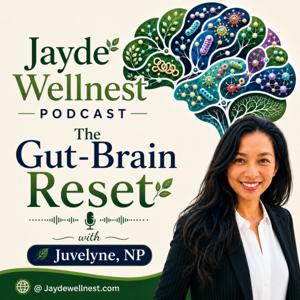


The gut-brain axis is a two-way communication system linking the gastrointestinal system and the brain through neural, hormonal, and immune pathways. This means what happens in your gut can influence mood, cognition, and behavior—and vice versa. The gut microbiome, made up of trillions of microorganisms, plays a central role in this communication. Disruptions in this system have been linked to conditions like IBS, depression, and metabolic disorders. [1] [2]
Physical activity is emerging as a powerful regulator of this axis. It doesn’t just improve fitness—it may help “reset” communication between the gut and brain by influencing inflammation, stress response, and microbial balance.
Takeaway: A healthy gut-brain axis is foundational to both mental and physical health—and movement is one of the most effective ways to support it.
https://us.fullscript.com/welcome/jde-guzman/store-start
https://www.jaydewellnest.com/
Creative Commons — Attribution 3.0 Unported — CC BY 3.0
Music promoted by Copyright Free Music - Background Music For Videos 👉 / @podcastbackgroundmusic
https://www.youtube.com/watch?v=cdFqvdekuvI&list=PLdYm0OsclpUwmwxL4umm63v-UBctUT6_n&index=1
https://www.optimantra.com/optimus/patient/patientaccess/servicesall?pid=N0d1aDU4MFdMMlJCQmc5QmdJYzBZQT09&lid=TWt0aVhmYUtySUJaWk04RzJlZkJiQT09
Sources:
The gut-brain axis and the microbiome: mechanisms and clinical implications. Clinical Gastroenterology and Hepatology, 2019
The microbiota-gut-brain axis: from motility to mood. Gastroenterology, 2021
Interaction of physical activity and gut-brain axis: relevance for obesity. Reviews in Endocrine & Metabolic Disorders, 2026
Exercise, the gut microbiome and gastrointestinal diseases: therapeutic impact and molecular mechanisms. Gastroenterology, 2025
Could the therapeutic effect of physical activity on irritable bowel syndrome Be mediated through changes to the gut microbiome? A narrative and hypothesis generating review. Neurogastroenterology and Motility, 2025
Neurobiological, molecular, and systemic mechanisms of exercise in the treatment of mental health disorders. Journal of Psychiatric Research, 2026
Inflammation, lifestyle factors, and the microbiome-gut-brain axis: relevance to depression and antidepressant action. Clinical Pharmacology and Therapeutics, 2023
The physical activity guidelines for americans. JAMA, 2018
A tribute to Fathers.
Creative Commons — Attribution 3.0 Unported — CC BY 3.0
Music promoted by Copyright Free Music - Background Music For Videos 👉 / @podcastbackgroundmusic
https://www.youtube.com/watch?v=cdFqvdekuvI&list=PLdYm0OsclpUwmwxL4umm63v-UBctUT6_n&index=1
https://www.optimantra.com/optimus/patient/patientaccess/servicesall?pid=N0d1aDU4MFdMMlJCQmc5QmdJYzBZQT09&lid=TWt0aVhmYUtySUJaWk04RzJlZkJiQT09
Mission Control: The Gut and Your Health Is an overview of how the gastrointestinal system plays a central role in overall health. It explains that the gut is not just responsible for digestion, but also influences immunity, metabolism, and even mental health through the gut-brain axis. The content highlights the importance of the gut microbiome—trillions of bacteria that help regulate inflammation, nutrient absorption, and disease risk. It emphasizes that diet, lifestyle, medications, and stress all impact gut balance, and that maintaining a healthy gut can support better energy levels, immune function, and chronic disease prevention
https://us.fullscript.com/welcome/jde-guzman/store-start
https://www.jaydewellnest.com/
Creative Commons — Attribution 3.0 Unported — CC BY 3.0
Music promoted by Copyright Free Music - Background Music For Videos 👉 / @podcastbackgroundmusic
https://www.youtube.com/watch?v=cdFqvdekuvI&list=PLdYm0OsclpUwmwxL4umm63v-UBctUT6_n&index=1
https://www.optimantra.com/optimus/patient/patientaccess/servicesall?pid=N0d1aDU4MFdMMlJCQmc5QmdJYzBZQT09&lid=TWt0aVhmYUtySUJaWk04RzJlZkJiQT09
This episode brings everything together into the Gut Brain Reset Method: Reduce, Repair, Regulate
Step 1: Reduce
Step 2: Repair
Step 3: Regulate
How the gut and brain communicate (gut-brain axis)
The impact of stress, sleep, and nervous system regulation
Creating stability in both gut function and mood
How these three steps work together as a system—not separate fixes
What real progress looks like (and why it’s not overnight)
Final takeaway: this is about building resilience, not chasing perfection
https://us.fullscript.com/welcome/jde-guzman/store-start
Sources:
Detection of various microplastics in human stool: a prospective case series. Annals of Internal Medicine, 2019
Impact of microplastics and nanoplastics on liver health: current understanding and future research directions. World Journal of Gastroenterology, 2024
Impact of microplastics on the human gut microbiome: a systematic review of microbial composition, diversity, and metabolic disruptions. BMC Gastroenterology, 2025
https://us.fullscript.com/welcome/jde-guzman/store-start
https://www.jaydewellnest.com/
Creative Commons — Attribution 3.0 Unported — CC BY 3.0
Music promoted by Copyright Free Music - Background Music For Videos 👉 / @podcastbackgroundmusic
https://www.youtube.com/watch?v=cdFqvdekuvI&list=PLdYm0OsclpUwmwxL4umm63v-UBctUT6_n&index=1
https://www.optimantra.com/optimus/patient/patientaccess/servicesall?pid=N0d1aDU4MFdMMlJCQmc5QmdJYzBZQT09&lid=TWt0aVhmYUtySUJaWk04RzJlZkJiQT09
You can’t eliminate every exposure.
But you can build a more resilient gut.
Focus on fiber-rich foods to support beneficial bacteria.
Increase plant diversity.
Include anti-inflammatory foods.
A stronger microbiome helps regulate inflammation and maintain gut barrier function.
This is how you buffer environmental stress.
Now—we bring everything together
https://us.fullscript.com/welcome/jde-guzman/store-start
Creative Commons — Attribution 3.0 Unported — CC BY 3.0
Music promoted by Copyright Free Music - Background Music For Videos 👉 / @podcastbackgroundmusic
https://www.youtube.com/watch?v=cdFqvdekuvI&list=PLdYm0OsclpUwmwxL4umm63v-UBctUT6_n&index=1
https://www.optimantra.com/optimus/patient/patientaccess/servicesall?pid=N0d1aDU4MFdMMlJCQmc5QmdJYzBZQT09&lid=TWt0aVhmYUtySUJaWk04RzJlZkJiQT09
Sources:
The ancestral and industrialized gut microbiota and implications for human health. Nature Reviews: Microbiology, 2019
Lifestyle interventions for treatment and remission of type 2 diabetes and prediabetes in adults: implications for clinicians. American Journal of Lifestyle Medicine, 2025
Moody microbes or fecal phrenology: what do we know about the microbiota-gut-brain axis?. BMC Medicine, 2016
You don’t need to eliminate plastic completely.
Focus on the highest-impact changes.
Avoid heating food in plastic.
Use glass or stainless steel when possible.
Switch from bottled water to filtered water.
Reduce reliance on ultra-processed foods.
And improve indoor air quality with ventilation.
Small changes, consistently applied, make a difference.
Next—we talk about strengthening the gut itself.
https://us.fullscript.com/welcome/jde-guzman/store-start
Sources:
Detection of various microplastics in human stool: a prospective case series. Annals of Internal Medicine, 2019
Impact of microplastics and nanoplastics on liver health: current understanding and future research directions. World Journal of Gastroenterology, 2024
Impact of microplastics on the human gut microbiome: a systematic review of microbial composition, diversity, and metabolic disruptions. BMC Gastroenterology, 2025
Creative Commons — Attribution 3.0 Unported — CC BY 3.0
Music promoted by Copyright Free Music - Background Music For Videos 👉 / @podcastbackgroundmusic
https://www.youtube.com/watch?v=cdFqvdekuvI&list=PLdYm0OsclpUwmwxL4umm63v-UBctUT6_n&index=1
https://www.optimantra.com/optimus/patient/patientaccess/servicesall?pid=N0d1aDU4MFdMMlJCQmc5QmdJYzBZQT09&lid=TWt0aVhmYUtySUJaWk04RzJlZkJiQT09
Ultra-processed foods impact the gut in multiple ways.
They’re low in fiber, high in additives, and often packaged in plastic.
So you’re getting a combination of microbiome disruption and environmental exposure.
This creates a double hit to gut health.
When you reduce ultra-processed foods, you’re not just improving nutrition—you’re also lowering microplastic exposure.
Next—we shift into what you can actually do.
https://us.fullscript.com/welcome/jde-guzman/store-start
Sources:
Detection of various microplastics in human stool: a prospective case series. Annals of Internal Medicine, 2019
Impact of microplastics and nanoplastics on liver health: current understanding and future research directions. World Journal of Gastroenterology, 2024
Impact of microplastics on the human gut microbiome: a systematic review of microbial composition, diversity, and metabolic disruptions. BMC Gastroenterology, 2025
Creative Commons — Attribution 3.0 Unported — CC BY 3.0
Music promoted by Copyright Free Music - Background Music For Videos 👉 / @podcastbackgroundmusic
https://www.youtube.com/watch?v=cdFqvdekuvI&list=PLdYm0OsclpUwmwxL4umm63v-UBctUT6_n&index=1
https://www.optimantra.com/optimus/patient/patientaccess/servicesall?pid=N0d1aDU4MFdMMlJCQmc5QmdJYzBZQT09&lid=TWt0aVhmYUtySUJaWk04RzJlZkJiQT09
The biggest sources of microplastics are not always obvious.
Bottled water is a major one.
Food packaging—especially when combined with heat—is another.
Ultra-processed foods carry higher exposure from both packaging and production.
Even indoor air contains microplastic particles from dust and synthetic materials.
This isn’t about eliminating everything.
It’s about understanding where small changes can reduce your overall load.
Next—we expand on food specifically.
https://us.fullscript.com/welcome/jde-guzman/store-start
https://www.optimantra.com/optimus/patient/patientaccess/servicesall?pid=N0d1aDU4MFdMMlJCQmc5QmdJYzBZQT09&lid=TWt0aVhmYUtySUJaWk04RzJlZkJiQT09
Sources:
Detection of various microplastics in human stool: a prospective case series. Annals of Internal Medicine, 2019
Impact of microplastics and nanoplastics on liver health: current understanding and future research directions. World Journal of Gastroenterology, 2024
Impact of microplastics on the human gut microbiome: a systematic review of microbial composition, diversity, and metabolic disruptions. BMC Gastroenterology, 2025
Creative Commons — Attribution 3.0 Unported — CC BY 3.0
Music promoted by Copyright Free Music - Background Music For Videos 👉 / @podcastbackgroundmusic
https://www.youtube.com/watch?v=cdFqvdekuvI&list=PLdYm0OsclpUwmwxL4umm63v-UBctUT6_n&index=1
There is currently no proven way to detox microplastics from the body.
No supplement, no cleanse, no shortcut.
If you’re seeing products claiming to remove plastics—they’re not backed by evidence.
What actually works is reducing exposure and supporting the body’s natural systems.
Your liver, gut, and immune system already handle environmental stressors.
The goal is to support them—not override them.
Next—we look at where exposure is really coming from.
https://us.fullscript.com/welcome/jde-guzman/store-start
https://www.optimantra.com/optimus/patient/patientaccess/servicesall?pid=N0d1aDU4MFdMMlJCQmc5QmdJYzBZQT09&lid=TWt0aVhmYUtySUJaWk04RzJlZkJiQT09
Sources:
Detection of various microplastics in human stool: a prospective case series. Annals of Internal Medicine, 2019
Impact of microplastics and nanoplastics on liver health: current understanding and future research directions. World Journal of Gastroenterology, 2024
Impact of microplastics on the human gut microbiome: a systematic review of microbial composition, diversity, and metabolic disruptions. BMC Gastroenterology, 2025
Creative Commons — Attribution 3.0 Unported — CC BY 3.0
Music promoted by Copyright Free Music - Background Music For Videos 👉 / @podcastbackgroundmusic
Your gut and brain are constantly communicating.
This connection is known as the gut-brain axis.
Signals travel through the nervous system, immune pathways, and microbial metabolites.
When the gut is inflamed or imbalanced, those signals change.
Microplastics may contribute to that disruption.
Through microbiome imbalance and increased gut permeability, they can promote inflammatory signaling that reaches the brain.
This may show up as brain fog, anxiety, or mood changes.
We don’t have definitive human outcomes yet.
But we understand the pathway.
Next—we’re clearing up one of the biggest misconceptions
https://us.fullscript.com/welcome/jde-guzman/store-start
https://www.optimantra.com/optimus/patient/patientaccess/servicesall?pid=N0d1aDU4MFdMMlJCQmc5QmdJYzBZQT09&lid=TWt0aVhmYUtySUJaWk04RzJlZkJiQT09
Sources:
Detection of various microplastics in human stool: a prospective case series. Annals of Internal Medicine, 2019
Impact of microplastics and nanoplastics on liver health: current understanding and future research directions. World Journal of Gastroenterology, 2024
Impact of microplastics on the human gut microbiome: a systematic review of microbial composition, diversity, and metabolic disruptions. BMC Gastroenterology, 2025
Creative Commons — Attribution 3.0 Unported — CC BY 3.0
Music promoted by Copyright Free Music - Background Music For Videos 👉 / @podcastbackgroundmusic
From the publisher's feed