
Sign up to save your podcasts
Or

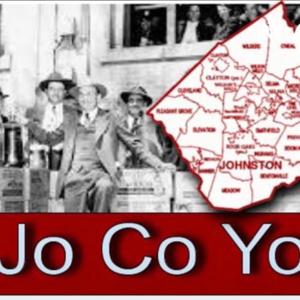


Johnston County has been selling to people who are just passing through for nearly a century. This episode looks at how Exit 95 turned transit traffic into an economy—and what gets lost when a place becomes a stop instead of a destination.
Johnston County is named for one man and defined by another. This episode unpacks two Johnstons, one Civil War surrender, and the difference between loyalty and pretending.
History books and courthouse lawns tell a simple story of the Civil War: blue versus gray, with honor tied strictly to the battlefield. But in Johnston County, the reality was far more complicated. North Carolina led the Confederacy in desertions, driven by a quiet resistance of men who decided "a rich man's war and a poor man's fight" wasn't worth their lives. This episode explores the secret network of the Red Strings and the farmers who stayed behind, daring the Home Guard to find them. Who were the real cowards of the county?
Along Highway 210 in Johnston County, a forgotten cemetery tells a story of slavery, family, and memory. This episode follows Adam Sanders, who bought the land where his ancestors were buried and made sure the circle stayed unbroken.
It’s two million years old, six miles wide at its mouth, and still manages to surprise us. This is the story of the Neuse River, Johnston County’s original highway—and its most persistent problem
Before the bankruptcy banners and empty storefronts, Heilig-Meyers was the furniture store that helped define small-town North Carolina. This is the story of how it started, how it grew, and why its collapse mattered far beyond the showroom
For over sixty years, Main Street in Benson was the center of the universe for Johnston County youth on a Friday night. From horse-drawn buggies in the 1930s to polished Mazda RX-7s in the 1990s, cruising wasn't just driving in circles—it was the most analog matchmaking system in the county, a ritual of belonging, and a reason for a small town to come alive. But when two thousand people start showing up, things inevitably change. In 1996, the town put up a sign, changed the traffic code, and ended a sixty-year tradition. This episode explores what we found when the windows were down, and what was actually lost when the cruising stopped.
Every farmer is a gambler, but for sixty years, Johnston County's tobacco growers held a guaranteed winning hand. The federal quota system provided a vital safety net until 2004, when the government offered a buyout that forced every farming family into a midnight, kitchen-table decision. This episode explores the moment the agricultural rules changed in eastern North Carolina, asking who decided to take the money and walk, and who kept playing the hand.
There is a bronze soldier standing on the courthouse lawn in Smithfield. He has been there since 1926. He stands at parade rest — chin up, eyes forward — with the posture of a man who doesn't yet know what's waiting for him.
On the stone beneath his feet: forty-seven names.
Buck Hill. Pearlie H. Harris. Maudius Godwin. Charlie Wall.
Tobacco farmers. Mill workers. Farm boys from Four Oaks and Kenly and the banks of the Little River. They went to France. They did not come home.
There is a ledger in the North Carolina State Archives. Bound in leather. Column after column of names. It is titled Johnston County Permanent Registration of Voters, 1902 to 1908.
Every name in it is white. That was the point.
Smith Brooks had sat on the Smithfield Board of Commissioners. Mack Sowell would sit on the Selma Town Council. Between them: ninety-two years. Two names. And everything Johnston County built to keep those names from being closer together.
This is A Change Is Gonna Come.
From the publisher's feed