
Sign up to save your podcasts
Or



Pain may be real, but suffering is unreal or imaginary.
For the jīvanmukta, or the one who realises the Truth, the body may undergo karmic sufferings but the mind will not be affected. The mind will remain happy, peaceful enjoying whatever comes, “It is a part of life. Let it be.”
In this episode, Sadguru shows us that the wise one, who lives on happily doing whatever presents itself to him to be done, does not encounter any difficulty either in activity or in inactivity.
If you'd like to get the links and shownotes for this episode, visit:
https://www.saiprakashana.org/KU-EP21
It is seated, yet It travels far.
It is lying down, yet It goes everywhere.
In this episode, Sadguru Sri Madhusudan Sai elaborates on this Truth of the supreme all-pervading and bodiless ātman, which resides in impermanent bodies. It is said, that having known this, the courageous and discriminating one does not grieve.
If you'd like to get the links and shownotes for this episode, visit:
https://www.saiprakashana.org/KU-EP20
The entire world is a modification of the one pure consciousness.
The ātman, subtler than the subtlest and greater than the greatest, dwells in the heart of all beings. The one free from desire and grief, with the sense and mind at peace, perceives the glory of the ātman. The atom which is a micro-representation of the entire cosmic material existence, is made up of 99.9999999…% empty space. Hence the entire universe, is also made up of 99.9999999…..% empty space.
If one were to dive deeper and deeper into our very existence, we will discover that we too are nothing but empty space.
If you'd like to get the links and shownotes for this episode, visit:
https://www.saiprakashana.org/KU-EP19
By realising the absolute nature of the Self (puruṣa), one achieves freedom from the guṇas (the fundamental attributes that cause desire). This is the highest kind of non-attachment. Knowing this, one can differentiate between that which can exist on its own, and that which depends on something other than itself to exist.
The true me; which is neither the body, which is in the waking state, it is not the dreaming mind, nor it is the ignorant deep sleep stage. It is pure consciousness – the fourth, which is what I truly am.
If you'd like to get the links and shownotes for this episode, visit:
https://www.saiprakashana.org/KU-EP18
According to vedanta, the four states of consciousness are captured beautifully in the divine ओंकार oṁkāra.
If you'd like to get the links and shownotes for this episode, visit:
https://www.saiprakashana.org/KU-EP17
We may practise using the oṁ mantra in so many modified ways, however these are all just a lesser utilisation of a bigger power. oṁ can be used for much, much higher goals, unfortunately, most of us are using it for only very trivial attainments.
Sadguru says that the whole universe is filled with this fundamental vibration called oṁ. In this episode, Sadguru describes how we can begin to understand our True form through the meditation of the silence that is the basis of oṁ.
If you'd like to get the links and shownotes for this episode, visit:
https://www.saiprakashana.org/KU-EP16
In this episode, Sadguru explains the three kinds of तपस् tapas (austerities) to be performed in order to attain brahman.
The austerities for the body comprise worshipping the Gods, guru and the enlightened, maintaining a clean body, being straightforward and celibate with the complete focus on God and practicing non-violence. The austerities for the speech comprise speaking without causing agitation to others, speaking the truth in a pleasant way and practising the chanting of scriptures. The austerities of the mind comprise maintaining a pleasant mind with compassion, silence, self-control and purity of thoughts.
If you'd like to get the links and shownotes for this episode, visit:
https://www.saiprakashana.org/KU-EP15
When we look around, we notice many objects around us. Yet, we tend not to notice the light with which everything is lit up.
Likewise, ātman is everywhere, our Self is everywhere, inside, outside and everywhere. We see and experience everything using that Self. Yet we don’t see the Self.
In this episode, Sadguru Sri Madhusudan Sai teaches us that It is really not hiding anywhere. But it appears to be hiding, just as the spectacles appear to have gone missing though they are right there, resting on the forehead. It is only that we fail to notice it. Like that, ātman or brahman is everywhere, in everything, in every single experience of ours.
If you'd like to get the links and shownotes for this episode, visit:
https://www.saiprakashana.org/KU-EP14
In this episode, Swami introduces us to the concept of the three pillars of vedānta, which are:
If the third pillar is not reached, i.e. without anubhava, all that is heard or contemplated on is merely borrowed knowledge. Only when it is experienced through one’s own personal experience does one truly attain the Truth.
If you'd like to get the links and shownotes for this episode, visit:
https://www.saiprakashana.org/KU-EP13
Whether we practise karma yoga, bhakti yoga or jñāna yoga – we should examine the true motivation behind our actions. Are the homas, the seva and the prayers/bhajans really solely to please God/atman? Or are we doing it to achieve or attain some kind of returns for ourselves – by pleasing our mind and body? If it is the latter then, that is not ādhyātma.
ādhyātma, Sadguru Sri Madhusudan Sai says, is another word for spirituality. Spirituality is not about anything outside of you.
Spirituality is everything about who You really are, and finding out who You really are.
If you'd like to get the links and shownotes for this episode, visit:
https://www.saiprakashana.org/KU-EP12
From the publisher's feed
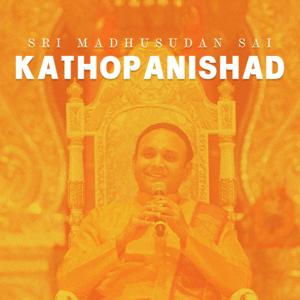
Kathopanishad is one of the 10 principal upanishads which present the essence and culmination of all knowledge found within India’s most ancient and sacred texts; the vedas. It is a dialogue…
It is believed that listening to the upanishads is the first step towards discovering our unique spiritual path to liberation. In 2020, Sadguru Sri Madhusudan Sai gave a series of talks over the course of a month, which methodically and thoroughly explained the significance of the Kathopanishad and its relevance to us in our lives. This podcast series is compiled from those talks.