
Sign up to save your podcasts
Or



From the publisher's feed
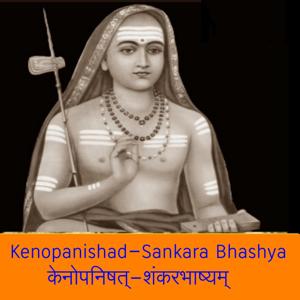
Adi Shankara wrote two commentaries on Kenopanishad. One is called Kenopaniṣad Padabhāṣya and the other is Kenopaniṣad Vākyabhāṣya. In his commentary on the third khanda…
Kena Upanishad is notable in its discussion of Brahman with attributes and without attributes. It asserts that the efficient cause of all the gods, symbolically envisioned as forces of nature, is Brahman. The Kena Upanishad is also significant in asserting the idea of “Spiritual Man”, “Self is a wonderful being that even gods worship”, “Atman (Self) exists”, and “knowledge and spirituality are the goals and intense longing of all creatures”.
The Kena Upanishad (Kenopaniṣat) is classified as one of the primary Upanishads that is embedded inside the last section of the Talavakara Brahmanam of the Samaveda. It is listed as number 2 in the Muktikā, the canon of the 108 Upanishads. It has a structure where the first 13 are verses composed as a metric poem, followed by 15 prose paragraphs of main text plus 6 prose paragraphs of epilogue.