
Sign up to save your podcasts
Or

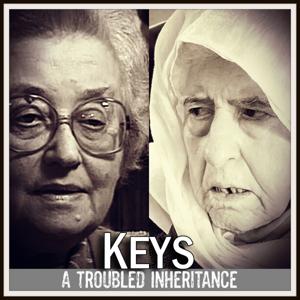


Sami abu Salem is a Gaza journalist who, like most Gazan Palestinians, has been pursued with his extended family up and down the Strip by Israel's war machine since October, 2023. Sami has reported regularly to broadcaster and film-maker Mike Joseph, and so to the Balfour Project. Earlier this week he sent this voice commentary as news of a ceasefire began to circulate. There was no let-up, however, in the war. In Deir al Balah, in central Gaza, where Sami and his mother, wife and children cowered under Israel’s hovering quadcopters, 13 more Palestinians were killed near his makeshift dwelling as he spoke. Mike Joseph introduces for us Sami’s moving voice report.
Sami abu Salem, fleeing south down Gaza with his family, pursued by the Israeli war machine---bombs, drones, rockets, snipers---finds himself in Rafah. He reports here to Mike Joseph, who is chronicling Sami's plight for the Balfour Project
Credits
Reporter Sami Abu Salem
Presenter Mike Joseph
Pictures Sami Abu Salem
Images
Mike Joseph
Sami Abu Salem
Music
Keys Theme & Variations on a Bach Prelude in B minor - Micha Wink
PRODUCTION
Mike Joseph Producer
Zac Ware Sound Editor
Pamela Koehne-Drube Audience and Web Advisor
This double episode closes the first season of Keys.
With the Hamas invasion and massacre of October 7 2023 leading to the 2023 Israel-Gaza War, this episode brings its historical understanding to the cruel events that are unfolding as we work. We reveal that the horror that fills the news every day has its roots deep in the history of Israel-Palestine.
UN Secretary-General António Guterres reminded the world that “the attacks by Hamas did not happen in a vacuum”. This special episode shows how the deeds and decisions of the past are projected on to the screen of today. If we know our history, can that help us to escape it?
PLACE NAMES
When the place names in Keys get confusing, these notes will help.
Mike’s grandparents came from Galicia, a part of eastern Europe on no modern map. Today some of Galicia is southeast Poland, another part is western Ukraine. Galicia no longer exists.
In the last century, many of Galicia’s Jews, Ukrainians and Poles also ceased to exist, violently, as their province was repeatedly ruptured by the front lines of two World Wars, genocide and ethnic cleansing.
Before 1918, Galicia was the Austro-Hungarian Empire’s most eastern province. Its capital was Lemberg (German) = Lwów (Polish) = Lviv (Ukrainian).
Three names, but one city.
Further south, Mike’s grandfather grew up in Stanislau (German); left Stanislaviv (Ukrainian) in 1918 for a better life in Germany; deported back to Stanisławów (Polish) in 1938, which became Stanislaviv (Ukrainian) in 1939; killed in Stanislau (German) in 1941.
Before Mike first visited that city in 1999, the Soviet Union renamed it Ivano-Frankovsk (Russian). Today the place where he found his grandfather’s surviving colleagues and allies is called Ivano-Frankivsk (Ukrainian).
Five names, but one city.
Fatima Abu Salem grew up in the thriving Palestinian village of Burayr, at crossroads leading to Gaza, Hebron and Beersheba. Today a few ruins of Burayr are surrounded by the fields of Kibbutz Bro’r Hayyil.
Two names, but one place.
Place names matter. How we name places reveals our own histories, identities and yearnings.
CREDITS for this episode
Testimony
Testimony and commentary by Mike Joseph, Asha Phillips
Interpreters and Translators
Dina Brandt
Alex Dunai
Markus Hartmann
Burkhardt Kolbmuller
Svitlana Kovalyk
Itamar Shapira
Nadia Slobodyan
Hannah Kleinfeld
Atef Alshaer
Images
Mike Joseph
Sami Abu Salem
Music
Keys Theme & Variations on a Bach Prelude in B minor - Micha Wink
Sources
Eulogy for Ro’i Rothberg by Moshe Dayan, Avnei Derekh, Tel Aviv 1976, p191; q. in Zertal, Idith, Israel’s Holocaust and the Politics of Nationhood, Cambridge University Press 2005, p180
Universal International News, 6 August 1956, Suez Crisis
Theodor Meron, A life of learning, American Council of Learned Societies Occasional Paper No 65, Pittsburgh, 9 May 2008. Memorandum by Legal Adviser, Ministry of Foreign Affairs (Theodor Meron) to Political Secretary to the Israeli Prime Minister, 18 Sep 1967
Israeli Kahan Commission Report is main source for the Israel-Falange history. Its Appendix can be accessed at: http://www.documentcloud.org/documents/4887715-Kahan-Commission-Appendix-Complete-English.html
Ben Gurion, speaking to the Israeli Cabinet, May 24, April 26, May 7, 1953, Israel State Archives; quoted in Tom Segev, A State at Any Cost, 2018, p512
PRODUCTION
Mike Joseph Producer
Zac Ware Sound Editor
Pamela Koehne-Drube Audience and Web Advisor
PRESENTERS
Mike Joseph
Asha Phillips
SPEAKERS AND CAST in programme order
Sami Abu Salem, interviewed by Mike Joseph
James Stewart voicing Moshe Dayan, Theodor Meron, BBC World Service Newsreader, Baruch Ben Meir
Rabbi Dr Gerhard Graf voiced by Mark Levene
Lilli Gold voiced by Christine Willison
Hoda Khoury, interviewed by Mike Joseph
Primo Levi voiced by Andrea Brondino
António Guterres, UN Secretary-General
Gilad Erdan, Israeli Ambassador to UN
How do people become refugees? What’s it like? Mike Joseph’s aunt became a refugee on her 10th birthday. This is the story of comfortable family life transformed in an instant, narrated by the family’s only survivors. Yet even refugees are not the most unfortunate. Some are trapped, unable to escape, awaiting their fate.
In this epic journey, Mike sets out to uncover his Holocaust inheritance, but is led relentlessly to discovering his Nakba inheritance. It turns out that the two different catastrophes are more connected than he thought possible. In 2023, can both stories be heard and understood?
With unique personal testimony, recordings, letters and memories by those who survived and those who did not, this challenging audio series is devised, dramatised and narrated by broadcaster Mike Joseph.
PLACE NAMES
When the place names in Keys get confusing, these notes will help.
Mike’s grandparents came from Galicia, a part of eastern Europe on no modern map. Today some of Galicia is southeast Poland, another part is western Ukraine. Galicia no longer exists.
In the last century, many of Galicia’s Jews, Ukrainians and Poles also ceased to exist, violently, as their province was repeatedly ruptured by the front lines of two World Wars, genocide and ethnic cleansing.
Before 1918, Galicia was the Austro-Hungarian Empire’s most eastern province. Its capital was Lemberg (German) = Lwów (Polish) = Lviv (Ukrainian).
Three names, but one city.
Further south, Mike’s grandfather grew up in Stanislau (German); left Stanislaviv (Ukrainian) in 1918 for a better life in Germany; deported back to Stanisławów (Polish) in 1938, which became Stanislaviv (Ukrainian) in 1939; killed in Stanislau (German) in 1941.
Before Mike first visited that city in 1999, the Soviet Union renamed it Ivano-Frankovsk (Russian). Today the place where he found his grandfather’s surviving colleagues and allies is called Ivano-Frankivsk (Ukrainian).
Five names, but one city.
Fatima Abu Salem grew up in the thriving Palestinian village of Burayr, at crossroads leading to Gaza, Hebron and Beersheba. Today a few ruins of Burayr are surrounded by the fields of Kibbutz Bro’r Hayyil.
Two names, but one place.
Place names matter. How we name places reveals our own histories, identities and yearnings.
CREDITS for this episode
Testimony
Testimony and commentary by Mike Joseph, Asha Phillips
Interpreters and Translators
Dina Brandt
Alex Dunai
Markus Hartmann
Burkhardt Kolbmuller
Svitlana Kovalyk
Itamar Shapira
Nadia Slobodyan
Hannah Kleinfeld
Atef Alshaer
Images
Mike Joseph
Sami Abu Salem
Music
Keys Theme & Variations on a Bach Prelude in B minor - Micha Wink
PRODUCTION
Mike Joseph Producer
Zac Ware Sound Editor
Pamela Koehne-Drube Audience and Web Advisor
PRESENTERS
Mike Joseph
Asha Phillips
SPEAKERS AND CAST in programme order
Lilli Gold interviewed by USC Shoah Foundation, © 1998 USC Shoah Foundation. From the archive of USC Shoah Foundation – The Institute for Visual History and Education http://sfi.usc.edu/
Peter Kirsten as Leipzig policeman
Rosa Gold interviewed by Mike Joseph
George May as Israel Gold
In 1938 Britain and the USA call an international conference to rescue Jewish refugees from Hitler. The world refuses to open its doors, a humanitarian disaster that clears the way for Hitler’s Final Solution. But astonishingly, Zionists attending the conference see this as an achievement. How could that be?
Episode 8 of KEYS: A Troubled Inheritance released on 25 October 2023, and now available on all platforms.
In this epic journey, Mike sets out to uncover his Holocaust inheritance, but is led relentlessly to discovering his Nakba inheritance. It turns out that the two different catastrophes are more connected than he thought possible. In 2023, can both stories be heard and understood?
With unique personal testimony, recordings, letters and memories by those who survived and those who did not, this challenging audio series is devised, dramatised and narrated by broadcaster Mike Joseph.
PLACE NAMES
When the place names in Keys get confusing, these notes will help.
Mike’s grandparents came from Galicia, a part of eastern Europe on no modern map. Today some of Galicia is southeast Poland, another part is western Ukraine. Galicia no longer exists.
In the last century, many of Galicia’s Jews, Ukrainians and Poles also ceased to exist, violently, as their province was repeatedly ruptured by the front lines of two World Wars, genocide and ethnic cleansing.
Before 1918, Galicia was the Austro-Hungarian Empire’s most eastern province. Its capital was Lemberg (German) = Lwów (Polish) = Lviv (Ukrainian).
Three names, but one city.
Further south, Mike’s grandfather grew up in Stanislau (German); left Stanislaviv (Ukrainian) in 1918 for a better life in Germany; deported back to Stanisławów (Polish) in 1938, which became Stanislaviv (Ukrainian) in 1939; killed in Stanislau (German) in 1941.
Before Mike first visited that city in 1999, the Soviet Union renamed it Ivano-Frankovsk (Russian). Today the place where he found his grandfather’s surviving colleagues and allies is called Ivano-Frankivsk (Ukrainian).
Five names, but one city.
Fatima Abu Salem grew up in the thriving Palestinian village of Burayr, at crossroads leading to Gaza, Hebron and Beersheba. Today a few ruins of Burayr are surrounded by the fields of Kibbutz Bro’r Hayyil.
Two names, but one place.
Place names matter. How we name places reveals our own histories, identities and yearnings.
CREDITS for this episode
Testimony
Testimony and commentary by Mike Joseph, Asha Phillips
Interpreters and Translators
Dina Brandt
Alex Dunai
Markus Hartmann
Burkhardt Kolbmuller
Svitlana Kovalyk
Itamar Shapira
Nadia Slobodyan
Hannah Kleinfeld
Atef Alshaer
Images
Mike Joseph
Sami Abu Salem
Music
Keys Theme & Variations on a Bach Prelude in B minor - Micha Wink
PRODUCTION
Mike Joseph Producer
Zac Ware Sound Editor
Pamela Koehne-Drube Audience and Web Advisor
PRESENTERS
Mike Joseph
Asha Phillips
SPEAKERS AND CAST in programme order
James Stewart as Joseph Goebbels and voice of Der Stürmer
George May as Israel Gold
Lilli Gold interviewed by USC Shoah Foundation, © 1998 USC Shoah Foundation. From the archive of USC Shoah Foundation – The Institute for Visual History and Education http://sfi.usc.edu/
Andrea Brondino as Monsignor Giuseppe di Meglio
Richard Tebboth as David Ben Gurion
Rosa Gold interviewed by Mike Joseph
Alice Gold as young Lilli Gold
Mick Napier as Henryk Ehrlich
Peter Kirsten as Leipzig policeman
In Episode 7, when Nazi Germany excludes Jews from citizenship, Israel Gold, Mike Joseph’s grandfather, is forced to consider emigrating to Palestine. He learns Hebrew and Arabic, because his kind of Zionism seeks a bi-national state of all its inhabitants. But in 1937, the British Government reveals a different plan: a Jewish state, with its native Palestinian population removed by force. How will Zionism react, and what will Israel Gold do?
In this epic journey, Mike sets out to uncover his Holocaust inheritance, but is led relentlessly to discovering his Nakba inheritance. It turns out that the two different catastrophes are more connected than he thought possible. In 2023, can both stories be heard and understood?
With unique personal testimony, recordings, letters and memories by those who survived and those who did not, this challenging audio series is devised, dramatised and narrated by broadcaster Mike Joseph.
PLACE NAMES
When the place names in Keys get confusing, these notes will help.
Mike’s grandparents came from Galicia, a part of eastern Europe on no modern map. Today some of Galicia is southeast Poland, another part is western Ukraine. Galicia no longer exists.
In the last century, many of Galicia’s Jews, Ukrainians and Poles also ceased to exist, violently, as their province was repeatedly ruptured by the front lines of two World Wars, genocide and ethnic cleansing.
Before 1918, Galicia was the Austro-Hungarian Empire’s most eastern province. Its capital was Lemberg (German) = Lwów (Polish) = Lviv (Ukrainian).
Three names, but one city.
Further south, Mike’s grandfather grew up in Stanislau (German); left Stanislaviv (Ukrainian) in 1918 for a better life in Germany; deported back to Stanisławów (Polish) in 1938, which became Stanislaviv (Ukrainian) in 1939; killed in Stanislau (German) in 1941.
Before Mike first visited that city in 1999, the Soviet Union renamed it Ivano-Frankovsk (Russian). Today the place where he found his grandfather’s surviving colleagues and allies is called Ivano-Frankivsk (Ukrainian).
Five names, but one city.
Fatima Abu Salem grew up in the thriving Palestinian village of Burayr, at crossroads leading to Gaza, Hebron and Beersheba. Today a few ruins of Burayr are surrounded by the fields of kibbutz Bro’r Hayyil.
Two names, but one place.
Place names matter. How we name places reveals our own histories, identities and yearnings.
CREDITS for this episode
Testimony
Testimony and commentary by Mike Joseph, Asha Phillips
Interpreters and Translators
Dina Brandt
Alex Dunai
Markus Hartmann
Burkhardt Kolbmuller
Svitlana Kovalyk
Itamar Shapira
Nadia Slobodyan
Hannah Kleinfeld
Atef Alshaer
Images
Mike Joseph
Sami Abu Salem
Music
Keys Theme & Variations on a Bach Prelude in B minor - Micha Wink
Ba’a M’nucha, Nathan Alterman & Kurt Weill - Gail Stewart soprano, Mike Joseph piano
PRODUCTION
Mike Joseph Producer
Zac Ware Sound Editor
Pamela Koehne-Drube Audience and Web Advisor
PRESENTERS
Mike Joseph
Asha Phillips
SPEAKERS AND CAST in programme order
Lilli Gold interviewed by USC Shoah Foundation, © 1998 USC Shoah Foundation. From the archive of USC Shoah Foundation – The Institute for Visual History and Education http://sfi.usc.edu/
George May as Israel Gold
Rosa Gold interviewed by Mike Joseph
Richard Tebboth as David Ben Gurion
Nationalism comes under the spotlight in Episode Six: Israel Gold, Mike Joseph’s grandfather, adds a four-kilo dictionary to his soldier’s kit bag in November 1917. We discover why. Then, without knowing it, Israel Gold becomes Ukrainian, an identity which will through time reveal the strengths of multiculturalism and the perils of ethnic nationalism.
In this epic journey, Mike sets out to uncover his Holocaust inheritance, but is led relentlessly to discovering his Nakba
With unique personal testimony, recordings, letters and memories by those who survived and those who did not, this challenging
When the place names in Keys get confusing, these
Mike’s grandparents came from Galicia, a part of eastern Europe on no modern map. Today some of Galicia is southeast Poland,
Three names, but one city.
Five names, but one city.
Fatima Abu Salem grew up in the thriving Palestinian village of Burayr, at crossroads leading to Gaza, Hebron and Beersheba. Today a few ruins of Burayr are surrounded by the fields of Kibbutz Bro’r Hayyil.
Two names, but one place.
Place names matter. How we name places reveals our own histories, identities and yearnings.
Testimony
Testimony and commentary by Mike Joseph, Asha
Interpreters and Translators
Dina Brandt
Alex Dunai
Markus Hartmann
Burkhardt Kolbmuller
Svitlana Kovalyk
Itamar Shapira
Nadia Slobodyan
Hannah Kleinfeld
Atef Alshaer
Images & music
Mike Joseph
Sami Abu Salem
Micha Wink
Lilli Gold, © 1998 USC Shoah Foundation. From the archive
PRODUCTION
Mike Joseph Producer
Zac Ware Sound Editor
Micha Wink Keys Theme & Variations
Pamela Koehne-Drube Audience and Web Advisor
PRESENTERS
Mike Joseph
Asha Phillips
CAST in programme order
Terry Dimmick as car park attendant
George May as Israel Gold
Mike Joseph’s mother petitions the Queen for help to recover her Nazi-plundered house from a resistant Germany. The Queen’s response unlocks a wave of British government action, which escalates towards an international crisis. In this episode, a very personal family story becomes a highly political dispute.
In this epic journey, Mike sets out to uncover his Holocaust inheritance, but is led relentlessly to discovering his Nakba inheritance. It turns out that the two different catastrophes are more connected than he thought possible. In 2023, can both stories be heard and understood?
With unique personal testimony, recordings, letters and memories by those who survived and those who did not, this challenging audio series is devised, dramatised and narrated by broadcaster Mike Joseph.
PLACE NAMES
When the place names in Keys get confusing, these notes will help.
Mike’s grandparents came from Galicia, a part of eastern Europe on no modern map. Today some of Galicia is southeast Poland, another part is western Ukraine. Galicia no longer exists.In the last century, many of Galicia’s Jews, Ukrainians and Poles also ceased to exist, violently, as their province was repeatedly ruptured by the front lines of two World Wars, genocide and ethnic cleansing. Before 1918, Galicia was the Austro-Hungarian Empire’s most eastern province. Its capital was Lemberg (German) = Lwów (Polish) = Lviv (Ukrainian).
Three names, but one city.Further south, Mike’s grandfather grew up in Stanislau (German); left Stanislaviv (Ukrainian) in 1918 for a better life in Germany; deported back to Stanisławów (Polish) in 1938, which became Stanislaviv (Ukrainian) in 1939; killed in Stanislau (German) in 1941. Before Mike first visited that city in 1999, the Soviet Union renamed it Ivano-Frankovsk (Russian). Today the place where he found his grandfather’s surviving colleagues and allies is called Ivano-Frankivsk (Ukrainian).
Five names, but one city.
Fatima Abu Salem grew up in the thriving Palestinian village of Burayr, at crossroads leading to Gaza, Hebron and Beersheba. Today a few ruins of Burayr are surrounded by the fields of kibbutz Bro’r Hayyil.
Two names, but one place.
Place names matter. How we name places reveals our own histories, identities and yearnings.
CREDITS for this episode
Testimony
Testimony and commentary by Mike Joseph, Asha Phillips, James Stewart
Interpreters and Translators
Dina Brandt
Alex Dunai
Markus Hartmann
Burkhardt Kolbmuller
Svitlana Kovalyk
Itamar Shapira
Nadia Slobodyan
Hannah Kleinfeld
Atef Alshaer
Images & music
Mike Joseph
Sami Abu Salem
Micha Wink
Lilli Gold, © 1998 USC Shoah Foundation. From the archive of USC Shoah Foundation – The Institute for Visual History and Education http://sfi.usc.edu/
Brahms, German Requiem, The Holden Consort Orchestra and Choir http://ml.cs.colorado.edu/~ben/Brahms/
Licensed under the Creative Commons Attribution-Share Alike 2.0 Generic license
PRODUCTION
Mike Joseph Producer
Zac Ware Sound Editor
Micha Wink Keys Theme & Variations on a Bach Prelude in B minor
Pamela Koehne-Drube Audience and Web Advisor
PRESENTERS
Mike Joseph
Asha Phillips
CAST in programme order
Christine Willison as Lilli Gold
James Stewart as Robert Fellowes, voices of UK Foreign Office, Martin Gilbert, British Ambassador to Germany.
What do you say to an old Nazi? With this question, Mike Joseph’s daughter Asha opens an episode in which we hear what Mike does say when suddenly, in 1991 he encounters the Nazi who stole his mother’s house fifty years earlier.
The old Nazi shouts him down. Then Mike finds that he is not the only voice in newly-reunited Germany refusing to return property stolen by the Nazis.
In this epic journey, Mike sets out to uncover his Holocaust inheritance, but is led relentlessly to discovering his Nakba inheritance. It turns out that the two different catastrophes are more connected than he thought possible. In 2023, can both stories be heard and understood?
With unique personal testimony, recordings, letters and memories by those who survived and those who did not, this challenging audio series is devised, dramatised and narrated by broadcaster Mike Joseph.
CREDITS for this episode
Testimony
Testimony and commentary by Mike Joseph, Asha Phillips, James Stewart
Interpreters and Translators
Dina Brandt, Alex Dunai, Markus Hartmann, Burkhardt Kolbmuller, Svitlana Kovalyk, Itamar Shapira, Nadia Slobodyan, Hannah Kleinfeld, Atef Alshaer
Images & music
Lilli Gold, Mike Joseph, Holger Jackisch, Sami Abu Salem
Lilli Gold, © 1998 USC Shoah Foundation. From the archive of USC Shoah Foundation – The Institute for Visual History and Education http://sfi.usc.edu/
Dresden Bombing: Bundesarchiv Bild 146-1994-041-07, Dresden, zerstörtes Stadtzentrum.jpg Bundesarchiv, Bild 146-1994-041-07 / Unknown author / CC-BY-SA 3.0, CC BY-SA 3.0 de, https://commons.wikimedia.org/w/index.php?curid=5483604
Licensed under the Creative Commons Attribution-Share Alike 3.0 Germany license.
Foreign & Commonwealth Office main building.jpg, created: circa 2014 QS:P,+2014-00-00T00:00:00Z/9,P1480,Q5727902
Public sector information licensed under the Open Government Licence v2.0.
Klaus Kinkel: Tohma, CC BY-SA 4.0 https://creativecommons.org/licenses/by-sa/4.0, via Wikimedia Commons
Helmut Kohl: © European Communities, 1996 / EC, Photo: Christian Lambiotte
Otto Lambsdorff: Bundesarchiv, B 145 Bild-F046792-0029 / Wegmann, Ludwig / CC-BY-SA 3.0, CC BY-SA 3.0 DE https://creativecommons.org/licenses/by-sa/3.0/de/deed.en, via Wikimedia Commons
Hinrich Lehmann-Grube: Axel Hindemith, CC0, via Wikimedia Commons
Brahms, German Requiem, The Holden Consort Orchestra and Choir http://ml.cs.colorado.edu/~ben/Brahms/
Licensed under the Creative Commons Attribution-Share Alike 2.0 Generic license
PRODUCTION
Mike Joseph - Producer, Zac Ware - Sound Editor, Micha Wink - Keys Theme & Variations on a Bach Prelude in B minor, Pamela Koehne-Drube - Audience and Web Advisor
PRESENTERS
Mike Joseph, Asha Phillips
CAST in programme order
Daniel Ratthei as Burkhardt Kolbmuller [German]
Werner Bauer as Ralph Dippmann [German]
James Stewart as Ralph Dippmann [English]
Christel Stoecker-Danby voicing confiscation and conveyance to Dippmann [German], James Stewart [English]
James Stewart as Holger Jackisch and voices of UK Foreign Office, Leipzig City Council and Federal German Government, Daily Telegraph
Klaus Riekemann as Hinrich Lehmann-Grube and Christian Jacke
Bruno Bubna-Kasteliz as Klaus Kinkel and Otto Lambsdorff
Christine Willison as Lilli Gold