
Sign up to save your podcasts
Or

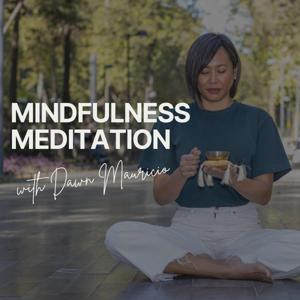

In this practice, kindness is your anchor as you notice what’s actually here—the texture of how you’re arriving, the subtle pushes and pulls of feeling tone. Rather than being caught in the story of good or bad, you’re observing the landscape itself, allowing you to relax with what’s present instead of subtly resisting it.
Practice reflection:
We spend so much energy trying to be in the “right” state—calm when we’re anxious, energized when we’re flat, peaceful when we’re overwhelmed. We treat our actual experience as a problem to solve rather than something to observe. But what if the shift came not from changing what’s here, but from how we relate to it?
The Buddhist concept of upekkhā (equanimity) is a kind of warm, clear seeing that isn’t reactive. When you label an experience as “good” or “bad,” you’ve already stepped into a position of judgment and grasping. But when you notice the feeling tone itself—the pull toward pleasantness or away from unpleasantness—you create space, you’re no longer caught. You can observe what’s happening without automatically being moved by it.
In daily life, this might look like noticing you’re anxious without immediately trying to fix it, noticing you’re frustrated with someone without automatically acting on that frustration (so! hard!), noticing joy without clutching it so tightly it slips away. Kindness is what makes this possible—not kindness as niceness, but as gentleness with yourself in the act of noticing. You’re not bad for being caught; you’re just human, and in the noticing itself, you’re already free.
🗓️ explore ways to deepen your practice and study here
🌱 learn more about somatic experiencing for qt/bipoc here
💌 receive a monthly letter in your inbox here
 View all episodes
 By Dawn Mauricio
5
1717 ratings
In this practice, kindness is your anchor as you notice what’s actually here—the texture of how you’re arriving, the subtle pushes and pulls of feeling tone. Rather than being caught in the story of good or bad, you’re observing the landscape itself, allowing you to relax with what’s present instead of subtly resisting it.
Practice reflection:
We spend so much energy trying to be in the “right” state—calm when we’re anxious, energized when we’re flat, peaceful when we’re overwhelmed. We treat our actual experience as a problem to solve rather than something to observe. But what if the shift came not from changing what’s here, but from how we relate to it?
The Buddhist concept of upekkhā (equanimity) is a kind of warm, clear seeing that isn’t reactive. When you label an experience as “good” or “bad,” you’ve already stepped into a position of judgment and grasping. But when you notice the feeling tone itself—the pull toward pleasantness or away from unpleasantness—you create space, you’re no longer caught. You can observe what’s happening without automatically being moved by it.
In daily life, this might look like noticing you’re anxious without immediately trying to fix it, noticing you’re frustrated with someone without automatically acting on that frustration (so! hard!), noticing joy without clutching it so tightly it slips away. Kindness is what makes this possible—not kindness as niceness, but as gentleness with yourself in the act of noticing. You’re not bad for being caught; you’re just human, and in the noticing itself, you’re already free.
🗓️ explore ways to deepen your practice and study here
🌱 learn more about somatic experiencing for qt/bipoc here
💌 receive a monthly letter in your inbox here

12,754 Listeners