
Sign up to save your podcasts
Or



Brother, sister, respected friend, have you paused to examine carefully this faith that is being highlighted again and again over these days?
This message will take a fast flight over human history from the book of Genesis until now and look again at the foundations of this FAITH! The just shall LIVE by faith… and that wasn’t just the idea of Luther and the reformers, it IS the Word of God! But wait, LIVE by faith? Is this a concept… or a life changing reality? And, as the old song states: will it “do when I am dying?”
Fallow ground is unprepared, unseeded, and unattended. It is both neglected and hardened, unable to reach its full potential. Fallow ground speaks of missed purpose, lukewarmness, apathy and slothfulness. Count on it… fallow ground never leads to abundant fruitfulness.
The call to break up fallow ground was not given to the heathen nations, but to God’s people. Repentance was the first message of Jesus as He began His preaching ministry. It is more than a one-time experience in becoming saved. Repentance is a way of life for those living in the light and are bearing glorious fruit for God.
The theme of the panel discussion is taken from 1 Corinthians 16:13.
“Watch ye, stand fast in the faith, quit you like men, be strong.”
—1 Corinthians 16:13, KJV
Each panelist focuses on one phrase, then wrestle through questions. Following are the four topics:
Tradition is a system of beliefs or expected behaviors passed down within a group of people with symbolic meaning or special significance…customs, ethics, values, norms, heritage and culture are nearly synonymous terms.
Traditionalism refers to a profound distrust of anything that would alter or interfere with maintaining traditions. In the extreme, this behavior becomes “reactionary,” that is, an opposition to (and rejection of) any and all innovations that cause traditions to be modified or lost.
Anabaptist commitment to a cultural heritage has been a two-edged sword. It has been a tremendous blessing… insulating our churches from many damaging societal influences… “a friend to grace to help us on to God.”
Clearly, though, an unhealthy preoccupation with the past can diminish our ability to portray the glory of Christ. It can distract us (and the watching world) from His Gospel. It can damage our compelling portrayal of His kingdom.
This sermon will attempt to consider an answer to Francis Schaeffer’s pressing question: “How, then, shall we live?”
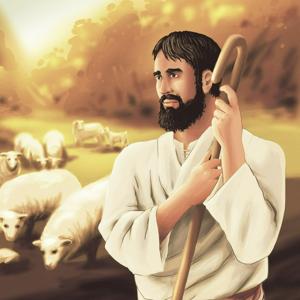
As the focus of this conference will include the inspiring history of some courageous young men in the 1500s who took a tough stand for clear principles of the Word of God, this message for youth will jump back a few centuries earlier and gain courage and inspiration from a boy in the Bible. This boy stood firmly with faith in his God in a very absorbing and challenging cultural setting that was not entirely unlike ours today. Will you?
Asked what 500 years of Anabaptism has retained or lost, Kai Steinmann says he can't judge that for his audience. Instead he uses the Schleitheim Confession as a baseline for their self-examination, urging them out of the "middle of the road" and into God's will. On baptism, he insists there is no true baptism without faith, death to self, and incorporation into Christ's body, the church.
On excommunication, drawing on Menno Simons, he argues that neglecting the ban is a failure of love. It must be a function of the church, reserved for the unrepentant, follow biblical timelines, and aim at restoration rather than serve as a weapon.
He calls for clear separation from the world, rejects "freedom in Christ" as license, and describes ministers as servant-protectors.
Finally, citing Münster, Mennonite support for Hitler, and rising nationalism, he warns that political entanglement always harms the church, asking whether Anabaptists kept the name but lost Christ.
Marking Anabaptism's 500th anniversary, Chester Weaver traces the shared roots of the Swiss Brethren (including the Amish), Dutch-Russian Mennonites, Brethren, and Hutterites. He argues that the movement's core is wholeness: when the Holy Spirit works freely, faith and life, belief and practice, are united.
This rejects both Catholic sacramentalism and a Protestant faith that leaves life unchanged. Drawing on Michael Sattler, he contrasts servile obedience with filial obedience and warns that many churches have settled into fear-driven fundamentalism. He highlights gelassenheit, the yielded spirit that made martyrs' deaths compelling, and recounts Hans Landis forgiving his executioner. He also confesses shameful chapters, including Münster, Mennonite complicity with Nazism, and separating money-making from faith.
After reviewing key leaders and migrations, he names shared essentials: Christ and Scripture as authority, believers' baptism, discipleship, church-state separation, and two-kingdom theology. He fears these, especially two-kingdom theology, are eroding and urges their recovery.
In this message, Harry Argo shares how reading the Bible brought him to conviction and a changed life, then asks whether Christians are missing the Holy Spirit. He argues that the Spirit’s work is not emotional manipulation, spectacular experiences, or mere knowledge, but lasting conviction that turns people toward Jesus.
Warning that false spiritual claims cause real harm, he recounts a cancer patient confused by a false prophecy and points to Acts 5 on the gravity of lying to the Spirit. Surveying the Gospels, he shows that John the Baptist and Jesus promised the Spirit as a comforter who abides with believers and testifies to Christ. The Spirit’s central work is to reveal Jesus.
Argo criticizes “check-the-box” conversions and easy-believism, which can produce imitation without transformation, and contrasts them with the repentance and bold witness seen at Pentecost. He closes by urging honest, obedient prayer that seeks Christ and the Spirit’s renewed work.
What would come to be called the “Radical Reformation or Anabaptism” began in a time of unrest and upheaval. The medieval traditions and the authority of the established church were being challenged by many voices and ideas.
How could someone know the truth in such a chaotic and confusing time? If the traditional medieval church model was corrupted, should it be reformed or completely rebuilt? How should the Scriptures be interpreted and applied to give the right direction? By what process would believers determine God’s direction for their lives and how would they counsel other believers?
Those decisions were important, because they would live, and perhaps die, by what they believed and by whose voice they chose to follow.
From the publisher's feed
Kingdom Fellowship Weekend exists to promote Biblical Christianity in an era marked with apathy and compromise. Our heart-cry is to "continue steadfastly in the apostles’ doctrine…
We endeavor to do this by encouraging revival, fervent prayer, surrender to Jesus, and by providing a forum for Biblical teaching for those who desire to live as disciples of Christ. We want this event to be a place where Kingdom-minded Christians from various backgrounds can meet one another for edification and encouragement. We especially want to encourage those who are new to embracing the teachings of Jesus and provide fellowship for them in the journey.
We are committed to a Christian expression that is Christ-centered, Scripture-based, and Kingdom-focused, specifically as modeled by the Anabaptist tradition. Although Kingdom Fellowship Weekend is organized and sponsored by conservative Anabaptists, our vision is to build bridges among all true followers of Jesus. We welcome all who, as we, are praying "Thy kingdom come, Thy will be done on earth as it is in heaven."
https://kingdomfellowship.org/
Ranked by our users in the last 21 days