
Sign up to save your podcasts
Or

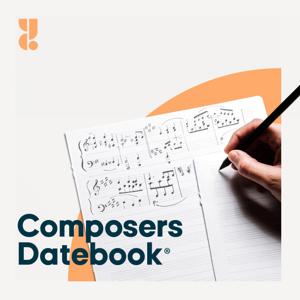

On today’s date in 1939, pianist John Kirkpatrick gave a recital at Town Hall in New York City that included the New York premiere of the Concord Sonata, by American composer Charles Ives.
Ives had self-published his Concord Sonata some 20 years earlier and sent copies of it free to anyone he thought might be interested, including then-prominent composer and teacher Rubin Goldmark, who, in 1921, was giving composition lessons to young Aaron Copland. Copland recalled seeing the Concord Sonata on Goldmark’s piano but was not allowed to borrow it.
“You stay away from it,” Goldmark warned him. “I don’t want you to be contaminated by stuff like that.”
In 1934, Kirkpatrick saw a copy of the Concord Sonata in Paris and wrote Ives: “I have decided quite resolutely to learn the whole sonata.”
It would take him five years, but Kirkpatrick’s Town Hall recital would put both him and Ives on the map.
A New York Times critic wrote, “This sonata is exceptionally great music — it is, indeed, the greatest music composed by an American, and the most deeply felt and essential. ... Kirkpatrick’s performance was that of a poet and a master, an unobtrusive minister of genius.”
Charles Ives (1874-1954) Piano Sonata No. 2 (Concord, Mass., 1840-1860) Marc-André Hamelin, piano New World 378
 View all episodes
 By American Public Media

4.7
176176 ratings
On today’s date in 1939, pianist John Kirkpatrick gave a recital at Town Hall in New York City that included the New York premiere of the Concord Sonata, by American composer Charles Ives.
Ives had self-published his Concord Sonata some 20 years earlier and sent copies of it free to anyone he thought might be interested, including then-prominent composer and teacher Rubin Goldmark, who, in 1921, was giving composition lessons to young Aaron Copland. Copland recalled seeing the Concord Sonata on Goldmark’s piano but was not allowed to borrow it.
“You stay away from it,” Goldmark warned him. “I don’t want you to be contaminated by stuff like that.”
In 1934, Kirkpatrick saw a copy of the Concord Sonata in Paris and wrote Ives: “I have decided quite resolutely to learn the whole sonata.”
It would take him five years, but Kirkpatrick’s Town Hall recital would put both him and Ives on the map.
A New York Times critic wrote, “This sonata is exceptionally great music — it is, indeed, the greatest music composed by an American, and the most deeply felt and essential. ... Kirkpatrick’s performance was that of a poet and a master, an unobtrusive minister of genius.”
Charles Ives (1874-1954) Piano Sonata No. 2 (Concord, Mass., 1840-1860) Marc-André Hamelin, piano New World 378

6,774 Listeners

38,890 Listeners

8,772 Listeners

9,216 Listeners

5,777 Listeners

928 Listeners

1,388 Listeners

1,287 Listeners
3,156 Listeners

1,975 Listeners
523 Listeners
183 Listeners
13,770 Listeners

3,082 Listeners

248 Listeners
28,116 Listeners

430 Listeners

5,467 Listeners
2,196 Listeners

14,146 Listeners
6,417 Listeners
2,513 Listeners

4,840 Listeners

575 Listeners
243 Listeners