
Sign up to save your podcasts
Or


This is extra material on the The Nordics and Small State Theory from the nordics.info podcast with Janne Holmén, 'Sweden: Uncovering Nordic Education and Society with Janne Holmén' from February 2021.
Follow us on Instagram, Facebook and LinkedIn.
Interested in the Nordic universal welfare systems and how effective welfare can be in times of crisis? How has Iceland fared compared to the other Nordic countries, before and after the Great Recession of 2008? Can this teach us anything about how to tackle Covid?
Join the editor of nordics.info, Nicola Witcombe, on her virtual visit around the Nordic countries, this time to Stefán Ólafsson, Professor of Sociology at the University of Iceland. Stefán has had a long career looking at social policy in Iceland and elsewhere, and is one of the editors of the well-known book ’Welfare and the Great Recession: A Comparative Study'.
In this podcast, you will hear an historical overview of Iceland’s welfare policy since the middle of the last century. You will also hear about a range of related issues, like whether Iceland was a failed neoliberal experiment and 'business vikings'.
This podcast was recorded in January 2021 and is the first in the series: The Nordics Uncovered: Critical Voices from the Region. The second in the series is an interview with Janne Holmén, Associate Professor in the Department for Education at Uppsala University in Sweden who will be talking about key geopolitical events and trends and how these influence education policy in the Nordics, as well as what it means to be a 'small state' on the world stage.
Sound credits from freesound.org including "Noir" Reel by Hainbach by makenoisemusic.
Follow us on Instagram, Facebook and LinkedIn.
This is extra material on the Icelandic pensions system and means-testing from the nordics.info podcast with Stefán Ólafsson, 'Iceland: Uncovering the Nordic Welfare State with Stefán Ólafsson' from January 2021.
Follow us on Instagram, Facebook and LinkedIn.
In current times, schools are often hot spots for education policy initiatives driven by party politics. Encounters between the majority ethnic group and newcomer children can be exaggerated or underplayed depending on the political context, and it can be a highly contested area.
In this nordics.info podcast, the head of Aalborg University’s Centre for Education Policy Research, Mette Buchardt, gives a historical overview of developments in Denmark in comparison with the other Nordic countries from the 1950s until today. In so doing, the conversation necessarily covers wider issues, such as, the division between state and church; the use of schooling in molding citizens of the (Nordic) welfare state; and that persistent question: how to create the same provision for all when children have varying needs?
Find further reading and a biography of the participant by clicking here.
Follow us on Instagram, Facebook and LinkedIn.
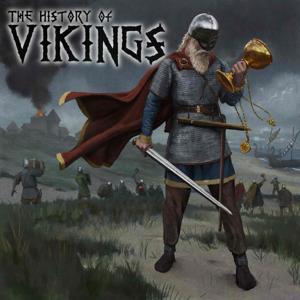
In the ninth century, the word ”viking” in many parts of Europe would have conjured up a terrifying image of violent maurauders teeming forth from their longships and inflicting unspeakable carnage. Today, the word ”viking” is invoked in all sorts of contexts, from underwear and hand-dryer brands to the fantasies of business and management leaders and onwards to home DNA testing kits and their seductive promise of ”Viking heritage”. In this podcast, medieval historian from Aarhus University Richard Cole explores why the Viking era is ‘up for grabs’, and zooms in on why and how some business gurus have latched on to truths, half-truths, and fallacies about the Vikings. In doing so, we explore the paradox that although capitalists may not be able to tell us much about the Vikings, the Vikings end up telling us unexpected things about capitalists.
Warning: Your preconceptions of the Vikings may be challenged by listening to this podcast!
Richard Cole is interviewed by editor of nordics.info Nicola Witcombe and the podcast was recorded in November 2020 at the department for history at Aarhus University.
Sound credits from freesound including Battlecry by Akrythael.
Follow us on Instagram, Facebook and LinkedIn.
I 1944 udgav den berømte finsk-svenske romanforfatter Sally Salminen ’Kommer far hjem til jul?’ som en novelle i magasinet Juleroser. Salminen fik sin berømmelse efter at have vundet en finsk-svensk litteraturpris i 1936 for sin roman Katrina. Hendes berømmelse var måske ikke blot grundet romanens kvalitet og store appel, men også fordi hun skrev den under en ganske usædvanlig omstændighed, mens hun arbejdede som huspige i New York.
Salminen kom fra en stor familie og voksede op med mange brødre og søstre. Hun havde også selv et plejebarn. Hun skriver også om moderskab og krig i to andre noveller: 'Et Barn er fodt os' (1941) og 'Trollet' (1944) og hun udtrykker barndommen og barnets perspektiv i romanerne Lars Laurila og Barndomens land samt i erindringsbogen Upptäcktsresan (1966) (Opdagelsesrejsen).
Tilladelse er givet af Sallys pårørende til offentliggørelse på både dansk og engelsk, der ejer rettighederne til hendes arbejde. Du kan også lytte til en engelske oversættelse af Paul Larkin her. Denne novelle er oplæst af Kieu Anh Nguyen (nordics.info studentermedhjælper).
Læs historien her.
#nordicsinfo #ReNEWHub.
Sounds effects from freesound.org, including 7-14-Crying (14FSmitakovaK, CC BY-NC 3.0) and Fire In Woodburning Stove (Benboncan, CC BY 3.0).
Follow us on Instagram, Facebook and LinkedIn.
In 1944, the renowned Finland-Swedish novelist Sally Salminen has the short story 'Kommer Far hjem til jul?' (Is Daddy coming home for Christmas?) published in the magazine Juleroser (Christmas Roses). Salminen had shot to fame after winning a Finnish-Swedish literary prize in 1936 for her novel Katrina. Her celebrity status was perhaps not only because of the quality and wide appeal of the novel, but also because she wrote it quite unusually while working as a house maid in New York.
Salminen she came from a big family and grew up with many brothers and sisters. She herself had a foster child. She writes about motherhood and war also in two other short stories: 'Et Barn er fodt os (1941) (A Child is Born to Us), and 'Trollet' (1944) (The Troll), and she pictures childhood and the perspective of the child in the novels Lars Laurila and Barndomens land (The Land of Childhood), as well as in the memoir Upptäcktsresan (1966) (The Trip of Discovery).
Permission has kindly been granted for publication in both Danish and English by Sally’s descendants who own the rights to her work. The English translation is by Paul Larkin. Listen the original Danish version by clicking here.
The story is read out by Anna Kristensen and the podcast is produced by Nicola Witcombe.
You can read the story in English or Danish by clicking here.
#nordicsinfo #ReNEWHub
Sound effects from freesound.org, including 7-14-Crying (14FSmitakovaK, CC BY-NC 3.0) and Fire In Woodburning Stove (Benboncan, CC BY 3.0).
Follow us on Instagram, Facebook and LinkedIn.
An ageing population, immigration, tax evasion and incoming foreign workers are frequently cited as threats to the Nordic Model. The universal welfare state is built upon citizens and the state fulfilling their particular roles: the state providing childcare, healthcare and benefits in return for people working and paying their taxes (’the social contract’). But don’t these roles require a lot of national regulation? And what happens to them when globalising forces (such as the arrival of workers from overseas, Europeanisation or international financial markets) hit?
In this podcast, we get to hear about some specific challenges which exemplify the overall context of how big and small crises have affected regulation in the Nordics. The podcast was recorded in October 2020 at the annual conference of the Danish European Community Studies Association. Thanks are extended to the organisers for letting nordics.info be a fly on the wall.
Find futher reading and full biographies of the participants by clicking here.
If you would like to hear more about the Nordic Model, check out two earlier podcasts from @KnowledgeOnTheNordics: The Nordic Model: Heaven or Hell, or read more on nordics.info.
Follow us on Instagram, Facebook and LinkedIn.
The global success of Danish TV drama in the late 2000s and early 2010s was surprising because of the relatively small number of people who can understand the Danish language and because the programmes were produced largely for a domestic audience by public broadcasting corporations. Audiences around the world appear to have responded to the combination of authenticity, emotional proximity and the portrayal of gender as well as the exotic Nordicness of the series. Many people from the Anglophone community as well as elsewhere were prepared to watch drama with subtitles in English for the first time. In 2020, the wave of hype around these programmes appears to be over, but key aspects, along with what is often considered to be Nordic Noir, arguably still influence mainstream television-making.
Researchers Pia Majbritt Jensen and Ushma Chauhan Jacobsen from Aarhus University are ideally placed to help us find out why Danish TV drama is popular the world over as they have been involved in an interdisciplinary project which started in 2013 involving seven other scholars from Aarhus University and affiliated scholars in eight different countries focusing on The Killing, Borgen and The Bridge.
Listen to Pia and Ushma discuss with editor of nordics.info, Nicola Witcombe, how different players at many different levels from key broadcasters in the television industry down to bloggers created an organic hype around the series, arguably leading to key elements from the series becoming mainstream today.
Find a list of the programmes mentioned in the podcast.
Be sure to listen to the other nordics.info podcasts on Nordic identity, or the Nordic Model.
#nordicsinfo #ReNEWHub
Follow us on Instagram, Facebook and LinkedIn.
Around a third of the world’s population play video games. But how are video games used to explore images of the Nordic region? What place do video games occupy in terms of cultural representations? To what extent can video games be considered part of a cultural hegemony from a historical culture perspective?
Nordic regionality is expressed through different applications of game, game design and play. It is used in different ways (such as, counterfactual uses of history or using myth and nostalgia) and in different contexts (such as, using history and heritage). From a practical perspective, regional game production and game consumption by local teams and actors intersect with the mainstream and global game industry in different ways.
This podcast was recorded in September 2020 when the editor of nordics.info Nicola Witcombe caught up with three researchers from the Helsinki Game Research Collective from the University of Helsinki. The three participants - Heidi Rautalahti, Lysiane Lasausse, Ylva Grufstedt - are ideally placed to assist us in finding out more about the subject from different perspectives coming as they do from history, theology and Nordic Noir.
Find a list of the games and books mentioned on nordics.info.
Be sure to listen to the other nordics.info podcasts on Nordic identity, or the Nordic Model.
#nordicsinfo #ReNEWHub
Follow us on Instagram, Facebook and LinkedIn.
From the publisher's feed

111,764 Listeners
462 Listeners