
Sign up to save your podcasts
Or

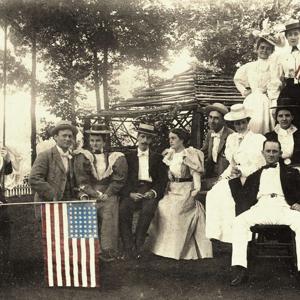


In early 1794, barely just over two years after the town of Knoxville was established, a short but strange news item appeared in the Knoxville Gazette. A detachment of soldiers, 30 miles outside of Knoxville, encountered a “creature” that appeared nothing like they had ever seen or heard about before. And it wasn’t happy to see these soldiers in its own woods. Soon, the story was run in the Belfast Northern Star in Ireland and the English paper, the Derby Mercury, always crediting the Knoxville Gazette. Some reprints added: “The following account of a wonderful animal, lately discovered in the Cumberland Mountains, may be acceptable to the curious, and oblige a constant reader, it being a fact.” Fact or not, the Creature of the Cumberlands was real enough to those soldiers. And they weren’t afraid to report it.
Written by Jack Neely and read by Alex Haralson. Sound design and editing by Pete Carty. Theme song composed by Mike Stallings.
Knoxville Chronicles is brought to you by the nonprofit Knoxville History Project.
Learn more at KnoxvilleHistoryProject.org
Following on from "Halloween Begins," the holiday puts on a mask and heads out on to Knoxville city streets. Although trick or treating and jack-o-lanterns were uncommon here until the early 1900s, by the roaring twenties, Halloween began to take on a livelier, and sometimes a darker turn. Costumed revelers paraded all parts of downtown, especially up and down Gay Street, blowing horns and displaying general merriment. By the early 1940s, the boisterousness had turned into mayhem and the police department began declaring a state of emergency on Halloween nights in a bid to stem widespread vandalism. It was a trend that would continue until the early 1970s.
Written by Jack Neely and read by Josh Brandon. Sound design and editing by Pete Carty. Theme song composed by Mike Stallings.
Knoxville Chronicles is brought to you by the nonprofit Knoxville History Project.
Learn more at KnoxvilleHistoryProject.org
Some holidays haven't changed much over the years. Fourth of July has always been noisy, public, and hot; Easter is always centered around church, and Thanksgiving mainly revolves around a family meal. But Halloween is the shape-shifting monster of holidays. And like the Blob, it just keeps getting bigger. In this episode, take a brief historical journey through the evolution of Halloween in Knoxville, from its initial stirrings in the mid-1800s, through to its increasing popularity in the 1870s and ‘80s when "little maidens" would have all-female parties based around festive decorations in the hope that they could predict who they were going to marry. Adults began to embrace the holiday by the end of the 19th century, but it wouldn’t be until just after World War II that trick or treating really began.
Written by Jack Neely and read by Josh Brandon. Sound design and editing by Pete Carty. Theme song composed by Mike Stallings.
Knoxville Chronicles is brought to you by the nonprofit Knoxville History Project.
Learn more at KnoxvilleHistoryProject.org
There are some names in Knoxville history that seem rarer than others. Cansler is one. In Mechanicsville, there’s a Cansler Street, and on University Avenue, a Cansler Building. Off Western is the old Laura Cansler School, a former “colored” elementary school, now home to Wesley House. And in East Knoxville, there’s the Cansler Family YMCA.
The Cansler family had a big impact on Knoxville in the late 19th century and the first half of the 20th. And that name wouldn’t be here if not for a love story. Maybe a couple of love stories.
Most love stories never get written down, at least not in places where historians can find them. Love stories often die with the lovers. But we’re grateful to Charles W. Cansler for writing down his family story, and having it published in his 1939 book Three Generations: The Story of a Colored Family in East Tennessee. That book, narrating the story of Cansler’s unusual family, preceded Alex Haley’s Roots by 37 years. Indeed, Cansler could be called a pioneer of the African American genealogical narrative. Join us in this podcast for a look at his fascinating story.
Written by Jack Neely and read by Don Thress. Sound design and editing by Pete Carty. Theme song composed by Mike Stallings.
Knoxville Chronicles is brought to you by the nonprofit Knoxville History Project.
Learn more at KnoxvilleHistoryProject.org
The elegant old weather kiosk on the corner of Clinch Avenue and Market Street looks like something built for an Exposition of the beaux-arts era. But in fact, it was originally installed in 1912, not long before Knoxville’s gigantic and elegantly appointed National Conservation Exposition of 1913.
People used to gather around it to see what the federal weatherman had observed, and what they could expect next. Checking on the weather was a social event. So many people hung out around it, they earned a nickname – the Kiosk Leaners.
Today, the big relic is said to be one of America's only remnants of the Weather Kiosk Era. It’s both a rarity and a landmark, and one very hot day, more than 90 years ago, it attracted a very large crowd.
Written by Jack Neely and read by Richard Lee. Sound design and editing by Pete Carty. Theme song composed by Mike Stallings.
This episode is funded in part by federal award number 21.027 awarded to the City of Knoxville by the U.S. Department of the Treasury and the Arts & Culture Alliance.
Knoxville Chronicles is brought to you by the nonprofit Knoxville History Project.
Learn more at KnoxvilleHistoryProject.org
In 1856, before the Civil War, Dr. William J. Baker, with assistance from a few others including his suffering patient, hurried medical science along a bit by performing one of the first hysterectomy surgeries in the United States here on Gay Street.
Of that historic team of four surgeons, the youngest is the one best remembered today. Knoxvillians may recognize the name, even if they don’t remember right away where they’ve seen it. It’s the name of “Our Beloved Physician,” memorialized with the stout marble arch at the Knox County Courthouse corner of Gay Street and Main Street. At 23, Dr. John Mason Boyd was the youngest of the team that performed surgery on an African American woman named Matilda.
But Matilda’s story doesn’t end there. She lived 34 more years and there’s much more to tell…
Written by Jack Neely and read by Chrissy Keuper. Sound design and editing by Pete Carty. Theme song composed by Mike Stallings.
This episode is funded in part by federal award number 21.027 awarded to the City of Knoxville by the U.S. Department of the Treasury and the Arts & Culture Alliance.
Knoxville Chronicles is brought to you by the nonprofit Knoxville History Project.
Learn more at KnoxvilleHistoryProject.org
The Knoxville area once known as the Bowery included hundreds of little shops: secondhand stores run by immigrants, some early African American barber shops and movie theaters, some of the city’s first Chinese laundries, some of the city’s last livery stables and blacksmiths, and drugstores that sold things that mainstream drugstores wouldn’t. It was also the epicenter of an underground economy, the herb men. To most people, one such herb man, known as Doc Mullins, was a complete mystery. His death certificate listed him, rather matter-of-factly, as a “Herb Doctor.” But by reputation, he was known as a conjurer. Thanks to curious News-Sentinel columnist Bert Vincent we can know some of Doc’s strange story.
Written by Jack Neely and read by Josh Brandon. Sound design and editing by Pete Carty. Theme song composed by Mike Stallings.
This episode is funded in part by federal award number 21.027 awarded to the City of Knoxville by the U.S. Department of the Treasury and the Arts & Culture Alliance.
Knoxville Chronicles is brought to you by the nonprofit Knoxville History Project.
Learn more at KnoxvilleHistoryProject.org
Three days before Christmas in 1893, Whittle’s sawmill by the river exploded and the disaster proved to be a portent of trouble ahead on the streets of Knoxville. While for some, Christmas was a quiet, family affair, with gifts and Christmas trees, for others it was a time for looking for some fun or for some trouble. The ensuing mayhem meant that it was a Christmas period like no other. Jack Neely chronicles the balmy twists and turns of the Christmas season that year when madness and mayhem prevailed.
Written by Jack Neely and read by Todd Ethridge.
Produced by the Knoxville History Project. Sound design and editing by Pete Carty.
Knoxville Chronicles is brought to you by the nonprofit Knoxville History Project.
This episode is made available that to funding by federal award number 21.027 awarded to the City of Knoxville by the U.S. Department of the Treasury and the Arts & Culture Alliance.
Learn more at KnoxvilleHistoryProject.org
This short podcast looks back on how national and local events influenced the celebration of Thanksgiving in Knoxville, connecting seemingly disparate events such as the Siege of Knoxville during the Civil War, prohibitionist Carrie Nation’s visit in 1906, and later, even UT football.
Written by Jack Neely and read by Todd Ethridge
Produced by the Knoxville History Project. Sound design and editing by Pete Carty.
Knoxville Chronicles is brought to you by the nonprofit Knoxville History Project.
This episode is made available that to funding by federal award number 21.027 awarded to the City of Knoxville by the U.S. Department of the Treasury and the Arts & Culture Alliance.
Learn more at KnoxvilleHistoryProject.org
The pilot episode of Knoxville Chronicles tells the story of Adolph Ochs, a kid who was scared of a graveyard while he learned the ropes of newspaper publishing here in Knoxville as a Printer’s Devil. The lad went on to become the founder of a major American institution, a cultural leader who changed a whole profession, established a landmark, and introduced a new way of celebrating a holiday. The story connects Knoxville in post-Civil War Tennessee to booming, electric New York in the 20th century.
Written and narrated by Jack Neely.
Produced by the Knoxville History Project. Sound design and editing by Pete Carty.
Knoxville Chronicles is brought to you by the nonprofit Knoxville History Project.
This episode is made available that to funding by federal award number 21.027 awarded to the City of Knoxville by the U.S. Department of the Treasury and the Arts & Culture Alliance.
Learn more at KnoxvilleHistoryProject.org
From the publisher's feed
Knoxville Chronicles is a podcast series produced by the Knoxville History Project highlighting some of the most interesting of the city’s old stories that still have relevance today.The Knoxville…