
Sign up to save your podcasts
Or

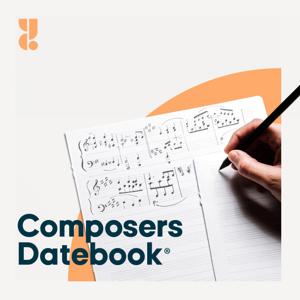

Contemporary Hungarian composer György Kurtág is famous for writing short, sparse and concentrated musical works. He has, however on occasional written more expansive pieces, including one big orchestral piece for the Berlin Philharmonic and some works for large chorus.
Obsessively self-critical, Kurtág disavowed most of the music he wrote before his mid-thirties, which included some for chorus, but a suggestion from Italian avant-garde composer Luigi Nono that he write for chorus again resulted in a work that the BBC Singers premiered in London on today’s date in 1981.
It has an Italian title, Omaggio a Luigi Nono, or Tribute to Luigi Nono, — a tip of the hat to his Italian colleague, but the work itself is a setting of bits of Russian poems. Now at the time of its premiere, 25 years after the Russian-led invasion of Hungary in 1956 and 10 years before the collapse of the Soviet Union, Hungarian eyebrows were raised when Kurtág chose to set Russian texts. Disparaging or just plain dissing anything Russian was the normal M.O. for Hungarian intellectuals in those days.
Kurtág, for his part, stood his ground: as an ardent Dostoevsky’s fan, he simply said Russian was a sacred language to him.
György Kurtág (b. 1926): Omaggio a Luigi Nono; SWR Vokalensemble Stuttgart; Marcus Creed, director; SWR Music; 93.174
 View all episodes
 By American Public Media

4.7
176176 ratings
Contemporary Hungarian composer György Kurtág is famous for writing short, sparse and concentrated musical works. He has, however on occasional written more expansive pieces, including one big orchestral piece for the Berlin Philharmonic and some works for large chorus.
Obsessively self-critical, Kurtág disavowed most of the music he wrote before his mid-thirties, which included some for chorus, but a suggestion from Italian avant-garde composer Luigi Nono that he write for chorus again resulted in a work that the BBC Singers premiered in London on today’s date in 1981.
It has an Italian title, Omaggio a Luigi Nono, or Tribute to Luigi Nono, — a tip of the hat to his Italian colleague, but the work itself is a setting of bits of Russian poems. Now at the time of its premiere, 25 years after the Russian-led invasion of Hungary in 1956 and 10 years before the collapse of the Soviet Union, Hungarian eyebrows were raised when Kurtág chose to set Russian texts. Disparaging or just plain dissing anything Russian was the normal M.O. for Hungarian intellectuals in those days.
Kurtág, for his part, stood his ground: as an ardent Dostoevsky’s fan, he simply said Russian was a sacred language to him.
György Kurtág (b. 1926): Omaggio a Luigi Nono; SWR Vokalensemble Stuttgart; Marcus Creed, director; SWR Music; 93.174

6,773 Listeners

38,915 Listeners

8,771 Listeners

9,202 Listeners
5,780 Listeners

927 Listeners

1,388 Listeners

1,287 Listeners

3,161 Listeners

1,975 Listeners

523 Listeners
183 Listeners

13,767 Listeners

3,083 Listeners

248 Listeners
28,135 Listeners

430 Listeners

5,470 Listeners
2,194 Listeners

14,142 Listeners

6,423 Listeners
2,515 Listeners

4,836 Listeners

574 Listeners

244 Listeners