
Sign up to save your podcasts
Or

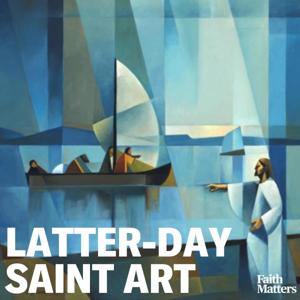


Jenny Champoux: Hello, and welcome to our final episode of Latter-day Saint Art, a limited series podcast from Wayfare Magazine. I'm your host, Jenny Champoux. Throughout this series, we've examined the artistic tradition of The Church of Jesus Christ of Latter-day Saints, and we've talked with contributors to the book Latter-day Saint Art: A Critical Reader. The book was published in September by Oxford University Press, with support from the Center for Latter-day Saint Arts. If you're listening on the podcast, keep in mind that you can find a video, transcript, and images of the artworks at wayfaremagazine.org.
In this episode, we're looking at some of the broad themes introduced in the book. How has Latter-day Saint history and belief affected art production? And similarly, how has Latter-day Saint art affected faith and culture? We'll discuss the value of religious art, what makes it worthy of academic study, and what areas of Latter-day Saint art need further scholarship. [00:01:00]
Our guests today are Emily Larsen and Micah Christensen.
Emily Larsen is a Utah-based curator, museum professional, researcher, and collage artist. She currently serves as the executive director at the Springville Museum of Art, where she's worked in a variety of positions since 2014. Her research and writing focus on Utah artists and the Utah art scene, from 1880 to 1950. She has an M.A. in US History from the University of Utah.
Micah Christensen is a scholar of European, Asian, and American fine art, porcelain and decorative objects. He earned his doctorate in the history of art from University College London, and his master's in fine art from Sotheby's Institute. He served on the board of the Springville Museum of Art until last year and is now the director of the new Salt Lake Art Museum opening in 2026. Micah is also a partner at [00:02:00] Anthony's Fine Art and Antiques. He is a co-author of the Dictionary of Utah Fine Artists and the founder of the Zion Arts Society, a nonprofit organization dedicated to showcasing works by professional and emerging Latter-day Saint artists.
Although Emily and Micah were not authors in the book, they are gifted and knowledgeable art historians and curators working in the Utah and Latter-day Saint space. I'm excited to have them join our discussion today, and I think adding their perspectives to this series shows just how much more work on Latter-day Saint art is being done out there and is still left to do. Emily and Micah have been friends of mine and colleagues for several years, and they're both doing incredible work. I can guarantee that you'll not only learn something new from them today, but you'll also be inspired by their enthusiasm and passion for this work.
Emily and Micah, thank you so much for talking with us today.
Micah Christensen: Thank you. It's great to be here.
Jenny Champoux: Emily, congrats on the annual Spring Salon that is currently at the Springville Museum of Art. I know that's a huge project. For our listeners who may not be familiar, can you tell us what the Spring Salon is and what role it plays in the Utah art scene?
Emily Larsen: Yeah, so the Spring Salon is one of the longest running and biggest juried art competition shows in Utah. So, it's an open call show anyone can enter. And we've been hosting it in Springville since 1922. So, it's a huge tradition. And this year we got about a thousand entries. We had jurors who came and drew it down to about 250, and it's kind of a snapshot of contemporary Utah art, what's happening in Utah art today.
It leans a little bit more towards representational art and traditional art than some of the other juried shows in the state. And is just a great celebration of Utah art and an opportunity for artists to show some of their best works [00:04:00] and be awarded for it. So, it's a fun, a fun tradition, and we'd love for everyone to come.
Jenny Champoux: Great. Thank you. Yeah. Is there, have you noticed any trends this year in the show or any themes that you see popping up?
Emily Larsen: You know, actually one thing that I think is really interesting about this show, sometimes we feel the shows are really a commentary on what's happening in the world, and there's a lot of, political or social commentary. And this year with everything that's going on in the world, we maybe expected that more.
But I think the artists are really using the art and art as a respite. Because it feels like it's really a celebration of art and fine art and is, I guess maybe less about current events than you would expect.
Jenny Champoux: Okay. Thank you. Yeah. Micah, you're joining us today from what will soon be the new Salt Lake Art Museum opening next year. Tell us about your vision for this new institution and what we can look forward to seeing [00:05:00] there.
Micah Christensen: Boy, I've never done this before. I don't know what to tell you. I've never started a museum! Well, the Salt Lake Art Museum will open officially in the spring of 2026 and it's housed in the historic B’nai Israel Temple, which was a synagogue built in 1890 on land that was given to the Jews in Salt Lake by Brigham Young. And my great-grandfather was a member of that congregation. I'm half Jewish by descent and I'm half Mormon. And well, I'm a mutt. And, it was a, a building that I'd always wanted. And, uh, there's a lot of construction going on in Salt Lake and the population is growing dramatically. It's doubled in the past five years in Salt Lake and it's supposed to double again by 2030. And the, uh, [00:06:00] it’s the first new art museum in Salt Lake since 1983, which, you know what, how we imagine our role is, is we'll play well with other museums. I was on the board of the Springville Museum of Art for more than 13 years. I'm still on the acquisitions committee for Springville. I see that our role is just to educate about Utah art and artists. And it's not much more complicated than that.
We’re hoping to have historic and living artists on a regular basis. Competitions here and there. Nothing like the Springville Museum's competition, but more like, you know, for one, one example is we're having a small competition that's more like an invitational of 15 of the country's best plein air painters, many from Utah, to [00:07:00] focus on the Great Salt Lake and to talk about its preservation. So, things like that that we're planning on our first, I can announce now, no one really knows this, that our first retrospective next spring we'll be opening with is James Christensen. And I think it'll be the first major show to happen since he passed, and we're working with the Christensen family now.
Jenny Champoux: Oh, great.
Micah Christensen: It's exciting. It's total chaos. And half the time it's really exciting. And the other half of the time you just, what was the quote that I heard the other day? You know you're on the right path if the path disappears. The path, the path has disappeared.
Jenny Champoux: That sounds really exciting. A lot of possibilities and exciting things coming. So, just so I understand, your museum then is just for artists that lived and worked in Utah or is just to [00:08:00] showcase Utah artists, but from any, any faith tradition or any time period or,
Micah Christensen: Yeah, there's no origin criteria. It's whether or not they were connected to Utah in a meaningful way.
Jenny Champoux: Okay.
Micah Christensen: you know, some of the shows we're looking at doing are maybe one on Emil Kosa, who trained with Alphonse Mucha then worked in California and was the only artist I know who won an Academy Award.
He did all the set design for Cleopatra and he did the 20th century Fox logo with the search lights. He invented that. But he spent about 30% of his time painting in Utah just because he loved the atmosphere. And he worked with a lot of artists that we know, like LeConte Stewart.
I mean, he's not strictly from Utah, but he painted in Utah a lot. I'm not going to do a lot of those shows. The plan is …
Jenny Champoux: Welcome back to Latter-day Saint Art, a limited series podcast from Wayfare Magazine. I'm your host, Jenny Champoux in Latter-day Saint Art, I'll guide you through an examination of the artistic tradition of The Church of Jesus Christ of Latter-day Saints. Each guest is a contributor to the new book, Latter-day Saint Art: A Critical Reader, from Oxford University Press and the Center for Latter-day Saint Arts. A video and transcript of each episode along with images of the artworks discussed are posted at Wayfaremagazine.org.
In today's episode, we'll look at the history of films in the Latter-day Saint tradition. We'll focus on four themes: approaches to embodiment, the performance of values and beliefs, the influence of global cultures, and the projection of a Latter-day Saint self-image. Our guests today are Mason Kamana Allred and Randy Astle.
Mason Allred is an associate professor of communication, media and culture at Brigham Young [00:01:00] University Hawaii. He earned his PhD from the University of California Berkeley with a designated emphasis in film studies. He is the author of Weimar Cinema: Embodiment and Historicity and Seeing Things: Technologies of Vision and the Making of Mormonism. In addition to being a co-editor of Latter-day Saint Art: A Critical Reader, he wrote a chapter for the book titled, “The Piety of Perspective: Bodies, Media and Cinematic Experience In Latter-day Saint Film, 1970 to 2020.”
Randy Astle is the author of Mormon Cinema: Origins to 1952 and over 60 articles on Mormon film. He has taught Mormon cinema at BYU, acquired hundreds of DVDs as the BYU Library’s Mormon film specialist. He edited special issues of BYU Studies and Mormon Artist Magazine. He served for two [00:02:00] years as film editor for Irreantum and programmed film screenings at the Sunstone Summer Symposium. And he created the Annual Academic Forum at the LDS Film Festival. He's currently writing a second book, Mormon Cinema: 1953 to 2024. His chapter we're looking at today is called, “Moving Pictures: Subjectivity and Mormon Identity in Documentary Film.”
It's going to be fun to hear from these excellent scholars and to turn our attention to a slightly different form of art today. So, let's get started.
Mason and Randy, thank you for talking with us today!
Mason Kamana Allred: Happy to,
Randy Astle: Thanks for having us.
Mason Kamana Allred: be with you.
Jenny Champoux: Mason, will you tell us more about your work as co-editor of this book? What was your vision for this project and how do you hope it will inspire future scholarship?
Mason Kamana Allred: Thank you for that question. I love this book, so I'm happy to talk about it. And it was so much work it's really nice and [00:03:00] almost cathartic to talk about it now. But to be honest, the, the project was already really in place with, with Laura Hurtado and Glen Nelson kind of planning it out and reaching out to different authors who could cover uh, subject areas of expertise. So, by the time I was brought in to not only be a chapter, uh, author, but to be a co-editor with Amanda Beardsley, was already kind of set. So that was nice. She had done a lot of that front loading, preliminary work. But then when I came in, 'cause she's had other things going on in her life, she had to turn her attention too.
So, Amanda Beardsley and I came in and took over editing together and worked with Glen Nelson and Mykal and all the team at the Center and Richard Bushman. And what it was like was, um, because we already had the author set and the, the basic subjects, we could still kind of mold a little bit like the direction of chapters and the overall sense of the volume. And we really enjoyed that. And, and Randy knows this too, but like, we kind of agreed, uh, Amanda, I, and, and Glen too, that we really wanted to have, [00:04:00] um, we wanted to be quite academic. We wanted it to like work in a college classroom, you know, at any, any campus, whether it was like BYU or Harvard, that you could totally use this in some class on, on religion and media or religious history or, or art and religion, something like that. So, we did want that, that kind of register to hit that register. Not to be inaccessible or pedantic, but to, to be legit. Like we wanted to treat it like that, and we felt like we had the right authors to pull that off.
The other thing we both felt strongly that like we didn't, as much as possible, we didn't want people to write about art in a way that you could do if you'd never seen the artwork. So, we wanted them to do a lot of, to kinda lean into formal analysis, close textual analysis whenever possible. And that was great 'cause some people were more comfortable with that than others. Um, but you saw even historians kind of getting into more of that to really get descriptive and interpret at least analytical, if not interpretive, uh, at some points on these.
So, we did want more of that. We knew we were gonna have tons of images. [00:05:00] So we had like, you know, 200 and something images in there. That was a lot of work. I'd never really worked with that many permissions and images and files before. That was daunting. Um, but that was the basic idea and we didn't wanna really tell authors what to do far as like their approach or coverage.
And we tried to let them know like, it doesn't need to be exhaustive. Like that would be ridiculous to pretend like we could be comprehensive what we can. But you go where it takes you. And we tried to give them as much room to just do what they do 'cause they're all brilliant. Um, and I think it worked out well because of that. The, the sad thing for me was. I love this project, but the sad thing was when we first all signed up, and Randy will remember this in like 2020, it was like this idea that we were gonna get together like once, twice a year and have these big kind of like, know, moments to really counsel together, think about chapters, share with each other, what you're working on. And that only happened over Zoom, which was helpful, but not quite the same. So that was kind of sad 'cause I really wanted to hang out with all these people and we [00:06:00] gotta do like Zoom breakout rooms instead, but do anything about it at the time, right? So that's kind of how it all came together. So, it's been really exciting, uh, you know, steep learning curve. It's been great for me, but, um, I'm really proud of it. It's really a great volume. In fact, let me do my Bushman gif and hug this book because, uh, it, I'm really proud of it.
I think it's a really great book. I can't wait to see how people build on it and how they critique it and do new things, but I feel, I feel really great about it.
Jenny Champoux: Thank you. Yeah. And I'm glad you held up the book there for people to see. It is a gorgeous cover with that Jorge Cocco artwork on the front. Um, and I, I like, I appreciate that you, and, and also in our conversations with Glen Nelson and Amanda Beardsley, each of you have talked about how this was not an exhaustive survey of Latter-day Saint art, but, um, just sort of a first step and I think there's so much great information here, but it also just reveals the breadth of what [00:07:00] there is that can still be tackled in this field and how much there is to think about and analyze and contextualize. So, I think it's really inspiring for future work too.
Mason, let me ask you one more follow up question. How did you decide the order of chapters? Because I noticed you and Randy have the only two chapters that deal exclusively with film studies, but they're, you know, separated by four or 500 pages in the book. What was your thinking as you put the chapters together?
Mason Kamana Allred: So, we, we first looked at them kind, basically chronologically first. That was the list we had and how authors were reached out to. So, we all kind of saw it like that. And then as a, we got closer and closer once they were kind of written and we'd had seen…
Jenny Champoux: Welcome back to Latter-day Saint Art, a limited series podcast from Wayfare Magazine. I'm your host, Jenny Champoux. Throughout this series, we've been examining the artistic tradition of The Church of Jesus Christ of Latter-day Saints, and talking with contributors to the book, Latter-day Saint Art: A Critical Reader. It was published in September by Oxford University Press, with support from the Center for Latter-day Saint Arts. If you're listening on the podcast, keep in mind that you can find a video transcript and images of the artworks wayfaremagazine.org.
In today's episode, we'll look at contemporary Latter-day Saint art and thinking about current trends. What distinguishing features do we see in contemporary art and how do they relate to those of more traditional art forms? Where is the art headed in the future? We'll also consider the role of the BYU Art Department in shaping Latter-day Saint art approaches.
Our guests today are Chase Westfall and Maddie Blonquist.
Chase Westfall is an artist, educator, curator, and arts administrator. He currently serves as curator and head of gallery at VCU Arts Qatar. In 2024, he served as the interim executive director at the Institute for Contemporary Art at Virginia Commonwealth University. Prior to that, he served as director and curator of student exhibitions and programs at the Anderson, also at VCU. In 2021, he curated Great Awakening: Vision and Synthesis in Latter-day Saint Contemporary Art at the Center Gallery for the Center for Latter-day Saint Arts. Westfall received a BFA from the University of Florida and an MFA from the University of Georgia with a concentration in painting. His book chapter we're exploring today is titled, “Toward a Latter-day Saint Contemporary Art.”
[00:02:00] And then Maddie Blonquist works primarily with religious art objects within the BYU Museum of Art’s collection as the Roy and Carol Christensen curator of religious art. In 2018, she graduated from Brigham Young University with degrees in music and interdisciplinary humanities, and she went on to receive an M.A.R. in Visual Arts and Material Culture from Yale Divinity School and Institute of Sacred Music. Maddie has worked at numerous art institutions, most recently at the Yale University Art Gallery and Utah Museum of Contemporary Art. Maddie is not one of the book authors, but I'm delighted that she's agreed to join us to enhance our discussion, offering her perspective as a curator and scholar of Latter-day Saint art.
So, let's get started.
Chase and Maddie, thank you for talking with us today!
Maddie Blonquist: Of course.
Jenny Champoux: Before we jump into [00:03:00] the book, I'm hoping we can tell our listeners a little more about the work you do. Chase, I want to say that you're a triple threat because you're not only a working artist, you're also a scholar of visual culture, and a curator, a museum curator. So, can you tell us how, how do those things overlap for you, or how does your scholarly work inform your artistic production?
Chase Westfall: First of all, yeah, that's a very flattering way to categorize, I think what I do is very kind of you. I often feel a lot of imposter syndrome that because I work in a lot of areas, I'm sort of a quasi or semi, all of those things, with a few other things thrown in. I think, at its best taking that kind of jack of all trades approach creates moments where you can have these really lovely kind of synergies, where the different perspectives can inform one another and augment and sort of be a force multiplier for one another.
I used to play a lot of sort of like punk [00:04:00] rock guitar and I think about like a phase shifter. If anybody has familiarity with that, it's like a, it is a special effects pedal where the different sort of frequencies come in and out of phase. And so, you get these really wonderful, I think, high peaks when the, the different bodies of knowledge can align in exciting ways.
But then you have some sort of troughs and valleys and tough places where you feel like you're not making the progress you might want to, in any given area because of being sort of spread thin. But, you know, so there's challenges that come with not really being a subject expert, not necessarily being an expert in terms of the modalities.
But on the whole, it's a good thing. If you'll indulge me, there's a, there's a term that comes from a really well known curator, which is Ausstellungsmacher, which sounds really pretentious, but it's a German word that just means like “exhibition maker.” And I like using that term because it has, uh, it implies sort of a more pragmatic approach to exhibition making.
And I think within that pragmatic [00:05:00] framework, having all those different areas of knowledge to draw on really helps you kind of get the work done, get projects across the finish line with some assurances that at least it's gonna hit some of the right notes for the different audiences that you're trying to serve.
So anyway, it's a, it's mostly a good thing and, and sometimes a very challenging thing.
Jenny Champoux: Yeah, I would think that being a practicing artist and having worked with the different kinds of media and materials might give you some additional insights as you're doing scholarly work into analyzing art.
Chase Westfall: I think it does. You know, when you get into, uh, talking through the artwork, which is sometimes the first sort of step in doing that analysis, having some familiarity with the means and methods, I think does help. It gives you an entry point. Or you can engage it as an object, you can engage it as a process in addition to whatever it might sort of mean or [00:06:00] signify.
And bringing that multiple perspectives to bear is, I think, a, a nice way of sometimes triangulating a compelling argument that you want to be able to make for work. I think that's a good point.
Jenny Champoux: Maddie, congratulations on recently joining the BYU Museum of Art as the religious art curator. I'm curious, what are you enjoying most there so far? And is there anything in the role that has surprised you?
Maddie Blonquist: So, I can't say I've been very surprised just because I worked at the MOA as a student for a few years during my undergraduate degree, and they actually gave me quite a bit of independence, and let me work on some really amazing projects at a very high level. And so returning feels very much like coming home. Although it's still surreal to be in the office that, Kenneth Hartvigsen had when he was there and I was being mentored by him, I still sometimes feel a little bit funny opening that door [00:07:00] and I have the key now. But no, it's been really wonderful to, to be back in that space and I'm really enjoying.
Being able to work with the collection and acquire new works into the collection and shape sort of the future of, uh, what holdings we have. And Ashlee Whitaker, who held the role before me, who's featured in this book as well, huge shoes to fill, but I think she's left such an amazing legacy and Dawn Pheysey before her in that same position I'm just trying to build upon and move forward.
So it's been wonderful so far. It's not quite been a year yet, but I plan to be there for a very long time.
Jenny Champoux: Wonderful. I'm so thrilled. And I've known Kenneth for a long time too. We overlapped just a little bit in our graduate program at Boston University and, you know, he did really great work there at the MOA. And Ashlee too, with putting [00:08:00] on some fantastic exhibitions there and did great work. So, I'm so excited that you're part of that legacy now. I'm excited to see what you do there
Maddie Blonquist: Thanks, me too.
Jenny Champoux: As we start thinking about Chase's chapter from the book today, let's first define for our listeners what we mean by contemporary art. Chase, can we start with you? What is contemporary art and how is it different from what we might call modern art or more traditional kind of a…
Jenny Champoux: Hi everyone, and welcome back to Latter-day Saint Art, a limited series podcast from Wayfare Magazine. I'm your host, Jenny Champoux. In Latter-day Saint Art I'll guide you through an examination of the artistic tradition of The Church of Jesus Christ of Latter-day Saints. Each guest is a contributor to the new book, Latter-Day Saint Art: A Critical Reader, from Oxford University Press and the Center for Latter-day Saint Arts.
If you're watching the video at home, you'll see that I'm holding up a copy of the book with the beautiful cover art by Jorge Cocco. I'm also posting a video and transcript of each episode along with images of the artworks discussed at WayfareMagazine.org.
In today's episode, we'll look at the history of Latter-day Saint temple art and architecture. We'll ask, how does design affect, experience and mood? Hearkening back to our discussion about the sacred and profane with Terryl Givens in our first episode, we'll think about [00:01:00] the ways material and spiritual boundaries are blurred in the built environment of the temple. We'll also learn about recent changes in temple design and interior decoration, and what this tells us about how the Church is responding to a growing and increasingly international membership.
Our guest today is Josh Probert.
Josh Edward Probert is a historian and historic design consultant who specializes in the material culture of 19th century domestic and religious life. He is a historic interiors consultant to the Church on the renovation of five of the Church's oldest temples. A graduate of the program in Religion and the Arts at Yale Divinity School and Institute of Sacred Music, he earned a PhD from the University of Delaware in cooperation with the Winterthur Museum. His chapter in the new art book is, “Latter-day Saint Temple Design: Aspirations of Grandeur and Tempering Restraints.”
Colleen [00:02:00] McDannell is unable to join us today, but her chapter in the book nicely parallels many of the topics that Josh covers. So, we'll also be looking at her chapter titled, “Temple Art Renewal, 2000 to 2022.” Colleen McDannell is a professor of history and the Sterling M. McMurrin Professor of Religious Studies at the University of Utah in Salt Lake City. A recipient of a Guggenheim Fellowship, she's a specialist in American religions. In 2019, her book, Sister Saints: Mormon Women Since the End of Polygamy, won an award given by the Organization of American Historians.
These chapters were both really interesting to me, and I like that we're going to get a chance to talk a little bit about Latter-day Saint architecture today. So, let's jump in.
Josh. Thanks for talking with us today.
Josh Probert: Thank you for having me.
Jenny Champoux: Your chapter and Colleen's chapter complemented each other so well with their analysis of Latter-day Saint temple art and architecture. I really appreciated the [00:03:00] ways you each highlighted the evolution of these sacred spaces. Before we get into more recent developments, I liked that in your chapter you explained some of the early history of Latter-day Saint temple building and use, which is a little different than how we think about it today.
Can you tell us more about that early history?
Josh Probert: Sure. Joseph Smith and his family, Brigham Young, his family, Hebrew, Kimball, all the, this group of early actors in the Church grew up in this long shadow of Protestant architecture, since the Reformation. And then the, you know, immigration to the New World, you know, British North America, French North America, all these colonies, right? Their minds, the cultural universes which they inhabited, of the idea of a religious meeting house [00:04:00] influences the way that early LDS temple architecture is realized. And so, we know that the early Church met in, you know, people's houses, things like that. They didn't, you know, build what we today call a church or a, or what Protestants would've called a meetinghouse.
And then Joseph Smith receives a revelation to build a temple in Missouri, in Independence, Missouri, that is never realized. But they take those plans and, uh, they're modified slightly in some ways executed in Kirtland, Ohio. And so that temple in many ways is a Protestant meetinghouse. It doesn't have endowment rooms because the endowment room hadn't been introduced yet, you know?
And so you think of just two preaching halls stuck on top of each other, [00:05:00] and with the architecture drawing largely from contemporary builders’ guides. In this case, a very popular builder named Asher Benjamin, who wrote a design guide that you can go in the Kirtland Temple and just go, oh, there's that window surround, there's that door surround, there's that Greek key design, right? And, and see where they're drawing from. And the same thing happens in Nauvoo is that there are these two meetinghouses stacked on top of each other basically, and that is the design intent for the temples through the late Utah period, Manti, Salt Lake, St. George and Logan. And that's why they're masked like that with a long fenestration of tall, you know, windows because they're originally supposed to be two meetinghouses or two, you know, let's call them assembly rooms. Sorry, not too meetinghouses stacked on each other.
What [00:06:00] happens is that, as you know, the endowment is performed in the attic of the Nauvoo Temple. In St. George, it's performed in the basement. And in mid-construction of the building of the Logan Temple, the architect there in consultation with John Taylor, decides to introduce endowment rooms into the temple. And they change the first floor construction of the temple that's mid-construction and put in endowment rooms, but you still have the vestige of the two assembly rooms with the upper assembly room. And so, they changed the floor plans for the Manti Temple, for the Salt Lake Temple accordingly as well. So, you have that Protestant meeting house interior carrying all the way up through the dedication of the Salt Lake Temple. And then it pops up again in, you know, Los Angeles and DC. They put an assembly room upstairs. But by the time you get the Cardston Temple and the Hawaii temple and the Mesa Temple, they don't have that assembly room anymore.
Jenny Champoux: [00:07:00] Okay, so that's an interesting evolution of the kind of functional spaces in there that changed some of the design. I also liked how you and Colleen both considered the ways in which that material environment contributes to a certain kind of feeling. Intentionally. And I wondered, does art, you know, framed art, does it play a role in creating that kind of feeling of peace or refuge in the temple? And does art in the temple ever have other functions? Is it ever used to teach or to provoke additional thought, or is it just meant to sort of be restful?
Josh Probert: Right, right. Well, you know, the question of framed art, is a nest is, is part of a nested, you know, like a Russian nested doll of the broad, a larger question that your [00:08:00] question, it really taps into this question of the role of the built environment writ large. And what, why built a built environment?
What, what is the goal of enlisting material objects for religious purposes? You know, many of Joseph Smith's contemporaries, romantics of letters, of poetry, whatever, would say that God is in nature, right? And they have this, a lot of them have an impulse to look to God in nature. One could ask, “Well, why not do the endowment outside? Why not do baptisms outside baptisms for the dead outside like they did for the living?” Right? And so this is one of the unique things that Joseph Smith contributes or introduces that when he receives the revelation about [00:09:00] baptism for the dead it said, this ordinance belongeth to mine house. And then he says, we need to build a temple so that we can do these ordinances. Now in exigent circumstances, there were times when the endowment was given in other …
Jenny Champoux: Hello everyone and welcome back to Latter-day Saint Art, a limited series podcast from Wayfare Magazine. I'm your host, Jenny Champoux. In Latter-day Saint Art, I'll guide you through an examination of the artistic tradition of The Church of Jesus Christ of Latter-day Saints. Each guest is a contributor to the new book, Latter-day Saint Art: A Critical Reader, from Oxford University Press and the Center for Latter-day Saint Arts.
In this episode, we're thinking about ways that race has been used as a visual symbol in Latter-day Saint Art. We will examine the 19th century history and then consider recent efforts by artists and Church leaders to include diverse global artworks in Latter-day Saint visual culture. Finally, we'll ask what lessons we can learn from this history to move forward in inclusive ways.
Our guest today are W. Paul [00:01:00] Reeve and Carlyle Constantino.
Paul Reeve is chair of the history department and Simmons Chair of Mormon Studies at the University of Utah. He is author of Religion of a Different Color: Race and the Mormon Struggle for Whiteness and Let's Talk about Race and Priesthood. He is project manager and general editor of an award-winning digital database, Century of Black Mormons, designed to name and identify all known Black Latter-day Saints baptized into the faith between 1830 and 1930. His chapter in the new book is called, “Race and Latter-day Saint Art.”
Carlyle Constantino is a doctoral student in the history department at the University of California Santa Barbara. With both a BA and MA in art history and curatorial studies from Brigham Young University, she interrogates race and image in the 19th and 20th centuries. Her current [00:02:00] research and dissertation project examines artistic labor in the World War II era Japanese American concentration camps, exploring the interplay between art education in the camps and the exhibitions of Japanese American inmate art happening simultaneously around the country. Today we're talking about her new book chapter, “Native Americans, Mormonism, and Art.”
I am so grateful for the good work these two scholars are doing and excited to hear from them today. Let's get started.
Paul and Carlyle, welcome to Latter-day Saint Art.
Paul Reeve: Thank you. Pleasure to be here.
Carlyle Constantino: Yeah. Thank you for having me.
Jenny Champoux: We're so excited to talk to you both today, and your chapters complemented each other so well in these considerations of race in the art. Paul, just to give our listeners a little bit more about your background, your scholarship on understandings of race in Latter-day Saint history includes not only these really important analyses of the record, but also the [00:03:00] recovery of information about Black members in the early years of the Church.
And you're doing that a lot through this Century of Black Mormons website. Can you tell us about that project, that digital database and what you hope its impact will be?
Paul Reeve: Yeah, sure. So Century of Black Mormons is a digital public history project. We launched in June of 2018. Uh, the goal is to name and identify and write short biographies of every person of Black African ancestry baptized into The Church of Jesus Christ of Latter-day Saints between 1830 and 1930. So, the first 100 years of the faith, and it's simply designed to recover what was lost, the identity and stories of Black Latter-day Saint pioneers.
The first documented member of Black African ancestry was baptized in [00:04:00] 1830, and there have been Black Latter-day Saints ever since, but largely been erased from collective memory, both on the inside and outside of the faith. So, the database is simply designed to recover those stories and identities. Latter-day Saint racial history has largely been told from the perspective of White male leaders. And the database is designed to help us understand what meant to be a Latter-day Saint, Black Latter-day Saint from the vantage point of Black Latter-day Saints in the pews.
I hope it allows us to tell a more diverse Latter-day Saint story, and that the racial diversity was there from the beginning. And I hope it allows us to imagine in art, for example, new stories to depict, right? [00:05:00] These Black Latter-day Saints have largely been erased from collective memory and from Latter-day Saint history.
And so, it's a way of recovering that and, I think, giving voice to people who were erased. And I guess that helps us to tell a more complete story.
Jenny Champoux: Yeah, just fantastic that you're not only doing the scholarship, but also you're uncovering these sources that allow for more research and scholarship. So really fantastic. Thank you.
Paul Reeve: Yeah. Thank you.
Jenny Champoux: And Carlyle, congrats on recently passing your qualifying exams. That's a major accomplishment.
Carlyle Constantino: Yes, thank you. Yes. I'm happy to be done with this. It was a long process.
Jenny Champoux: So, you're working on your dissertation now. Can you tell us a little more about that project?
Carlyle Constantino: Yes, absolutely. So my dissertation has taken a few different [00:06:00] trajectories. It started out as a history of internment camps in the United States, and I was feeling like that might be a little bit too, a big of a topic to try and conquer with my dissertation. So, I narrowed it down a little bit to the 20th century.
So, I am looking at this idea of artistic labor in the Japanese American concentration camps during World War II, and specifically looking at the art schools in the camps and how the students and teachers of those schools, they put on exhibitions in the camps for their fellow inmates and the other areas.
But there were also exhibits happening on the outside of the camps where inmates sent their artwork to the outside. Happening, you know, across the country during World War II. And so, I find that tension really interesting between what's going on in the camp and what's going on outside. And also the question of, well, who is looking at these [00:07:00] exhibits on the outside, you know, who is this for? As opposed to in the camp, you know, it's really for the inmates and to kind of have this sense of community and uplift, but then how does that kind of turn or twist maybe when it's, when there's exhibits of inmate art happening during the same time on the outside simultaneously. So, it's, it's very interesting, to me at least.
But, so there's a lot of good research there and scholarship, so I'm excited to dig in more into that.
Jenny Champoux: Yeah, I can't wait to read that one day. I think that's, I mean, such a tragic moment in history. But I didn't know that there was a lot of art coming out of that time. So yeah, I'm really excited to see what you do with that.
Carlyle Constantino: Thanks. Yeah, it's, I didn't know either until, you know, fairly recently. But then I'm finding, you know, just doing some digging in [00:08:00] archives at universities who hosted exhibitions or, you know, small galleries in Massachusetts or California. And it's just fascinating to see, reception and how people were talking about these exhibitions.
Like, you know, these groups are still making beautiful art even though they're in this kind of tragic, you know, confined spaces. So, it's very interesting how it's being talked about as well, which is, you know, that kind of brings. Ties into this in my chapter, in this book of, of just thinking about how, you know, Latter-day Saints are looking at Native Americans and, you know, how that translates into visual culture.
Jenny Champoux: Hmm. Okay. Beautiful transition there. Thank you, Carlyle. So, let's do it. Let's get into the art from these book chapters. You know, when you look at sort of a survey of the history of Latter-Day Saint art, really until the past 40 years or so, most of the figures depicted have been White.
Paul, your [00:09:00] chapter explains that one reason for that was maybe a desire by 19th century, early…
Jenny Champoux: Hello everyone and welcome back to Latter-day Saint Art, a limited series podcast from Wayfare Magazine. I'm your host, Jenny Champoux. In Latter-day Saint Art, I'll guide you through an examination of the artistic tradition of The Church of Jesus Christ of Latter-day Saints. Each guest is a contributor to the new book, Latter-day Saint Art: A Critical Reader, from Oxford University Press and the Center for Latter-day Saint Arts.
In this episode, we're thinking about ways that race has been used as a visual symbol in Latter-day Saint Art. We will examine the 19th century history and then consider recent efforts by artists and Church leaders to include diverse global artworks in Latter-day Saint visual culture. Finally, we'll ask what lessons we can learn from this history to move forward in inclusive ways.
Our guest today are W. Paul [00:01:00] Reeve and Carlyle Constantino.
Paul Reeve is chair of the history department and Simmons Chair of Mormon Studies at the University of Utah. He is author of Religion of a Different Color: Race and the Mormon Struggle for Whiteness and Let's Talk about Race and Priesthood. He is project manager and general editor of an award-winning digital database, Century of Black Mormons, designed to name and identify all known Black Latter-day Saints baptized into the faith between 1830 and 1930. His chapter in the new book is called, “Race and Latter-day Saint Art.”
Carlyle Constantino is a doctoral student in the history department at the University of California Santa Barbara. With both a BA and MA in art history and curatorial studies from Brigham Young University, she interrogates race and image in the 19th and 20th centuries. Her current [00:02:00] research and dissertation project examines artistic labor in the World War II era Japanese American concentration camps, exploring the interplay between art education in the camps and the exhibitions of Japanese American inmate art happening simultaneously around the country. Today we're talking about her new book chapter, “Native Americans, Mormonism, and Art.”
I am so grateful for the good work these two scholars are doing and excited to hear from them today. Let's get started.
Paul and Carlyle, welcome to Latter-day Saint Art.
Paul Reeve: Thank you. Pleasure to be here.
Carlyle Constantino: Yeah. Thank you for having me.
Jenny Champoux: We're so excited to talk to you both today, and your chapters complemented each other so well in these considerations of race in the art. Paul, just to give our listeners a little bit more about your background, your scholarship on understandings of race in Latter-day Saint history includes not only these really important analyses of the record, but also the [00:03:00] recovery of information about Black members in the early years of the Church.
And you're doing that a lot through this Century of Black Mormons website. Can you tell us about that project, that digital database and what you hope its impact will be?
Paul Reeve: Yeah, sure. So Century of Black Mormons is a digital public history project. We launched in June of 2018. Uh, the goal is to name and identify and write short biographies of every person of Black African ancestry baptized into The Church of Jesus Christ of Latter-day Saints between 1830 and 1930. So, the first 100 years of the faith, and it's simply designed to recover what was lost, the identity and stories of Black Latter-day Saint pioneers.
The first documented member of Black African ancestry was baptized in [00:04:00] 1830, and there have been Black Latter-day Saints ever since, but largely been erased from collective memory, both on the inside and outside of the faith. So, the database is simply designed to recover those stories and identities. Latter-day Saint racial history has largely been told from the perspective of White male leaders. And the database is designed to help us understand what meant to be a Latter-day Saint, Black Latter-day Saint from the vantage point of Black Latter-day Saints in the pews.
I hope it allows us to tell a more diverse Latter-day Saint story, and that the racial diversity was there from the beginning. And I hope it allows us to imagine in art, for example, new stories to depict, right? [00:05:00] These Black Latter-day Saints have largely been erased from collective memory and from Latter-day Saint history.
And so, it's a way of recovering that and, I think, giving voice to people who were erased. And I guess that helps us to tell a more complete story.
Jenny Champoux: Yeah, just fantastic that you're not only doing the scholarship, but also you're uncovering these sources that allow for more research and scholarship. So really fantastic. Thank you.
Paul Reeve: Yeah. Thank you.
Jenny Champoux: And Carlyle, congrats on recently passing your qualifying exams. That's a major accomplishment.
Carlyle Constantino: Yes, thank you. Yes. I'm happy to be done with this. It was a long process.
Jenny Champoux: So, you're working on your dissertation now. Can you tell us a little more about that project?
Carlyle Constantino: Yes, absolutely. So my dissertation has taken a few different [00:06:00] trajectories. It started out as a history of internment camps in the United States, and I was feeling like that might be a little bit too, a big of a topic to try and conquer with my dissertation. So, I narrowed it down a little bit to the 20th century.
So, I am looking at this idea of artistic labor in the Japanese American concentration camps during World War II, and specifically looking at the art schools in the camps and how the students and teachers of those schools, they put on exhibitions in the camps for their fellow inmates and the other areas.
But there were also exhibits happening on the outside of the camps where inmates sent their artwork to the outside. Happening, you know, across the country during World War II. And so, I find that tension really interesting between what's going on in the camp and what's going on outside. And also the question of, well, who is looking at these [00:07:00] exhibits on the outside, you know, who is this for? As opposed to in the camp, you know, it's really for the inmates and to kind of have this sense of community and uplift, but then how does that kind of turn or twist maybe when it's, when there's exhibits of inmate art happening during the same time on the outside simultaneously. So, it's, it's very interesting, to me at least.
But, so there's a lot of good research there and scholarship, so I'm excited to dig in more into that.
Jenny Champoux: Yeah, I can't wait to read that one day. I think that's, I mean, such a tragic moment in history. But I didn't know that there was a lot of art coming out of that time. So yeah, I'm really excited to see what you do with that.
Carlyle Constantino: Thanks. Yeah, it's, I didn't know either until, you know, fairly recently. But then I'm finding, you know, just doing some digging in [00:08:00] archives at universities who hosted exhibitions or, you know, small galleries in Massachusetts or California. And it's just fascinating to see, reception and how people were talking about these exhibitions.
Like, you know, these groups are still making beautiful art even though they're in this kind of tragic, you know, confined spaces. So, it's very interesting how it's being talked about as well, which is, you know, that kind of brings. Ties into this in my chapter, in this book of, of just thinking about how, you know, Latter-day Saints are looking at Native Americans and, you know, how that translates into visual culture.
Jenny Champoux: Hmm. Okay. Beautiful transition there. Thank you, Carlyle. So, let's do it. Let's get into the art from these book chapters. You know, when you look at sort of a survey of the history of Latter-Day Saint art, really until the past 40 years or so, most of the figures depicted have been White.
Paul, your [00:09:00] chapter explains that one reason for that was maybe a desire by 19th century, early 20th century Church members to assimilate with American culture at the time and ideas of whiteness in the broader American culture at the time.
How did early Latter-day Saint art use depictions of race to contrast members of the Church with other groups?
Paul Reeve: Yeah, so I think it's important, like you, like you said, Jenny, to kind of understand that whiteness played a pretty significant role, in Latter-day Saint history and theology. And that shows up in the art as a result. And if we understand race in the Latter-day saint context as something ascribed from the outside and aspired to from within, it helps us to understand maybe, how this plays out. I thought maybe we could just talk, [00:10:00] briefly about a political cartoon that shows up in Frank Leslie's Budget of Fun in January, 1872.
This is when Brigham Young is arrested and hauled off to jail. And Frank Leslie's Budget of Fun is a 19th century pictorial magazine. And it imagines what that scene must looked like, right. Really what it imagines is Brigham Young presiding over a mixed race family, that he is actually intermarrying with people of Black African ancestry and as a result, denigrating the White race, like darkening the White race. And in the minds of outsiders, what's really at stake is not just the traditional family, but American democracy. Senator Calhoun says on the floor of the United States Senate that ours is the government of a White race. Only White people are capable of self-rule. So if you are intermixing with other [00:11:00] races, especially with, African Americans, you are darkening the White race, making it unfit for democracy.
And that's, in fact what this scene depicts is Brigham Young presiding over, a mixed racial family. His wives and imagined his imagined wives and children, right, are mixed race, but also even the angle of the face of the supposed Un-American wives, signal degeneration. They're more ape-like than, you know, human. And Brigham Young himself is depicted in an ape-like physical characterization. So that's one example of how outsiders are imagining Latter-day Saints.
And then I think that helps us to understand how a Latter-day Saint artist also in the same decade. So, I thought we could just choose two from the 1870s. So that's 1872. And then you have C. C. A. [00:12:00] Christensen, painting Joseph Preaching to the Indians around 1878.
And so, you have outsiders ascribing a degenerate racial identity onto the Latter-day Saints, and you have Christensen at least suggesting that, no, Latter-day Saints actually are those who are preserving whiteness and civilization in his depiction. So he is, in his depiction showing Joseph Smith preaching to a group of Native Americans and you have Joseph Smith and then presumably other White Latter-day Saints in one corner. And that's sort of the light corner and the white corner of the depiction. And then you have the group of Native Americans all depicted in, uh, red face. And sort of blending into the foliage in, in the picture, sort of a notion of, you know, primitive, [00:13:00] children of nature and the sense is that Joseph Smith and the Latter-day Saint gospel is bringing racial uplift to these people.
And, you know, the Book of Mormon itself will encourage that kind of interpretation, that, as they convert they will become “white and delightsome,” to use a Book of Mormon phrase. Joseph Smith actually changes the word “white” to “pure,” but a printing mishap sort of loses that until the 1981 edition of the Book of Mormon changes it to “pure.” And there were Latter-days Saints who read that literally. And believed that in converting native peoples, they would become White, their skin color would actually change. And so, it gives an example of the ways in which there is a certain power embedded in whiteness and in [00:14:00] Latter-day Saint history theology, and it shows up in the art. So Latter-day Saints sort of not White enough as ascribed from the outside and then they aspire towards whiteness from the inside. And I think those two visual depictions help us to understand how that plays out.
Jenny Champoux: Yeah, I think so too. That's a great comparison. In the C. C. A. Christensen piece I also noticed, and I think you may have mentioned this in the chapter, so you have Joseph Smith and the members of the Church that are wearing formal clothing, jacket and suit and dresses and bonnets, and then the Native Americans, who are wearing this kind of stereotypical imagined sort of state of half dress almost. And even the Mormon woman is sitting in a chair, whereas the Indigenous people are just sitting all on the ground.
So yeah, [00:15:00] again, these interesting little visual cues that Christensen is, pointing to these ideas of refinement, and the contrast there. Yeah.
Paul Reeve: And, and you know, the shading itself, the light, you know, centers on, uh, the Latter-day Saints and the, the one depiction, and then darkness sort of goes the other direction, over the Native Americans. And you can sort of see the contrast in even the light and dark in the picture itself.
Jenny Champoux: Yeah. Carlyle, just to continue with C. C. A. Christensen, because you also had a really interesting comparison of two others of his pieces. And you were considering in your essay these types of contrasts in the depiction of Native Americans by artists in the early Church. Can you talk about those two pieces and the juxtaposition you see there?
Carlyle Constantino: Yes. Yeah, I'm happy to. Uh, so the first one is from [00:16:00] 1880. It's Indian Encampment at Manti.
And it is interesting because in that painting, the foreground and even, you know, the middle ground is this Native American encampment, like the title says, and it's very peaceful. I would say the atmosphere seems tranquil. It is, you know, kind of a tender scene of, of these families. And there's really nothing that is, worrisome or dangerous it's a pleasant scene and you know, but you notice in the background that there are these white wagons, white covered wagons, that are kind of looming on the horizon. And they're there, but they're obviously not the, uh, the focal point of the painting. And so it's interesting that you notice there's a presence, but it's not impeding the scene in any way. And whereas 20 years later in 1900, he paints, Handcart Pioneers and it's a very different scene, very different feeling.
Whereas now it's kind of, the perspective [00:17:00] has shifted quite a bit. And so we see the pioneers, we see these White individuals, families, young, older, you know, it's very, I would also say tender. There's these sweet familial interactions of, uh, you know, people sitting together starting a fire.
This woman, I love the woman who's breastfeeding because that is just so relatable, you know, to women who have children. And, you know, really kind of creating this empathetic and compassion for these people, who are crossing the plains. But then it is interesting, and this one, it's a very different, background.
We have these figures that are riding out. And you know, it's, at first I didn't even notice them, to be honest. But then as you look closer, you realize, oh, you know, you wonder who are these people? And then you realize as you zoom in that the main figure is likely Native American. He has dark [00:18:00] hair. He's not wearing, you know, any shirt, and so again, we see this type, we see this type of figure that is, that has been circulating, you know, through visual culture, especially in the 19th century with photographers like Edward Curtis who photographed, you know, all of these, uh, these individuals who in the blankets and with props.
And it was very much staged and trying to create this, this type of, some of someone who is distinctly, as I was saying, other. And also, not White. And so we see here kind of the foregrounding of whiteness, right? In a way, and it's, it is, it is interesting that the Latter-day Saints are given the compassion and the tender in this, you know, the pioneers are given the compassion, whereas now it's, it's just the opposite.
And so it's, it's very interesting to see that, that [00:19:00] difference and how it diverges in only 20 years. And to think about, you know, the historical context of what's happening at this time, you know, we have all of the laws and acts that are being passed against Native Americans. You have the Indian Appropriation Act in the 1850s and the Dawes Severalty Act, which is, you know, it's just cutting down the land for the, for Native Americans, and then you have boarding schools that are, that are showing up. And so it's just interesting to see you can see reverberations in these paintings of the visual culture of the Latter-day Saints.
Jenny Champoux: Yeah, I think that context is so important. I'm so glad you mentioned that and I, I believe that both of these paintings by the time, they were 20 years apart, but by the time both of them were painted, most of the Ute and Shoshone and Paiute people in Utah had already been moved onto reservations.
And so it was already this sort of nostalgic, looking back to this romanticized, like you said, [00:20:00] almost stereotypical kind of idea of, of Native Americans. So we, we've already passed right? The moment where they were actually living together. Yeah.
Carlyle Constantino: Yeah, and it's, that's interesting too because then it's kind of like, as Paul's talking about, it's this idea of Latter-day Saints were trying to legitimize themselves during this time and to really be seen as, you know, to, to portray themselves as they are of, you know, of course they're White, you know, that kind of thing, and they're civilized. And so, it's, it's also a way to show that we are civilized as opposed to this group or these people. Which, you know, even though they're not in proximity to each other and necessarily that they can draw back to that image, which I find interesting.
Jenny Champoux: Yeah. So, I think complicating all of this history in the visual art is the way that language from the Book of Mormon has sometimes been seen in racial terms. And Paul, you've done really [00:21:00] great work in your Let's Talk about Race Book to sort of contextualize this and show what's actually going on there.
But these sort of cultural traditions of thinking about race this way, the way that it's talked about in the Book of Mormon, they show up in the art. So, we have the righteous people being shown as White. We have wicked people being shown as darker skinned, right?
Nephites and Lamanites are even still today usually contrasted in the art by their skin color. That seems to be the main, the main way that artists continue even, you know, 150 years later to, visually distinguish the two groups. So, there is this sort of entrenched history in the art and also in, in the scripture and the way it's permeated into the culture.
So, let me ask you both, how does this kind of visual symbolism [00:22:00] play into traditional stereotypes like Carlyle was talking about? And why is it important for Church members and artists to more carefully consider such depictions? Paul, can we go to you first?
Paul Reeve: Sure. So why is this problematic? It's, it's, it's problematic because it assumes that White is normal. And then as it plays out in Latter-day Saint theology and gets represented in Latter-day Saint art, right? Like anything that is not White is a deterioration away from White. And then the assumptions that go along with it, right?
That, brown or Black or dark, darker skinned people, you associate righteousness with skin color. And, you know, there are the problematic verses in the Book of Mormon. That's a, just such a reading. But the Book of Mormon also is filled with verses about God's love for all [00:23:00] of His children.
Right? And so, you have Nephi who gives us, you know, the “skin of blackness” language, but you also have Nephi I think, you know, teaching universal truths when he says “all are alike unto God.” Uh, and it's the same person saying both things, right? So which one is actually, right, theologically grounded in God's universal love.
And so you have this association that plays out in the way that Latter-day Saints interacted with Native peoples, but other peoples, right, including people of Black African ancestry, uh, in the 19th century. And they are bringing those racialized assumptions with them, and it's all grounded in the notion that White is normal. That White is default. The Church of Jesus Christ of Latter-day Saints in the [00:24:00] 21st century has officially stated right that skin color is not related to righteousness, but it still exists in Latter-day Saint culture amongst Latter-day Saint members. And so, I think helping to get our minds around what the implications are.
I start the chapter, here in this book, with African American Janan Russell Graham, who went to a Latter-day Saint temple in Chicago for the first time as a convert to a faith and sees a depiction of, uh, Jesus, uh, and the resurrection. And they're all White angels. And she's asking does my new faith even see me in the eternities? Right. Do I even exist? And so that's how it intersects, right, the theology with the art and gives that impression.
Jenny Champoux: Yeah, this is, I think, a really timely [00:25:00] discussion because the Church just released a new Topics and Questions essay titled, “Race and the Church.” And they talk about some of these things and they, like you said, they even mentioned the Book of Mormon language about a skin of blackness. And the essay explains that we don't quite know what that means and whatever it meant, it doesn't apply to people today.
It also, I just want to read one quote from it. It says, “The Church of Jesus Christ of Latter-day Saints teaches that everyone is an equal child of God regardless of race, ethnicity, background, skin color, or nationality. The Book of Mormon teaches that all are alike unto God.” So,
Carlyle, let me get, get your take on all this.
Carlyle Constantino: Yeah, I mean, I don't think I could say it any more eloquently than Paul, but I think though that, I think it's just reiterating the notion that, you know, in 2025 it is discouraging to hear that beliefs and [00:26:00] tropes are still present and active, but it's also important to realize and to remember that in 2025, the Church has made statements and that there is a way to move beyond that. And so, and you know, just, just thinking we can, we can move past these notions that, that do not hold truth that are, you know, and, and that should be distinguished, or extinguished, excuse me. And so, you know, it's just, I guess reinforcing you both have said is that listening to the Church leadership and following the statements and also immersing yourselves in the scriptures because the scriptures, you know, like you said, Paul, all are like to God and I think that is just, uh it's important to just remember that and, and try to do your best [00:27:00] to move away from those old notions. And, it's, you know, it's something that I think is just, it's going to take time to really get away from all of that. But I am hopeful in certain ways. Definitely something to consider and to think about and to, to ponder and, you know, we all want to hope to try to be better.
Jenny Champoux: Carlyle, I liked in your chapter how you showed a sort of progression over time. And you were specifically looking at Native American artists. You talked about how in the 19th century, mostly they were being represented by White male artists in the art. And then in more recent years we see more self-representation from native peoples in the art.
Can we just first look at some of [00:28:00] these 19th century pieces that you talked about? There were two that I thought made a really interesting comparison. Dan Weggeland, his portrait of a Native American woman, and then Mahonri Young has a landscape with a sort of anonymous Native American woman.
Talk to us about these pieces and what works or what doesn't work for you in these two artworks.
Carlyle Constantino: Yes, absolutely. I like that you asked for a comparison because I think I hadn't really compared them in my mind before, but I think it's interesting considering, the subject that, you know, they're both women and so with, with Weggeland’s painting, it's very interesting considering the context of the piece.
And I think that's really important for this piece is knowing who Sarah Maraboots was. And so she was a second wife of Ira Hatch who was a Mormon, Latter-day Saint missionary down in the Four Corners region. [00:29:00] And she had several kids with him and, one of the kids is featured in the painting. And so I think that context is in, is important to understand, relationship with the Church and with Latter-day Saint visual culture. Because she is portrayed, she's painted on a leather hide, which was common in Native American trading economy. So that again, is just kind of reinforcing this notion of, you know, that Native American identity in and of itself. And then she's looking at the viewer straight on, which I think is fascinating. She has a blanket on her, which is again, kind of like that stereotypical Navajo blanket. I do think it is interesting considering her relationship with the Church and with the Latter-day Saint missionaries, that he decided that [00:30:00] Weggeland decided to paint her instead of, you know, the missionary Ira Hatch or someone else who was, and so it, you know, who was in the, the Latter-day Saint Church who was White.
And so I think that's interesting, kind of again, going along that idea of it's this, it's kind of like this fascination with things Native American. It was, I termed it in the book, it's called the Indian Craze. That's what another a scholar has used. And I think you kind of see that a little bit here is this, this fascination with things that are Native American, especially in this time period.
And comparing that to Mahonri Young. Young is interesting in and of itself, himself because he's lauded pretty prominently throughout the Church or, you know, he's, he is celebrated and his artwork is, you know, pretty well-loved throughout the Church, I would say. And you know, technically [00:31:00] his paintings are beautiful in the post-impressionist style. He went and trained in Paris, and you know, he has this really, you know, formal education. That's wonderful, but is, it is interesting his paintings of Navajo, well, he termed them Indian women.
I titled it Navajo Woman because I wanted to hopefully try to find a little more accuracy and, and give a little bit of, you know, give the woman her space, you know, her time. So, it is interesting that he paints these women as part of the landscape. So, it is very much like she is, it's not focused on her, on her figure, you know, really at all. We have this tree that is kind of, you know, overgrowing and we have a goat and then we have the sky and the clouds are thick and the grass, you can tell it's brown, but it's kind of blowing in the wind and it's a really lovely [00:32:00] painting. But when you think about it, you know, who is this woman what is her story?
And we don't get any of that, which I, you know, and that's, that's kind of going back to, you know, the positionality of the artist is it was a White male and, you know, looking, kind of having this certain kind of gaze on the Native Americans and especially Native American women as part of the landscape and really kind of defining that landscape. And I think it's, yeah, it's interesting that her identity is not particularly important to the, to Mahonri Young, but, you know, she is there regardless. And, uh, and so that is, yeah, that's something that I, I really took notice of.
Jenny Champoux: So, I had not been familiar with this Mahonri Young painting before. I'm so glad you included it. It's visually a beautiful painting. You know, it reminded me a little bit of John Hafen's Girl with Hollyhocks.
Carlyle Constantino: Yeah.
Jenny Champoux: [00:33:00] Which I mean, that's another White male artist and this is his daughter in it. But it's actually kind of similar that there's a girl in a landscape. You don't really see her face. It's partially obscured. She actually, I think in John Hafen's, we see her from the back. And it just, I thought that was interesting that I think they're painted around the same time. I think Hafen’s is 1902 and Young’s, it seemed like we weren't quite sure, but maybe 1915 or something like that.
Carlyle Constantino: Yeah, I, we, so there wasn't a date, associated with this painting and, it was kind of buried a little bit. And, and the title was, you know, again, that was something that had been given by the curator at the Church History Museum. So, he hadn't even named this. So, it was a little bit of just a, a big question mark as to when this was painted, why it was painted, who it's painted of. [00:34:00] but I do think that's, that is interesting. I never thought of that comparison with the John Hafen piece.
Jenny Champoux: Well, I just thought since they're painted around the same time in the same community, by artists that knew each other, and it made me think maybe the issue is more with male gaze than any kind of statement about race. Right? I mean, in both it's a male artist putting an anonymous woman in a landscape and in one it's a White girl and in one it's a Navajo woman. But kind of a very similar composition. I don't know.
Carlyle Constantino: Yeah, we could get, I mean, there could be a whole podcast about the male gaze, but the, it is interesting. I mean, especially, you know, training in Europe and, and, and being kind of around, you know, the, the post-impressionists and, something that you see, you know, in Manet and, and I mean, Ingres, and all the, all these, these very prominent European artists.
And so it's that, isn't it? I like that you brought that. It could just be [00:35:00] the gaze and not race. That’s interesting. But I definitely think it's part of it. I think it's, I think it's complicated,
Jenny Champoux: Yeah. I had one more question about the portrait of Sarah Maraboots. Do we have any information on was Weggeland commissioned by the family to do this, or was it something he just did on his own? Because I feel like that would change maybe the way we, right, think about his motivations there.
Carlyle Constantino: Yeah. That's a great question. I wish I had an answer for you. I tend to find pieces that nobody knows anything about, so I really have to dig to. I was actually, I was talking with Laura Howe at the Church Museum. She shared what she knew about the piece, and I just think it's one of those that came to the museum, and it was, uh, just something that was, we had. They kind of had to dig to find some research on, or to find some information about. And so, I don't know if it was commissioned. I, I'm not sure.
Jenny Champoux: Well, again, another piece that I wasn't familiar with, so I love that you're bringing these early pieces to light for us to, to think more deeply about deeply.
Paul, in the 19th century, are there many portrayals of Black latter-day saints?
Paul Reeve: Uh, the simple answer is no. I don't find them being represented, at all as pioneers in sort of pioneer depictions, uh, they're just .The one, one exception that I include in the chapter is just simply the fact that the 1847 pioneers, both Black and White into the Salt Lake Valley, maintained a revered status throughout the 19th century and into the early 20th century. Each July 24th [00:37:00] celebration, which commemorated Young's entrance into the Salt Lake Valley, would include, 1847 pioneers who would receive sort of a venerated spot, and sometimes even included in the speeches. It's important to remember there were three Black enslaved men who arrived on July 22nd in the Salt Lake Valley, two days ahead of Brigham Young. One of those, Green Flake, remains a practicing Latter-day Saint for the rest of his life. And, there are at least 19 newspaper accounts that mention him in conjunction with Pioneer Day celebrations. And he is depicted with a line drawing in a newspaper article in the 19th century, that commemorates his role as an original pioneer into the Salt Lake Valley. The other exception is Jane Elizabeth Manning James and her brother Isaac Manning, are [00:38:00] also depicted in newspaper with line drawings, commemorating their status as people who worked in Joseph Smith's home, Joseph and Emma's home in in Nauvoo. Of their connection to the founding prophet of the faith, uh, newspaper reporters would track them down and, and talk to them.
And Jane and her husband, who was also named Isaac, and their two children were also 1847 pioneers into the Salt Lake Valley. And so, because of that status, uh, they were remembered in the 19th century. And both Jane and Isaac Manning her brother, not her husband, and Green Flake, were depicted visually with line drawings.
I mean, you know, it's always possible that, historians miss something, right? There could be some depictions [00:39:00] out there that we're not aware of, but that, seems to be the only indications that I'm aware of, and it's the connection to 1847. Uh, once that generation dies away, it just really then, depictions disappear of Black Latter-day Saints. They seem to really disappear. And the Black Latter-day Saints themselves, even in written forms, seem to disappear from the narratives that Latter-day Saints tell about the pioneering experience.
Jenny Champoux: I really liked that you both talked about how in recent decades we've seen this move toward greater representation, or self-representation by non-white artists. And, bringing their own cultures and styles to bear in Latter-day Saint art. Paul, let me, I wanna go to both of you, but Paul, let me stick with you for a minute. Could you share an example or two from your chapter about this idea?
Paul Reeve: Yeah, sure. I think [00:40:00] it's, you know, like you mentioned Jenny, the last 40 or so years where we have, remember 1996 is the year in which historians have documented, there are more Latter-day Saints outside of the United States than inside. And, you have Latter-day Saints around the globe who start to imagine themselves in the arts that they are producing.
One of my favorite examples, uh, the, a Church History Museum commissioned who is an artist in Sierra Leone, uh, in the 1990s, I believe. Yeah, it was 1992 to create a variety of depictions and, uh, it was really difficult picking one to include. This was the frustration of, this chapter is, the visual depictions that actually make it into print. [00:41:00] Uh, he did a whole series. they included just everyday scenes of a Latter-day Saints in Sierra Leone, blessing the sacrament or, you know, giving them a blessing or, or whatever, just what Latter-day Saints around the globe would recognize as these rituals.
But everyone included was Black, so really atypical. But the things that really captivated me, the pieces that captivated me were, uh, he did a depiction of Joseph and Mary and baby Jesus, all Black. He did a depiction of the Last Supper. Everyone was Black. The depiction that I chose to include was Christ on the Cross. Um. It, it still kind of gets to me. It's just, for me, a beautiful depiction that, centers blackness at the heart of the [00:42:00] redemption rather than being relegated, as people who aren't redeemable. It actually centers them at the heart of the redemption.
I just find it visually compelling, theologically compelling. And I love that, uh, you know, Emile Wilson, gave us a Black Jesus, that I think conveys profound meaning. And, you know, it's a part of the Church History Museum's collection.
Jenny Champoux: Yeah. Thank you. Thanks for explaining that history and including that image in your chapter. Carlyle, what about you? What examples do you see recently of this greater self-representation in the art?
Carlyle Constantino: Yeah. I appreciate what you shared, Paul. And I think just sticking with my chapter too, I guess actually to bring it up for a sec, I think to [00:43:00] reiterate that this is a global church now, you know, and that's, it's exciting and I, hope and wish that we can embrace that, that this is a global church that we are part of.
And my chapter, I focus primarily on Kwani Winder, who is, she's a Santa Clara, or of that tribe and Native American. And she's really inspiring in many ways. I was, had the opportunity to interview her for my chapter and I shared that in the book. But I think, just her thoughts were really enlightening and eye-opening in ways that even I didn't think about in the sense that, you know, she's just talking about how for her, you know, it's complicated and it's messy, and she doesn't know all the answers to why certain things happened in Latter-day Saint history or, talking about, you know, the Indian Placement [00:44:00] Service Program and just her family's, you know, experience with that.
And just a lot of really kind of sensitive and tough topics and histories in the Church. Yet, you know, I'm inspired by her because she says, well, I, you know, don’t know all the answers. But she paints her truth. So, I love that she incorporates elements of her heritage, of her, of not only, you know, the Santa Clara tribe, which is very, a lot of emphasis on pottery. And so the designs that, you know, are used and by that tribe, but also, just her, her spiritual heritage or cultural heritage, just kind of all of that combined. And I love a piece, it's not in, in my chapter, but it's called Heavenly Mother. It's just this beautiful, you know, Indigenous woman who she has, you know, this kind [00:45:00] of the tribal pottery, the designs behind her.
And it's just something so different so far than what I think a lot of people would, would envision when they think heavenly mother or just kind of anything that is, is related to, you know, spiritual, the divine. And so, I love that, that's, that's her divine and that that's what she goes to. And I wish, I want to see more of that from artists.
And I know that there's artists who are working now, who are, who are, really embracing their heritage and I love it. And I, I hope that we as a church and church members can embrace that more going forward.
Jenny Champoux: Yeah, I think it adds such a richness to our iconography. I also loved the Les Namingha Hopi pottery that you included, and, and the way he is fusing Christian symbolism, like Christ with the nail marks in his hands, but fused it with these traditional Hopi symbols, like the [00:46:00] whirlwind and the spiral, indicating the universe or a sense of eternity.
And, I think that is really exciting to me. And it feels very peculiarly Latter-day Saint. And I think we need to lean into that a little more, that like really interesting fusion of our beliefs and doctrine and these different cultural heritages and iconography. I think it's really beautiful.
Yeah. Thank you.
Carlyle Constantino: I, and just to, to make a, to comment on Winder and, and just Native American artists in particular. You know, I think it's just really important to remember that, you know, Native Americans are not monolithic. That they are, you know, it's, they're nuanced and, and complex and that there are, you know, very different, know, not only from different, uh, but just very different people and, you know, culture, like, just like [00:47:00] the spiritual faith journeys that we're all going on.
You know, it's, it's complicated and of life and messy so.
Jenny Champoux: Yeah. That's great nuance. Thank you for pointing that out. Paul, you mentioned that the Church History Museum had commissioned this series of works from Wilson in Sierra Leone. Are, are there other efforts that you see among Church leaders or just Church members to try to include a greater variety of art?
Paul Reeve: Yeah, I think so. Obviously the Museum's International Art Competition, is probably the best example of that. But I actually conclude my chapter with one example that I found quite heartening, because it contrasts really well with the opening to the chapter where I open with Janan Russell Graham encountering the imagined resurrected savior and the angels who are all White wondering if, [00:48:00] uh, her faith, even sees her in the eternities. And I end with the example, the Washington, DC Temple was rededicated and the artwork that was included was deliberately diverse. But it included a commissioned piece, which indicates to me at least that Latter-day Saint leadership are attuned to the kind of things we're talking about today.
They commissioned artist Dan Wilson to paint once again a new version of Christ’s anticipated reappearance, the second coming. Uh, and it includes, uh, you know, hundreds of imagined angels. And an incredible diversity of, uh, racial diversity amongst those angels, right? So that, those who enter the Washington DC Temple, it's one of the images they will encounter, and it does see right, [00:49:00] all of God's children in the eternities. So, to me, that's a great example of how, what it, it seems that there is an effort, right, to, I think those are efforts that I see taking place that are deliberate, and I welcome them.
Jenny Champoux: Yeah. I do think you're right that at the Church History Museum, there's [00:50:00] been several decades now of curators there interested in expanding, to a broader cultural representation. Richard Oman in the eighties and nineties certainly did a lot to begin that effort and collecting, I mean, going to villages and reservations and collecting things and commissioning things and, from all over the world and then, and writing about it and presenting it to the Church.
And then Laura Hurtado and now Laura Howe, all, I think all of them are like of that same mindset of really feeling excited by the possibilities of a global visual culture.
Carlyle, what about you? Do you see any efforts here towards greater diversity?
Carlyle Constantino: Yeah. I do, I mean, I would reiterate all of Paul's points and I think, you know, even just thinking [00:51:00] about this volume, the Latter-day Saint, you know, our critical reader, I think that that's also an important step to just getting it out to people so they can have it in their homes. And something to, to look at.
I know not everybody's gonna read this book. But I think it, it starts with talking about it, with writing about it, with, you know, I've noticed that, and even in chapels that they're changing out the artwork.
Our chapel in Santa Barbara, they changed out their artwork recently. And I do notice that there is a little bit of difference. I mean, the old paintings were more of the Arnold Friberg style. So it is interesting to see updated artwork and maybe that's just because we're out there and maybe it was Utah, it would be different, but, and quicker. But it is interesting to see changes happening and it's, it's, [00:52:00] me hopeful, you know, especially with the art competition at the Church History Museum and the art that's going into the temples and then this book. I think that there are gains that are being made. And I think it's exciting, and I'm hoping that as we go forward, that there will only be more. I hope we'll be on an upward, swing here so that we can continue to, you know, talk about these, these tough histories, but also, you know, show that church is, it's a global church.
It's, you know, it's not just White. It's more than that. And, we should celebrate that. So I'm, I'm hopeful for the future.
Jenny Champoux: Yeah, I love that. I've also seen recently some artworks done by White members of the Church depicting early Black Latter-day Saints. And Paul, I [00:53:00] imagine that your great Century of Black Mormons project has helped shift the conversation here a little bit and sparked an interest in thinking about that early history and then trying to visualize it to a broader audience.
So, I know like Anthony Sweat has done The Ordination of Q. Walker Lewis, who was an early 19th century member of the Church. Megan Rieker has done several paintings of Jane Manning, James. Walter Rane last year did a, uh, a Black Jesus painting. So, I think that I, I've seen that trend too, of just artists across the board, White or not, feeling like they just want to explore that history more and include a, a greater diversity of figures.
Paul Reeve: Yeah, I might mention, that the, the Church History Library has now commissioned a series, I hope I'm not going to get in trouble by saying this, [00:54:00] based on stories from Century of Black Mormon. So, the painting of Isaac Lewis Manning that Marlena Wilding did. And then they have commissioned Marlena to do three additional ones.
Two of them are complete, so, they're, they're a part of the permanent collection, of the Church History Museum. William and Marie Graves, uh, who were, uh, converts in, in Oakland, California, uh, the turn of the 20th century, uh, who went on vacation in 1920 to Georgia and were asked to leave the Georgia chapel because they were Black. They bothered to look up where a church was, Marie invited two of her friends to introduce them to her faith, and they were invited out of the chapel and, and dismissed. They returned to Oakland and continued to worship there for the rest of their lives. [00:55:00] Marlena has now painted them, and a copy of their painting hangs in one of the churches.
The original is in the Church History Museum. And then, Freda Lucretia Magee Beaulieu, who waited six, nine years to get into a Latter-day Saint temple and lived in New Orleans, has also, Marlena has done a portrait of her and then is working on an additional one. So, there is a deliberate effort yes, to include some of these stories visually. And it's grounded in the Century of Black Mormons database.
Jenny Champoux: Yeah. Thank you. Okay, final question here. Paul, I like the way you've talked in some of your writings about President Nelson's call, where you said, calling on members everywhere to lead out in abandoning attitudes and actions of prejudice. So, can you each give me some specific thoughts on what can members of the Church can [00:56:00] do to heed that call?
Paul Reeve: Yeah, I remain hopeful in that chapter. I give some examples. I, you know, uh, we're asked to consider our brothers and sisters as ourselves. And if we're only thinking of that as, you know, White people, then we're missing the point. Or as a White person, if I'm only thinking of that as considering, esteeming my brothers and sisters as myself, I'm missing the point.
And if I'm encountering people of my faith who have had difficult experiences because of their racial identity or their ethnic identity, if I get defensive or suggest that somehow whiteness is under attack, I am not fulfilling my obligation to, uh, [00:57:00] esteem my brothers and sisters and myself. Sometimes, just being a listening ear and being willing to understand that other people's experiences may very well be different from mine because their ethnic and racial identity is different than mine. Being willing to be inclusive, to think about in which, we can be inclusive. And I've, I've had people, you know, these are the unintended consequences of the Century of Black Mormons database, but I've had people, you know, send me pictures of the bulletin boards that have created by simply downloading pictures and documents from the Century of Black Mormons database and creating, bulletin boards in their chapels for Black History Month.
Jenny Champoux: Beautiful. Thank you.
Carlyle Constantino: I guess I think about it in this way. I always tell my kids when they go to school, remember to be like Jesus. And they're like, okay, mom I, you know, I think about it and it's like, why do I say that? And then I think about [00:58:00] it and Jesus was no respecter of persons.
He was kind to all, and it seems like such a simple thing, but it makes such a difference when you approach your life that way. And when you approach everyone that way is that he was no respect or persons. And so, who am I to judge? Who am I to, to put someone above another person? You know? And I, I think about it, you know, it's funny because I only study non-White people and that's how it's been my whole, my whole academic career. So, it's interesting to me to be in this space and to think about, you know, it's like, of course, like treat everybody, you know, kindly and, and fairly and you know, it's just interesting with my own biases and my perspectives and, you know, just thinking about. Well, what does it boil down to? And it really boils down to the scriptures and to, to be like our savior, to be like Christ. To be [00:59:00] kind and, and to avoid judgment. I love, Paul, what you said about the Black History Month. I think that is something that's exciting because it's tangible and it's something that, that people can actually do.
So, I'm gonna, I'm gonna start thinking about things that are like that, that we could do, that are, you know, can be experienced by people in the ward or, or whatever.
Jenny Champoux: Yeah. Okay. At the end of every episode, I'm asking our guests to share a Latter-day Saint artwork that is meaningful to them. Doesn't have to be your very favorite and it doesn't have to relate to this discussion. Paul, can we start with you? Do you have one you'd like to talk about?
Paul Reeve: Yeah, so I'm gonna just use Marlena Wilding’s portrait of Isaac Lewis Manning. I did the research on Isaac for the Century of Black Mormons database, and I found enough information that I ended up publishing an [01:00:00] article on him in the Journal of Mormon History. Most of the attention has been on Jane and rightfully so.
She's an amazing Latter-day Saint pioneer. But I was also intrigued by Isaac’s story. He digs four graves for the slain bodies of Joseph and Hiram Smith. He digs two decoy graves in the Nauvoo Cemetery because the Latter-day Saints were worried that those who had killed Joseph and Hiram would dig up the bodies and desecrate them. So, caskets filled with sand were buried in the public ceremony. But the bodies were actually buried at the Joseph and Emma homestead location. And Isaac dug those graves as well.
After the 20th century in 1904 he's in Salt Lake and living with Jane, his sister, [01:01:00] he swears out an affidavit in which he proudly declares, “I dug the graves.” And he gives details in that affidavit, that only he could have known. I tried to match up everything in the affidavit with what is known about the burials and, he had inside information that just confirms to me that this was just his badge of honor. Uh, and so Marlena's portrait of Isaac includes him holding a shovel as the symbol for him digging those graves.
And then in the other hand, holding his affidavit. That was his connection to Joseph Smith and, like I said, his badge of honor that he carried with him for the rest of his life. And so, Marlena in my estimation, beautifully captures that. And so it is kind of captivating to me, [01:02:00] and it was on display at the LDS Church History Museum's temporary exhibit.
And it's now back in the corner of my office. I haven't unwrapped it yet after getting it from the Church History Museum. But I’m just thrilled about the visual depiction and sort of the meaning that it conveys.
Jenny Champoux: I had a chance to see that piece in the Work and Wonder exhibition out there this year and was really excited to see it. It is a really stunning piece, aesthetically. And then knowing the history. Thank you for sharing that.
Carlyle, how about you?
Carlyle Constantino: The one that I, that really kind of stuck to my mind was, it's called Living Waters by Madeline Rupard. She's featured in Chase's chapter, Chase Westfall’s chapter. And we were actually housemates in Provo a long time ago. And that was when I first got to know her and got to kind of experience her art. And [01:03:00] and then as she's gone on. I love that she paints just kind of like the every day, the real life and like these quirky moments and just things that you don't even just, you pass by and they're just so real.
And the painting, Living Waters, it is of the fountains, the water fountains in a Church building and there's a trash can sitting next to the fountains like you typically see. And then above the fountains is a painting of Christ. And I think it is just, so real and so relatable and so personable, especially, you know, just now as a churchgoer, as someone who goes into these Church buildings.
You know, they're all kind of, that you get that same feeling when you go into the Church building. You know, it's just very familiar and seeing this scene that is so familiar and having that title of Living Waters. There's the water, but there's also [01:04:00] Christ, you know, that kind of interesting double meaning. It's just, I love that piece because it's just something that is easy and relatable and like Christ is the living waters, and this is where I go to worship him, you know? And, and this is, it's just familiar. And, and I really like that, about that. And she actually, she talked with Glen Nelson, I think it was, in a podcast about that piece specifically, and she said that she found that image from someone else's Instagram, kind of just like textures of Mormon life. And so just interesting too, this connection to social media and kind of where we're at in, you know, just it feels very now and very real.
Jenny Champoux: Yeah, I feel like that piece really taps [01:05:00] into a point that Terryl Givens made in his chapter, and we talked with him on the first episode of this podcast about it. This, the way the Latter-day Saints just completely collapse the distance between sacred and profane, right? So, you've got this image of Christ, but then like the trash can, and, and the way, like, we're all, like, “Every member a janitor!” Like we're all, you know, it's like holy but it's holiness in just the most mundane, everyday things. Which is beautiful. And I like the way Madeline is capturing that in her art.
Carlyle Constantino: Yeah.
Jenny Champoux: Yeah. Thanks. Well, Paul and Carlyle, thank you so much for talking with us today.
Carlyle Constantino: Thank you. This was awesome. So, thank you, Jenny.
Paul Reeve: Yeah, it was a lot of fun. Thanks. Thanks for the opportunity.
Jenny Champoux: To our listeners, thanks for tuning in. Join us on the next episode as we consider the evolution of [01:06:00] temple art and architecture. Josh Probert will be our guest to discuss the material environment of the temple, including some recent developments in building design and art commissions. We'll see you then.
Thank you for listening to Latter-day Saint Art, a Wayfare Magazine limited series podcast. Each guest is a contributor to the new book, Latter-day Saint Art: A Critical Reader from Oxford University Press and the Center for Latter-day Saint Arts. I hope you'll order a copy of the book to read the full essays and see all the gorgeous full color images of the artwork.
You can learn more about the book and other projects at the Center's website at centerforlatterdaysaintarts.org. If you enjoyed this interview, be sure to listen to the other episodes in this series. You can subscribe to Wayfare Magazine at Wayfaremagazine.org. And thanks to our sponsor, Faith Matters, an organization that promotes an expansive view of the restored gospel.
If you'd like to learn more about Latter-day [01:07:00] Saint Art, check out my other podcast, Behold: Conversations on Book of Mormon Art. You can also learn more at my website, the Book of Mormon Art Catalog. With more than 11,000 artworks, it's the largest public digital database of Latter-day Saint art. You can search by scripture reference topic, artist, country, year and more.
And we recently added a new section for art based on Church history, the Doctrine and Covenants, and the Pearl of Great Price. The website is bookofmormonartcatalog.org. Check it out and see what exciting new art you can find to enrich your study.
Jennifer Champoux is the founder and director of the Book of Mormon Art Catalog. She wrote C. C. A. Christensen: A Mormon Visionary (University of Illinois Press, forthcoming) and co-edited Approaching the Tree: Interpreting 1 Nephi 8 (Maxwell Institute, 2023).
Jenny Champoux: Welcome back to Latter-day Saint Art, a limited series podcast from Wayfare Magazine. I'm your host, Jenny Champoux. In Latter-day Saint Art, I'll guide you through an examination of the artistic tradition of The Church of Jesus Christ of Latter-day Saints. Each guest is a contributor to the new book, Latter-day Saint Art: A Critical Reader, from Oxford University Press and the Center for Latter-day Saint Arts. Please note that a transcript of each episode and images of the artworks discussed are posted at WayfareMagazine.org.
In this episode, we're considering how the human body is either displayed or hidden in Latter-day Saint art. Our guests will chat with me about the messages or beliefs that might be encoded into the representation of bodies. The discussion will focus on 19th-century photographs of polygamous families, the Art and Belief movement of the 1960s, and feminist artistic approaches. Our guests today are Amanda Beardsley, Mary Campbell, and Menachem Wecker.
Amanda Beardsley is the Cayleff and Sakai Faculty Scholar at San Diego State University and received her PhD in Art History from Binghamton University. Her research and publications have ranged from sound studies and feminism in Mormon culture, to science and technology studies, gender, and faith. Her chapter in the book is titled, “Latter-day Saint Feminism and Art.”
Mary Campbell is an Associate Professor of American Art History at the University of Tennessee, Knoxville. A lawyer as well as an art historian, she works on the intersections of race, gender, and the law in the arts of the United States. Her first book, Charles Ellis Johnson and the Erotic Mormon Image, received the support of the Stanford Humanities Center and the American Council of Learned Societies. Campbell received her JD from Yale Law School and her PhD from Stanford University. [00:02:00] She clerked for the Honorable Sharon Prost of the U.S. Court of Appeals for the Federal Circuit and is a member of the New York Bar Association. Today we're talking about her book chapter, “Success in Circuit: Brigham Young's Big Ten.”
And then Menachem Wecker is the U.S. News Editor at the wire Jewish News Syndicate. He holds a master’s in art history from George Washington University. He has published frequently on the intersection of faith and the arts in both general interest and scholarly publications. And his essay is called, “Draw All Men Unto Him: The Mormon Art and Belief Movement.”
There is so much to talk about from these three chapters, so let's get started!
Amanda, Mary, Menachem, thank you for joining us today to talk about your chapters in Latter-day Saint Art!
Amanda Beardsley: Hi. Thank you for having us.
Mary Campbell: It's great to be here.
Menachem Wecker: Thank you.
Jenny Champoux: Okay. Before we jump into the essays, I want to ask each of you about your art [00:03:00] historical work. Amanda, we're going to start with you since you were a co-editor of this book project. Congratulations. I've loved reading the book. What an accomplishment. Really a landmark contribution to the field. Can you tell us about your vision for the project as a co-editor and what it was like collaborating with all of these authors?
Amanda Beardsley: Yeah, I mean, from the beginning the project was collaborative and so the vision actually was, it, I, I have to give a lot of credit to Glen Nelson, Richard Bushman, and Laura Allred Hurtado, who brought us all together initially. And so at first I was just an author alongside everyone else, and then, COVID happened and some changes took place.
And so, Mason and I were asked to be co-editors on the volume, which was [00:04:00] a huge honor to be given this project and to take the reins and figure out how to still make it ours, while also honoring that history that Laura, Glen, and Richard had kind of given us.
And so, collaborating with 22 authors, um, was, uh, an experience. I think it was such an experience because, and it was a good experience. I mean, I remember we did a, like a mini symposium, mini conference with the authors where we brought them together in Utah and were able to share our chapters, like just really early versions of our drafts with the chapters.
And I think those kind of moments were really generative for us. I know that like in my chapter for instance, like Menachem, like had given me some great advice and knowledge about like some of the Hebrew that was used by one of the [00:05:00] artists that I was featuring. And so it was that knowledge sharing that was for me, super exciting. And then, I think also just like the multidisciplinary-ness of it, that was also really exciting knowing that like, I'm working with, you know, a few art historians, you know, and the book is mainly an art history, you know, like book. But also bringing those disciplines to bear, I think on art and especially Mormon art history was another kind of exciting thing.
So, I think out of it all, it was just a great experience and one that required a lot of communication and a lot of patience on our author's parts, with Mason and I tackling such a large project. So we are, we're just really, really grateful for all of their work.
Menachem Wecker: And I think for some of us who just had to show up and not do that immense amount of work behind the scenes, at least for me, it felt kind of like [00:06:00] pilgrimage. Like it was really nice to come together as, as a community. I had forgotten about the Hebrew that you mentioned, but I know for my chapter, I got in touch with a lot of people who were, you know, who contributed other chapters and ran questions by them, and we looked at things and it was just, it felt great to have a community, which didn't happen on its own. There's a lot of effort that behind the scenes went into it.
Mary Campbell: Absolutely. And I have to say, because I continue to work in the sort of visual culture of the Church, but I'm also working on a book in a completely different area. And that's such solitary work that to come back to my sort of art historical roots and then have all of these people involved in it.
And again, like Amanda and Mason, I'm not quite sure how you held onto your sanity throughout the process. But again, that kind of communal scholarship that I had stepped away from was really wonderful.
Amanda Beardsley: [00:07:00] Mm-hmm.
Jenny Champoux: Yeah. And Mary, just speaking about your work in this book, so you are, you have training as a lawyer and as an art historian. So, when I was in graduate school for art history, my husband was in law school, so I have a little glimpse into, you know, both worlds and I just am so impressed that you've done both.
Mary Campbell: Thank you.
Jenny Champoux: Could you, could you tell us a little bit about how that dual training is used in your work? How you draw on both of them?
Mary Campbell: Yeah, absolutely. So actually, my book, which looks at LDS visual culture and especially this photographer named Charles Ellis Johnson, who was working for the Church right around the turn of the century. It started out as a law school paper. And then that turns into an article that I published in the Yale Journal of Law and Feminism. And so, when I went back to grad school, I still had this kind of foot [00:08:00] in LDS legal studies, and then what became really interesting to me was the way in which the Church relied so heavily on images. To really mainstream itself and its members back into the nation after the scandal of polygamy and the ways in which sort of, the Church's appeals to more kind of standard political or legal interventions, whether it was taking cases up to the Supreme Court under the First Amendment or starting newspapers, the way in which that ultimately wasn't as effective as this move to really present a different image of the Church through, you know, I focused on photography.
So, through photographs and family photographs and then even the fact that, you know, like [00:09:00] Congress and the court i…
Jenny Champoux: Hello and welcome back to Latter-day Saint Art, a limited series podcast from Wayfare Magazine. I'm your host, Jenny Champoux. In Latter-day Saint Art, I'll guide you through an examination of the artistic tradition of The Church of Jesus Christ of Latter-day Saints. Each guest is a contributor to the new book, Latter-day Saint Art: A Critical Reader, from Oxford University Press and the Center for Latter-day Saint Arts.
Please note that a transcript of each episode, along with the images we discuss, is available at Wayfaremagazine.org.
In this episode, we'll consider questions of geography and culture in the art, particularly as it relates to Latter-day Saints in Utah and Mexico. We'll look at how members of the Church reshaped landscape, built architecture, and then projected an image of their space through the art.
Our guest scholars will also teach us about the dynamic interweaving of cultures in the art, and how Latter-day Saints have wrestled with combining faith and art making. Our [00:01:00] guests today are Heather Belnap, James Swensen, and Rebecca Janzen.
Heather Belnap is a professor of Art History and Curatorial Studies and a Global Women's Studies affiliate at Brigham Young University. She presents and publishes widely in feminist and cultural history, including the fields of Utah and Mormon studies. Recent publications in these areas include the book Marianne Meets the Mormons: Representations of Mormonism in Nineteenth Century France and a special issue for the Utah Historical Quarterly on Utah women in the arts at mid-century. She is currently working on a biography of Minerva Teichert and a book project on Utah women in the arts. Her chapter in the Latter-day Saint art book is, “Globetrotting Mormon Women Artists and the Art of Travel, 1900 to 1950.”
James Swensen is a professor of art history and the history of photography at BYU. He is the author of Picturing Migrants: The Grapes of Wrath and New Deal Documentary Photography. And also, In a Rugged Land: Ansel Adams, Dorothea Lange, and the Three Mormon Towns Collaboration. His chapter in the Oxford volume is, “Defining the Mormon Landscape: Photography, and the Representation and Evolution of a Distinctive American Space.”
And then Rebecca Janzen is a professor of Spanish and Comparative Literature at the University of South Carolina in Columbia. She is a scholar of gender, disability, and religious studies in Mexican literature and culture, whose research focuses on excluded populations in Mexico. Her most recent book, Unlawful Violence: Law and Cultural Production in 21st Century Mexico, is about human rights, law, and literature. Her essay that we'll discuss today is titled, “Mormon Art and Architecture in Mexico: Between Mexico and the United States.”
If you're following along at home with the book, you'll notice that we're not moving [00:03:00] chapter by chapter in these episodes. Instead, I've grouped the authors in ways that will highlight themes or that I think will create interesting dialogue.
I'm really looking forward to talking with our three brilliant guests today. So, let's get into it.
Heather, Rebecca, James. Thank you for talking with us today.
Heather Belnap: Great to be here.
James Swensen: Glad to be with you.
Rebecca Janzen: Yeah. Thanks for having us.
Jenny Champoux: Thank you. I've given our listeners a little short introduction to your scholarship, but I want to give you each a chance to tell us more about your work. Heather, I want to start with you. I've known you for a long time, since I was an undergraduate at BYU and took a class from you. And you just had a way of making the art and the history come alive. And you really helped me learn to look more closely and more critically at art. And so I was thrilled to read your chapter and see still, I'm still learning from you that way, from the great work you're doing.
And I really appreciate your [00:04:00] attention in this book and so much of your work, to highlighting the experiences and contributions of women artists. I know you recently helped curate the Work & Wonder exhibition at the Church History Museum, and I just wanted to ask, in what ways did you hope viewers would come away from that exhibition better informed about Latter-day Saint women artists?
Heather Belnap: Yeah, so as you know, first of all, thank you. You are a credit to the profession and, just having had students like you makes kind of all the difference. And as you know, most of my research and publication has been on women artists and critics and patrons, just kind of sort of women in the arts.
And that's something I hold really near and dear. In turning the lens to Latter-day Saint art, I was particularly keen on making sure that people knew about the [00:05:00] contributions of women. And part of that was expanding what I think a lot of people have in terms of their definition of what is art. So, as you go through the exhibition, you will see a lot of material with objects, right? Things that have been considered craft. Everything’s material. This an exhibition, but I'm talking about textiles and pottery, and the like, and those media and genres have been, as you know, overlooked for, for a long time in the annals of art history.
And I think that's especially true actually in Latter-day Saint arts. So, that was important to highlight that women artists sometimes use nontraditional media.
Jenny Champoux: Yeah, thank you. I think that is really important to have that broader sense of what we consider art or the visual culture. Yeah, thank you. Okay. And then Rebecca, your work often draws [00:06:00] on literature in considering Mexican culture. I just wondered, do you find that the tools you use in literary analysis are also helpful in considering material and visual culture?
Rebecca Janzen: I do think that. My PhD is in Spanish in the study of Mexican literature. So that's what I was trained in, in critical cultural theory and thinking about how we can use those.
So I was trained in the study of literature, like close reading, a text in its historical context, and in conversation with critical and cultural theory. And, I think that these tools are really useful for analyzing anything that you could ever want to analyze.
And when I first started working on or expanding what I had already written about Mexico in a subsequent project, which was about Mennonites and later on Mormons, including members of The Church of Jesus Christ of Latter-day Saints, I needed to [00:07:00] look for sources that were not literary because there weren't things in literary sources.
So I see this chapter as expanding a little bit of what I had done in that previous work.
I’ll add one anecdote. Amanda Beardsley was assigned to edit my section and many of her comments were encouraging me to pay closer attention to the visual elements. So I was really thankful for the expertise of an art historian to help me think about art as also art and also material culture as art.
Jenny Champoux: Yeah, I think that's great. It's always nice when you can get a little cross disciplinary action going and just kind of open up new avenues for thinking about things. So yeah, thank you. And then, James, I know you're a scholar of art history and photography history, and your chapter mostly, I think, maybe exclusively focuses on photographs. Just to help our listeners who maybe aren't as familiar with [00:08:00] photography studies, can you tell us, do viewers tend to respond differently to photographs than to paintings? Or do you as a scholar read a photograph differently than a painting?
James Swensen: That's a great question, and thanks for having us on. I think we react to photography differently, and yet one of the things that I really love is, in so many ways, as you can read a painting, you can read a photograph. And, you know, it is a little different, obviously. I mean, with a photograph, there's always a there, there.
I mean, we can always assume that. At some point in tim…
Jenny Champoux: Hi, everyone, and welcome back to Latter-day Saint Art, a limited series podcast from Wayfare Magazine. I'm your host, Jenny Champoux. In Latter-day Saint Art, I'll guide you through an examination of the artistic tradition of The Church of Jesus Christ of Latter-day Saints. Each guest is a contributor to the new book, Latter-day Saint Art: A Critical Reader, from Oxford University Press and the Center for Latter-day Saint Arts.
Please note that a transcript of each episode, along with images of the artworks discussed, is posted at wayfaremagazine.org.
In this episode, we'll learn about efforts by early Utah artists to improve their skills and stay connected to the cosmopolitan art world. For many, this meant traveling back east to New York. For some, it meant traveling all the way to Paris, France. The experiences and training they gained there would affect Utah art styles and culture for years to come.
We'll also discuss mid-20th century opposition to avant garde [00:01:00] movements, like modernism, in Utah and reflect on whether that history still influences Latter-day Saint preferences today. Our guests in this episode are Glen Nelson and Linda Jones Gibbs.
Glen Nelson is a co-founder of the Center for Latter-day Saint Arts, and he hosts the Center's podcast. He is the author of 33 books, as well as essays, articles, short fiction, and poetry. As a ghostwriter, three of his books have been non-fiction New York Times bestsellers.
He curated the museum exhibition John Held, Jr. at the Brigham Young University Museum of Art, and co-curated Joseph Paul Vorst: A Retrospective, at the Church History Museum in Salt Lake City, Utah. His most recent books include the first biography of Joseph Paul Vorst and a volume about the lost fiction of John Held, Jr. He has two chapters in this new book. One is, “LDS Artists and the Art Students League of New York,” and [00:02:00] the other is titled, “George Dibble and Modernism in Utah.”
Linda Jones Gibbs, an independent scholar living in New York, has a PhD in art history from the City University of New York, with specialties in American and modern art. She was a former curator at the Museum of Church History and Art in Salt Lake City and at the Brigham Young University Museum of Art. She has written extensively on American artists in France and on the artist Maynard Dixon. Her essay in the Oxford volume is, “The Paris Art Mission.”
Glen and Linda are both passionate about studying Latter-day Saint art history and teaching others about it. I guarantee you're going to learn something new from them today. So, let's get started!
Linda and Glen, thanks for joining us on episode three of Latter-day Saint Art.
Glen Nelson: Thank you for having me.
Linda Gibbs: Thank you so much.
Jenny Champoux: I'm so delighted to get to talk to two of the best scholars [00:03:00] helping to recover the history of Latter-day Saint art. I think the events you highlight in your chapters are not well known to most members, but it's important history that really helps us understand the development of our visual culture. So, I'm grateful to you for the good work you're doing.
Linda, I want to start with you. You were working at the Church History Museum in its earliest days in the 1980s and then also at the BYU Museum of Art when it first opened in the 90s. So as someone who's been part of the development of this field studying Latter-day Saint visual culture, really since the beginning in those early days, what, what changes have you since then, in terms of how we're thinking about Latter-day Saint visual culture and do you see any areas that you think need further exploration and scholarship right now?
Linda Gibbs: There's been a wonderful explosion since those early days. When I first started working [00:04:00] at the church historical department, the art collection was uncatalogued and unknown, as was BYU's collection. If you go back to really not that long ago, I mean, it is what, 35 years or so, the present, there's been a tremendous expansion of knowledge and scholarship, a great infusion of interest in women's art, in international LDS art.
I see it only getting better. As artists, as the church grows and expands and artists are highlighted in various venues in Utah. I don't really perceive of big gaps at this point. I see it just a wonderful expansion.
Jenny Champoux: Yeah, it is a really exciting moment. And Glen, I think you have a lot to do with [00:05:00] that as well. You have the distinction of having two chapters in this book. And you also helped write the foreword along with Richard Bushman. The book itself wouldn't have happened without your longstanding commitment to the study of Latter-day Saint art.
Can you tell us a little bit about your work at the Center for Latter-day Saint Arts in New York and how this book grew out of your projects there?
Glen Nelson: Well, I'm happy to. I don't know if I can remember it very well, um, but Richard Bushman, contacted me. He had worked with me previously when I, I had an organization called Mormon Artist Group for a few decades. And he said, let's get together and see what we can do with visual art. If that appeals to you.
And I said, yes, it appeals to you very much. And so we had a list of big projects to do. And one of them was to try to figure out what the canon would be, but also thematically what the canon might be. So there were greatest hits for sure. There were usual suspects [00:06:00] for sure. What weren't we kept covering and what was still to be discovered? And so one of the things that I'm happiest about is gathering these scholars. We made a list of people who have PhDs in art history or who were teaching at the university level or were executive directors at museums, that sort of level. And there were about 50 of them. And the majority of them didn't know each other, didn't live close to each other. And so when this book came about, it was kind of a social experiment. Can we get people together? Can they write about stuff that they actually care about? Not assigned to them, but what they really care about, and then it all evolved from there.
Jenny Champoux: Yeah, I love that you had the authors really tackle projects that they were passionate about, and I think that really came through in the book, that there's just, there's such variety and, but the passion really comes through and it gives you a sense of how much there is still to [00:07:00] explore in this history.
Glen Nelson: I think there are lots of holes, and anybody who travels the world knows that it's impossible to write a global story of anything. But I don't think of this book as being the be all and end all, the final word on anything. I, but I do love it as being an initial resource.
Jenny Champoux: Yeah, thank you. All right, so let's get into your chapters from the book. Linda, yours is on the, your chapter is on the Paris Art Mission of 1890, and, I know you were involved with an exhibition years ago at the Church History Museum, and I think you wrote the catalog for that exhibition as well, is that right?
Linda Gibbs: I did. It was 1987. It was called Harvesting the Light: The Beginning of the Paris Art Mission - artists, missionaries.
Jenny Champoux: Yeah, yeah, it's a beautiful catalog and I love that you were able to draw on your previous scholarship and expertise [00:08:00] to write this excellent chapter. So for those who aren't familiar, can you tell us what, what was the Paris Art Mission? Why were Church leaders wanting to send members of the church to Europe to study art?
Linda Gibbs: So their, their wanting to send was really a response to a request, a very fervent request by a group of artists, most notably John Hafen, who wrote to the First Presidency after actually met with George Q. Cannon of the First Presidency in 1890, and he said, you know, we've got this beautiful temple that's about to be completed. It had been under construction for 40 years, the Salt Lake Temple. What are we goin…
Jenny Champoux: Welcome back to Latter-day Saint Art, a limited series podcast from Wayfare Magazine. I'm your host, Jenny Champoux. In Latter-day Saint Art, I'll guide you through an examination of the artistic tradition of The Church of Jesus Christ of Latter-day Saints. Each guest is a contributor to the new book, Latter-day Saint Art: A Critical Reader, from Oxford University Press and the Center for Latter-day Saint Arts.
In this second episode, we look at some of the earliest Latter-day Saint art from the 19th century. It's going to be a fun mix of mediums and styles as we discuss paintings, sculptures, cartoons, quilts, and even commemorative designs crafted out of human hair. We'll consider the ways these early artists were navigating a pull between the individual and the community, how they used art to announce their respectability to the world, how women used domestic crafts to visualize belief and shape identity, [00:01:00] and how art was displayed in the earliest temples.
Our guests are Ashlee Whitaker Evans, Nathan Rees, and Jennifer Reeder.
Ashlee Whitaker Evans is the former head curator and Roy and Carol Christensen Curator of Religious Art at the Brigham Young University Museum of Art. Prior to that, she was associate curator and registrar at the Springville Museum of Art. She is an alumna of BYU, graduating summa cum laude with degrees in art history and curatorial studies. Her research interests span religious art and visual culture, as well as western regional American art. Ashlee has curated numerous exhibitions, including Rends the Heavens: Intersections of the Human and Divine, In the Arena: The Art of Mahonri Young, The Interpretation Thereof: Contemporary LDS Art and Scripture, and Moving Pictures: C. C. A. Christensen's Mormon Panorama. Her chapter in this new book [00:02:00] is titled, “Establishing Zion: Identity and Communitas in Early Latter-day Saint Art.”
Our second guest, Nathan Rees, is an Associate Professor of Art History at the University of West Georgia. His research focuses on the intersection of race and religion in American visual culture. He has published and presented on topics ranging from the influence of metaphysical religion on 20th century abstractionists’ encounters with Native Americans, to the representation of race in the visual culture of Southeastern shape note hymnody. He is the author of the book, Mormon Visual Culture and the American West. And his chapter in this new Latter-day Saint art book is called “The Public Image: How the World Learned to See Mormonism from Cartoons to the World's Fair.”
And then finally, we'll be joined by Jennifer Reeder, who is the 19th Century Women's [00:03:00] History Specialist at the Church History Department in Salt Lake City, Utah. Jenny has co-authored three collections of women's writings and written a narrative history of Emma Smith. She grew up playing under the quilts her mother, grandmother, and great-grandmother sewed, and she has an innate interest in folk art. At George Mason University, where she earned her Ph.D. in American History, Jenny studied religious history, memory, and material culture. And her chapter in this book is called “Creating Something Extraordinary: 19th Century Latter-day Saint Women and Their Folk Art.”
I've known our three amazing guests for many years, and I know from experience that they are brilliant, dedicated, and generous scholars. You are going to love hearing from them today.
Ashlee, Nathan, and Jenny, thank you so much for being here!
Jenny Reeder: Hello
Ashlee Whitaker Evans: Thank you.
Jenny Champoux: What a treat to have such a powerhouse group with us today. [00:04:00] I'm really excited to dive into early Latter-day Saint art of the 19th century with you. I've already given our listeners a little bit of background on you and your scholarship and professional work, but I'd like to give you a chance to tell us a little bit about yourselves. Ashlee, let's start with you. You recently helped curate a really important exhibition at the Church History Museum on Latter-day Saint art. How did your work on that exhibition inform your scholarship in this chapter? Or maybe vice versa?
Ashlee Whitaker Evans: Yeah. That's a great question. And just to start off, a wonderful nod to the center for Latter-day Saint Arts, because I feel like we were all part of this book and that preceded the exhibition, but just a little, they had the vision of creating this unprecedented publication of Latter-day Saint Art.
And then, shortly thereafter, it felt [00:05:00] like, they approached myself and two other just outstanding art historians about doing an exhibit, also kind of an unprecedented scope, looking at Latter-day Saint art, and one of the things that really felt important was to root it thematically. Not necessarily chronologically, not linear, but thematically. And the reason for that was we felt like it was really important to allow for the values and kind of the, some strong beliefs of the Latter-day Saint people to be the framework in which we look at how these have been manifested over time, over countries, continents, genders, that type of thing. And I think similarly, my thought process as I was approaching my chapter in particular, which, is the more traditional art media of the 19th century. I really kind of kept coming back to this idea that [00:06:00] at least for me to look at this media, there really needed to be a strong foundation and understanding at the core, who the Latter-day Saint people were, and most particularly in context of what I wrote is how deeply the idea of covenant identity of a people that were, you know, Zion, that were seeing themselves as a modern day Israel were.
In informing portraiture, landscapes, and genre scenes, etc. And so in that way, I, it just felt like characterizing and putting the artwork in context of values, beliefs, and even discussions of doctrine felt like a really important framework.
Jenny Champoux: I had a chance to visit the exhibition out there and just loved it. It was such a fantastic juxtaposition of really iconic pieces, [00:07:00] plus stuff maybe we're not as familiar with that we don't see as often. Old things, new things, things from America, things from all over the world, from members globally.
And it just, it was just gorgeous and really gave me a lot to think about. So great work!
Ashlee Whitaker Evans: Good, good. That was our hope. That was really our hope.
Jenny Champoux: Thanks. Okay. Nathan, when we think about Latter-day Saint art, probably for a lot of people, the default is to think about paintings, right? Your chapter deals more with cartoons from 19th century and monumental sculptures. What drew you to thinking about those different types of media? And do you, as an art historian, do you read those kinds of works differently than you would a painting?
Nathan Rees: Yeah, so there's kind of two answers to that question. And the broader answer is that I'm interested in visual culture beyond just what we might think of as art history. And I [00:08:00] think that's something we have in common, actually, with several of us that worked on this project. So the idea with visual culture is that you are interested in how people communicate through images. And you don't really pay as much attention to the hierarchies of like which images are maybe more important. So to me that really just expands the whole range of what we can actually think about as important images to consider and that's not to say that you don't employ all of those methods of art history as well, too. So visual analysis is super important. Thinking about how all of these creators whether they thought about themselves as artists or not, used the formal elements of art to actually communicate what they were trying to get across. That's a really important piece of visual culture analysis. So that's like the method. The question about why these two things because that is a little weird I know to have like stuff t…
From the publisher's feed