
Sign up to save your podcasts
Or



In this episode, we continue our discussion with attorney and legal scholar Dr. Cecile De Villiers (Ep. 7) on the topic of religious freedom in the workplace in the US and South Africa.
South African attorney and legal scholar Dr. Cecile De Villiers and I explore the changing landscape of religious accommodations for employees in the workplace. As an employer, should it matter whether the religion "requires" certain behavior? What is "undue burden on the business"? Join us for what promises to be an informative and entertaining discussion.
Today's podcast will feature five new and different human resources legal questions and how I might answer them. If you have a quirky, funny, or otherwise interesting HR/legal question you want to ask, please submit it to [email protected].
Whether I am at the grocery store, the gym, or even a backyard barbecue, the conversation typically begins, "So you're an attorney? Well, I have a question for you, if you don't mind me my asking." At other times, I will be working with a client and they will start asking probing questions about their personal situation. Today, I want to share five questions that I thought you might find interesting, along with answers. Please note that I am not giving legal advice on this platform. If you want information about my trainings, please visit my website or contact me at [email protected]
Now that the United States Supreme Court has rejected affirmative action programs in higher education, how will the chilling effect of this decision impact your DEI programs? In this episode, we look at the Supreme Court decision and the ensuing fallout. We also provide some best practices for framing your DEI programs."
As we wrap up our discussion of the East Cleveland, Ohio, Million-Dollar Dump, we end on a positive note. We look at ways other communities in the Midwest have repurposed and reimagined blighted areas. We consider ways your community can work with would-be developers and contractors to produce the best result for all involved. We also look at one Detroit, Michigan, community that recently turned blight into beehives! Speaking of blight, we will look at its history and how one Washington, DC, community used the claim of blight in the mid-1950s to unfairly expel thousands of minority families from their homes based on an alleged "public purpose." Your story of blight revitalization can be a success story. Join me to learn more.
Welcome to Part Two of my series "From Trash to Treasure" which describes how one man swindled two Ohio cities out of millions of dollars as they tried to revitalize their Cleveland and East Cleveland communities. For this episode, I invited former Richmond Heights, Ohio, Mayor Miesha Headen to join me. Before being elected mayor, Headen served on the Richmond Heights City Council for nearly a decade. Today, Headen is an award-winning author and advocate for impoverished people. Headen and I explore what measures cities like East Cleveland and Cleveland should take to prevent another "George Michael Riley" from taking advantage of them. We also explore ways that small governments can and should partner with other entities to better leverage themselves when they are engaged in community and economic development initiatives. This podcast is being submitted to the Supreme Court of Ohio for Continuing Legal Education credits. If you need CLE credit for listening, please email me directly at [email protected].
Do you work in municipal government? Perhaps you work in community or economic development with the goal of resolving blight and spurring growth and development. If so, this podcast will be eye-opening for you. I am going to take you on a journey as I review how one George Michael Riley, a man claiming to be a recycler of building materials, was able to steal almost $4,000,000 from the City of Cleveland, Ohio. Not only did he take the money, he dumped used and combustible building materials in a residential community in East Cleveland, Ohio. Riley touted his scheme as a way to help two communities address blight and spawn growth and development. In the end, Riley's scheme ultimately wasted tax dollars, led to more blight and community distress, and caused a significant risk to human life when the dump burst into flames. By the end of this Arco 3-Part Series, I will have analyzed municipal, civil procedure, and constitutional laws. Continuing Legal Education credits will be available for Ohio attorneys. If you are seeking CLE credits for listening to this podcast, please email me at [email protected]" to ensure you can receive your credits.
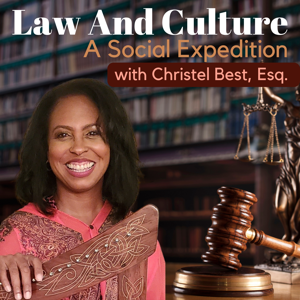
Hi everyone! My name is Christel Best, and I am a licensed attorney in Ohio. I am excited to introduce my new podcast, Law And Culture: A Social Expedition. In this podcast, we will be talking about the law not just from a boring textbook point of view, but also looking at interesting cases about the environment, social justice, and issues related to harassment and discrimination.
We are going to cover a lot of different subjects and occasionally conduct interviews with special guests. You do not want to miss a single episode. Whether you are in law school, are an attorney, or just have a general interest in law, this is the place for you.
And for attorneys, please remember that you can go to christelbesttraining.com. There you will find information about opportunities to earn continuing legal education hours.
Please join me and follow me on Apple, Spotify, or wherever you get your podcast content.
From the publisher's feed