
Sign up to save your podcasts
Or


(Note: This recording contains a static hum that, in spite of efforts to remove, does remain somewhat. But the content of the talk might be worth overlooking).
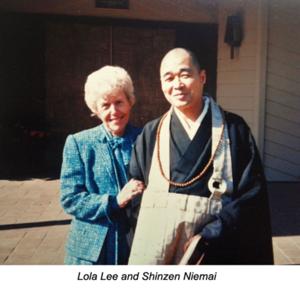
Zen Roshi, Lola McDowell Lee, understands how odd it must sound to some that an individual human being can become one with the universe.
She explains that this search for unity is often misguided because people look out there for something that can only be found in the immediate present.
This issue begins with our own internal division. The split between spirit and body, or matter and consciousness. If a person is divided within themselves, they cannot possibly perceive existence as a unified whole. Only an individual who has achieved internal integration can truly know that existence is indivisible.
This internal division is not innate but learned. An infant is born in a state of natural integration, unaware of any separation between body, mind, soul, or even between self and mother. However, the necessities of survival, societal conditioning, and the need for security force the growing child to begin to discriminate.
Lola explains how we are taught to identify with the upper part of the body (the intellect and head) while viewing the lower part (instincts and feelings) as inferior or shameful. This preference for the intellect causes blockages, leaving us constantly struggling to control our thoughts and creating a life defined by inner conflict.
Lola suggests we try switching it up: a re-awakening of sensitivity.
The intellect has no direct access to the world and is entirely dependent on the senses. When we lose touch with our physical senses, our intellect becomes uninformed and life loses its magic. Try to bypass thinking that the flower is beautiful and instead focus on what the senses are actually reporting.
This return to sensitivity is likened to the ignorance, or non-duality, of a child. Our goal, however, is to achieve an awakened innocence—a state of wisdom where the knower and the known are one .
Unlike intellectual efforts, Lao Tzu focuses on total immersion in one's activity. Whether walking, eating, or listening, try to become the act itself.
Lola emphasizes the physiological aspects of spiritual integration, specifically regarding breath. Driven by anxiety, we breathe shallowly from the chest, whereas children and enlightened figures like the Buddha breathe from the abdomen.
The tanden is not merely a physical location below the navel, but is a center of spiritual power. By shifting the seat of breath from the chest to the tanden, one can bypass the chaotic attempts by the brain to manage our experience, and access a deeper, more stable source of power. It will quiet the ego. Breathing from the tanden naturally clears the mind and allows mysteries to reveal themselves without intellectual effort .
We must avoid the our imagination’s construction of complex illusions, including concepts of gods, heavens, hells, and even enlightenment itself. Intellectual attempts to clear these webs only create more webs. One logic is simply replaced by another. The only way out is to step out of the imagination entirely into a state of pure existence, where there are no thoughts or concepts.
If we cannot see God in a simple stone, how can we find God within ourselves. True realization is an all-embracing acceptance of life—seeing the divine in weeds, insects, and stones—resulting in a serenity and the unified, innocent vision of the child.
Oct 14, 1981
 View all episodes
 By I & A Publishing
(Note: This recording contains a static hum that, in spite of efforts to remove, does remain somewhat. But the content of the talk might be worth overlooking).
Zen Roshi, Lola McDowell Lee, understands how odd it must sound to some that an individual human being can become one with the universe.
She explains that this search for unity is often misguided because people look out there for something that can only be found in the immediate present.
This issue begins with our own internal division. The split between spirit and body, or matter and consciousness. If a person is divided within themselves, they cannot possibly perceive existence as a unified whole. Only an individual who has achieved internal integration can truly know that existence is indivisible.
This internal division is not innate but learned. An infant is born in a state of natural integration, unaware of any separation between body, mind, soul, or even between self and mother. However, the necessities of survival, societal conditioning, and the need for security force the growing child to begin to discriminate.
Lola explains how we are taught to identify with the upper part of the body (the intellect and head) while viewing the lower part (instincts and feelings) as inferior or shameful. This preference for the intellect causes blockages, leaving us constantly struggling to control our thoughts and creating a life defined by inner conflict.
Lola suggests we try switching it up: a re-awakening of sensitivity.
The intellect has no direct access to the world and is entirely dependent on the senses. When we lose touch with our physical senses, our intellect becomes uninformed and life loses its magic. Try to bypass thinking that the flower is beautiful and instead focus on what the senses are actually reporting.
This return to sensitivity is likened to the ignorance, or non-duality, of a child. Our goal, however, is to achieve an awakened innocence—a state of wisdom where the knower and the known are one .
Unlike intellectual efforts, Lao Tzu focuses on total immersion in one's activity. Whether walking, eating, or listening, try to become the act itself.
Lola emphasizes the physiological aspects of spiritual integration, specifically regarding breath. Driven by anxiety, we breathe shallowly from the chest, whereas children and enlightened figures like the Buddha breathe from the abdomen.
The tanden is not merely a physical location below the navel, but is a center of spiritual power. By shifting the seat of breath from the chest to the tanden, one can bypass the chaotic attempts by the brain to manage our experience, and access a deeper, more stable source of power. It will quiet the ego. Breathing from the tanden naturally clears the mind and allows mysteries to reveal themselves without intellectual effort .
We must avoid the our imagination’s construction of complex illusions, including concepts of gods, heavens, hells, and even enlightenment itself. Intellectual attempts to clear these webs only create more webs. One logic is simply replaced by another. The only way out is to step out of the imagination entirely into a state of pure existence, where there are no thoughts or concepts.
If we cannot see God in a simple stone, how can we find God within ourselves. True realization is an all-embracing acceptance of life—seeing the divine in weeds, insects, and stones—resulting in a serenity and the unified, innocent vision of the child.
Oct 14, 1981