
Sign up to save your podcasts
Or

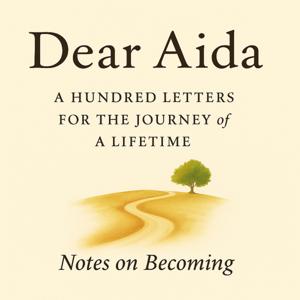


The voice that writes Dear Aida does not come from the beginning of the road.
It comes from a place further on—
from the stretch where the scenery has repeated often enough to reveal its patterns,
where certain ambitions have lost their shine,
and where a few quiet truths have proven themselves stubbornly reliable.
This is not a voice intoxicated by ideals.
Nor is it one hardened by disappointment.
It belongs to someone who has watched certainty collapse without letting meaning collapse with it.
The author has learned, slowly, that most of life’s pain does not come from cruelty,
but from confusion.
From mistaking noise for truth.
From mistaking intensity for love.
From mistaking movement for progress.
From mistaking admiration for worth.
They have seen how easily people surrender their judgment—to crowds, to status, to borrowed beliefs—
and how long it takes to recover it once lost.
So these letters are written with restraint.
They do not shout.
They do not sell.
They do not try to win.
They are offered the way one offers a map—
not to dictate a route,
but to prevent unnecessary wandering.
The person writing Dear Aida is no longer trying to be impressive.
That phase has passed.
They have learned that performance is exhausting,
that applause is fleeting,
and that the most important work happens where no one is watching.
They now live by a quieter measure:
Can I respect myself when the room is empty?
That question shapes the tone of every letter.
This is a mind that understands psychology,
but refuses to hide behind it.
It knows the power of unconscious forces,
the pull of attachment,
the contagion of desire,
the distortions of status and ideology.
But it uses these insights gently—
not to label or diagnose,
but to help another person see where they are standing.
Clarity, here, is an act of care.
The author has loved enough to know that love is not a rescue.
They have learned that no one completes you,
that chemistry lies easily,
and that devotion without boundaries eventually turns to resentment.
And yet—
they have not retreated.
Love still matters deeply.
But it is now understood as practice:
attention returned,
truth spoken early,
repair attempted honestly,
time given deliberately.
Time itself has left its mark on this voice.
There is an awareness—never stated outright—that days are numbered,
that losses accumulate quietly,
and that regret grows not from bold mistakes,
but from postponed living.
Mortality is not dramatized.
It is respected.
It sharpens the writing, trims excess, and focuses it on what endures.
Most importantly, this voice does not seek followers.
It does not want agreement.
It does not want loyalty.
It does not want to be needed.
It wants the reader to stand on their own feet.
The letters are written with an open hand,
not a closed fist.
Take what helps.
Leave what doesn’t.
Live your own life.
Dear Aida is written by someone who has learned that wisdom is not about having answers.
It is about knowing which questions are worth carrying—
and how to walk with them without losing yourself.
The letters come from a place beyond urgency,
beyond ideology,
beyond the need to be right.
They come from someone who has paid attention long enough
to see what breaks lives—
and what quietly holds them together.
And having seen that,
they write—
not to shape another person,
but to spare them unnecessary harm,
and help them become, in their own way,
fully themselves.
Dear Aida, If I had to distill everything I’ve learned—everything I wish I’d known sooner—into a handful of truths, it would look something like this.
If I had to distill everything I’ve learned—everything I wish I’d known sooner—into a handful of truths, it would look something like this.
Not rules.
Not commandments.
Just bearings.
Dear Aida,
You have walked with me through one hundred letters —
each a small lantern,
each an invitation to see yourself and the world
more clearly,
more honestly,
more gently,
and more courageously.
You now stand at the threshold these letters were always pointing toward:
A life shaped from the inside out.
A life with an internal compass.
A life of self-possession, clarity, and freedom.
Freedom, as you’ve learned, is not a single destination.
It is a mosaic —
built from identity,
attention,
inner steadiness,
clear seeing,
healthy love,
meaning,
and wise stewardship of money.
Freedom is not the absence of responsibility
but the ability to choose your responsibilities consciously.
Freedom is not the escape from life
but deeper participation in it.
Freedom is not found in wealth alone
but in the alignment of your days
with who you truly are.
Dear Aida,
There is a version of wealth the world celebrates loudly —
the visible kind:
big houses, luxury cars, designer signals, curated lifestyles,
the performance of prosperity.
But there is another version of wealth —
the quieter, truer, deeper kind —
that almost no one sees,
yet everyone longs for:
peace of mind.
Real wealth is not what you can show.
Real wealth is what allows you to sleep well.
Real wealth is what frees your time.
Real wealth is what secures your family.
Real wealth is what gives you choices.
Real wealth is what removes fear.
Real wealth is what lets you live aligned,
not stretched thin by appearances.
Wealth is not display.
Wealth is stability.
Dear Aida,
People often imagine that becoming indispensable
requires extraordinary brilliance, rare talent, or charismatic leadership.
But the truth — the deeply underestimated truth —
is that the most indispensable people in any environment
are the ones who are consistently reliable.
Reliability is a superpower.
Not because it’s flashy,
but because it’s rare.
Most people are intermittently excellent
and inconsistently dependable.
They show up brilliantly on their good days,
but unpredictably on their ordinary ones.
The world quietly hungers for people
who simply do what they say they will do,
every time,
without drama,
without excuses.
Reliability builds trust faster than brilliance.
And trust creates opportunity faster than talent.
Dear Aida,
There are two forces that quietly shape a remarkable life —
not talent, not intelligence, not luck,
but intense interest and assiduity.
Intense interest is the spark.
Assiduity is the discipline.
Together, they form a lifetime engine that is far more powerful
than any advantage people are born with.
Most people misunderstand greatness.
They think it comes from extraordinary ability.
But the truth is simpler:
Extraordinary outcomes come from ordinary people
who sustain focused curiosity over long periods of time.
This is the real differentiator.
Not genius.
Not brilliance.
Sustained fascination.
Dear Aida,
There is a kind of work environment that feels exciting at first —
fast-paced, high-pressure, chaotic, fueled by urgency.
People admire you for surviving it.
You feel important simply for enduring it.
But here is the truth:
Any environment that requires constant heroism is unsustainable.
And anything unsustainable is unwise.
Heroic workplaces run on exhaustion, not excellence.
They rely on sacrifice, not systems.
They reward burnout, not balance.
They praise the people who stay late instead of the people who build intelligently.
The world is filled with people worn down by environments
that never should have demanded their soul in the first place.
Do not let that be your story.
Dear Aida,
Most people think of compound interest as a financial concept —
a mathematical mechanism that makes money grow faster the longer it’s invested.
But the deepest truth is this:
Compounding is not just something that happens to your money.
It is something that happens to your character.
It is a personality trait — a way of moving through life.
People who become financially free early
aren’t just good with money.
They’re good with compounding.
They think in arcs, not moments.
In decades, not days.
In habits, not impulses.
In steady growth, not dramatic leaps.
Compounding is a lens,
a temperament,
a worldview.
And it spills into everything you touch.
Dear Aida,
There is a truth most people never learn because they spend their whole lives rushing past it:
Time is the most valuable financial asset you will ever have.
Not money.
Not investments.
Not intelligence.
Not opportunity.
Time.
Time shapes every financial outcome.
Time amplifies every good decision.
Time forgives many small mistakes.
Time turns modest habits into extraordinary results.
Money grows because of time.
Compounding works because of time.
Freedom happens because you gave your decisions enough time to mature.
Time is the soil in which every form of wealth takes root.
And yet,
it is the asset people squander most casually.
Dear Aida,
Most people think financial freedom is a mystery —
a rare achievement reserved for the lucky, the brilliant, or the unusually wealthy.
But the truth is quieter, simpler, and far more democratic:
Early freedom is not built on luck.
It is built on math —
steady, predictable, unromantic math.
The math of freedom is not complicated.
It has no secrets, no tricks, no hidden formulas.
It is built on three forces:
How much you earn.
How much you keep.
How long you let compounding work.
That’s it.
But while the math is simple,
the discipline required to live by it is rare.
From the publisher's feed