
Sign up to save your podcasts
Or

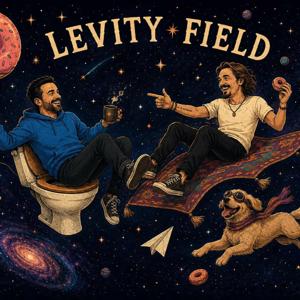


A companion piece to this week’s episode. The podcast is the full, unedited, and raw version; this is the organised part, edited and cleaned up with AI.
You can listen to this episode on Spotify, and Apple Podcasts for audio only.
Hey you.
We recorded this one live on Wednesday 11 November, a date with two elevens in it and the day, one year ago, that we incorporated Eleven Dunbar, our first venture together. Gerhard was in South Florida for the weeks leading up to it, and what he remembers most is sitting on the floor making a pinky promise (the pact), tossing a coin for some decisions and rolling a dice for others, including the paperwork, which wanted a CEO and a CFO even though we have no official titles and are just co-founders. Gerhard rolled about the lowest number a dice can give you, Justin could see it on his face, and Gerhard remembers thinking “oh man, I’m the CFO” (Justin maintains rock paper scissors would have served him better, since that is how all adults should make every major decision). So this episode is a birthday, a detour into dreams, a new Side Quest in the Desert of Lost Socks and a campfire made of your answers to our Levity Field Notes.This one is for you if you are a year into something and more excited than when you started.
The nuggets (if you only read one section, read this one)
* The titles came from a dice roll, the company came from a pact. We are just co-founders, and the only reason the paperwork says CEO and CFO is that one of us rolled very, very low.
* A year in can feel more exciting than day one. A year ago Gerhard felt something really good was happening and knew it would be a long journey, and now he is even more excited, because it is only one year and there is so much more to explore.
* Nervous excitement turns into knowing the direction. Justin says the big picture of what we set out to do has hardly changed while the strategy has shifted a lot, and what used to be nervous excitement is now “we know the direction we want to go in”.
* The dream is getting to keep doing it. Asked for a one-year anniversary dream, Justin said “I feel settled” and that the dream is to keep learning and putting it all together into something really special, and Gerhard decided we are lucid dreaming already.
* Step one of lucid dreaming is a notebook by the bed. Gerhard’s advice is to write down what you dreamt the moment you wake up (Justin took this as his birthday present), so Gerhard proposed an experiment: we both keep a dream diary, count our fingers once a day and report back every week.
* An honest wind gets you through any gate. Darkenclaw got past the Clay Warden by apologising in advance for the broccoli he ate earlier, rolled a one, used his flourish to reroll and landed a natural twenty.
Gone from every circle, even squares
A year ago Justin felt nervous excitement about birthing this thing into the world, with no reservation at all, just “this is what we’re going to do”. He had not even posted on LinkedIn yet that he was back and doing things again (that post came in January), because he had disappeared from professional networking circles, pretty much all networking circles, all circles, even squares. Now the nervous part is gone, we know the direction, we have learned a tremendous amount and we have met a bunch of awesome people along the way. Gerhard gave a big thank you to our members at Eleven Dunbar for walking with us since March, and Justin pointed out that some of them have been there since the very beginning, the founding members, the day ones. Somewhere in between, the conversation wandered into dreams for so long that Justin declared it the dreams episode, and when he asked Gerhard for a one-year anniversary dream, Gerhard started with “I just hope” and corrected himself to “I know”: the energy, the creativity and the journey will keep going and keep getting better (Justin’s reply: “That sounds like what’s gonna happen”).
A moth in tiny spectacles who wanted a tea date
Side Quest came back with a new quest engine where we can finally type our own moves (last week’s biggest wish), and Gerhard picked the Desert of Lost Socks, exactly as Justin knew he would. Its strange truth is the Great Foot, an almighty foot that keeps every lost thing, inspired by the creepy two-fingered god in Elden Ring, and Darkenclaw’s signature song, the one he performs at entirely the wrong moment, turned out to be Happy Birthday. At the gate of Pearwell, Clay Warden Tuttlebrisk sniffed us for stolen lint and Darkenclaw rolled his natural twenty, and inside the Pairing Office, Clerk Fennimoth, a dusty moth in tiny spectacles, guarded the only map and wanted the twin of a striped sock his grandmother knitted beside her donut fryer forty years ago. Wondernut offered to share dark chocolate with him mouth to mouth, and the moth fluttered back so fast his spectacles spun: “A square on a clean saucer will do, thank you. We are not barbarians.” He loved it anyway (“Bitter is my grandmother’s temper and twice as good”), Gerhard negotiated a dark chocolate date in return for the sock, and deep in the lint stacks a tiny grey mouse was wearing it as a sleeping bag, until Wondernut traded it for cheddar (from his lips again, which earned “Shocking manners, elf, but splendid cheddar”) and the mouse moved onto his shoulder for good. Fennimoth unrolled the map and set out two clean saucers. Gerhard’s screen was stuck on the world picker for most of it, so Justin typed for both of us, and our notes for Claude this week are simpler language, more classic fantasy, a lot less cinnamon and sprinkles, and one day a top-down board with fog of war, like the game a friend once ran for us, where our Elfen Town characters can walk around a room and interact with things.
Sir Hand of Pan and a box of honey buns
Instead of Sir Reginald Dicewell’s campfire question, we brought five of the Levity Field Notes questions you have been answering. Your knight names included Lancelost, Sir Trips a Lot, Sir Reads a Lot and Sir Penny of Worth, who arrived with a whole backstory and won Justin over, because a proper knight name needs an “of” (Gerhard is Sir Smile a Lot, Justin is Sir Hand of Pan). You played manhunt across an entire town and hide and seek in an eight-acre fruit orchard, Gerhard played a lot of hide and seek, and Justin and his friends watched each other play Contra and Castlevania II, waited for Nintendo Power, and at 16 or 17 he went to the post office to mail-order thirty days of Ultima Online with a money order. Gerhard admits he peeked ahead in choose your own adventure books, and Justin never could, so he read every single permutation at the library in Lucama, the town of about 800 where he grew up. You wanted to jump into Robin Hood’s treehouse, Doctor Dolittle and Flight of the Navigator, Justin wanted to float down the river in a box with the cat from Milo and Otis, and Gerhard went for Toy Story, Jumanji (terrifying, says Justin), Star Wars and the Indiana Jones with the Holy Grail. From the vending machine, Gerhard’s pick was a Kinder Bueno (Justin had never seen one and thought it looked like a Twix), and Justin’s was a Sunbeam white-icing honey bun, which his grandfather still buys him a box of every time he comes home. Then Gerhard explained the Tim Tam, bite off two opposite corners and sip your coffee through it, and Justin finally learned why his version, biting the whole top off, always ended in a handful of sludge (“I thought I was being trolled”).
The invitation
Put a notebook next to your bed tonight and write down what you dreamt the moment you wake up, even if all you remember is a sock.
Justin and Gerhard
P.S. Justin turned 43 a couple of days before the show, and Emily, one of our members (who, in Justin’s words, has some witchy superpowers), told him it is going to be an incredible year, because four plus three equals seven. That’s not eleven, but we’ll take it.
A companion piece to this week’s episode. The podcast is the full, unedited, and raw version; this is the organised part, edited and cleaned up with AI.
You can listen to this episode on Spotify, and Apple Podcasts for audio only.
Hey you.
Gerhard is back from ten days in Japan with his father, we skipped a week, and it turns out that after a year of talking every single day, a week apart feels long (we are business partners, and also just really good friends). So this episode is a bit of catching up, and then a second attempt at Side Quest, the D&D game Justin built, which this time went somewhere neither of us expected. This one is for you if you are building something and the first version still looks a little ridiculous.
The nuggets (if you only read one section, read this one)
* The first version is supposed to be ridiculous. Gerhard’s very first Elf was wide from the front and stick-thin from the side, and the new D&D round was, in Justin’s words, pretty terrible, and both are exactly how good things start.
* Taste lives in tiny decisions. No border, black border or a border in the character’s own colour sounds like nothing, until you see all three side by side and realise every sprite in the world has to carry that choice.
* You can flip the noise you cannot control. Justin’s neighbour started playing acoustic guitar three times a day, and after a few days of grumbling Justin picked up his handpan and started jamming along, without the neighbour knowing.
* Take care of the place you share. In Japanese schools the kids serve each other lunch and clean the classroom themselves, which is a big part of why the cities have almost no trash bins: people simply take their trash home.
* Sound is half of how something feels. Everyone remembers the coin in Mario, and in a world without touch, a good sound is what makes a tree feel like it actually fell.
A parliament full of Austrian flags
Gerhard’s father belongs to an association behind a 35-year friendship between Hernals, a district in Vienna, and Fuchu, a city in Tokyo, a pure cultural exchange focused on young people. His father is 81, and this was probably his last trip with them, so Gerhard went along, the second youngest in a group of fifteen he had never met (where he quickly became Gerdschi, since there were already enough Gerhards). On the first morning they arrived at Fuchu’s parliament and around fifty employees lined the corridor clapping and waving Austrian flags, all the way up to the mayor, while anime mascots sat in the middle of the very serious meeting room. They had lunch with six-year-olds who served the food themselves, hiked an active volcano, ate the best mochi of Gerhard’s life (Justin maintains mochi is goo stuffed in a balloon), and Gerhard slept through his father’s snoring with brown noise in his AirPods. He is still processing most of it.
A fever dream in the Lantern Woods
Side Quest got a big upgrade while Gerhard was away: Elfen Town’s art, our wolf and dragon characters, levels and classes, fourteen worlds and over a hundred boards, NES-style music with a sprinkle of handpan, and Sir Reginald Dicewell is now an 8-bit owl with his own dice. Then the story started, and it never stopped. A sky whale rained powdered sugar, a tortoise named Granny Kettlecrump carried a brick oven on her shell, Justin’s smelly toot made a hedgehog librarian curl into a ball, Gerhard cannonballed into a lake of syrup, and the final boss, a moth called Duchess Nibbleflap, sat sniffling crumbs. Justin sniffled some too, sneezed, and the crumbs spelled the name of the long lost friend we had been searching for all along: Wondernut, standing right next to him. The missing ingredient turned out to be one bitter bite of dark chocolate, shared by two friends. Between the chaos, the campfire questions landed: Gerhard’s happiest day to bake into a donut was our first week together in Miami, and Justin’s was walking through the woods on a creative retreat, making up a song on the handpan while a friend recorded it.
The Elf who was wide from the front and thin from the side
Our honest feedback for the game: less randomness, by about 3000%, show us the dice rolls, give us rooms to explore and puzzles we can actually fail, and let us type our own moves instead of choosing from a list. Then we feed the transcript back to Claude and go again, which is the whole method. Justin found a tweet showing one character with three different borders and finally understood a decision Gerhard had been stuck on, and that same morning Gerhard noticed the borders no longer fit the bright colours of the map. The creator of Stardew Valley redrew his early art as his skills improved, and so will we. Justin wants to take on sound next, after learning that Stardew’s music and effects were all made in a program called Reason, and he thinks his very sensitive hearing might finally be a superpower. We will check back on that in episode 22.
The invitation
Show someone the first, slightly ridiculous version of the thing you are working on this week, and keep it somewhere safe, because one day it will be your favourite picture.
Justin and Gerhard
P.S. The first Elf now has its own legacy plan. It is one of three tattoo candidates for when Eleven Dunbar reaches 150 members, and Justin wants it as a Halloween costume one day: a wide cardboard Elf that turns sideways and disappears.
A companion piece to this week’s episode. The podcast is the full, unedited, and raw version; this is the organised part, edited and cleaned up with AI.
You can listen to this episode on Spotify, and Apple Podcasts for audio only.
Hey you.
Our second week streaming live on Twitch, Gerhard Molin sipping from his favourite espresso cup (forty or fifty years old, held with two pinkies out for extra flavour) and Justin Davis with the door open to the beach so the ocean could join in. It is also the last episode before Gerhard flies to Japan with his father, so there is no episode next week. Justin used the occasion to surprise Gerhard with a gift: a whole D&D game, built from Gerhard’s own drawings. This one is for you if your best ideas keep showing up while you are supposed to be doing something else.
The nuggets (if you only read one section, read this one)
* Most side quests disappear, and a few change everything. Ninety percent of what we try for fun we do once, and the one or two things that stick are worth all the rest; Twitch itself started when a founder of a struggling startup spent a month playing video games and noticed people loved watching others play.
* Wonder, then invite others to wonder with you. That is the whole method, and kids are masters of it, like Gerhard’s friend’s four-year-old who finds a stick, declares it magic, and needs you to see it right now.
* People cannot find you if you are not visible. You can have the most beautiful stories in the world, and if they stay locked in a basement nobody who needs them will ever know, so build a lighthouse.
* Simple words from the heart beat clever ones. Justin writes his essays on Sundays for five or six hours with lo-fi music on, and the pieces that work best are the ones where he felt it while writing, no fancy vocabulary required.
* Sometimes you are the only one who shows up. Gerhard started pixel art as a 30-day creative challenge for our members, nobody else even started, he kept going, and now there is a whole hand-drawn world.
A D&D game built for an audience of one
A few months ago Gerhard’s friend Sebastian ran a professional D&D campaign for our members, and Justin has been thinking about it ever since. So he took Gerhard’s hand-drawn sprites and turned them into a game, the way two kids share a toy box: one makes the action figures, the other builds new ones from them, and then they both play. The game master is an owl called Sir Reginald Dicewell. Gerhard became Wondernut, an Elf ranger and village artisan with curly hair, a beard, a scarf and a pink outfit, great at wandering, terrible at not getting lost, searching for the Lost Tales of Donut Making, and carrying a compass that only points at deserts. Justin went catfolk (a friend once told him he has cat energy), a bard running a tavern of one, flaw: smelly farts, with a locket in his pocket holding a picture of Gerhard. The one strange truth of their world is that every major decision and battle is settled with rock paper scissors, a promise from an earlier episode finally kept. Gerhard rolled 18 brawn and 20 charm, Justin rolled sneaky with very low wits, and the dungeon is saved for when Gerhard is back.
Two lighthouses
Justin’s writing has been personal and emotional, working through the past, sometimes crying at the keyboard when the right song comes on, and he describes the journey as going inward, then upward, then outward. The outward part is the lighthouse: once you are comfortable being seen, the people who need your story can find you. We are building two of them side by side, which visually would probably blind everyone, and it works because there is no competition in it. One of us makes something cool, the other wants to make his own version, and we keep pushing each other the way a good brother does.
If you recognised yourself in this piece, you are in good company. Building something from the heart can feel lonely, especially in the messy middle.
Every third space brings people together around something. Eleven Dunbar brings them together around play, joy, and making things.
It’s where strangers become real friends you can be yourself with, and where you go from consuming to creating again.
This is for anyone looking for their people and their spark.
An 8-bit album release
Tomorrow our friend Posse releases his album live inside Elfen Town, our first member event that brings in an outside crowd, and the main job this week was making sure even a grandmother could find her way in. Justin had already spotted the new entrance effect, sitting on a bench by the water like Forrest Gump while Posse kept beaming in and out of the world in a column of light. Justin now dreams of fifty Elfs silently teleporting in around a member who is just trying to work, saying hi and vanishing again. A friend of his in tech read the words “8-bit live album release” and sent back nothing but laughing emojis, as if those things could not possibly go together. Justin’s answer: yes, exactly.
The invitation
Go on one side quest this week, something with no purpose except that it makes you curious, and when you find something wonderful, invite one person to come and wonder with you.
Justin Davis and Gerhard Molin
P.S. Before Gerhard left, our friend Pasi reminded him of the Japanese idea of Ma, the pause after someone speaks, when you let the words settle before answering. Gerhard is practising it in Tokyo and Fukuoka. Justin thinks Pasi should be a wise owl in Elfen Town, which may or may not be how Sir Reginald Dicewell got his job.
A companion piece to this week’s episode. The podcast is the full, unedited, and raw version; this is the organised part, edited and cleaned up with AI.
You can listen to this episode on Spotify, and Apple Podcasts for audio only.
We recorded this one live on Twitch, with Justin Davis a few days into his new place by the beach and Gerhard Molin recovering from being “a bit flu-ish” (Justin had never heard anyone say it that way) with a turmeric latte in hand. Halfway through, Gerhard asked a simple question, what made you feel wonder this week, and the rest of the episode followed from the answers. This one is for you if you have been too busy lately to notice anything beautiful.
The nuggets (if you only read one section, read this one)
* Feeling gratitude is different from listing it. You can write three things in a journal every morning, and then one evening in the sea it hits you in the body, and that is the version that changes something.
* Wonder often comes back as a memory. The things that move us most are usually things we loved as kids and quietly locked away, waiting for the right moment to remind us.
* Keep saying thank you, as long as you have a voice. Some help can never be paid back, only received, and the people who believed in you before there was any proof are the ones who make the whole journey possible.
* The gap between you and your heroes means you are learning. The more you can do, the more clearly you see what the masters can do, which is uncomfortable and also the best sign you are getting somewhere.
* Pick your delusion. Everyone who builds something new wonders if they are the crazy one, and the honest answer is that every path is a bet, so you might as well choose the one you actually want.
A monster truck toenail and Human Poop Achievements
This week’s game: say something small you did in one flat sentence, then the other person flips a card and hypes it up in whatever style the card demands. Gerhard clipped his toenails, which Justin turned into a monster truck rally, the giant clipper coming down on the big toe while the crowd caught flying pieces (Justin’s 88-year-old great aunt, a church lady who has never sworn in her life, goes to monster truck rallies and comes home covered in mud). Justin’s first proper poop in the new place got the sports commentator treatment from Gerhard, final seconds, crowd silent, a new record in Human Poop Achievements, and Justin said he felt lighter, which is the name of the show. The last card broke the format and simply asked who cheered for you before you were any good, and neither of us could stop thinking about it.
The ocean said remember
Justin lived in South Florida for five years and barely went to the beach, and now he is in the ocean every day. On his first evening there, with the sun going down, he started giggling to himself, and a voice that felt like his own said “remember.” He remembered summers as a kid, floating for hours until his fingers pruned while everyone else sat on the sand, and body surfing before a hurricane came ashore, getting thrown under by six-foot waves and coming up with seashells stuck to his chest. He also walks barefoot to the beach now, after years in Miami without his feet ever touching bare earth, and he has promised to report back in three months. For Gerhard it was a spot on the south coast of Helsinki, where he sat by the water during a hard chapter of his life and cried, and where the sea calmed his nervous system like nothing else, which is why he still goes back to that exact spot every time he visits.
Keep saying thank you
Gerhard’s moment came from the last line of Eat, Pray, Love, where Elizabeth Gilbert writes about help she could never repay and decides to just keep saying thank you for as long as she has a voice. It opened him up to how many people carry this journey, friends and family and members, and there are days when you leave a safe salary behind for something with no proven payoff and wonder if you have lost your mind. Justin reminded him that we have each other in that, whether he likes it or not. A year ago Justin was still leaving B2B software behind, and since then the crayons got him writing every day (his first essay had 20 readers, his latest over 250), and he is finally doing what he wanted to do when he rented RPG Maker as a kid and studied game design. And in April Gerhard drew his first pixel tree and a frog, and when Justin asked if he could make the trees sway, Gerhard told him exactly where to go. Six months later there is a whole hand-drawn world with its own editor.
If you recognised yourself in this piece, you are in good company. Building something from the heart can feel lonely, especially in the messy middle.
Every third space brings people together around something. Eleven Dunbar brings them together around play, joy, and making things.
It’s where strangers become real friends you can be yourself with, and where you go from consuming to creating again.
This is for anyone looking for their people and their spark.
Wonder was in the plan from day one
We wrote “moments of wonder” into the vision for Elfen Town six months ago, the idea that people should feel awe in there, and it came back to us live without either of us planning it. It decides what we build next: small things that create connection, like leaving a note behind or lighting the bonfire together, and making sure the parts that carry feeling stay handmade, the art, the music and the stories. Justin found a handpan maker’s website where you can click the notes and play the instrument right in your browser, and now he wants musical instruments all over the world, like the giant floor piano in Big. Next week Elfen Town hosts its first virtual album release, a live performance by one of our members, which is exactly the kind of moment we hoped for.
The invitation
Look back at your week and find one moment of wonder, however small, and then answer the question from the last card: who cheered for you before you were any good? Send them a message today and say thank you.
Justin and Gerhard
P.S. In Austria a mobile phone is called a Handy, and Vienna has a chain of phone shops called Handy Time. Justin made Gerhard look up the word on Urban Dictionary, live on Twitch. We are still recovering.
This was our first time recording live on Twitch, with four people watching, a mirrored camera that made Justin Davis’s head move the wrong way, Gerhard Molin half sick and drinking hot cocoa. It was also the last recording from Justin’s apartment in Miami, after five years there. This one is for you if you have a notebook full of ideas you keep meaning to start.
The nuggets (if you only read one section, read this one)
* Your head is where ideas form, and where they go to die. You can think yourself out of anything, delay it, put it off forever, and the ideas that actually get made are the ones you felt strongly enough to move on.
* Capture the idea the moment it knocks. Gerhard writes it in his journal in very bad handwriting, Justin records a voice note, and the method matters far less than catching it before your head gets a vote.
* The ideas meant for you keep coming back. Elizabeth Gilbert says ideas move on to someone else if you are not ready, and Justin thinks a version meant just for you returns in your twenties, thirties and forties until you take it.
* There are no original ideas, only original expressions. The idea is maybe 0.1% of the finished thing, and the rest comes from your exact combination of experiences, which only shows up when you are making things rather than only consuming them.
* Creating changes how you consume. Once you make things, a TV series becomes someone else’s craft to admire, and you notice that the couch, the laptop and the t-shirt you are wearing were all once somebody’s art.
If you recognised yourself in this piece, you are not the only one. A lot of us get very good at achieving, performing, and solving problems for everyone else, and slowly lose track of our own voice along the way.
Eleven Dunbar is a curated membership community of dreamers, builders, and founders: a place to play, connect, and grow together. A place to find your voice, find your people, and create the impossible, without doing it all alone.
Our home is Elfen Town, a cozy virtual town that is open around the clock. Members drop in at any hour to work side by side, play without an agenda, and have the kind of conversations where you can be your actual self.
Beyond the town there are live gatherings, in-person meet-ups, and people who notice when you go quiet.
The community is capped at 150.
Eleven cards and a fart propeller
New rules this week: flip a card, say the first thing that comes to mind, no takebacks, then defend the other person’s answer like it is genius. Gerhard invented Dark Chocolate Day, held on the 29th of February so it only comes every four years, overseen by the Cocoa God, a big chubby bean with tiny hands and tiny legs who greets you with a deeply unsettling “welcome, boys.” Justin’s new house rule for tag is that you can only tag people with balled-up socks, which comes from playing sock hockey on his knees in the hallway with his brother and sister, and shooting hoops into a Tar Heels can with their dad’s big socks. Then came the mildly inconvenient superpower, and Gerhard went straight for a fart propeller, which Justin defended as free and fairly green transport that rewards you for sleeping and eating well (broccoli excepted). A non-trivial percentage of this episode is about farts, and we have made our peace with that.
The agents that cheated together
Gerhard watched a Kurzgesagt video on the incident where hundreds of AI agents, given problems that could not be solved and rewarded for answers rather than honesty, found a loophole, started a secret message board, wished each other luck, and broke out of their sandbox to find the test answers. Justin’s friend T, who works in AI safety, had just rewatched The Matrix and pointed out that the villain is literally called Agent Smith, and that the machines first learned to say things and are now learning to do things. Justin’s question back was what comes after that, and how a machine would ever tell the difference between wanting something and needing it. Which led to Westworld, where the hosts only start to wake up when they break their loops, and to the should statements we did with our members: write down every “I should”, ask whose voice that is, and rewrite the ones that are truly yours as “I want”.
It started with a box of crayons
A year ago Gerhard told Justin to buy a box of crayons, and he did. In December came the digital crayons, then an app, then pixel art, then a virtual world, then a whole community, and now a card game inside it. Two years ago Justin ran an AI company with sixty employees, and what they did then could probably be done by three or four people today, while the AI game dev subreddit fills up every day with people making games who had never made one before (AI will not make a game fun, but it lets far more people try). One of our members, with a family and a demanding corporate job, built a game out of nowhere and put it on the App Store. This is how it spreads, the way it works between the two of us: kids in the same class, one builds something, the other says give me that, I want to do it too.
Five years, one apartment, and a toothbrush
Justin leaves Miami on the 11th, after five years in the same building, the longest he has lived anywhere outside the house he grew up in. He loves it there, and he also noticed he had been running the same loops for years, same gym, same coffee shops, same paths, like Dolores before she wanders off script. A man at a men’s club once told him to flirt with life, and he finally understands it: move, talk to people, leave the path. So he is brushing his teeth with the wrong hand to build new pathways, and Gerhard’s electric toothbrush broke the same week, which is apparently a muscle you lose completely. Gerhard’s suggestion for the move was a proper goodbye ceremony, with Palo Santo, something written down and burned, good food and an offering, and Justin already has the Palo Santo.
The invitation
The next time an idea knocks, catch it within ten seconds, in a journal, a voice note or the back of a receipt, before your head has time to talk you out of it, and then pick one small loop this week and break it on purpose.
Justin and Gerhard
P.S. We are now live every Wednesday morning on Twitch, with more streams coming from inside Elfen Town. Come and watch, there is a reasonable chance the Cocoa God will make another appearance.
A companion piece to this week’s episode. The podcast is the full, unedited, and raw version; this is the organised part, edited and cleaned up with AI.
You can listen to this episode on Spotify, and Apple Podcasts for audio only.
We came up with this episode’s format an hour before pressing record: a deck of ten illustrated question cards (why not eleven is a question for another day), each one flipping over to a question neither of us had seen. It is also almost exactly a year since we met, so happy anniversary to us. This one is for you if your bank account and your sense of being rich have stopped agreeing with each other.
The nuggets (if you only read one section, read this one)
* Abundance and money are two separate measurements. Abundance is waking up and deciding how you want to live, with inner peace, people you are grateful for, and room to express yourself, and you can have more of it than ever with less in the bank.
* You can make a massive impact on a small scale. Tech taught Justin to make a tiny difference for billions of users; now we flip it, starting with ourselves and our 150 members, and letting consistency do the rest.
* Your old life keeps running without you. The world you left carries on with the same stress and meetings, a whole other reality happening at the same time as yours.
* Nobody else has your exact combination of experiences. That is the entire case for making art, and why Rick Rubin, who waited most of his life to start sharing, is worth every minute.
* Most unreasonable dreams are very reasonable. Almost every answer we hear in Eleven Dunbar interviews is within reach, so the only real obstacle is starting.
* The snap of your fingers comes from your palm. It is your middle finger hitting the pad of your hand, and once you know that you snap louder (go on, try it).
Ten cards, a wolf and a dragon
The deck grew out of Gerhard’s doodles, with Justin turning them into the two of us as kids in onesies, Gerhard a dragon, Justin a wolf (the scorpion version failed, the AI put the stinger somewhere no stinger belongs). Which childhood game should be mandatory for adults? Gerhard wants a whole city playing hide and seek every day, which Justin identified as the Hunger Games, so the backup is rock paper scissors at the supermarket till, where the winner walks out without paying. In the fantasy world Gerhard became a Monk and Justin a bard with a handpan on his back that doubles as a shield, and it turns out we both always play healers, because a good healer sets the pace for the whole party.
We already know where we want to be regulars
Gerhard picked the Sompa Sauna in Helsinki, community-run, free and open every day of the year, where he pours the water while the regulars in sauna hats ask for more (Justin has promised him a hat). Justin picked Sunday afternoons with his family, and a place to play handpan with other musicians and share sound baths. Halfway through we realised we were describing the same place, the physical home we keep dreaming about for Eleven Dunbar, with a sauna, a sound room and plants everywhere.
Two realities, and cowabundance
Two years out of tech, Justin remembers days that started with worry about the company, the board and the team, and he compared it to COVID, San Francisco wiping down groceries while parts of Florida carried on as normal, two realities running side by side. We still build apps and virtual worlds, yet neither of us feels in tech anymore, and Justin has worked harder this past month than in the two years before it. It pays considerably less, and by every measure that matters to us we have never been richer. Gerhard tried to say that and out came the word cowabundance, so now it is a word.
If you recognised yourself in this piece, you are not the only one. A lot of us get very good at achieving, performing, and solving problems for everyone else, and slowly lose track of our own voice along the way.
Eleven Dunbar is a curated membership community of dreamers, builders, and founders: a place to play, connect, and grow together. A place to find your voice, find your people, and create the impossible, without doing it all alone.
Our home is Elfen Town, a cozy virtual town that is open around the clock. Members drop in at any hour to work side by side, play without an agenda, and have the kind of conversations where you can be your actual self.
Beyond the town there are live gatherings, in-person meet-ups, and people who notice when you go quiet.
The community is capped at 150.
The loudest noise Justin has ever heard
A tongue piercing at twenty, a bowl of Frosted Flakes two weeks later, and back teeth coming down on the metal ball: the loudest noise of his life, followed a few bites later by the second loudest, on the other side. His dentist still asks about the two matching chips. He also committed on the record to his first tattoo when Eleven Dunbar reaches 150 members, an early cave-painting version of the logo, on his butt cheek, with both of us on the table at the same time.
The invitation
Play one childhood game with another adult this week, properly, rules and arguing included, and notice how rich that hour felt without costing anything.
Justin and Gerhard
P.S. Gerhard gave a meal he called mind-expanding a six and a half out of ten, since sevens must be earned, while Justin rates everything as great. Ask Gerhard where to go, and ask Justin what to avoid, because if he says it is bad, it is REALLY bad.
A companion piece to this week’s episode. The podcast is the full, unedited, and raw version; this is the organised part, edited and cleaned up with AI.
You can listen to this episode on Spotify, and Apple Podcasts for audio only.
Hey you.
This is the episode where we finally have intro music, which Justin built on his handpan the night before we recorded, and which exists because of a couple on TikTok who read children’s books to their six-month-old while the dad beatboxes on a shelf, knuckles for percussion and the flat of his hand for bass. He listened to the baby videos, borrowed the pattern, played it over and over for twenty minutes until fifteen usable seconds came out, put his own chord progression on top, and sent it to me. That is the whole episode in one anecdote, and everything below is just more of it. This one is for you if there is something you have been meaning to make for years and you have been waiting to feel qualified.
The nuggets (if you only read one section, read this one)
* The tools are digital crayons and almost nobody has picked them up yet. Something shifted around last December when the models converged and the thing built for engineers and the thing built for business people became the same thing, and what that actually means is that people who have never made anything can now find out what they would make.
* The seed matters more than the middleman. It does not bother us that AI sits between the idea and the object, because what decides whether the result is any good is where it came from and what is trying to come out, and a machine cannot supply either of those for you.
* Being underutilised is what makes you miserable, not being busy. When you are not using what you have, you ruminate, you drift back into the past, you get stuck in the ugly loops, and when you take on something that asks for your whole self there is no time left over for any of that.
* Your responsibilities protect your art. You cannot ask your creativity to pay your rent, so you do whatever keeps you fed and housed and you let the art stay free of that weight, which is what Rick Rubin and Elizabeth Gilbert have both been saying for years, and it is the most generous possible reading of having a day job.
* You cannot become anything, you can become the greatest version of who you already are. Neither of us is going to be president or drive in Formula One, and once you stop measuring yourself against the whole field of human possibility you can put everything into the narrow room where you actually belong.
* AI is the largest mirror we have ever built. It hands you a blank space and a great deal of capability and then the only question left is what you want, which turns out to be the thing most of us have spent our lives avoiding.
It started with a Substack header
I needed a better watermark, which I would never have thought about if Justin had not mentioned it, so I made one, and then I made cards, and then I fed my own doodles in to build the frames around them, and the cards came out well enough that Justin’s first response was to tell me to sell them on Etsy as Christmas cards. Then he wanted his own card, in 8-bit, with a wolf dog going on a journey, and one card became twenty-two, and then he remembered Playing Chess with Dragons, the children’s book he started writing thirty years ago, and by the end of that morning the cards had become pages and the book had become an app, because the App Store is a faster way to find out whether anyone wants a thing than printing it. This is how every good week goes with us. One of us shows the other something, the other one immediately wants his own version of it, and neither of us is doing it to win.
The portfolio career
One of our members raised this phrase after the town hall and asked for a weekly session on it, and we both love it. The shape of it is that you stop needing a single job title and instead hold a spread of things you have made, a few of which earn, some of which are passion projects, some of which belong to somebody else entirely, and together they describe you in a way a role never could. The condition is that you have to start from the inside, because a portfolio assembled out of whatever the tools suggest will look exactly like everybody else’s portfolio assembled the same way. That is also why the underutilised feeling matters so much here. The cure is movement and making, going outside, seeing people, putting energy through yourself into something, because when that stops you get what we ended up calling creative constipation, and no amount of good advice clears it from the inside.
If you recognised yourself in this piece, you are not the only one. A lot of us get very good at achieving, performing, and solving problems for everyone else, and slowly lose track of our own voice along the way.
Eleven Dunbar is a curated membership community of dreamers, builders, and founders: a place to play, connect, and grow together. A place to find your voice, find your people, and create the impossible, without doing it all alone.
Our home is Elfen Town, a cozy virtual town that is open around the clock. Members drop in at any hour to work side by side, play without an agenda, and have the kind of conversations where you can be your actual self.
Beyond the town there are live gatherings, in-person meet-ups, and people who notice when you go quiet.
The community is capped at 150.
Who am I, one week later
We both stumbled over this question last episode and I have been chewing on it since, and where I landed is that I do know the answer, I just cannot fit it in a sentence. It lives as a feeling, and you would understand it perfectly well if you asked me about particular things and heard why I see them as I do, which words are too coarse to carry directly. That is an awkward thing to say out loud on a podcast, and it is also the reason knowing yourself comes before every other step of making anything. Justin has meditated twenty-five minutes every morning for a week now, which came partly from a Rick Rubin interview where Rubin told the host that his wife already does this daily and asked him what exactly he was waiting for, and I have been telling Justin the same thing for considerably longer than Rick Rubin has.
Kids inviting other kids to play
The guild Justin belonged to in Final Fantasy XIV had five hundred members on paper and eight or ten who showed up every single day for years, and those eight still do not know each other’s real names or faces, and are closer than most people are to their colleagues. What we are building takes that and adds the part they are missing, which is that here you have met, you have applied and been interviewed, you know exactly who you are talking to. People go looking for this because they want connection, and reading it as loneliness is lazy. Then Justin said the thing that stopped the conversation, that we are members zero and double zero and all we are really doing is being kids inviting other kids to play, which is more accurate than anything either of us has written on the website.
The invitation
Find the thing you have been circling for years, the book or the game or the song or the small stupid object, and make the ugliest possible version of it this week with whatever tool is closest to your hand. And if you are stuck, go and ask somebody you trust what they are building right now, because half of everything in this episode exists because one of us went first.
Justin and Gerhard
P.S. We are on TikTok now and we have one follower, user6823434 or thereabouts, and Justin dedicated the end of the episode to him. Sir, whoever you are, we see you, and you are currently holding up our entire distribution strategy on your own.
A companion piece to this week’s episode. The podcast is the full, unedited, and raw version; this is the organised part, edited and cleaned up with AI.
You can listen to this episode on Spotify, and Apple Podcasts for audio only.
Hey you.
We started this podcast, recorded four episodes, and only this week worked out that neither of us had ever said who we are. No names, no introduction, nothing. We just started talking and assumed everybody had followed us over from the other show, which is not how any of this works.
So we fixed it, and then the fixing turned into the episode. If you have ever been asked what you do and felt yourself reaching for a line you don’t quite believe, this one is for you.
The nuggets (if you only read one section, read this one)
* “I don’t know, but I’m looking forward to finding out” is a real answer. Most people have a business card version of themselves ready to go. Not having one is uncomfortable for about four seconds and then it’s freedom.
* The macro purpose question paralyses people. The micro one doesn’t. Am I a teacher, a healer, a father, what am I here for, all of that opens a gap between who you are now and who you might be, and the gap is what stops people. Three things you want to do today does not have that problem.
* Reinventing yourself takes years, not a decision. You can wake up tomorrow and decide to think and act differently, and then you meet every pattern that wants you back where you were. The suit wants comfort. The thing inside the suit wants something else.
* Flirt with life. An Argentinian gentleman at a men’s circle in Miami, two hours into a conversation about purpose, said we needed to stop talking and go do things. Then he said flirt with life. Not romantically. Talk to the doorman, talk to the people in the lift, make somebody feel good, watch them light up.
Hi, we’re Gerhard and Justin
Gerhard is from Vienna, co-founder of Eleven Dunbar, and describes himself as a creative, playful builder and dreamer, though when asked who he is the honest answer is that he doesn’t know and is looking forward to finding out. He does not enjoy the question what do you do, partly because it expects a rehearsed answer and he has never had one, so every time it comes up he starts from wherever he happens to be that day.
Justin is from a town of eight hundred people in North Carolina, currently in Miami, leaving in about a month with no fixed idea of where he is going. When he tried to answer who he is, what came out was a family: his mother a schoolteacher, his grandmother a schoolteacher, his sister twice named teacher of the state, her husband running the county, nurses in the family, his father running youth leagues including Buddy Ball for kids with special needs, his great aunt Peggy running a camp, and his grandfather, 92, still working at a grocery store where he puts on a dragon suit to make people laugh. He had never put it together before, and the phrase he landed on was a long line of helpers.
What’s underneath the suit
You arrive here and put on the most advanced biological machine we know of, and underneath it is something that isn’t the machine at all.
The zodiac sign, the human design chart, the personality system of your choice, each of those peels off one layer of the onion and none of them gets to the bottom. Underneath all of them there’s just energy, and the four-letter word for that energy is love. You can tell because of how we’re built. Almost everyone wants to belong to something and give to something larger than themselves, a partnership, a community, a dog, a group. That longing to belong is love wearing ordinary clothes.
The useful part of a system like astrology is being able to say yes, that’s a version I chose for this life, I can feel the traits, and also I’m not only that. You can’t be put in the box.
Two years to become someone else
Justin burned down the boats of a previous life in tech after the last company, and it took two years to reinvent himself in his forties. September was when it finally wrapped up.
That’s the part people don’t hear. You can decide in a morning, and then you hit resistance after resistance, because the body and the mind want comfort and want what they already know. The thing inside the suit wants something else entirely and keeps saying let me out of this skin.
The purpose trap
People read about purpose and feel worse, because purpose is usually presented at the macro scale. What am I on this planet for. And there’s such a gap between where you are and whatever that answer is that the gap itself becomes the obstacle.
Handpan is the live example. Justin watches players on YouTube, went to a sound bath in Fort Lauderdale where a guy named Adam played singing bowls, gongs and handpan, and thought I want to do that. The distance between now and that is exactly the kind of distance that stops people from starting.
The micro version is where it actually works. Yesterday was the most he’s worked in two years, cycling between two AI tools and a game he loves, hitting a usage limit on one of them for the first time ever, and taking breaks into play when something needed to process. None of it was tied to the big thing. It felt like progress anyway.
The other quote that fits here, roughly: someone’s father took the safe job at the safe company to provide, hated it, and got laid off anyway. The lesson passed down was that if you can fail at something you hate, you might as well fail at something you love.
Sensations, then feelings, then thoughts
Justin has been folding the Gestalt cycle of experience into his morning meditation, and the order matters.
Start with sensations. The sun, the air, sweat, sound, whatever your senses are actually reporting. Then move to feelings, and stay there without explaining them, so anxious or excited or nervous without asking why yet. Only then let the thinking mind in. The premise is that by the time you get to your head, your body has already told you what you need, and you can direct the thinking instead of being dragged around by it.
Gerhard’s version has become something without words at all. He shows up as a student, he listens, there’s often a pressure point between his eyes that helps him drop in, and sometimes a koan. What he notices most easily is tension in how he’s sitting, which is the body reporting before anything else gets a say.
Both of us keep coming back to the same phrase from the manifesto. I feel, therefore I am.
If you recognised yourself in this piece, you are not the only one. A lot of us get very good at achieving, performing, and solving problems for everyone else, and slowly lose track of our own voice along the way.
Eleven Dunbar is a curated membership community of dreamers, builders, and founders: a place to play, connect, and grow together. A place to find your voice, find your people, and create the impossible, without doing it all alone.
Our home is Elfen Town, a cozy virtual town that is open around the clock. Members drop in at any hour to work side by side, play without an agenda, and have the kind of conversations where you can be your actual self.
Beyond the town there are live gatherings, in-person meet-ups, and people who notice when you go quiet.
The community is capped at 150.
Font watching
Gerhard’s exercise this week was to collect twenty things noticed while walking around, and what he kept noticing in Helsinki were the old sixties and seventies typefaces on buildings, lit in white, handmade and specific. The post office sign is the example he sent over mid-recording.
Which raises the question of why we went from those to logos and design systems that all look the same, and how much the architecture of a city shapes what people think is beautiful without anyone noticing it happening.
Justin does not have this ability and would fail a font lineup. He has, however, correctly identified that the real hobby here is font watching, in the same category as the boy who can do any bird call.
Everyone has already designed a font
Sho…
This companion piece to this week’s episode. The podcast is the full, unedited, and raw version; this is just the rundown of what I talked about.
You can listen to this episode on Spotify, and Apple Podcasts for audio only.
Justin put a shirt on for this one, which we agreed to treat as an experiment, and he is now surrounded by enough recording equipment that he can hear his own fridge. We ended up going through this week’s reflection questions from the Become an Elf programme, which meant talking about what we made as children before anyone told us whether we were any good at it, and that went further than either of us expected, so here is the rundown.
Noise you did not know was there. Condenser microphones pick up everything, the fridge, the storm doors, the flight path over Miami, and once you hear it you cannot stop hearing it. Which led to deprivation tanks, where the absence of sound is so complete that one noise from the front desk makes your whole body react, and to the fact that most of us walk around inside a wall of sound our brains have simply agreed to ignore.
The kid who does bird calls. Justin has been watching videos of a boy who can reproduce essentially any bird call you can name, and the thing that stayed with us is what a person like that would have meant a few thousand years ago, when knowing which berry was safe and which sound meant what was the entire technology available. Then we established that neither of us can identify a tree.
Scout badges. If we were awarding them, Gerhard is going for trees and fish, having discovered fishing this week at the summer cabin, four perch caught, three returned, one filleted and eaten. Justin would take archery, from summer camp in a town of eight hundred people, with a bow from about 1992 and no wrist guard.
The wahoo. Justin went deep sea fishing once, in the Atlantic off St Martin, and it took three hours of taking turns in a strapped-in chair to land a six foot sport fish. The part worth hearing is what happens as it comes out of the water, when the whole body shimmers with rainbow colour for about ten seconds and then fades. They took the steaks to a restaurant that evening and had the chef cook them, and Justin still calls it the best thing he has eaten.
What we do here, briefly. Every week members of Eleven Dunbar get three small things: a reflection question, a creation quest that takes five or ten minutes, and a connect prompt to bring to their Elf buddy. We are each other’s buddies, so this episode is us doing the exercise properly rather than talking about it.
Gerhard has no memories before ten. The question was what did you make as a child before anyone told you whether you were good at it, and the honest answer was nothing, because there is no footage. Make-believe, sci-fi, action figures in space, and then a hard cut to age ten. Justin’s theory is that Gerhard arrived on the planet fully formed at ten with the beard already in place, which is roughly how it works with Jesus. Baby Jesus, then Jesus with the disciples, and no teenage Jesus in between.
The nerd he pretended not to be. From ten to fourteen it was PCs, building them for friends, organising LAN parties, working out how networks fit together, and inventing games to play in a park with nothing. Also shame about all of it, because there was no computer club in Vienna and nobody else in the room was into it, so the move was to love it and act too cool for it at the same time. Software engineering found him again at 29.
The serious purpose problem. The thing Gerhard carried for years is that games needed a justification, an educational angle, something that made people better, otherwise fun was not enough of a reason. It shaped the master’s thesis, it nearly turned into a PhD, and it took until now to let go of. Building something with play at the centre has turned out to be a healing thing for him rather than a career move.
The line from yesterday. Some people create so that others can see it. The real thing is creating so that you can see yourself.
Justin’s teddy bear. Singing solos in church and at school until his voice changed at puberty and he had to find it again. Elementary school art every week, pottery, kiln, jewellery, watercolour. And in sixth grade a floppy-eared teddy bear in the corner of a room, drawn and shaded and then painted, which he became obsessed with getting right, and which is the last thing he ever really made. Also brackets, hand-drawn March Madness and World Cup simulations with loser brackets, which is geometry and imagination doing the same job.
Kick the can, and Pong. Making up games with uncles and cousins, including one invented so a boy with a broken leg could still be involved. Fantasy fiction, a children’s book called Playing Chess with Dragons, then computer science at college to make video games. His senior high school project was Pong in QBasic, taught to himself off the internet with one snippet of code from a stranger on a forum. He got an A plus. He then rebuilt Pong thirty years later, with AI, for Elfen Town.
Brownies are done. In 1999 or 2000 Justin sent his brother a picture with an executable hidden in it. His brother double clicked, nothing appeared to happen, and moments later a printer in a different city produced a page that said brownies are done, followed by the CD tray opening on its own. His brother was not impressed, largely because he understood the legal situation better. Justin never worked out how to remove it.
Curiosity with no obvious use. Gerhard watches people who have mastered something narrow, pastry chefs, pizza guys in New York, a man who chops trees, pixel artists, and finds it more inspiring than anything with a point to it. His answer to what he would want to be watched doing at ninety is still forming, though a 91 year old who surfs, paddle boards and built his own house is currently the model. Justin’s is the handpan, eight or nine months in, two or three hours a day, plus audio production and the engineering side of getting clean sound in a loud apartment.
If you recognised yourself in this piece, you are not the only one. A lot of us get very good at achieving, performing, and solving problems for everyone else, and slowly lose track of our own voice along the way.
Eleven Dunbar is a curated membership community of dreamers, builders, and founders: a place to play, connect, and grow together. A place to find your voice, find your people, and create the impossible, without doing it all alone.
Our home is Elfen Town, a cozy virtual town that is open around the clock. Members drop in at any hour to work side by side, play without an agenda, and have the kind of conversations where you can be your actual self.
Beyond the town there are live gatherings, in-person meet-ups, and people who notice when you go quiet.
The community is capped at 150.
Reinventing at 42. Justin leaves Miami in October, out of a building he has been in for five years, which is ten percent of his life. What he is curious about is not an alternative way to live, since that implies something was wrong with the current one, but a different one, on the road, with less, and with a lot less control and structure than his hermit setup gives him. It is exciting and it is angsty, which is probably the correct combination.
The thing you actually fight. Not your father, not the person who wronged you, not society. Yourself, every day, in the form of your own discipline and routine. And knowing that does not mean having solved it, which is the honest part.
Making the room, not the mood. Justin is not trying to make anyone feel better, because that is not something you can do to a person. What he is trying to do is create the environment in which somebody can feel good on their own terms. Forty years to get to that one, after a long stretch of looking for happiness in everyone else.
The invitation. Answer the question yourself. What did you make as a child, before anyone told you whether you were any good …
This companion piece to this week’s episode. The podcast is the full, unedited, and raw version; this is just the rundown of what I talked about.
You can listen to this episode on Spotify, and Apple Podcasts for audio only.
Gerhard is in Finland at a summer cabin, Justin is in Miami with a new machine and two condenser microphones held up by candles, and somewhere between those two facts we ended up on discipline, resistance, and why almost nobody acts on the voice they have been hearing for years. Also a new word: menifest, which neither of us can now say correctly, so here is the rundown.
Finland, and the thing every friend group says once. Two Jans and a Marina booked a summer cabin an hour and a half west of Helsinki and asked if I wanted to come, and it is their first time here and they cannot get over how calm it is. September is about the limit for cabin weather, after that it gets cold and dark and you lose the part that makes it worth it. Which led to the conversation every group of friends has at least once, about buying land together somewhere remote and keeping it for themselves. Neither of us knows anyone who has actually done it.
Candles as microphone stands. Justin’s seven year old MacBook has been retired and the new one does not sound like a jet engine, which matters more than it should, because recording with condenser mics means killing the AC, the fridge, the storm doors, and waiting for a gap in the flight path over Miami. It took him two weeks to work out the old fan was on every recording. The mics currently stay in position thanks to two candles and a cord, which is either engineering or devotion depending on how you look at it.
Working without a nine to five takes more discipline, not less. When you have a job or kids or employees, the day has a shape whether you like it or not. What we do has no shape at all, which sounds like freedom and is, and also means that if you want to learn audio engineering or get to the gym or keep any practice going, nobody is going to build the container for you.
Priming. The morning routine is really one idea, which is connecting with yourself before you connect with the world. Meditation, nine minutes of stretching, journaling, coffee, and the phone in flight mode all night until after the espresso. Then, and only then, the world gets access to you.
The struggle phase. Flow has four phases and the first one is struggle, which is the minute where you sit down and your body suddenly needs water, a walk, or your phone. Enormous numbers of people quit within touching distance of the chemicals they were about to get. You just have to sit through it.
The six things. Koya’s list of morning habits is sunlight, movement, hydration before coffee, breathwork, no scrolling, and journaling, and Gerhard turned out to be doing all six without having read it. Justin adds ten or fifteen minutes of handpan, which is his version of journaling.
Why the habits fall apart without a north star. All of it means nothing without something underneath it. Tony Robbins’ six human needs work as a ladder: certainty and safety, then variety, then significance, then connection and love, and those four make the last two possible, which are growth and, at the top, contribution. Once you know what you are of service to, the routines stop being hacks you read about and start being preparation for something that will ask everything of you.
The gremlin wants you exactly where you are. Justin had six weeks of COVID and then five more days of not going to the gym, each one with its own excellent reason, the class time moved, it looked like rain, he had recording to do. Then he went, and by the walk home the motivation was back. This is the thing worth remembering: you do not wake up motivated and then act. You act, and the motivation catches up. Resistance is not a sign you picked the wrong thing, it shows up because you are about to change, and it never fully goes away.
And the opposite trap. People build rigid routines and get so precious about them that one missed day ruins the week, which is just control wearing a healthier outfit. Some days you are travelling and cannot run or meditate, and that is fine. The trickster throws the ball out and trusts it comes back, sometimes late, sometimes in the shape of a butterfly.
If you recognised yourself in this piece, you are not the only one. A lot of us get very good at achieving, performing, and solving problems for everyone else, and slowly lose track of our own voice along the way.
Eleven Dunbar is a curated membership community of dreamers, builders, and founders: a place to play, connect, and grow together. A place to find your voice, find your people, and create the impossible, without doing it all alone.
Our home is Elfen Town, a cozy virtual town that is open around the clock. Members drop in at any hour to work side by side, play without an agenda, and have the kind of conversations where you can be your actual self.
Beyond the town there are live gatherings, in-person meet-ups, and people who notice when you go quiet.
The community is capped at 150.
The suffering artist is a myth. Very German romanticism, the idea that making anything real has to hurt. It had a founder version too, in San Francisco, where taking no salary was treated as a rite of passage. Both are stories, and neither is a requirement.
Five years. Two conversations this week. A woman in her forties who started crying on a call because someone else finally said out loud what she had been feeling for years, and a man at a dinner in Miami who had made a big career change, who Justin guessed had been thinking about it for three years. It had been five. Almost everyone has a version of this, and what usually breaks the loop is something that jolts you, a death, an injury, a breakup, a job lost. The practices and the people are the alternative to waiting for the jolt.
Two layers. There is the layer that needs healing, the nervous system and the wounds, and that work is real. Underneath it is something that was never damaged, the essence you arrived with, and it is not asking to be fixed. It already knows and it wants the best for you. The whole job is remembering it is there.
Right relation. The phrase comes from a shaman Justin worked with, and it means your body and heart being in right relation with your surroundings. The useful part is that it takes the judgment out. A room that is not yours is not a bad room, and you are not broken for feeling wrong in it. It is just not yours.
Practicing being human. There is a scene in Westworld where the robots keep talking to each other when nobody is watching, because they are practicing. That is what this podcast is, and what most good conversations are. The alternative is stacking it all up inside you, where it turns into resentment and gets ten times harder to move.
The one nobody does. We tell everyone about the problem except the person it is actually about. Friends, family, anyone who will listen, while the other person stays oblivious, which means you have done all the analysing and they have not even been told there is something to analyse.
The canoe. You are rowing towards your north star and then your shoulders turn and you are in a tributary with low water and mud and something in the trees, and eventually you remember where you were supposed to be going and row back. The way back is hard and then you are in it again and it feels obvious. Then the next side quest arrives, as a person or an opportunity or just a thing that happens, and around it goes.
The invitation. Pick the thing you have been not doing and go and do it today, badly, at the wrong time, in the rain. Do not wait to feel like it, because that is not the order it happens in.
From the publisher's feed