
Sign up to save your podcasts
Or



Many of us were taught to see land as something to own, use, or extract from—not something to be in right relationship with.
But long before colonization mapped boundaries, paved roads, and commodified the earth, there were older ways—uncolonized ways—of knowing, living, and relating. Ways that honored land as kin, as teacher, as memory-holder.
This session is a journey toward those ways. Together, we will explore how traditional Western land “use” practices have broken our relationship to land, to each other, and to ourselves—and what it means to return.
In this conversation we’re honored to be joined by Dr. Megan Peiser, tribally affiliated with the Choctaw Nation of Oklahoma and co-chair of Oakland University’s Native American Advisory Committee. Megan will share the living story of Gidinawemaaganinaanig: Endazhigiyang—a Native American Rematriation Heritage Site whose name means “All Our Relations: The Place Where We All Grow.”
Content note: there is a little swearing in this conversation.
In this episode of Liberated Land Use, we explore the power of deep connection—and how it can transform our understanding of governance by bringing those at the margins to the center. Having reckoned with the violent systems and processes that sever us from one another and from the land, we now turn toward the work of remembering. We ask: What does it mean to decolonize our engagement practices? How might we restore memory in our relationships—with ourselves, with each other, with our communities, and with the complexity and beauty of connection across difference and place? Through stories, case examples, and embodied practice, we begin to imagine governance not as bureaucracy, but as a sacred act—grounded in care, rooted in justice, and alive with possibility.
In this session, we’re pulling back the curtain on the ways traditional community engagement fails us—why it often feels extractive, performative, or just straight-up inaccessible. We’ll unpack how the language of land use and housing policy is designed to exclude, and how the very processes meant to serve communities often replicate harm instead, especially for people whose identities have been systematically pushed to the margins. From zoning jargon that keeps people out of decision-making to the outright hostility of public meetings, we’ll name the violence baked into the system and ask: What does it actually look like to engage people in a way that leads to justice?
In our inaugural episode, cohosts Yodit Mesfin Johnson and Jessica A.S. Letaw discuss their goals for the series and reconnect ourselves and our listeners with our stories and relationships with lands we’re all on. We invite Dr. Matthew Countryman to join in exploring land use planning's history, its ties to systemic injustice, and deepen our shared understanding of how historical injustices continue to shape contemporary land use and housing policies.
Additional resources and reading
From the publisher's feed
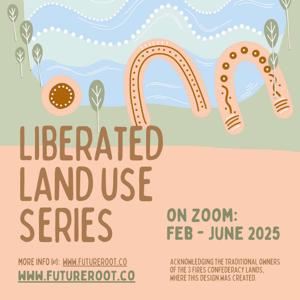
A conversation series exploring historical injustices in land, community practices around the world in stewarding land and housing, and envisioning futures of radical belonging and inclusion.