
Sign up to save your podcasts
Or



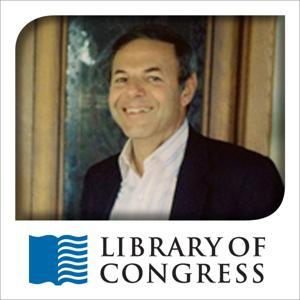
Mike Ashenfelder from the Library of Congress talks with Adam Farquhar about digital preservation with PLANETS.
BiographyAdam Farquhar is Head of Digital Library Technology at the British Library, where he co-founded the Library’s Digital Preservation Team and was a lead architect on the Library’s Digital Object Management system. He is Scientific Director of the EU-funded Planets Digital Preservation project, co-chair of the ECMA TC45 Standards Committee, serves on the Metadata Encoding and Transmission Standard Editorial Board, as well as on advisory groups for the JISC Repositories Program and the UK’s Digital Preservation Coalition. Prior to joining the Library, he was the principle knowledge management architect for Schlumberger (1998-2003), and a research associate at the Stanford Knowledge Systems Laboratory (1993-1998). He completed his PhD in Computer Sciences at the University of Texas at Austin (1993). Over the past twenty years, his work has explored ways to improve the way in which people can represent, find, use, exploit, and preserve digitally encoded knowledge.
Mike Ashenfelder from the Library of Congress talks with Linda Tadic about the challenges and practical solutions for archiving and preserving digital video.
BiographyLinda Tadic is Executive Director of Audiovisual Archive Network, an independent non-profit digital library and preservation service for historical sound and moving image collections. She also consults and lectures in the areas of digital asset management, audiovisual and digital preservation and metadata. She is an adjunct professor in New York University’s Moving Image Archiving and Preservation program. Tadic managed the Digital Library at Home Box Office (HBO), she was Director of the Media Archives and Peabody Awards Collection at the University of Georgia and Director of Operations for ARTstor. She is also a past President of the Association of Moving Image Archivists (AMIA).
Mike Ashenfelder from the Library of Congress talks with Chris Greer about the role of the federal government in science and information technology and about the Networking and Information Technology Research and Development program, the primary mechanism the federal government uses to coordinate its IT research.
BiographyChris Greer is Assistant Director for Information Technology Research and Development in the White House Office of Science and Technology Policy (OSTP). His responsibilities there include networking and information technology research and development, cybersecurity and digital scientific data access. Prior to joining OSTP, Dr. Greer was Director of the National Coordination Office for the Federal Networking and Information Technology Research and Development (NITRD) Program, which coordinates IT R&D investments across the Federal government. He is on assignment from the National Science Foundation where he has served in the Office of Cyberinfrastructure as Senior Advisor for Digital Data and in the Directorate for Biological Sciences.
Mike Ashenfelder from the Library of Congress talks with Babak Hamidzadeh, Director of Repository Development at the Library of Congress, about the challenges of building an efficient, scalable digital repository. Hamidzadeh describes how the Library’s repository works, future plans for the repository and its tools and what will be expected of IT professionals and digital librarians as their roles grow increasingly interdependent.
BiographyBabak Hamidzadeh is Director of Repository Development at the Library of Congress. Hamidzadeh is a computer scientist and former professor of Science and Technology at the University of Hong Kong and the University of British Columbia in Canada. His area of expertise is digital archives and electronic records management.
Mike Ashenfelder from the Library of Congress talks with Minnesota State Archivist Robert Horton about the challenges and success of making government electronic records available to the general public. Horton also talks about his work assisting other state archive in their digital preservation efforts.
BiographyRobert Horton is state archivist and director of the library, publications and collections division at the Minnesota Historical Society. Among other activities, he is on the advisory boards of the National Archives’ Electronic Records Archives; the College of St. Catherine’s Library and Information School; and the University of North Carolina’s Educating Stewards of Public Information project. Currently, he directs the Society’s National Digital Information and Infrastructure Preservation Program initiative, working with legislative digital content and its preservation; the immigrant oral history project and Minnesota’s participation in the National Newspaper Digitization project.
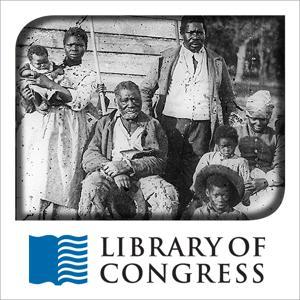
Mike Ashenfelder from the Library of Congress talks with Martin Halbert, Dean of Libraries at the University of North Texas about the role of collaboration in digital preservation projects. Halbert describes the process of creating the Transatlantic Slave Database and the MetaArchive consortium.
BiographyMartin Halbert, dean of libraries at the University of North Texas has worked in library administration and systems positions at University of North Texas, Emory University and Rice University. Halbert was an ALA/USIA Library Fellow stationed in Estonia assisting with the automation of the Tartu University Library. He is also president of the NDIIPP-funded MetaArchive Cooperative, an international consortium of research libraries and institutes that preserve digital archives in partnership with the Library of Congress.
From the publisher's feed
43 Listeners

9 Listeners

13 Listeners

12 Listeners

22 Listeners
0 Listeners