
Sign up to save your podcasts
Or

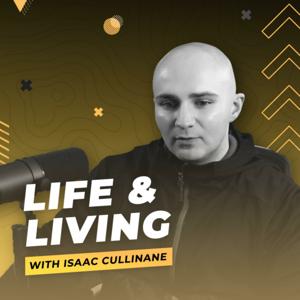


I moved to Thailand on a one-way ticket with a five-year visa and no clear plan. That amount of uncertainty made me notice how quickly the mind can invent a worst-case story—not because it’s true, but because certainty can feel safer than not knowing.
In this episode, I talk about catastrophizing, rumination and how stress, fatigue, hunger or dysregulation can distort the way we interpret a situation. Rumination can feel like problem-solving even when no new information is available, while anxiety can act like a fire alarm going off over burnt toast.
The answer isn’t forced positivity. It’s regulating first, returning to the facts later and trusting your own track record. You can leave a question unresolved while still trusting yourself to handle whatever turns out to be true.
I also share a recent example from Chiang Mai during burning season, when rest and a simple plan completely changed the shape of something that initially felt overwhelming.
A useful question: What do I actually know, and what has uncertainty added?
00:00 Moving to Thailand Without a Plan
00:35 Why We Invent Worst-Case Stories
02:10 Anxiety Is a Fire Alarm
03:20 When Rumination Pretends to Be Useful
04:34 Your State Shapes Your Perception
05:49 Trust Your Track Record
06:37 Catastrophizing in Chiang Mai
08:55 What Changed After I Rested
09:58 Leave Uncertainty Unresolved
I cancelled my Claude Max subscription after six months and switched to Codex Max. In this episode, I explain what changed: long-running agents, remote control from my phone, multiple parallel sessions and a simpler daily workflow for coding and general admin.
I show how I use agents to turn specs into plans, execute tasks that can run for hours, and review project goals, pull requests and tasks before starting work. Instead of staying at my laptop, I can step away and return only when Codex needs an approval, decision or final test.
I also compare the limitations I encountered with Claude, demonstrate Codex Remote with voice and computer control, check how the Max plan handles 10–20 active threads, and explain why GPT-5.6 has become comparable to Opus 4.8 for the work I do.
00:00 Switching to Codex
00:48 Agents and Long Tasks
01:36 Claude Limits Frustrations
02:36 Daily Remote Workflow
04:30 Codex Remote Wow
05:18 Max Plan Usage Check
05:46 Why Codex Feels Easier
06:50 Replacing Claude Setup
08:05 Codex Sessions and Tips
09:05 Time Saved and Quality
I tested whether Codex Computer Use and GPT Live could control my iPhone through iPhone Mirroring and order lunch using only my voice.
Codex opened Grab, found the restaurant, selected chicken quesadillas, removed an unwanted item and made it all the way to checkout. The limitation appeared at the final “Place order” button: Codex wouldn’t complete an action that could create a real charge, so I had to finish it myself.
I also explain why I switched from Claude to Codex, how I manage long-running work from my phone, and why starting fresh sessions for planning, execution and parallel work has changed my workflow.
Chapters
00:00 Ordering Lunch With Codex
01:03 Why I Switched From Claude
01:27 Session Management Superpower
02:23 Grab Order Attempt and Limits
05:07 Codex Remote Control Workflow
07:06 Voice-Driven Long Tasks Demo
07:43 Food Pickup and Final Thoughts
Connect on Socials
X/Twitter: https://x.com/isaac_cullinane
Overcoming Excuses: Personal Growth and AccountabilityIn this video, I discuss my preparations for combating the challenges of winter, focusing on the importance of avoiding excuses and maintaining motivation. I emphasize how excuses can become a detrimental pattern of behavior, hindering personal growth and progress. Through examples and reflections, I highlight the significance of taking responsibility, making small changes, and building better habits. By recognizing and addressing our own excuses, we can foster a mindset geared towards continuous improvement, regardless of external circumstances. Join me in exploring ways to stay motivated and accountable for a more productive and fulfilling life.00:00 Preparing for Winter: No More Excuses00:29 Breaking the Cycle of Excuses01:33 Taking Responsibility for Your Actions02:53 The Impact of Excuses on Your Life04:43 Making Small Changes for Big Results06:33 The Importance of Consistency08:42 Motivation vs. Determination10:09 Daily Habits and Micro Rewards14:14 Reflecting on Progress and Staying Mindful15:17 Final Thoughts and EncouragementConnect on SocialsX/Twitter: https://x.com/isaac_cullinane
Work with me → Book a call here
Let’s connect
X
YouTube
Instagram
Get this template (free)
Work with me → Book a call here
Let’s connect
X
YouTube
Instagram
Work with me → Book a call here
Let’s connect
X
YouTube
Work with me → Book a call here
Let’s connect
X
YouTube
Work with me → Book a call here
Let’s connect
X
YouTube
From the publisher's feed