
Sign up to save your podcasts
Or

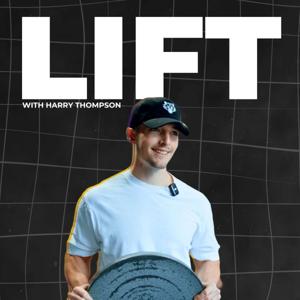


In this final episode of the Lift Podcast, Harry tackles the long-debated topic of training to failure. Does pushing every set to the max equal better gains, or is it holding you back? The answer might surprise you.
Key Takeaways:
🔥 Training to Failure: Fact vs. Fiction
✅ One set to failure? Slightly better growth.
❌ Multiple sets? Excess fatigue reduces long-term progress.
⚡ Why Too Much Fatigue Kills Gains
✅ Your body prioritizes recovery over growth when overstressed.
✅ Leaving 1 rep in reserve (RIR) gets you all the growth with less fatigue.
📊 How to Use Failure Correctly
✅ Check your RIR accuracy every few months by going to failure on one set.
✅ Save failure for the last exercise of a workout when it won’t affect your next moves.
✅ Progressive overload > training to failure. The goal is getting stronger over time.
Call to Action:
If you got value, do me a MASSIVE favour and subscribe to the LIFT podcast. We will never run ads here, so the only way this grows is through word of mouth.
If you want help to drop 5kg in the next 6 weeks and start putting on muscle FAST using science, send me a DM on Instagram with the word 'GAMEPLAN,' and I'll send you some details.
You can find my Instagram here: @Harry_tmp
Is muscle soreness a sign of a great workout or just a myth? In this episode, Harry busts the "no pain, no gain" mentality and breaks down how to train smarter, not harder for maximum muscle growth without unnecessary fatigue.
Key Takeaways:
💪 Muscle Soreness ≠ Muscle Growth
✅ Soreness is a side effect, not a measure of progress.
✅ Too much soreness = less growth as your body prioritizes repair over building.
📉 Train for Stimulus, Not Damage
✅ The goal is to maximize muscle activation while minimizing excessive damage.
✅ Sweet spot: 4-12 heavy working sets per muscle per week.
📈 Optimize Your Training Volume
✅ More isn’t always better—growth comes from what you can recover from.
✅ Adjust volume based on fatigue and recovery.
🎯 Find Your Optimal Training Range
✅ Even as little as 2 heavy sets per muscle per week can trigger growth.
✅ Monitor your sleep, protein intake, and recovery for sustainable progress.
Call to Action:
If you got value, do me a MASSIVE favour and subscribe to the LIFT podcast. We will never run ads here, so the only way this grows is through word of mouth.
If you want help to drop 5kg in the next 6 weeks and start putting on muscle FAST using science, send me a DM on Instagram with the word 'GAMEPLAN,' and I'll send you some details.
You can find my Instagram here: @Harry_tmp
Welcome back to The Lift Podcast with your host, Harry! Today, we’re diving deep into one of the biggest fitness myths—starvation mode. If you’ve ever felt like you’re doing everything right in a calorie deficit but suddenly stop losing fat, this episode is for you. We’ll break down the science behind adaptive thermogenesis, why your progress stalls, and what you can actually do to keep seeing results.
Key Takeaways:
🚨 Myth: Starvation Mode Stops Fat Loss
✅ Your body does not store fat out of thin air when you’re in a deficit.
✅ If you're not losing fat, you’re simply not in a deficit anymore due to natural metabolic adaptations.
⚙️ Why Your Progress Slows in a Deficit
✅ Your body adapts by reducing movement, making you feel more sluggish, and even lowering calorie burn.
✅ Less food = less glycogen = less energy for workouts = fewer calories burned.
✅ The longer you diet, the more your body resists fat loss.
🔄 How to Fix a Fat Loss Plateau
✅ Reverse the metabolic slowdown by increasing calories strategically (maintenance phase).
✅ The length of this phase depends on how extreme the adaptations are:
Mild plateau? 1 week of maintenance.
Severe stall & low energy? 3-4 weeks of maintenance.
✅ When you return to a deficit after resetting, fat loss will become easier again.
🧠 Mental Readiness Matters
✅ Before dropping back into a deficit, ask yourself:
Do I feel energized?
Am I motivated?
Can I stick to the plan without extreme cravings or bingeing?
Final Thoughts:
🔹 Starvation mode is a myth—but metabolic adaptation is real.
🔹 The key to long-term fat loss is knowing when to adjust your approach.
🔹 If you’re stuck in a plateau, strategic maintenance is the way out.
Call to Action:
If you got value, do me a MASSIVE favour and subscribe to the LIFT podcast. We will never run ads here, so the only way this grows is through word of mouth.
If you want help to drop 5kg in the next 6 weeks and start putting on muscle FAST using science, send me a DM on Instagram with the word 'GAMEPLAN,' and I'll send you some details.
You can find my Instagram here: @Harry_tmp
Welcome to The Lift Podcast, where we take the latest in exercise science and make it simple and actionable so you can lose fat faster and build muscle efficiently. In today’s episode, we’re breaking down the truth about the anabolic window—is it real, or just another fitness myth? Plus, new research reveals that carbs might be even more important than protein post-workout!
Key Takeaways:
🔹 The Anabolic Window IS Real—But Not How You Think
✅ The myth of the one-hour post-workout window is false—it’s actually 12+ hours.
✅ You don’t need to chug a protein shake immediately after your workout.
✅ What matters most? Hitting your total daily protein intake consistently.
🔹 New Study: Post-Workout Carbs Are KEY
🔥 A study tested two groups:
1️⃣ One had carbs immediately post-workout.
2️⃣ The other had carbs three hours later.
🔥 Result? The group who ate carbs right after training performed significantly better the next day.
🔹 Why Carbs Matter Post-Workout
💡 They rapidly restore glycogen, which fuels better recovery and performance.
💡 This is most important when cutting (in a deficit) to retain muscle while losing fat.
💡 To maximize results, time your carbs around workouts.
🔹 Practical Application: How to Use This
🍌 Instead of carrying a protein shake in your gym bag, pack a banana.
🥩 Pre-Workout: Have carbs to fuel your session.
🍚 Post-Workout: Eat carbs ASAP + a high-protein meal.
🚫 Rest of the day? You don’t need as many carbs—save them for when they’re most effective.
💪 Bottom Line: If you want to recover faster, train harder, and retain muscle while cutting, prioritize carbs immediately after your workout.
Call to Action:
If you got value, do me a MASSIVE favour and subscribe to the LIFT podcast. We will never run ads here, so the only way this grows is through word of mouth.
If you want help to drop 5kg in the next 6 weeks and start putting on muscle FAST using science, send me a DM on Instagram with the word 'GAMEPLAN,' and I'll send you some details.
You can find my Instagram here: @Harry_tmp
Key Takeaways:
🔹 More is NOT Always Better – The Truth About Training Volume
✅ Muscle growth is about stimulus, NOT excessive volume.
✅ You want maximum results with minimal fatigue—train hard, but don’t overdo it.
✅ More sets = more muscle only if you can recover from it.
🔹 Brand-New Study Findings (Still in Preprint!)
🔥 Two groups: One trained to failure, the other left 1-2 reps in reserve.
🔥 Both groups trained just 2 sets per muscle group per week… and still grew!
🔥 Proves that you don’t need high volume IF your intensity is high.
🔹 What’s the Optimal Training Volume?
🏋️ Sweet spot: 4-12 heavy sets per muscle per week.
If you're beginner-intermediate, 6-10 sets per week is ideal.
If you're advanced (lifting heavy & strong), 4-6 sets may be enough.
More volume = more growth ONLY IF you can recover.
🔹 The Real Key to Growth: Quality Over Quantity
💡 Your body first recovers from damage before it builds muscle.
💡 Too much volume = too much fatigue = less muscle growth.
💡 Train hard, push intensity, and focus on progressive overload.
💪 Bottom Line: Stop overcomplicating it. Train hard, recover well, and stay in the 4-12 set range for max results.
Call to Action:
If you got value, do me a MASSIVE favour and subscribe to the LIFT podcast. We will never run ads here, so the only way this grows is through word of mouth.
If you want help to drop 5kg in the next 6 weeks and start putting on muscle FAST using science, send me a DM on Instagram with the word 'GAMEPLAN,' and I'll send you some details.
You can find my Instagram here: @Harry_tmp
I post more exercise science made simple daily here!
Episode Summary:
In this episode of the Lift Podcast, we’re diving into new protein research that could change how you approach muscle growth, fat loss, and nutrition. A brand new study analyzed 29 protein studies, revealing how higher protein intake directly impacts muscle retention and growth—especially in a deficit. If you're trying to get lean without losing muscle, this episode breaks down what you need to know!
Key Takeaways:
🔹 Higher Protein Intake = More Muscle Retention & Growth
The study found a linear relationship between protein intake and muscle retention.
The more protein participants consumed (up to 4g/kg body weight), the better they preserved lean mass during fat loss.
🔹 The Best Protein Targets Based on Your Goals:
📉 If You’re in a Caloric Deficit:
2.5g - 3.0g/kg of body weight for max muscle retention & fat loss.
The more aggressive your deficit, the more protein you should aim for.
📈 If You’re at Maintenance or in a Surplus:
2.0g/kg of body weight is ideal—your body has enough resources to maintain muscle.
No need to go excessively high on protein when calories aren’t restricted.
🔹 Why This Matters in a Deficit:
When in a calorie deficit, your body can break down muscle for energy.
Higher protein intake prevents muscle loss by ensuring your body has enough amino acids.
The worst-case scenario? Excess protein just becomes extra energy—it won’t hurt you!
🔹 Protein vs. Fats vs. Carbs: Finding the Balance
✅ You need a minimum amount of fat (0.5g/kg of body weight) for hormone health.
✅ Carbs fuel gym performance, so don’t eliminate them entirely.
✅ Protein should increase in priority the deeper your deficit gets.
Call to Action:
If you got value, do me a MASSIVE favour and subscribe to the LIFT podcast. We will never run ads here, so the only way this grows is through word of mouth.
If you want help to drop 5kg in the next 6 weeks and start putting on muscle FAST using science, send me a DM on Instagram with the word 'GAMEPLAN,' and I'll send you some details.
You can find my Instagram here: @Harry_tmp
I post more exercise science made simple daily here!
In this episode of the Lift Podcast, Coach Harry breaks down the truth about the mind-muscle connection and why it’s not the key driver of muscle growth. If you've ever worried about not "feeling the burn" or struggled with knowing if you're working the right muscles, this episode will clear up all the misconceptions and show you what actually matters for muscle building.
Key Takeaways:
🔹 What is the Mind-Muscle Connection?
The ability to feel a muscle working during an exercise. While it can be beneficial, it’s not essential for muscle growth.
🔹 The #1 Driver of Muscle Growth
Forget the pump or the burn—the only things that matter are:
1️⃣ Mechanical tension (lifting progressively heavier weights)
2️⃣ Progressive overload (doing more reps or adding weight over time)
🔹 You Don’t Need to Feel a Muscle for It to Grow
Your muscles have to work in order to complete a movement.
If you’re progressively getting stronger on an exercise, the target muscle is growing.
Lifting heavier might reduce how much you feel the muscle, but that doesn’t mean it’s not working.
🔹 Don’t Fall into the Mind-Muscle Connection Trap
🚫 Never sacrifice heavier weights or progress just to "feel" the muscle more.
🚫 Reducing weight just to get more pump slows down your progress.
🔹 The Right Approach?
✅ Use the mind-muscle connection when possible, but don’t stress if you don’t feel it.
✅ Focus on proper technique—good form ensures the right muscle is working.
✅ Keep your eyes on the real goal: getting stronger over time.
Call to Action:
If you got value, do me a MASSIVE favour and subscribe to the LIFT podcast. We will never run ads here, so the only way this grows is through word of mouth.
If you want help to drop 5kg in the next 6 weeks and start putting on muscle FAST using science, send me a DM on Instagram with the word 'GAMEPLAN,' and I'll send you some details.
You can find my Instagram here: @Harry_tmp
I post more exercise science made simple daily here!
In episode four of the Advanced Training Series, Coach Harry breaks down resistance profiles—one of the most misunderstood concepts in training. Many lifters unknowingly select exercises that limit their muscle growth potential, especially as they become more advanced. Understanding how resistance changes throughout a movement allows you to optimize your training, reduce fatigue, and maximize hypertrophy.
Key Takeaway:
The resistance profile of an exercise dictates where in the movement it is most difficult and least difficult. As you advance in your training, optimizing this can make a difference in how efficiently you build muscle.
✅ Best-case scenario: The hardest part of the movement should be in the lengthened (stretched) position.
✅ Second-best scenario: Even resistance throughout the movement.
✅ Worst-case scenario: Most resistance in the shortened (contracted) position (e.g., dumbbell lateral raises).
Optimized Exercise Selection Examples:
🔹 Lateral Raises: Swap dumbbells for cables or machines to better load the lengthened position.
🔹 Bicep Curls: Use incline dumbbell curls, preacher curls, or cables instead of standard dumbbell curls.
🔹 Chest Presses: Avoid machines with poor resistance profiles (e.g., Hammer Strength Incline). Dumbbells or cables may be better.
🔹 Back Rows: Consider chest-supported rows or Smith machine incline rows for better stability and resistance control.
Does This Make a Huge Difference?
Not at first! Progressive overload (getting stronger) is responsible for 90% of muscle growth. But as you advance, optimizing your resistance profiles can enhance your training efficiency and speed up your gains.
Call to Action:
If you got value, do me a MASSIVE favour and subscribe to the LIFT podcast. We will never run ads here, so the only way this grows is through word of mouth.
If you want help to drop 5kg in the next 6 weeks and start putting on muscle FAST using science, send me a DM on Instagram with the word 'GAMEPLAN,' and I'll send you some details.
You can find my Instagram here: @Harry_tmp
I post more exercise science made simple daily here!
In this episode of the Lift Podcast, Coach Harry breaks down one of the biggest misconceptions in training—intensifiers. Many believe that drop sets, super sets, and other intensity techniques are what define advanced training. However, the truth is the most effective way to grow muscle is through mechanical tension and progressive overload, not the pump, pain, or metabolic stress. Learn why simplicity beats complexity in muscle growth and how focusing on strength progression will get you to your goals faster.
Key Takeaway:
The primary drivers of muscle growth are:
Many people overcomplicate their training with excessive intensity techniques, but the most advanced lifters are simply those who have trained smart and consistently for years. To maximize gains, focus on:
✅ Straight sets with proper rest
✅ Lifting in a 5-8 rep range for optimal strength & muscle growth
✅ Minimizing fatigue while maximizing stimulus
✅ Using intensifiers sparingly (e.g., drop sets only when needed)
Forget chasing the pump or soreness—progressive overload is king.
Call to Action:
If you got value, do me a MASSIVE favour and subscribe to the LIFT podcast. We will never run ads here, so the only way this grows is through word of mouth.
If you want help to drop 5kg in the next 6 weeks and start putting on muscle FAST using science, send me a DM on Instagram with the word 'GAMEPLAN,' and I'll send you some details.
You can find my Instagram here: @Harry_tmp
I post more exercise science made simple daily here!
Episode Summary:
In Episode 2 of the Advanced Training Series on the Lift Podcast, Coach Harry breaks down exercise redundancy—a concept that becomes increasingly important as you advance in your training. Many lifters unknowingly waste effort by doing different exercises that actually target the same muscle fibers at the same joint angles, leading to excessive fatigue without additional growth. This episode explains how to eliminate redundancy, optimize your exercise selection, and get more stimulus with less fatigue for faster muscle growth.
Key Takeaway:
As you become more advanced, every set matters. Instead of repeating the same movement pattern (e.g., a flat dumbbell press followed by a flat machine press), vary your joint angles and movement patterns to maximize muscle recruitment and minimize unnecessary fatigue. Simple adjustments—like switching from a flat press to an incline press or from a back squat to a split squat—can drastically improve results.
Call to Action:
If you got value, do me a MASSIVE favour and subscribe to the LIFT podcast. We will never run ads here, so the only way this grows is through word of mouth.
If you want help to drop 5kg in the next 6 weeks and start putting on muscle FAST using science, send me a DM on Instagram with the word 'GAMEPLAN,' and I'll send you some details.
You can find my Instagram here: @Harry_tmp
I post more exercise science made simple daily here!
From the publisher's feed