
Sign up to save your podcasts
Or

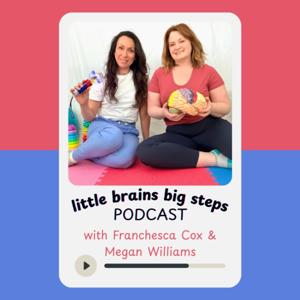


In this episode, Megan and Franchesca explore the tactile system—our sense of touch—and its critical role in sensory development and MNRI work. They break down the three types of touch (discriminative, nociceptive, and proprioceptive), how touch relates to reflex integration, and the calming power of deep pressure. They also discuss how the brain interprets touch and its emotional impact, especially for children navigating trauma or sensory sensitivities.
This podcast episode of Little Brains Big Steps features hosts Franchesca Cox, an occupational therapist, and Megan Williams, a speech-language pathologist, exploring the auditory system and its role in childhood development. They break down how the auditory system works, its connection to other sensory systems, and how challenges in auditory processing can impact focus, learning, and communication. The hosts share common signs of auditory processing difficulties and offer practical strategies for support in everyday settings.
Join Franchesca and Megan as they dive into the real meaning of vision—and spoiler alert, it’s way more than just seeing clearly.
In this episode, we're chatting all about visual processing—how the brain makes sense of what the eyes see—and why it matters for everything from learning to moving, talking, and even eating. We’ll break down the brainy stuff in a super relatable way and share red flags to look out for, plus simple strategies you can try at home.
💡 You’ll hear about:
How vision works in the brain (not just the eyes!)
Common signs of visual processing challenges
The link between vision, learning, speech & motor skills
How the visual and vestibular systems are besties
Real-life tips + cool research insights
Whether you're a parent, therapist, or just curious—this convo will help you “see” things in a whole new way. 👓
Hit play and come hang with us!
And don’t forget to leave a review so more families can find us!
Show notes
Occupational therapist Franchesca Cox and speech-language pathologist Megan Williams, both based in Houston, Texas, discuss pediatric therapy on their podcast Little Brain's Big Steps. They explore topics like the vestibular system, its role in balance, spatial awareness, and movement coordination, and its connection to other sensory systems. They highlight research showing vestibular dysfunction is common in children with conditions like cerebral palsy, autism, and traumatic brain injuries. They emphasize the importance of early intervention, therapy techniques, and educating families on how sensory processing affects daily life.
In this episode, Megan Williams and Franchesca Cox delve into the two main categories of proprioceptive processing in children. They discuss children with hypersensitive proprioceptive systems, who avoid movement and struggle with postural control, and those with under-responsive systems, who seek out intense physical activity and have difficulty with body awareness. The conversation highlights how these sensory differences impact play, behavior, and social-emotional development.
This podcast episode of Little Brains Big Steps features hosts Franchesca Cox, an occupational therapist, and Megan Williams, a speech-language pathologist, discussing the importance of seating and positioning for children with developmental delays. They welcome industrial designer Alex Geht, the creator of the Testa Seat, a customizable and versatile seating solution for children with special needs. Geht shares his journey into adaptive seating design, identifying gaps in existing solutions, and how Testa Seat enhances accessibility, comfort, and family participation. The conversation highlights real-life success stories, the role of seating in communication and feeding, and advice for parents seeking the best seating options for their children.
In this episode of "Little Brains Big Steps," host Megan Williams interviews Franchesca Cox, an expert in pediatric motor development, to explore various therapeutic approaches for children. Franchesca shares her journey into pediatric therapy, highlighting her passion for movement-based interventions that promote independence and mobility.
The discussion delves into several key therapies:
Franchesca emphasizes the importance of individualized therapy plans and the positive outcomes these approaches can yield.
Resources:
DMI Therapy
TheraSuit
What is TASES?
Episode Shownotes
In this episode, host Franchesca interviews her co-host, Megan Williams, about her expertise in MNRI (Masgutova Neurosensorimotor Reflex Integration), reflex integration, and feeding therapy. Megan shares her journey into pediatric therapy, how she became an MNRI core specialist, and her passion for the brain-body connection in feeding.
Listeners will gain insight into how reflexes impact motor control, communication, and eating, as well as Megan’s unique approach to sensory-motor feeding therapy. She provides valuable advice for parents navigating feeding challenges, emphasizing the importance of creating a safe and supportive experience.
Megan also shares success stories of children making breakthroughs in feeding through reflex integration, offering encouragement to families. The episode wraps up with a fun quick-fire Q&A and a call to action for listeners to engage with their own questions and stories.
Tune in for an inspiring and informative conversation that empowers parents to support their children’s development!
In this conversation, Megan Williams, a speech language pathologist, discusses the concept of neuroplasticity and its significance in therapy for children facing various challenges. She emphasizes the importance of tailored therapy techniques, real-life success stories, and the role of families in supporting neuroplasticity at home. The discussion also addresses common myths surrounding neuroplasticity and the understanding of progress in therapy, highlighting that change may not always be immediately visible but is nonetheless occurring beneath the surface.
See Show Notes
Keywords
neuroplasticity, therapy, children, speech language pathology, feeding challenges, sensory processing, MNRI, DMI, TheraSuit, home exercises
Takeaways
Resources Mentioned
Atomic Habits by James Clear
One Thing by Gary Keller
The Brain's Way of Healing: Remarkable Discoveries and Recoveries from the Frontiers of Neuroplasticity by Norman Doidge
The Brain That Changes Itself: Stories of Personal Triumph from the Frontiers of Brain Science
Chapters
00:00 Understanding Neuroplasticity
01:51 Neuroplasticity in MNRI Therapy
05:10 Supporting Neuroplasticity at Home
09:41 Myths and Misconceptions of Neuroplasticity
17:48 Partnered Progress Intensive With Megan and Franchesca
25:44 Key Takeaways on Neuroplasticity
27:33 Medical Disclaimer
27:54 Insights for Parents
In this conversation, Franchesca Cox and Megan Williams delve into the concept of neuroplasticity and its significance in therapy for children facing various challenges. They discuss how neuroplasticity allows the brain to reorganize itself and adapt after injuries, emphasizing the importance of early intervention and intensive therapy. The conversation highlights different therapeutic modalities, including DMI and MNRI, and their effectiveness in promoting neuroplasticity. Real-life success stories illustrate the profound impact of these therapies on children's development and recovery.
See Show Notes
Keywords
neuroplasticity, therapy, children, early intervention, DMI, MNRI, TheraSuit, sensory processing, brain recovery, reflex integration
Takeaways
Resources Mentioned:
Paul Bach-y-Rita on Neuroplasticity
PPI intensives
Chapters
00:00 Understanding Neuroplasticity
01:46 Breaking Down Neuroplasticity in Therapy with Children
07:35 What the Research is Saying About Neuroplasticity
07:53 The Role of Intensive Therapy
10:15 Using Mirror Therapy With Children
14:05 Research and Evidence in Therapy
16:49 Partnered Progress Intensives
18:22 Therapeutic Approaches and Neuroplasticity
22:36 DMI Therapy and Neuroplasticity
27:19 Real-Life Success Stories
30:50 Unlocking Potential Through Neuroplasticity
32:20 Medical Disclaimer
32:39 Insights for Parents
From the publisher's feed