
Sign up to save your podcasts
Or

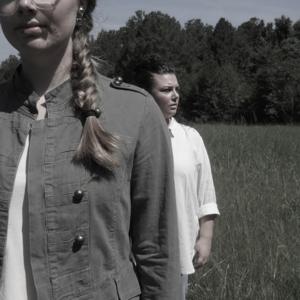


How much of what we think we know about another person actually came from them?
In The Living Room, Kaylee and Gabbi look at the versions we make of other people from incomplete information...and what happens when those versions begin to feel more convincing than the people themselves.
Through childhood friendships, family memories, celebrity crushes, and the experience of being interpreted by other people, this episode asks where ordinary observation becomes assumption, what happens when someone contradicts the version we've made of them, and whether knowing more about someone necessarily means knowing them better.
This episode interprets cultural patterns and personal experiences, not individual intent.
READING/SOURCES
Roland Barthes - Mythologies
Primary reading informing the episode's thinking about myth, interpretation, and the ways constructed meanings can begin to feel natural.
Jia Tolentino - Trick Mirror: Reflections on Self-Delusion
Supporting reading on self-perception, performance, and the relationship between people and the images made around them.
TEXTURE/COMPANION VIEWING
Cindy Sherman - Untitled Film Stills
A visual reference during the development of the episode, particularly around image, character, recognition, and what a viewer supplies when looking at another person.
SOUND
Original recording, room tone, editing, and sound design by Kaylee Graye.
Additional television/sound effects sourced from pixabay.
VOICES
Kaylee Graye - Host/Writer
Gabrielle Graye - Co-host
Personal stories in this episode are presented from the speakers' own memories and perspectives. Recollections of other people are not intended as comprehensive accounts of those individuals.
PRODUCTION
Written and produced by Kaylee Graye
Featuring Gabrielle Graye
Edited and sound designed by Kaylee Graye
Living in the Graye
A NOTE ON AI
Living in the Graye is conceived, researched, narrated, and produced by Kaylee Graye. The experiences, interpretations, questions, and editorial perspective expressed in the series are her own.
Generative AI tools were used during development as editorial aid, including for organizing research and notes, testing structure, and assisting with portions of drafting and revision. AI-generated material is reviewed, revised, and selected by the creator before publication. AI is not used as a substitute for the primary texts cited in the episode or represented as an independent source of factual authority.
What if shame is something we learn before we know we're learning it?
In The Kitchen, Kaylee and Gabbi look at the rules that become ordinary through repetition: the things everybody seems to know, the corrections that don't always need to be spoken, and what happens when those rules follow us long after we've left the place where we learned them.
Through memories of church, family, school, clothing, and the small ways people learn to monitor themselves, this episode asks whether shame is only something we feel...or whether it can become part of the structure we move through.
And then Gabbi complicates the question: what if some of those rules were useful?
This episode interprets cultural patterns and personal experiences, not individual intent.
READING/SOURCES
Brene Brown - I Thought It Was Just Me (But It Isn't): Making the Journey from "What Will People Think?" to "I Am Enough" (Gotham Books, 2007).
Primary reading informing the episode's examination of shame, belonging, judgement, and the experience of feeling that something is wrong with the self.
Christina Sharpe - In the Wake: On Blackness and Being
Supporting reading, particularly Sharpe's writing on atmosphere. The episode draws carefully from the broader idea of conditions becoming ambient rather than treating Sharpe's specific historical and racial analysis as interchangeable with the experiences discussed in the episode.
TEXTURE/COMPANION READING
Vern Rutsala - "Shame"
as reprinted in Brene Brown, I Thought It Was Just Me (But It Isn't) (Gotham Books, 2007). A brief excerpt is read in connection with the episode's discussion of shame.
VOICES
Kaylee Graye - Host/Writer
Gabbi Graye - Co-host
The personal stories in this episode are told from the speakers' own memories and perspectives. Events remembered from childhood are not intended as comprehensive accounts of the other people involved.
PRODUCTION
Written and produced by Kaylee Graye
Featuring Gabrielle Graye
Edited by Kaylee Graye
Living in the Graye
A NOTE ON AI
Living in the Graye is conceived, researched, narrated, and produced by Kaylee Graye. The experiences, interpretations, questions, and editorial perspective expressed in the series are her own.
Generative AI tools were used during development as an editorial aid, including for organizing research and notes, testing structure, and assisting portions of drafting and revision. AI-generated material is reviewed, revised, and selected by the creator before publication. AI is not used as a substitute for the primary texts cited in the episode or represented as an independent source of factual authority.
In today's episode, we explore the question: What do we inherit from a place before we understand what it has given us?
In the first room of Living in the Graye, Kaylee returns to the house she grew up in and to the unstable boundary between shelter and belonging. With her sister Gabbi, she considers what a childhood home can hold: family, faith, embarrassment, improvisation, memory, and the strange ways we learn to make refuge inside places we didn't choose.
The Threshold is an episode about the first places that teach us how to live and what happens when we begin looking at them from the outside.
Sources & Further Reading
Gaston Bachelard, The Poetics of Space, trans. Maria Jolas (Penguin Classics), p. 27.
bell hooks, Belonging: A Culture of Place. Routledge.
Toni Morrison, "The Site of Memory," in Inventing the Truth: The Art and Craft of Memoir, ed. William Zinsser.
Music
"What I Left to Find" -- Victor Lundberg, licensed through Epidemic Sound.
A NOTE ON AI
Living in the Graye is conceived, researched, narrated, and produced by Kaylee Graye. The experiences, interpretations, questions, and editorial perspective expressed in the series are her own.
Generative AI tools were used during development as an editorial aid, including for organizing research and notes, testing structure, and assisting portions of drafting and revision. AI-generated material is reviewed, revised, and selected by the creator before publication. AI is not used as a substitute for the primary texts cited in the episode or represented as an independent source of factual authority.
From the publisher's feed