
Sign up to save your podcasts
Or

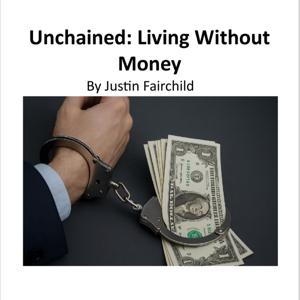


Today we continue with the third and final section of Chapter 9 in The Gift by Lewis Hyde, titled “Saplings.” In this moving and deeply human chapter, we see Walt Whitman emerge not just as a poet of the people — but as a man shattered open by love, illness, grief, longing… and, ultimately, trees.
In this episode, we continue our deep dive into Chapter 9 of The Gift by Lewis Hyde. We now step into Section II: Adhesive Riches—a dense, lyrical meditation on how Walt Whitman envisioned wealth, value, and the adhesive force of love and democracy.
This episode is about the power of lineage, inheritance, and art — not as property or product, but as a sacred continuation. We’ll follow Hyde’s reflections on Walt Whitman and what it means to give from beyond the grave, to sow gifts that continue sprouting long after we’re gone.
In this episode of Living Unchained, we explore Lewis Hyde’s reflections on the complex relationship between creativity and commerce. Can art survive — or even thrive — in a marketplace that prizes profit over depth? We look at how the exchange of money can alter the spirit of the gift, why some artists struggle when their work enters the market, and how creative communities have found ways to keep the gift alive in a world driven by sales. Along the way, we connect these ideas to the vision of a moneyless society, where art is valued not for what it earns, but for how it enriches the human spirit.
In this episode, we dive into Chapter 7 of The Gift—“Usury: A History of Gift Exchange.” Hyde explores how ancient lending practices rooted in reciprocity were slowly overtaken by interest-based systems that commodified human relationships. From Mesopotamian temples to modern banking, we trace the shift from mutual aid to profit-driven debt. Join us as we reflect on what was lost—and what a moneyless society might recover—when we choose generosity over gain.
In this episode, we explore Chapter 6 of The Gift by Lewis Hyde—“A Female Property.” Hyde takes us through cultural traditions where women were both givers and gifts in exchange systems, exploring the complex relationship between gender, value, and social structure. Join us as we unpack how these historical patterns shape our understanding of value today—and how a moneyless world might reimagine them.
In this episode, we explore Lewis Hyde’s reflections on the structure of gift communities—those tightly woven circles of reciprocity where relationships and meaning take priority over profit. After narrating the chapter, we unpack the implications for a post-monetary world, and how communities like yours and mine are already walking that path. This discussion deeply connects to the vision shared in Unchained: Living Without Money and offers a grounding in what it truly means to live the gift.
What happens when a gift is refused—or cannot be returned? This chapter explores the painful edges of gift exchange: obligation, imbalance, and rejection. In this episode, we reflect on the discomfort of nonreciprocal giving, and how modern society sometimes views true generosity with suspicion. Connecting with Unchained, we consider the social costs of living in a world where value is measured only in economic terms.
How does an artist survive in a world ruled by the market? In Chapter 3, Hyde digs deeper into the dilemma of the modern creative. This episode reflects on the artist’s double life—called by the muse, but bound by rent. Through stories of writers, musicians, and painters, we explore how the spirit of the gift continues to resist commodification. As in Unchained, we ask: What would it look like to build a society that sustains creativity without price tags?
Chapter 2 examines the uneasy tension between gift and market economies. Hyde reveals how the labor of art often exists in a space where monetary compensation falls short. In this episode, we reflect on the spiritual and social role of the gift—how sustaining creativity demands not just material support but a cultural ethic of mutual care. Drawing parallels with Unchained, we explore how honoring the gift can free us from systems of exploitation.
From the publisher's feed