
Sign up to save your podcasts
Or

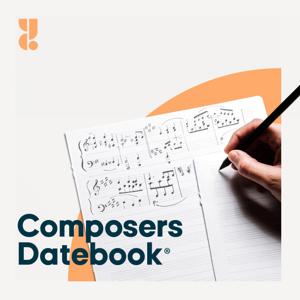

1685 was a good year for composers: Bach, Scarlatti and Handel were all born in 1685, as was, on today’s date, Italian composer Lodovico Giustini.
Like Bach, Giustini came from a family of musicians, and he began his career by succeeding his father as church organist, eventually landing the prize organ post at his hometown cathedral, a position he retained for the rest of his life. Giustini also took up a new-fangled keyboard instrument known as the forte-piano, which, unlike the harpsichord, struck the instrument’s strings with small hammers rather than plucking them like a harp. This new technology allowed music to be played loud and soft (piano and forte), with a more nuanced range of dynamics and phrasing.
Giustini’s claim to fame is that in 1732 he published the first collection of sonatas written specifically for the instrument we now call the piano. Although Giustini’s sonatas attracted little attention when they were first published, since only a few wealthy royals could afford to own these new and expensive instruments, over the next two centuries thousands of pianos — and piano sonatas — began appearing in even the most modest of musical households.
Lodovico Giustini (1685-1743) Canzona, from Sonata No. 12; Andrea Coen, fortepiano Brilliant Classics 94021
 View all episodes
 By American Public Media

4.7
176176 ratings
1685 was a good year for composers: Bach, Scarlatti and Handel were all born in 1685, as was, on today’s date, Italian composer Lodovico Giustini.
Like Bach, Giustini came from a family of musicians, and he began his career by succeeding his father as church organist, eventually landing the prize organ post at his hometown cathedral, a position he retained for the rest of his life. Giustini also took up a new-fangled keyboard instrument known as the forte-piano, which, unlike the harpsichord, struck the instrument’s strings with small hammers rather than plucking them like a harp. This new technology allowed music to be played loud and soft (piano and forte), with a more nuanced range of dynamics and phrasing.
Giustini’s claim to fame is that in 1732 he published the first collection of sonatas written specifically for the instrument we now call the piano. Although Giustini’s sonatas attracted little attention when they were first published, since only a few wealthy royals could afford to own these new and expensive instruments, over the next two centuries thousands of pianos — and piano sonatas — began appearing in even the most modest of musical households.
Lodovico Giustini (1685-1743) Canzona, from Sonata No. 12; Andrea Coen, fortepiano Brilliant Classics 94021

6,774 Listeners

38,890 Listeners

8,772 Listeners

9,216 Listeners

5,777 Listeners

928 Listeners

1,388 Listeners

1,287 Listeners
3,156 Listeners

1,975 Listeners
523 Listeners
183 Listeners

13,770 Listeners

3,082 Listeners

248 Listeners
28,116 Listeners

430 Listeners

5,467 Listeners
2,196 Listeners

14,146 Listeners

6,417 Listeners
2,513 Listeners

4,840 Listeners

575 Listeners

243 Listeners