
Sign up to save your podcasts
Or



Lecture Summary
This lecture talks about my opinions and experience treating COVID19 in the outpatient, inpatient, and ICU setting.
Key Points
- Public health is always more important than clinical medicine for the health of any population.
- So much information has changed so rapidly regarding COVID19, we need to focus on what really matters.
- Everything about Remdesivir points to a drug that works very poorly or not at all. From my perspective it looks like the manufacturers are delaying the real evidence to try and make big bucks before the truth comes out. I predict no mortality benefit.
- 80s are the new 90s for oxygen saturation. Consider proning patients early and for at least 16 hours a day if tolerated.
References
This lecture is for the most part based on my opinions and experiences. I do cite a few things in the text. But please take everything in this lecture as mostly my opinion!
- CDC, available at https://www.cdc.gov/coronavirus/2019-ncov/index.html
- WHO, available at https://www.who.int/emergencies/diseases/novel-coronavirus-2019?gclid=CjwKCAjwsO_4BRBBEiwAyagRTXlcLwmvRu9TKu22ZWDMcoK1zlS_IlUELlb6_1EdUcvuWtpKlJQnmxoCtx4QAvD_BwE
- Beigel et al. Remdesivir RCT. NEJM. 2020
- My experience living through the past 7 months
Lecture Summary
Learn about pathological, immature, and mature defense mechanisms in part 2 of the crazy inside all of us!
Key Point
- All of us have unacceptable impulses, emotions, desires, and anxieties which would be unacceptable to act upon.
- Our unconscious minds deploy a number of tactics, most notably defense or coping mechanisms to protect our rational minds from these anxiety provoking stimuli.
- Pathological defense mechanisms discussed include delusional projection, denial, and distortion.
- Immature defense mechanisms discussed include idealization, introjection, passive aggressive, withdrawal, social comparisons (racism), regression, acting out, projection, fantasy, somatization, conversion, repression, intellectualization, dissociation, and reaction formation.
- Mature defense mechanisms discussed include altruism, humor, sublimation, and suppression.
References
- First Aid for Step 1, Medical Board Exam Review Book
- Sigmund Freud
- Utah Psych Defense Mechanisms. Available at: http://www.utahpsych.org/defensemechanisms.htm
- DSM5, personality disorder section
- Wikipedia, defense mechanisms
- Personal experience treating and dealing with crazy people
- The crazy inside me
Lecture Summary
This podcast reviews the 10 personality disorders listed in the DSM5.
Key Points
1. Personality disorders are mental health disorders characterized by maladaptive patterns of behavior present throughout an individuals life. They cannot be explained by substance abuse or other mental health disorders and typically cause serious hardship.
2. They are divided into 3 categories, odd, dramatic, and anxious.
3. Recognizing these personality disorder traits in ourselves and those around us can help us become better people and better providers.
References
- Diagnostic and Statistical Manual of Mental Disorders 1, 2, 3, 4, and 5. American Psychiatric Association.
- Guze S. Criminality and Psychiatric Disorders. Oxford University Press. New York. 1976.
- World Health Organization, Personality Disorders.
- Wikipedia
- Personal experience treating and dealing with crazy people
- The crazy that lives inside me!
Lecture Summary
This four-part podcast reviews all of the current recommendations for preventative screening by the USPSTF. Many key concepts, interesting pearls, and opinions to facilitate discussion will also be included.
Key Points
· Disease prevention is very important and often underutilized
· Recommendations are not static, they are constantly changing due to factors like disease prevalence, tests available, and new research. Doctors should consider reviewing preventative screenings at least every couple years in order to stay current, maybe more.
· “Expert” panels like the USPSTF are often unable to agree with each other. Discordances exist, largely due to insufficient evidence. The pervasive influence of money must always be considered as well when evaluating such discordances.
· Every medical provider should be familiar with the most efficacious screenings. These screening should be discussed with and offered to appropriate patients.
· Stop doing things shown to cause more harm than benefit
· Support more research. If no one is studying something important, consider studying it yourself!
· For patient oriented education, see the corresponding blog post available at WanderMedicine.com.
References
- United States Preventative Service Task Force. (https://www.uspreventiveservicestaskforce.org/uspstf/).
- United States Preventative Service Task Force. Wikipedia. (https://en.wikipedia.org/wiki/United_States_Preventive_Services_Task_Force)
- CDC Childhood Vaccine Recommendations. (https://www.cdc.gov/vaccines/schedules/hcp/imz/child-adolescent.html)
- Federal Advisory Committee. Recommended Uniform Screening Panels. (https://www.hrsa.gov/advisory-committees/heritable-disorders/rusp/index.html)
- Achievement in Public Health, 1900-1999: Healthier Mothers and Babies. MMWR. CDC publication. 1999.
- Additional references were utilized and cited orally during the podcast.
Lecture Summary
Full scope is a free medical podcast designed to educate those working or training to work in healthcare. The target audience includes physicians, advanced practice providers, nurses, medical assistants, therapists of all types, students, administrators, and anyone else working in healthcare. However, anyone willing to listen is encouraged to. Education is something we carry with us wherever we go and it is immediately apparent to anyone we communicate with.
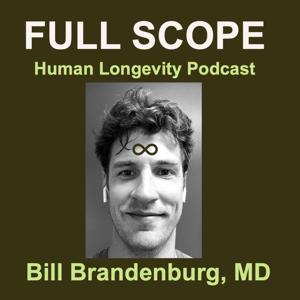
The writer and voice of Full Scope is Dr. Bill Brandenburg, a Board Certified, Family Medicine physician.
Bill Practices “full scope” medicine. This means he takes care of adults, children, and obstetric patients both in the acute and chronic care settings. It also means he provides medical care with no or limited input from specialist providers. A Full scope practice is often a necessity in rural areas. However many urban providers may also enjoy a broad scope of practice for a variety of different reasons.
As a full scope provider, one must be knowledgeable about all of medicine. As such, Full Scope will attempt to cover topics relating to every field of medicine. Additionally full scope will cover various topics related to general health, the business of medicine, teamwork, philosophy, and science in general.
This podcast is designed to make you more knowledgable in the applied science of medicine, improve your clinical judgment, and change the way you think about medicine, society, the environment, and the future of mankind.
Key Points
1. Bill Brandenburg is a Medical Doctor. He works as a rural hospitalist. He also owns and operates a outpatient medical clinic Wander Medicine.
2. Full Scope is a free podcast, which will cover topics related to health and medicine. It may also cover other topics related to science, business, and philosophy.
3. The content will be thought provoking and often very controversial. Medicine is bankrupting and killing people. Hard to fix a mess without making things a bit dirtier at the start.
4. A new episode will be released bi-weekly (approximately). Episodes will typically be 10 – 20 minutes long
5. Free online medical education has been become a fundamental part of modern medical education.
6. Thank you so much to the below podcasts. You have done so much for everyone in the medical industry! If you have not been following the below podcasts, strongly consider giving them a listen. Also, consider listening to medical podcasts, which cover content, outside of your scope of practice. Learning from other disciplines will make you much better at your own.
7. Most medical podcasts currently come from providers working in academic settings. Full Scope comes from a rural community doctor’s point of view. This should provide a new prospective for listeners.
8. Every podcast episode will have an accompanying patient oriented blog post on our clinic website, wandermedicine.com, under the “blog” tab.
9. If the podcast or the blog are helpful to you or anyone you know, please share them. We want people to use our knowledge to better the world, just as we have been using knowledge from others to do the same for many years.
From the publisher's feed
Longevity is the ultimate expression of human health. This podcast is for those rare individuals that seek to optimize their long term health and performance. No false promises, empty claims, or…