
Sign up to save your podcasts
Or

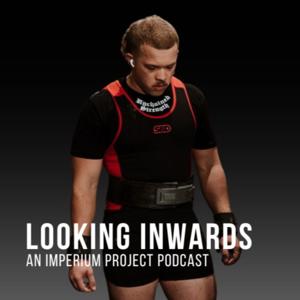


Complaining is easy. It gives us something external to blame when things don’t go the way we want them to.
But what if a lot of the things we complain about are actually just things we haven’t learned to tolerate yet?
In this episode, I break down why we complain, what sits underneath it, and how comfort can slowly make us less capable of dealing with discomfort. From fatigue, cold mornings and difficult training sessions to uncertainty, failure and being new at something, the goal isn’t to make life easier — it’s to become better at handling what life gives you.
I talk through lessons I’ve taken from powerlifting, coaching, journaling, and conversations with people who have helped me look more honestly at pain, discipline and self-awareness.
If you can endure it, endure it.
Stop looking for every reason why something shouldn’t be happening to you, and start asking what the situation is trying to teach you.
The first time you do anything probably isn't going to be great.
Your first lift. Your first run. Your first coaching session. Your first podcast. Your first difficult conversation.
We put so much pressure on ourselves to be good at things we've barely had any experience doing. But you can't skip the awkward stage. You can't think your way into competence. At some point, you have to be willing to be a beginner.
In this episode, I talk through my own experiences with powerlifting, landscaping, coaching, online coaching, running and starting the podcast — and how each one taught me that getting good at something is largely about accumulated exposure, mistakes and simply doing the work.
There's also another side to being a beginner: sometimes you get lucky. You might be naturally good at something, or have a great first result. But one good result doesn't mean you've mastered it.
Whether you're terrible at something or surprisingly good at it, the important thing is to keep learning.
Because your first attempt isn't a representation of your potential. It's just a representation of where you're starting.
Your first time isn't supposed to be your best time. It's supposed to be the first one.
Inner Dialogue — Episode 1
For the first episode of Inner Dialogue, I sit down with George, Chris and Nathan for a long-form conversation about powerlifting, training, gyms, coaching, community and the things that sit underneath all of it.
All four of us have spent years around strength training in different ways, and this conversation is less about giving answers and more about exploring why we do what we do in the first place.
We talk about what originally brought each of us into powerlifting, why we stayed, the lifters and old-school culture that influenced us, and whether the sport has changed for better or worse. We get into intensity, discipline, ego and the difference between simply training hard and actually becoming great at something.
We also talk about the role that gyms and training partners play in our lives — what makes a gym feel like home, what it means to genuinely belong to a community, and how much the people around you can influence what you're capable of.
From there, the conversation moves beyond training. We talk about coaching, owning gyms, turning something you're passionate about into a career, the sacrifices that people don't see, failure, identity and what happens when being strong becomes such a big part of who you are.
And underneath all of it is a bigger question: why do we voluntarily choose difficult things?
Why do we care so much about a number on a bar? Why do we keep pushing when it would be easier to stop? What are we actually chasing when the numbers, competitions and goals eventually change?
This is the first episode of Inner Dialogue — a series built around honest conversations with people who have spent years pursuing something, questioning it, and figuring out what it means to them along the way.
If you are lucky, you will die in a bed.
So why are you spending so much of your life getting comfortable?
We have become incredibly good at making life easy. Scroll. Watch. Consume. Order. Repeat.
And there’s nothing wrong with comfort — until comfort becomes the default.
Because one day, if everything goes well, you’ll be old, your body will slow down, and you’ll spend your final moments lying in that bed.
So the question is:
What are you going to do before you get there?
Travel somewhere you’ve never been.
Take the risk.
Have the difficult conversation.
Build something.
Compete.
Fail.
Learn.
Put the phone down.
Sit with your friends.
Actually be there.
You’re only here for a short visit.
What does it actually take to become an elite athlete?
In Episode 57 of Looking Inwards, I sit down with Jack Verman to unpack his journey through CrossFit — from placing 13,233rd worldwide in his first Open in 2021, to 127th worldwide in 2026, and earning an invite to the Torian Pro.
But this isn't just a conversation about rankings.
We talk about the years of work, setbacks, injuries, bodybuilding, identity, and the relentless pursuit of becoming better. Jack opens up about what it took to make that massive jump, what he learned from stepping away from CrossFit, and how a serious back injury forced him to redefine what progress actually looked like.
We also dive into the less glamorous side of high-level performance — the garage sessions, mistakes, absurd training volume, doubt, frustration, and the reality of what it takes to close the gap between being a good athlete and becoming a winning one.
From 13,233rd to 127th.
Five years of training, setbacks, detours and relentless pursuit.
This is the story of what happens when you commit yourself to a physical endeavour and refuse to stop progressing.
What does it actually take to become the athlete you want to be?
What if the thing stopping you from becoming the person you want to be isn’t a lack of motivation — but the fact that you haven’t fully understood what it will cost you if you never become them?
We spend so much time thinking about what we want to achieve.
What if we spent more time thinking about what we’re willing to miss?
The life you imagine.
The experiences you want.
The people you want to impact.
The things you want to provide for yourself and the people around you.
Are you actually okay with never having them?
Because if the answer is no, then the cost of inaction becomes pretty clear.
In this episode, I explore the Law of Inaction, the Culture of Distraction, doubt, and why conviction isn't something you find before you act — it's something you build through action.
You don't need to feel ready.
You need to identify the next action, take it, learn from it, and repeat.
Intention creates the direction. Action creates the evidence. And eventually, that evidence becomes conviction.
What happens when you stop looking for answers in everyone and everything around you, and start looking at yourself?
Across conversations with George, Rachel, Darrel, Nathan, Luca and Chris, this episode brings together some of the best moments and biggest ideas from The Imperium Story — all centred around one theme: looking inwards.
We talk about identity, ego, failure, relationships, training, faith, ambition, insecurity and the experiences that shape who we become.
Different people. Different backgrounds. Different perspectives.
But underneath all of them is the same idea:
You can spend your entire life trying to change your circumstances, other people or how you're perceived — without ever asking whether the real thing that needs to change is you.
This is a collection of the conversations that challenged me most, made me think differently, and forced me to look at my own decisions, beliefs and behaviours.
Not a motivational episode.
Not a set of answers.
Just a collection of people being honest about what they've learned from looking at themselves.
This week I sit down with George Belivanis to talk about powerlifting, mental health, faith, and the experiences that have shaped who he is today.
We get into the old-school era of powerlifting, the lifters who influenced us, Louis Simmons, Chuck Vogelpohl, the Lilliebridges, Dan Green, Konstantīns Konstantinovs, Andrey Malanichev and more.
We talk about what made that generation different, the importance of intensity, training with purpose, surrounding yourself with the right people, and what the culture created by Chris Mott and Unchained Strength has meant to us.
From there, the conversation gets more personal.
George opens up about mental health, perfectionism, self-judgement, dealing with failure, finding intensity when you need it, and how powerlifting has helped him through some of the harder periods of his life.
We finish by talking about faith — his journey back to Christianity, feeling too far gone, forgiveness, and looking back at the moments where he believes God was carrying him without him even knowing it.
A pretty raw conversation about strength, struggle, purpose and faith.
We all have something we lean on when life gets uncomfortable.
A phone. Work. Routine. Other people. Comfort. Procrastination. Excuses. Sometimes we don't even realise we're doing it.
In Episode 40 of The Imperium Story, I break down the metaphorical "crutches" I personally lean on — anticipation, screen time, needing to be in the right state to work, and rationalising my way out of things.
We explore why we naturally gravitate towards these crutches when faced with discomfort, friction, responsibility and accountability, and how something that gives us short-term relief can quietly prevent long-term growth.
Because a crutch isn't always inherently bad. Support can make you stronger. The question is whether what you're leaning on is helping you build your own capacity — or allowing you to remain dependent on it.
So ask yourself:
What are you using as your crutch?
And more importantly:
Is it helping you stand stronger, or stopping you from learning how to stand on your own?
What does it really mean to put yourself first without becoming selfish? In this episode, Karel Lloyd explores self-respect, responsibility, suffering, emotional awareness, and the difficult process of learning to see yourself clearly.
Using powerful ideas from Jordan Peterson and The School of Life, this conversation dives into the relationship between pain and growth, why so many people neglect themselves while caring deeply for others, and how comparison quietly pulls us away from our own path. Karel reflects on purpose, control, discipline, gratitude, and the kind of inner strength it takes to face life honestly.
This episode is about becoming more aware of your patterns, understanding your emotions, and learning how to carry yourself through hardship with clarity and intention.
Topics include:
If you've been trying to understand yourself better, let go of what you can't control, and grow through what life has handed you, this episode will stay with you.
From the publisher's feed