
Sign up to save your podcasts
Or

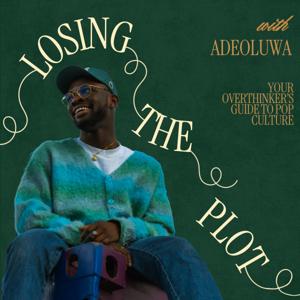


Wale joins me for a conversation about “Grateful,” the song I released on my birthday, November 3.
We talk about how I made it, what it means to me, and what I hope people take away from listening.
This is the audio edition of our outdoor interview.
Listen to “Grateful”:
https://www.submithub.com/link/adeoluwa-grateful
Follow the podcast for more conversations, and share this episode with someone who’s been listening to the song.
Stay Crowned,
ADEOLUWA
The songs are part of the story. This conversation gets into the rest.
In this birthday special of Losing the Plot, Wale and I look back at my music career, the experiences that shaped me, and the faith behind what I do.
We talk about my early days, what inspires me, what I believe, and what I still hope to create. It’s a chance to get to know the person behind the music.
Recorded for The Road to Grateful, this is the audio edition of our birthday conversation, accompanying my single “Grateful,” released November 3, 2026.
Listen to “Grateful”:
https://www.submithub.com/link/adeoluwa-grateful
Watch The Road to Grateful on YouTube:
https://youtube.com/playlist?list=PLGnaSXjlq_6A
Which song introduced you to my music? Let me know, and follow Losing the Plot for more conversations about music and the stories behind it.
Conversation with Wale Akinniyi
Rollout: Wale Akin for Stay Crowned Creations
Stay Crowned,
ADEOLUWA
#ADEOLUWAIsGrateful
The videos tell one story. Making them is another 😂
Wale and I revisit three of my music videos: “Ready,” “S'okan,” and “Dey Forever,” in that order.From making “Ready” in 2014 to releasing "S'okan" in 2019 and “Dey Forever” in 2025, we talk about how my creative process has changed, the work that goes into bringing these ideas to life, and what happened behind the scenes.
I’m reacting in real time, remembering what it took to make each video and looking at those decisions with fresh eyes.
This is Part 3 of The Road to Grateful, a series looking back at my life and creative journey ahead of my birthday and the release of “Grateful” on November 3, 2026. National Baba Crown Day.
Pre-save “Grateful”: https://distrokid.com/hyperfollow/adeoluwa/grateful?ref=release
Watch The Road to Grateful: https://youtube.com/playlist?list=PLGnaSXjlq_6A&si=bT-lv5IVuQ1BbWBR
Watch the original music videos:
Ready: https://www.youtube.com/watch?v=r1sduW8x1G0&list=RDr1sduW8x1G0&start_radio=1
S'okan: https://www.youtube.com/watch?v=MCoDUHbzSY0&list=RDMCoDUHbzSY0&start_radio=1
Dey Forever: https://www.youtube.com/watch?v=wMoK_G_5B3c&list=RDwMoK_G_5B3c&start_radio=1
Rollout: @Waleakiinn for #StayCrownedCreations
Stay Crowned,
ADEOLUWA
#ADEOLUWAIsGrateful
What happens when you watch yourself perform at 13?
In Part 2 of The Road to Grateful, Wale and I revisit two performances from different stages of my musical journey: a high school recital where I sang Adele's Turning Tables, and a performance of Mark Ronson and Amy Winehouse's Valerie from three years ago.
We talk about my evolution as a singer and performer, the changes in my musical style, the confidence I've gained, and how much my relationship with the stage has changed over time.
It's funny, nostalgic, and a reminder of just how far I've come.
This episode accompanies Part 2 of The Road to Grateful on YouTube, where you can watch the performances we're discussing.
Pre-save Grateful: https://distrokid.com/hyperfollow/adeoluwa/grateful?ref=release
Watch the full conversation: https://www.youtube.com/playlist?list=PLGnaSXjlq_6A
#ADEOLUWAIsGrateful
A birthday special on Losing the Plot.
Wale and I sit down to talk about the podcast in the first instalment of The Road to Grateful, a series looking back at my life and creative journey ahead of my birthday and the release of “Grateful” on November 3.
This is the audio edition of our video conversation, shared here as part of the rollout for my new single, “Grateful,” out November 3, 2026, on National Baba Crown Day!
Pre-save Grateful: https://distrokid.com/hyperfollow/adeoluwa/grateful?ref=release
Watch the full conversation: https://www.youtube.com/playlist?list=PLGnaSXjlq_6A
Stay Crowned,
ADEOLUWA
#ADEOLUWAIsGrateful
Season One of Losing The Plot began with a simple idea.
Albums are never just albums.
Across the season the show examined the hidden architecture behind music culture. From Adekunle Gold’s Fuji to the blockbuster strategies behind Ed Sheeran and Taylor Swift, from Brandy’s influence on modern vocal styles to Beyoncé’s challenge to genre boundaries, each conversation revealed a deeper system shaping how music is created, distributed, and remembered.
Along the way the season explored the evolution of Afrobeats, the power of producers and labels, the construction of pop star archetypes, and the cultural rules that determine who gets to grow, experiment, or fail in public.
Taken together these stories reveal something larger.
Music history rarely unfolds the way it appears on the surface. What looks like individual genius is often supported by infrastructure. What feels like cultural chaos often follows invisible rules. What seems like sudden success is usually the result of systems that have been quietly building for years.
The season finale brings these ideas together to ask the central question of the podcast.
If culture is shaped by systems rather than accidents, who has the power to change them.
And once we begin to see those systems clearly, the way we hear music may never sound the same again.
Pop culture loves the story of the self made star.
The artist who arrives fully formed. The genius who changes everything through talent alone. The overnight success who simply worked harder than everyone else.
But the history of popular music tells a different story.
This episode examines the invisible systems that shape the careers of the world’s biggest artists. From Michael Jackson’s relationship with MTV to Beyoncé’s mastery of visual spectacle, from Taylor Swift’s narrative control to the global expansion of Afrobeats through artists like Wizkid, Burna Boy, and Davido, the episode argues that no artist rises alone.
Every career sits inside a larger architecture. Producers, labels, cultural moments, technological shifts, and audience behavior all shape how artists succeed and how their work is received.
Pop culture may celebrate individuals, but history shows that systems create stars.
The music industry often measures success through visibility. Chart positions. Viral moments. Cultural dominance.
But some of the most enduring artists in music history built their careers through a completely different path.
This episode explores the cult favourite career model through artists who achieved longevity by cultivating loyal audiences rather than chasing constant mainstream attention. Artists like Asa, Robyn, Johnny Drille, Ric Hassani, and Yemi Alade demonstrate that influence and popularity do not always follow the same trajectory.
These artists built careers through emotional intimacy, consistent artistic identity, and powerful live audiences that sustained their music beyond fleeting trends. Their success challenges the industry’s narrow definitions of fame and reminds emerging musicians that longevity often comes from depth rather than scale
Some producers create songs. Others create eras.
This episode examines Don Jazzy’s influence on Nigerian pop culture and the broader role producers play in shaping the evolution of Afrobeats. From the early dominance of Mo’Hits Records to the global reach of Mavin Records today Don Jazzy has repeatedly helped define the sound and structure of Nigerian pop.
The episode also expands beyond one individual. Producers like Sarz, Pheelz, and Magicsticks have each introduced distinctive sonic signatures that reshaped the genre’s direction. In rhythm centered music cultures producers often function less like background collaborators and more like architectural designers of sound.
By examining these dynamics the episode asks whether Nigerian pop is uniquely producer driven or whether producers have always quietly shaped the trajectory of global popular music.
Music movements rarely emerge from isolated artists. They are often built by institutions.
This episode compares three labels that helped define entire eras of popular music. Motown Records in the United States, Mo’Hits Records in Nigeria, and Mavin Records in the modern streaming era. Each of these labels did more than release successful songs. They constructed sonic identities that shaped the sound of their generations.
Motown built one of the most organized production systems in music history and transformed Detroit into a global center of Black popular music. Mo’Hits created one of the first unmistakable sonic identities in modern Nigerian pop. Mavin later adapted that model for a globalized digital industry.
By tracing the rise of artists from Stevie Wonder and The Supremes to D’banj, Wande Coal, Rema, and Ayra Starr the episode explores how producers, songwriters, and label infrastructure transform individual talent into cultural movement