Lunch Hour Lectures - Autumn 2011 - Video

Lunch Hour Lectures - Autumn 2011 - Video

Download on the App Store

Lunch Hour Lectures - Autumn 2011 - Video episodes

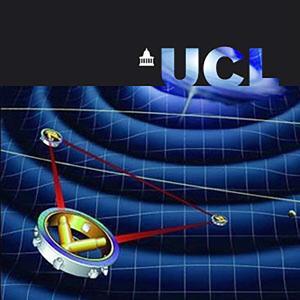
  • Photons, spacecraft, atomic clocks and Einstein – fundamental physics in the space environment - Video
    Satellites designed, built and launched by humans orbit the earth to carry out a myriad of tasks, friendly and hostile, commercial and scientific. Many of these missions supply critical data to model, mitigate and predict planet-scale processes such as El Nino events, sea level rise, plate tectonics and the earthquake cycle. Spacecraft move at 4 - 8 kilometres per second, and are between 500 and 20,000 km above the earth’s surface but for scientific purposes we need to know where they are to within a few centimetres, and we need to know the time they transmit their signals at the nano-second level. This lecture explains how this is achieved using concepts from fundamental physics.
    42 min
  • What has 'The King’s Speech' done to improve public awareness about stuttering? - Video
    The King’s Speech provides a backdrop against which to review our current understanding of stuttering, also known as stammering. To mark Stammering Awareness Day (22 October) Professor Howell will describe our current state of knowledge about the assessment of this condition, who might be affected, how it is most likely to start in childhood, and how recent work has been successful in predicting which young children will recover by teenage.
    Although speech is one of the primary features that indicates stuttering, there are other physical characteristics of the disorder, and this lecture will look at how language complexity, motor performance and psychological adjustment in school affect stuttering. Finally, Professor Howell will discuss if stuttering can be treated successfully, examining some of the treatments (successful and unsuccessful) and the robustness of the scientific evidence concerning the treatment of this condition.

    42 min
  • Voicing Slavery: Elizabeth Barrett Browning and Mary Prince - Video
    Women's voices were central to the struggle against slavery in the early 19th century. Elizabeth Barrett Browning, one of Britain's greatest poets, was the daughter of a slaveowner and the family money came from their Jamaican plantations. She sympathised with the cause of antislavery - but that sympathy was complicated by her family connections. Mary Prince was an enslaved woman who was brought by her 'owner' to Britain, escaped, and recorded her narrative. It was published and provided a moving testimony of the cruelties of slavery and a significant weapon in the war against it. Both these women had close connections with Bloomsbury, and this lecture, in conjunction with the exhibition 'The Slave Owners of Gower Street' will explore their lives and writings and the place of slavery in 19th century Britain.
    This lecture marks Black History Month in October. There is also an exhibition in UCL’s South Cloisters on the main campus entitled ‘The Slave Owners of Gower Street’
    42 min
  • Osteoporosis: Bouncing babies to crumbling wrinklies - the need to own our bones - Video
    The skeleton is key to our ability to undertake everyday movements and activities related to well-being and high quality independent living. The general perception of bone is that of a museum specimen – a dry inert structure. This is far from correct; our skeleton is a dynamic and responsive organ. The material properties and structural architecture are conditioned by both genetics and our changing functional demands throughout life. The devastating degenerative conditions such as osteoporosis (in both women and men) and associated fragility fractures represent a time bomb for society and healthcare requirements in our ageing population. Through an understanding of the pathobiology of bone and the skeleton we can develop strategies to mitigate the risk of these conditions and thus prolong an active and independent life in old age.
    This lecture marks World Osteoporosis Day on 20 Oct.
    41 min
  • The perfect storm: Can disaster reduction occur in the face of climate change and population growth? - Video
    In the near future we face the perfect storm; where the combination of climate change and population growth is set to increase the numbers of people affected by 'natural' disasters. By 2030 globally we will need 50% more energy, with much of this energy generated through fossil fuels, accelerating climate change. By 2030 we will need 50% more food and 30% more water to feed our expanding population.
    To mark International Day for disaster reduction (12 Oct), Professor Maslin will look at these dire predictions for the future and discusses how we, as a global society, can deal with these problems and ultimately reduce society’s vulnerability and save lives.
    40 min

About Lunch Hour Lectures - Autumn 2011 - Video

From the publisher's feed

Autumn 2011 - UCL's Lunch Hour Lecture Series is an opportunity for anyone to sample the exceptional research work taking place at the university, in bite-size chunks. Speakers are drawn from across…

More shows like Lunch Hour Lectures - Autumn 2011 - Video

#MadeAtUCL by UCL

#MadeAtUCL

1 Listeners

What Darwin got wrong - Audio by UCL

What Darwin got wrong - Audio

0 Listeners

Angels & Demons: The Real Physics - Audio by UCL

Angels & Demons: The Real Physics - Audio

0 Listeners

Angels, Putti, Dragons and Fairies: A Biological Dissection - Video by UCL

Angels, Putti, Dragons and Fairies: A Biological Dissection - Video

0 Listeners

Climate Change: The biggest global threat of the 21st century? - video by UCL

Climate Change: The biggest global threat of the 21st century? - video

0 Listeners

UCL-China Research Festival - Audio by UCL

UCL-China Research Festival - Audio

0 Listeners

City Visions: UCL Urban Laboratory Launch - Audio by UCL

City Visions: UCL Urban Laboratory Launch - Audio

0 Listeners

UCL Grand Round - Bench to Bedside - Audio by UCL

UCL Grand Round - Bench to Bedside - Audio

0 Listeners

Boxing: A Cultural History - Video by UCL

Boxing: A Cultural History - Video

0 Listeners

Cosmological significance and Detection of Gravitational Waves - audio by UCL

Cosmological significance and Detection of Gravitational Waves - audio

0 Listeners

Conversations in Applied Studies and Global Citizenship - Audio by UCL

Conversations in Applied Studies and Global Citizenship - Audio

0 Listeners

UCL: The Provost’s View - Audio by UCL

UCL: The Provost’s View - Audio

0 Listeners

Genomics, Identity and Health: Challenges and Opportunities for Interdisciplinary Discussion - Video by UCL

Genomics, Identity and Health: Challenges and Opportunities for Interdisciplinary Discussion - Video

0 Listeners

Practicing 18th-Century Science Today - Audio by UCL

Practicing 18th-Century Science Today - Audio

0 Listeners

Seedcamp 2008 - Audio by UCL

Seedcamp 2008 - Audio

0 Listeners

The Fragile Democracy of Somaliland - Audio by UCL

The Fragile Democracy of Somaliland - Audio

2 Listeners

Patent Claim Interpretation - Audio by UCL

Patent Claim Interpretation - Audio

0 Listeners

Emotion in Literature and the Brain - Audio by UCL

Emotion in Literature and the Brain - Audio

0 Listeners

Assisted Suicide in Britain - UCL & Bindman Debate 2009 - Video by UCL

Assisted Suicide in Britain - UCL & Bindman Debate 2009 - Video

0 Listeners

Pragmatic Approaches to the Problems of the Homeless - Making Things Better - Audio by UCL

Pragmatic Approaches to the Problems of the Homeless - Making Things Better - Audio

0 Listeners