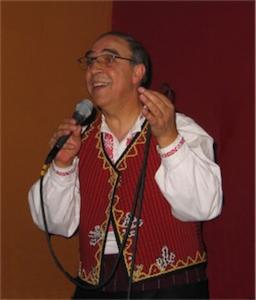
This song from northern Macedonia describes a mother's fears for her son marrying a woman from another village. Dragi also discusses the passing down of cultural traditions, and the population mix of villages in past generations.
This song praises the master of the house. Dragi talks about how popular this song is, sung by everyone at special occasions. He also talks about the song's first recording ist, Angelko Spirkovski.
This song from the Skopje region features the gajda (bagpipe). Dragi learned it from a recording by the famed Trio Kučkovki, and he talks about the trio, led by Zvezda Dimovska, and also about Stojka Stojkovska.
Dragi talks about this Tetovo song and the group that recorded it, Braḱa Gavrovski. He also talks about ornamenting songs and the possible identity of Kara-Mustafa.
For this song from north-central Macedonia, Dragi talks about the origin of the lyrics and four different versions. He also discusses Dragica Mavrovska.
For this song from north-central Macedonia, Dragi talks about the category of songs having to do with young men or woman who are awakened from sleep. He also talks about how this song is connected with his younger daughter.
Dragi talks about the Tetovo dialect, how songs spread from one village to another, the meaning of "young bride", and the symbol of the moon in folk songs.
18 min
About Macedonian Postcards
From the publisher's feed
David Bilides and Dragi Spasovski are your hosts for discussions and samples of Macedonian folk songs and culture. We completed all 54 songs in Dragi’s 3-CD project in 2024. We are continuing with new…
songs, and stories about the recordings, musicians, Dragi’s life, and Macedonian culture in general.